
Looking for the best smart home security systems in 2025? I recommend considering options like Ring Alarm, OSI, and SimpliSafe, which offer easy DIY installation, reliable wireless connections, and smart integrations with Alexa and Google Assistant. Many systems are expandable, support various sensors, and provide real-time alerts to keep your home safe and connected. If you want to explore the top choices and features, you’ll want to keep going.
Key Takeaways
- Top security systems in 2025 feature wireless, scalable setups with seamless smart device integration and real-time alerts.
- They offer easy DIY installation, remote control via apps, and compatibility with popular voice assistants like Alexa and Google.
- Advanced sensors, HD cameras, and sirens provide comprehensive indoor and outdoor security coverage.
- Many systems support professional monitoring plans with affordable monthly fees and reliable power backup options.
- Customizable and expandable, these systems adapt to various property sizes and security needs for complete home protection.
Ring Alarm 14-Piece Wireless Security System

If you’re looking for an easy-to-install security system for a 2-4 bedroom home, the Ring Alarm 14-Piece Wireless Security System is an excellent choice. It includes a base station, keypad, contact sensors, motion detectors, and a range extender, all designed for simple setup. The system integrates with your Wi-Fi and Z-Wave devices and offers remote control via the Ring app. You can expand it with additional sensors and connect it to Alexa for voice commands. Optional professional monitoring provides emergency responses, making it a versatile and reliable solution for keeping your home safe and connected.
Best For: homeowners seeking an easy-to-install, expandable wireless security system for a 2-4 bedroom home that integrates with smart devices and offers remote monitoring.
Pros:
- Easy setup and user-friendly mobile app control for quick installation and management
- Expandable system with additional sensors and accessories for customized security coverage
- Integrates seamlessly with Alexa for voice commands and supports professional monitoring options
Cons:
- Subscription required for cloud storage, professional monitoring, and some advanced features
- Limited to 10 devices per location, which may restrict larger setups
- Some features depend on reliable Wi-Fi or cellular connectivity, which could affect system performance in areas with poor network coverage
WiFi Door Alarm System, Wireless DIY Smart Home Security Kit

A WiFi door alarm system like the Tolviviov Wireless DIY Smart Home Security Kit is ideal for homeowners seeking an easy, customizable way to monitor their indoor spaces without complex wiring or professional installation. This 8-piece set includes sensors, remote controls, and a siren, all easily installed with self-adhesive strips—no tools needed. It connects via 2.4GHz WiFi, allowing control through an app, remote, or voice commands with Alexa and Google Assistant. The system offers instant phone alerts, supports expansion with up to 20 sensors, and features battery backup for reliability. Its straightforward setup makes it perfect for DIY enthusiasts wanting a flexible, affordable security solution.
Best For: DIY homeowners seeking an affordable, easy-to-install indoor security system with smart home integration and expandability.
Pros:
- Easy DIY setup with self-adhesive sensors and no tools required
- Compatible with Alexa and Google Assistant for voice control
- Supports expansion up to 20 sensors and features phone alerts
Cons:
- Limited to indoor use only, not suitable for outdoor security
- WiFi operates only on 2.4GHz, not supporting 5GHz networks
- Requires AC power with battery backup, so placement is somewhat limited to powered areas
OSI Alarm System for Home Security (Gen 2)
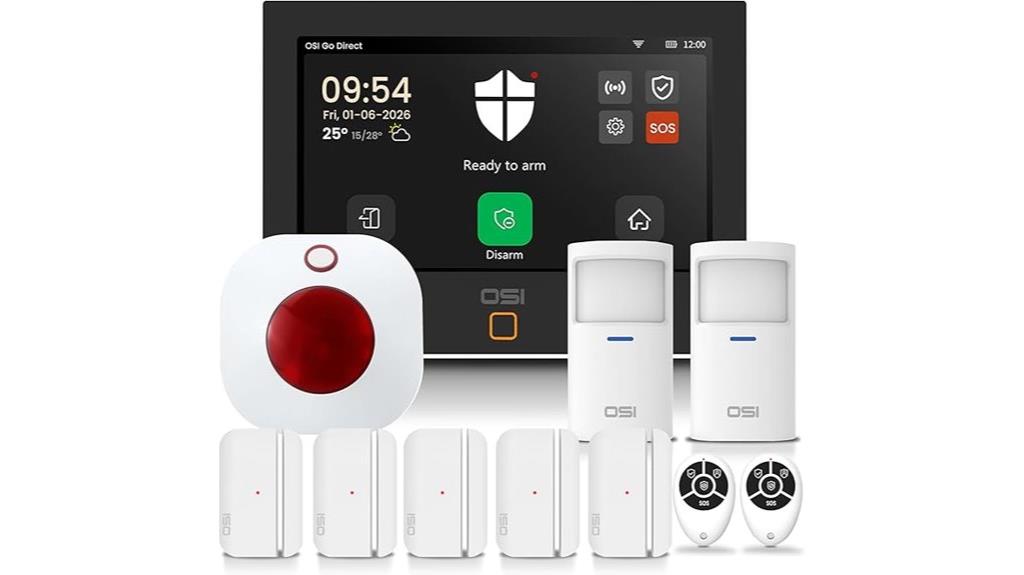
The OSI Alarm System for Home Security (Gen 2) stands out as an excellent choice for homeowners and small business owners who want a scalable, user-friendly security solution. Its 11-piece DIY kit includes a touchscreen control panel, sensors, siren, remotes, and a phone app, all compatible with Alexa. You can expand the system up to 160 sensors and control points, with multiple user access levels. It offers Wi-Fi connectivity, optional SIM card for SMS alerts, and a 24-hour backup battery. Easy to install and update, it provides reliable protection with motion detection, contact sensors, and remote controls, all without monthly fees for app notifications.
Best For: homeowners and small business owners seeking a scalable, easy-to-install security system with customizable monitoring options and user-friendly interface.
Pros:
- DIY installation with an interactive setup wizard makes setup straightforward.
- Supports multiple sensors and user access levels, ideal for expanding security needs.
- No monthly fees for app notifications, with optional paid SMS alerts through mobile providers.
Cons:
- Requires a mobile plan and active SIM card (not included) for SMS alerts, incurring additional costs.
- Limited to a maximum of 160 sensors and 6 controllers, which may not suit larger facilities.
- No support for monthly subscription services or ongoing professional monitoring options.
Ring Alarm 5-Piece Wireless Security System
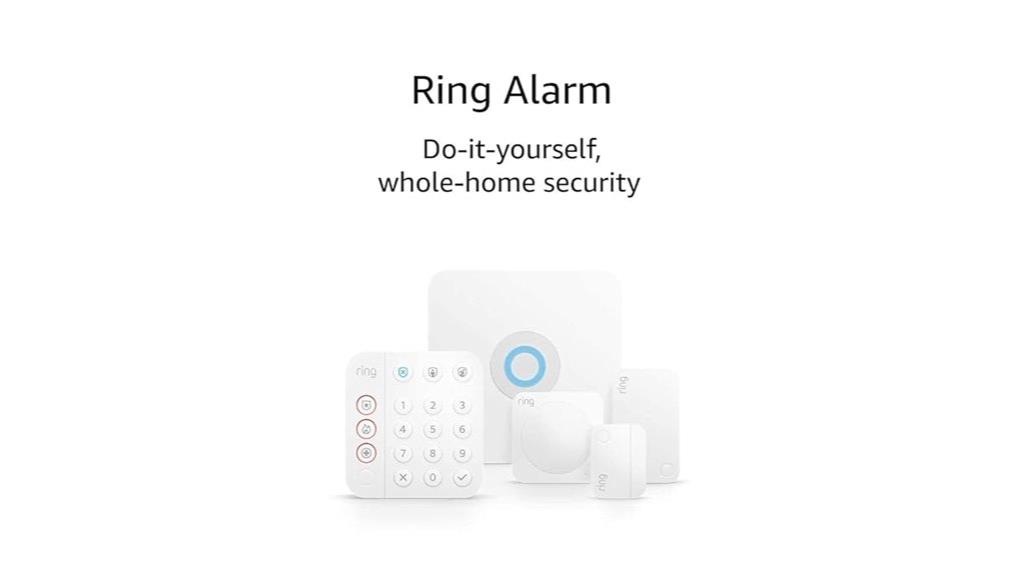
Looking for a reliable security system tailored for small homes, apartments, or condos? The Ring Alarm 5-Piece Wireless Security System is an excellent choice. It includes a Base Station, Keypad, Contact Sensor, Motion Detector, and Range Extender, all designed for easy setup and expansion. With Z-Wave, Wi-Fi, and cellular backup support, it guarantees dependable connectivity. The system integrates seamlessly with Alexa for voice control and supports additional Ring-certified devices. A Ring Home Plan subscription unlocks remote arming, professional monitoring, and cellular backup features. Compact, versatile, and compatible with various smart home devices, this system offers a complete solution for smaller residences.
Best For: individuals living in small homes, apartments, or condos seeking an easy-to-install, expandable wireless security system with smart home integration.
Pros:
- Easy setup and expandability with additional sensors and accessories
- Reliable connectivity with Z-Wave, Wi-Fi, Bluetooth, and cellular backup support
- Seamless integration with Alexa for voice control and other Ring-certified devices
Cons:
- Requires a Ring Home Plan subscription for remote access and professional monitoring
- Limited to indoor use for sensors and motion detectors
- No built-in smoke or CO monitoring capabilities
Ring Alarm 8-Piece Kit (2nd Gen) – Home Security System

If you live in a small home or apartment and want an easy-to-install security system, the Ring Alarm 8-Piece Kit (2nd Gen) is a smart choice. It’s designed for 1-2 bedroom homes, including a base station, keypad with emergency buttons, four contact sensors, a motion detector, and a range extender. The sensors are smaller and seamlessly integrate into your home. You can add extra sensors if needed. The system offers optional 24/7 professional monitoring and works with Ring’s ecosystem for live video, remote control, and voice commands through Alexa. It’s flexible, scalable, and perfect for keeping your home safe and smart.
Best For: small to medium-sized homes or apartments seeking an easy-to-install, scalable home security solution with smart home integration.
Pros:
- Easy to install and seamlessly integrates into small homes or apartments.
- Supports optional professional monitoring and remote control via Ring app and Alexa.
- Compatible with Ring ecosystem for combined security and live video access.
Cons:
- Designed primarily for 1-2 bedroom homes, may require additional sensors for larger spaces.
- Subscription required for advanced features like professional monitoring and continuous recording.
- Limited sensor options included; expansion necessary for comprehensive coverage.
PGST Wireless Home Security System with 4G SMS/Tuya App Alerts

For homeowners seeking a reliable, no-monthly-fee security solution that keeps them connected at all times, the PGST Wireless Home Security System with 4G SMS and Tuya app alerts is an excellent choice. This all-encompassing kit includes motion detectors, door sensors, and remote control options, all easily expandable to suit your needs. It offers instant alerts via SMS or push notifications, ensuring you’re always informed of any activity. Installation is simple, with no complex steps involved. Plus, the system’s SOS feature enables quick emergency calls, providing peace of mind. Powered by electricity and batteries, it’s a versatile, user-friendly security option for any home or villa.
Best For: homeowners and villa owners seeking a reliable, expandable, no-monthly-fee security system with easy installation and instant alerts.
Pros:
- No monthly fees, reducing ongoing costs
- Easy to install and customize for specific areas
- Instant alerts via SMS and Tuya app enhance security awareness
Cons:
- Requires corded power, limiting placement options during outages
- Limited details on third-party device compatibility
- Slightly higher price point compared to basic systems
SimpliSafe 11 Piece Wireless Home Security System (Gen 3)
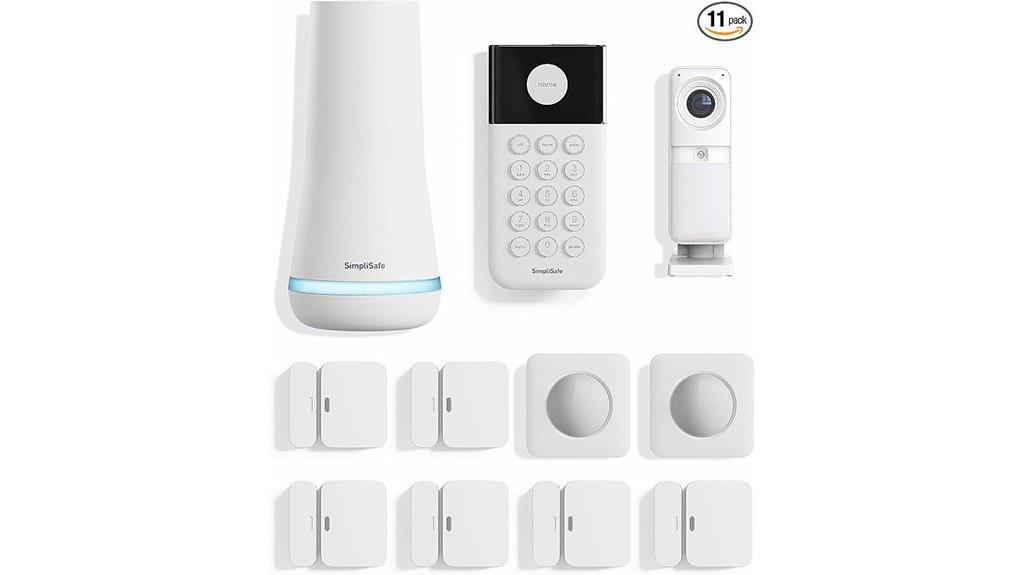
The SimpliSafe 11 Piece Wireless Home Security System (Gen 3) is an excellent choice for homeowners seeking a straightforward, wire-free setup that can be easily installed without drilling or wiring. I appreciate how simple it is to set up—just plug in the Base Station, place the sensors, and connect the HD indoor camera. The system includes a cellular backup, a loud siren, and a mobile app to control everything remotely. It’s compatible with Alexa and Google Assistant, and features a smash-safe keypad for quick access. With advanced sensors, real-time video, and professional monitoring, it offers all-encompassing protection that’s easy to customize and expand.
Best For: Homeowners seeking an easy-to-install, wire-free security system with professional monitoring and smart home compatibility.
Pros:
- Simple, wire-free setup with no drilling required
- Includes cellular backup and 24/7 professional monitoring options
- Compatible with Alexa, Google Assistant, and features app control for remote management
Cons:
- Limited to the US market, with no international availability
- Requires a subscription plan for professional monitoring and video verification features
- Some users may find the system’s expansion options somewhat limited compared to larger security setups
Tolviviov Home Security Alarm System (15-Piece Kit)
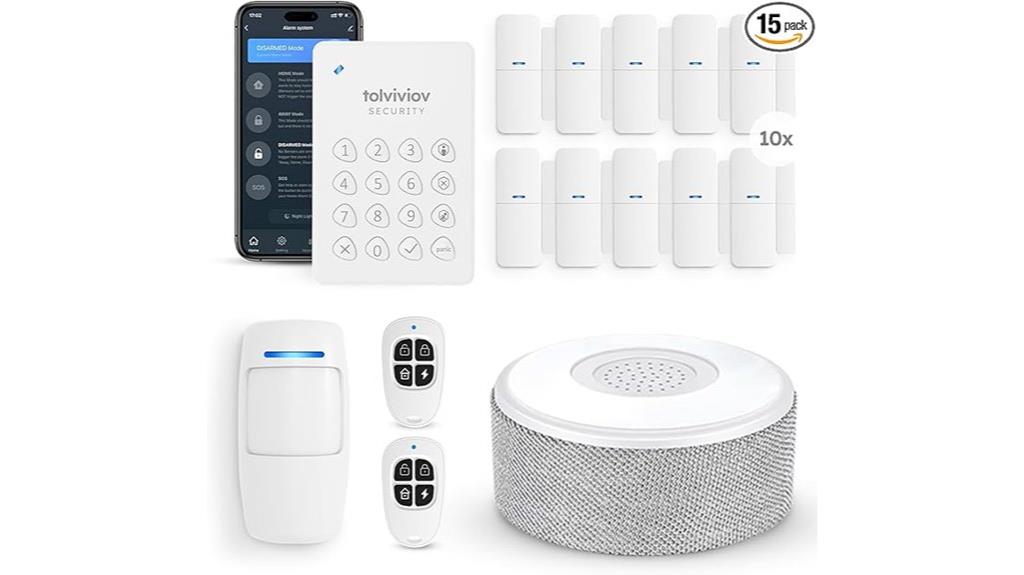
Anyone seeking a cost-effective, easy-to-install home security solution will appreciate the Tolviviov Home Security Alarm System. This 15-piece kit includes sensors for doors, windows, motion detection, a keypad, and remote controls, all designed for simple DIY setup with self-adhesive installation. It supports expansion up to 20 sensors and five remotes, plus seamless Alexa and Google Assistant integration. The system features real-time alerts sent straight to your smartphone, a loud 120dB siren to deter intruders, and no monthly fees. Powered by AC with battery backup, it offers reliable security, easy control via app or voice, and is perfect for those wanting a flexible, budget-friendly option.
Best For: budget-conscious homeowners seeking an easy-to-install, expandable home security system with smart device integration.
Pros:
- No monthly fees, saving money over time
- DIY installation with self-adhesive sensors for easy setup
- Supports expansion up to 20 sensors and 5 remote controls
Cons:
- Limited to 2.4GHz WiFi networks, which may affect connectivity in some homes
- Battery life of only 8 hours without power backup may require frequent replacements during outages
- Lacks professional monitoring options, relying solely on user management and alerts
LWOHSI Wireless Home Alarm System with Touch Screen
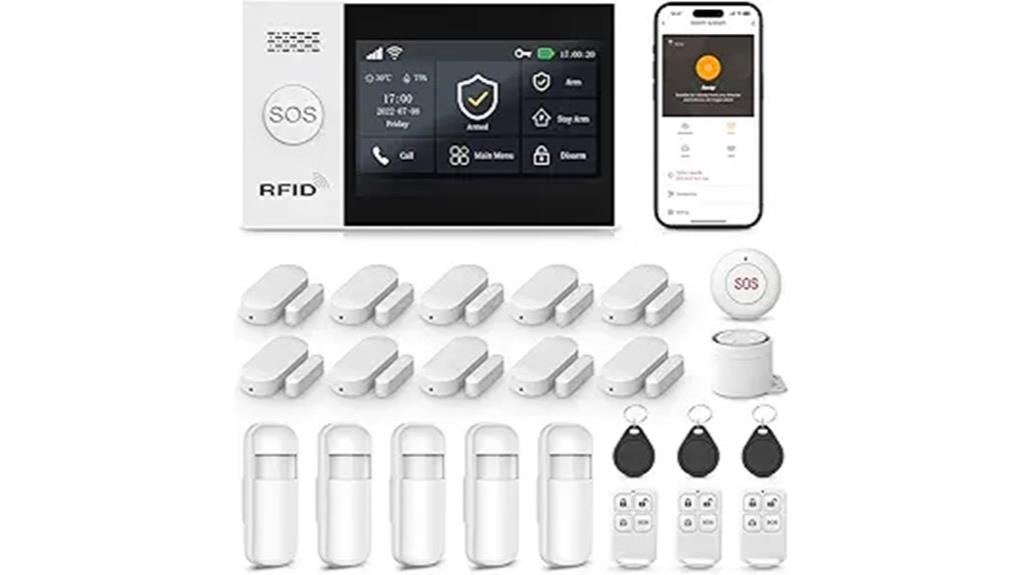
If you’re looking for a versatile home security solution that combines ease of use with advanced features, the LWOHSI Wireless Home Alarm System with Touch Screen is an excellent choice. It features a user-friendly 4.3-inch color IPS touch screen, supports multi-language menus, and offers voice operation and SMS alerts—all without monthly fees. The system includes sensors, RFID tags, a siren, and remote control, connecting via Wi-Fi and GSM networks. It supports multiple alarm modes, zone-specific alerts, and integrates with smart home devices like Alexa. Compact and battery-powered, it’s easy to install and monitor from your smartphone or tablet, providing all-encompassing protection and automation.
Best For: homeowners seeking an easy-to-use, versatile, and smart home-compatible security system with no monthly fees.
Pros:
- User-friendly 4.3-inch color IPS touch screen with multi-language support and voice operation
- Wireless installation with extensive connectivity options, supporting up to 100 controllers and sensors
- Integrates with smart home devices like Alexa for remote automation and control
Cons:
- Limited to 20 seconds of recorded alarm and voice messages, which may be short for some users
- Requires battery power, so periodic replacement or charging is necessary
- As a wireless system, it may be susceptible to signal interference or connectivity issues in certain environments
X-Sense Smart Home Security System (AS05)

For those seeking an easy-to-install, reliable home security solution, the X-Sense AS05 system offers a compact, wireless design that supports flexible setup without tools. It includes a base station, door and motion sensors, and a keypad, all powered by long-lasting lithium batteries. The system connects via 2.4 GHz Wi-Fi and can be managed remotely through the X-Sense app, allowing you to set modes and schedules easily. Installation is straightforward with adhesive tape or screws, making it perfect for homes, apartments, or offices. With expandable capabilities, durable components, and voice control support, the AS05 provides dependable, customizable security at an affordable price.
Best For: homeowners, renters, or small business owners seeking an easy-to-install, reliable, and customizable home security solution with remote management capabilities.
Pros:
- Wireless, tool-free installation using adhesive or screws for convenience
- Long-lasting lithium batteries with a lifespan of up to 5 years
- Expandable system supporting multiple sensors and voice control via Alexa
Cons:
- Supports only 2.4 GHz Wi-Fi networks, limiting compatibility with newer routers
- Limited to indoor use, not suitable for outdoor security
- Relatively basic features compared to more advanced security systems
Tolviviov Home Alarm System (2nd Gen) 12-Piece DIY Security System
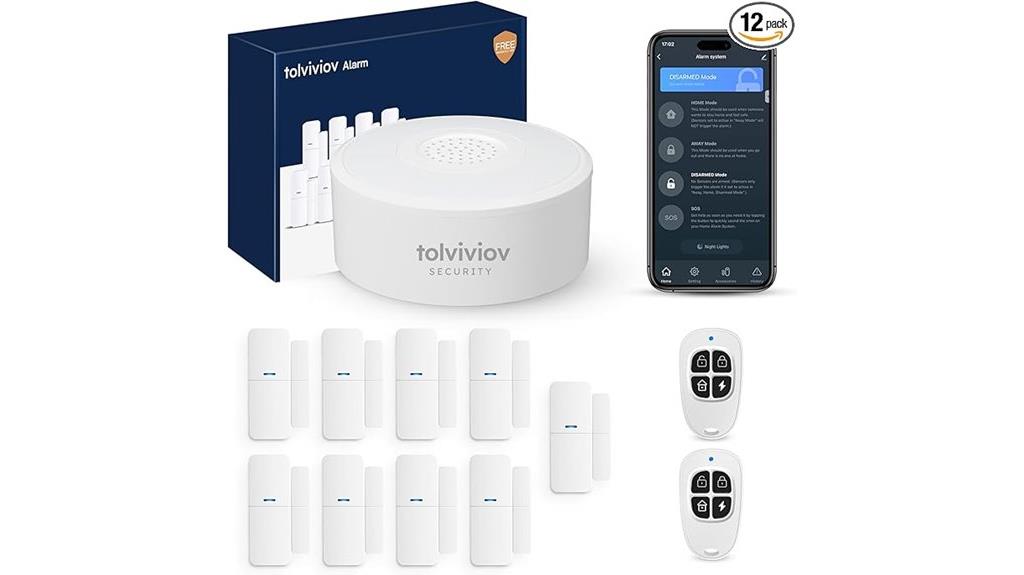
The Tolviviov Home Alarm System (2nd Gen) is an ideal choice for those seeking a customizable and easy-to-install DIY security solution without monthly fees. This 12-piece kit supports expansion up to 20 sensors and five remotes, making it flexible for various properties. It’s compatible with Alexa and Google Assistant, and works on 2.4GHz WiFi. The system includes contact sensors, remote controls, and a base station with a backup battery. Installation is wireless and damage-free, and alerts are sent via app, voice, or remote. With real-time notifications and voice control, it offers reliable, expandable security for homes, apartments, offices, or shops.
Best For: homeowners, renters, and small business owners seeking an easy-to-install, customizable DIY security system with no monthly fees.
Pros:
- Supports expansion up to 20 sensors and 5 remotes for flexible security coverage
- Compatible with Alexa and Google Assistant for voice control convenience
- Wireless, damage-free installation with a backup battery for reliable operation during outages
Cons:
- Only supports 2.4GHz WiFi, not compatible with 5GHz networks
- Limited to 12 pieces in the kit; additional sensors require expansion and may increase costs
- Requires alkaline batteries, which need replacement over time
SimpliSafe 12-Piece Wireless Home Security System with HD Cameras

Those seeking a thorough, easy-to-install home security solution will appreciate the SimpliSafe 12-piece wireless system, which combines HD cameras, various sensors, and remote control features. It includes door, window, and cabinet sensors, plus motion detectors with pet-friendly detection, all managed via a simple app. The indoor camera offers 1080p HD footage, day/night vision, and a privacy shutter. With Alexa and Google Assistant compatibility, a 95dB siren, cellular backup, and optional professional monitoring under $1/day, this system delivers powerful security without wiring or drilling. Its plug-and-play setup makes safeguarding your home straightforward, whether you’re home or away.
Best For: homeowners seeking an easy-to-install, comprehensive wireless security system with HD cameras and remote control capabilities.
Pros:
- Easy plug-and-play setup with no wiring or drilling required
- Includes a variety of sensors and HD cameras for full home coverage
- Supports app control and voice assistants for convenient remote management
Cons:
- System operation depends on Wi-Fi and cellular connectivity, which may be affected by outages
- Indoor camera privacy shutter may not fully prevent visual access when active
- Professional monitoring is optional and may add to ongoing costs
Wireless Smart Home Security System 17-Piece Kit with App Alerts
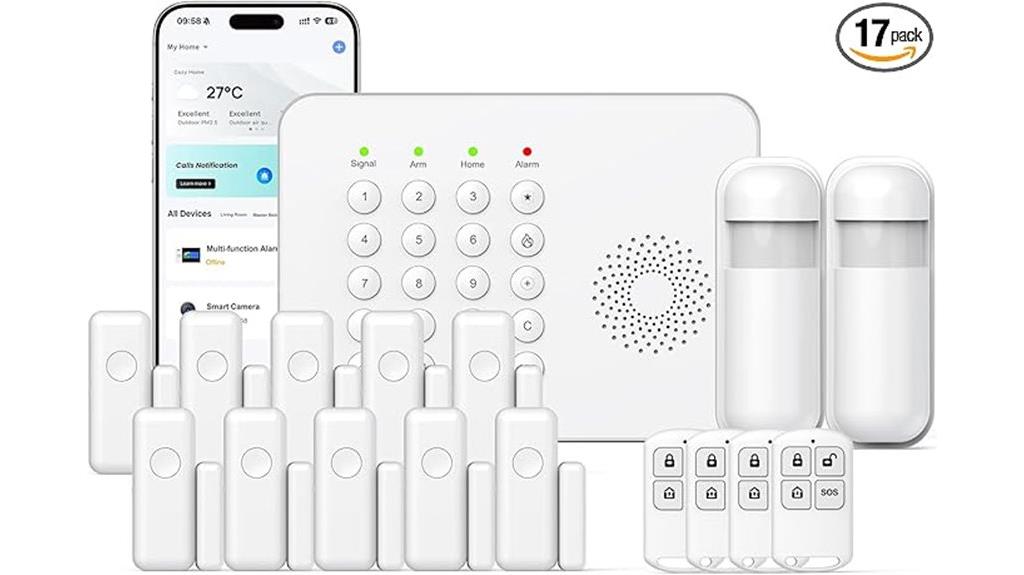
If you’re looking for a reliable and easy-to-install security solution for a medium to large home, the Wireless Smart Home Security System 17-Piece Kit with App Alerts is an excellent choice. It supports dual WiFi and 4G connectivity, ensuring instant alerts via app notifications, SMS, or calls, even during internet outages thanks to its WiFi alarm base station. The kit includes sensors for doors, windows, and motion, providing extensive coverage for 3-5 bedroom homes. With voice control compatibility with Alexa and Google Assistant, along with remote management, it’s user-friendly and budget-friendly—offering 24/7 protection without hidden costs.
Best For: homeowners seeking an easy-to-install, comprehensive security system for medium to large homes with reliable connectivity and smart home integration.
Pros:
- Supports dual WiFi and 4G connectivity for reliable alerts even during internet outages
- Includes extensive coverage with 17 pieces suitable for 3-5 bedroom homes
- Compatible with Alexa and Google Assistant for seamless voice control and remote management
Cons:
- No professional installation required but may require setup familiarization for some users
- Limited to the included sensors; expansion options may be necessary for larger or more complex homes
- Does not specify additional features like outdoor sensors or camera integration
Wireless WiFi Home Security System with Alexa & Google Compatibility (11 Pieces)

Looking for an easy-to-install security system that seamlessly integrates with your smart home devices? This Wireless WiFi Home Security System offers a straightforward DIY setup—no wiring or drilling needed—ready straight out of the box. It includes 11 pieces: sensors, a wired siren, remotes, and RFID cards, all controllable via keypad, app, or voice commands through Alexa and Google Assistant. It supports up to 100 sensors and connects via 2.4GHz WiFi and GSM networks for reliable alerts. With a 24-hour backup battery, real-time notifications, and a loud 120dB siren, it’s a versatile, expandable solution for keeping your home safe effortlessly.
Best For: homeowners and renters seeking an easy-to-install, smart-compatible security system with customizable sensors and remote control capabilities.
Pros:
- Simple DIY installation with no wiring or drilling required.
- Compatible with Alexa and Google Assistant for voice control.
- Supports up to 100 sensors and provides real-time alerts via app, SMS, and voice monitoring.
Cons:
- Rated 3.6/5 stars based on customer reviews, indicating mixed feedback.
- Limited to 2 wired sensors and 11-piece kit may require additional purchases for larger setups.
- Operates on 2.4GHz WiFi, which may be susceptible to interference in crowded networks.
SimpliSafe 8-Piece Wireless Home Security System

The SimpliSafe 8-Piece Wireless Home Security System is an excellent choice for homeowners seeking a straightforward, reliable security solution that’s easy to install and manage. Setting it up takes minutes—just plug in the Base Station, download the app, and place the sensors. No wiring or drilling needed, with optional professional help if desired. The system includes entry sensors for doors and windows, motion detectors that are pet-friendly, and a panic button for instant alerts. Controlled via the app or voice assistants like Alexa and Google, it offers cellular backup, 24/7 professional monitoring, and a one-year warranty, making it a smart, hassle-free security option.
Best For: homeowners seeking an easy-to-install, reliable wireless security system with professional monitoring options and smart home compatibility.
Pros:
- Simple setup requiring no wiring or drilling, making installation quick and hassle-free
- Includes cellular backup and professional monitoring for 24/7 security and emergency response
- Compatible with voice assistants like Alexa and Google for convenient control
Cons:
- Products are only supported in the US; limited international availability
- Professional monitoring involves ongoing costs after the first free month
- Limited customization options compared to more advanced security systems
Factors to Consider When Choosing Smart Home Security Systems

When selecting a smart home security system, I focus on how well it integrates with my existing devices and how easy it is to set up. I also consider whether it allows for future expansion, offers reliable monitoring options, and has backup power in case of outages. These factors make certain I choose a system that’s both practical and adaptable to my needs.
Compatibility With Devices
Choosing a smart home security system that seamlessly integrates with your existing devices is crucial for a smooth user experience. I look for systems compatible with popular ecosystems like Alexa, Google Assistant, or Apple HomeKit to ensure easy voice control and automation. It’s also important that the system supports integration with other smart devices such as locks, lights, or thermostats, allowing everything to work together efficiently. I verify that the system communicates via common protocols like Z-Wave, Zigbee, Wi-Fi, or Bluetooth, which broadens device compatibility. Additionally, I check whether the app is compatible with my smartphone’s OS, whether iOS or Android, for remote access and alerts. Ultimately, I consider if the system supports third-party device integration or has an open API for custom automation, enhancing flexibility.
Ease of Installation
Selecting a smart home security system often starts with considering how easy it is to install. Many systems are designed for DIY setup, eliminating the need for wiring or drilling, which makes installation quick and straightforward. Wireless options using Wi-Fi, Z-Wave, or Zigbee protocols simplify placement, reducing complexity. Installing sensors and control panels usually involves mounting with adhesive or screws, guided step-by-step through apps or manuals. Some systems even support remote setup via smartphone, allowing me to configure and customize my security network from anywhere. Compatibility with existing smart home devices and voice assistants further streamlines the process, enabling centralized control and automation. Overall, a user-friendly, hassle-free installation process is a key factor in choosing the right security system.
Expansion Capabilities
Expanding a smart home security system requires careful consideration of its compatibility with additional sensors and accessories. I look for systems that support adding door/window contacts, motion detectors, and other sensors to increase coverage as needed. It’s important to check the maximum number of sensors the system can handle to guarantee it can grow with my security needs. I also consider whether expansion is straightforward, preferring DIY installation if I want to avoid professional setup. Compatibility of communication protocols like Z-Wave, Zigbee, or Wi-Fi is essential for seamless integration of new devices. Finally, I verify that the platform’s app management, alerts, and automation features can accommodate additional devices, allowing me to control and monitor my expanded security system effortlessly.
Monitoring Options
When considering smart home security systems, it’s essential to evaluate the available monitoring options to guarantee they meet your safety needs and lifestyle. Professional monitoring offers 24/7 emergency response, automatically dispatching police, fire, or medical services during crises, but it usually requires a subscription. Self-monitoring lets you receive real-time alerts and control your system remotely, giving you independence but no emergency dispatch. Some systems provide hybrid options, allowing you to choose between professional monitoring or DIY alerts based on your budget and preferences. Keep in mind that coverage and response times can vary depending on the provider and plan tier. Assess your comfort level, budget, and desired response speed to select the monitoring setup best suited for your home.
Power Backup Features
Power backup features are essential components of a reliable smart home security system because they make certain your security remains intact even during power outages. These features typically rely on rechargeable or backup batteries that keep your system operational when the main power supply fails. Many systems provide 24-hour backup batteries, ensuring continuous protection for at least a day, with some offering even longer durations. The capacity and lifespan of these batteries vary, with some lasting up to five years under normal use. Having a dependable backup power source is vital for maintaining alarm and monitoring services during outages, preventing security lapses, and avoiding false alarms caused by power disruptions. Investing in systems with robust power backup features gives you peace of mind, knowing your home’s security is always active.
Security Protocols
Security protocols are the backbone of a smart home security system, ensuring that your data stays protected from unauthorized access. I look for systems that use strong encryption methods like AES-256, which shields data during transmission. Multi-channel authentication, such as two-factor authentication, adds an extra layer of security, making it harder for intruders to break in. Communication standards like Z-Wave, Zigbee, and Wi-Fi should support secure pairing and encrypted signals to prevent hacking. Regular firmware and software updates are essential, as they patch vulnerabilities and strengthen the system’s defenses. Additionally, real-time monitoring and alerts for suspicious activity help me respond quickly to threats. These security protocols are vital for maintaining a safe and private smart home environment.
Subscription Requirements
Choosing the right smart home security system involves considering whether it requires a subscription plan for additional features. Many systems offer basic functions like alerts and device control without extra costs, but advanced features often need a subscription. These can include remote access, professional monitoring, cloud storage, live video streaming, activity replays, and emergency responses. Subscription fees vary widely, from under $1 a day to over $30 a month, so it’s essential to review the costs beforehand. Make sure the subscription requirements align with your budget and security needs. Understanding what features depend on a subscription helps you avoid surprises later and ensures you select a system that provides both the essential security and added convenience you desire.
Budget Considerations
When selecting a smart home security system, it’s essential to establish a clear budget that covers not only the initial purchase and installation but also any ongoing costs like subscription fees or monitoring services. I recommend comparing basic packages with expandable systems to ensure future scalability fits your financial plan. Be aware that some systems require monthly or annual fees for features like professional monitoring or cloud storage. It’s also wise to evaluate the long-term value of features such as battery life, durability, and integration capabilities. Sometimes investing a bit more in higher-priced systems with advanced features provides better security and peace of mind, ultimately saving money and hassle in the long run. A well-planned budget ensures you get the most effective security without overspending.
Frequently Asked Questions
How Do Smart Security Systems Integrate With Existing Smart Home Devices?
Smart security systems seamlessly integrate with existing smart home devices through compatible platforms like Alexa, Google Home, or Apple HomeKit. I connect my security system to these platforms, allowing me to control cameras, alarms, and sensors with voice commands or apps. Most systems support standard protocols like Z-Wave or Zigbee, making it easy to sync with lights, thermostats, and other smart devices for a unified, convenient home automation experience.
What Are the Main Differences Between Wireless and Wired Security Systems?
Wireless security systems are easier to install since they don’t require wiring, offering flexibility and quick setup. Wired systems tend to be more reliable with fewer false alarms, but installation is more complex and invasive. I prefer wireless because I can move sensors easily and avoid drilling holes. However, if you want a more stable connection, a wired system might be better. It really depends on your home’s needs.
How Does Data Privacy and Encryption Work in These Security Systems?
Data privacy and encryption in security systems protect my information by converting it into coded formats that only authorized devices can decode. I rely on strong encryption protocols like AES to keep my video feeds, alerts, and personal data secure from hackers. Additionally, many systems use two-factor authentication and local storage options, giving me peace of mind that my home’s data stays private and protected from unauthorized access.
Can These Systems Be Customized for Specific Home Layouts?
Absolutely, these systems are like a tailor-made suit for your home, fitting your specific layout perfectly. I’ve customized mine to cover every nook and cranny, from basement to attic, ensuring no sneaky intruder slips through. With flexible sensors and adaptable cameras, you can design your security setup just the way you want. It’s almost like having a security system that knows your home better than you do!
What Is the Typical Cost Comparison Between DIY and Professional Installation?
On average, DIY security systems are more affordable upfront, often costing between $200 and $500, since you’re doing the installation yourself. Professional installation typically ranges from $200 to $1,000 or more, depending on the system’s complexity and the provider’s rates. I find DIY setups great for smaller homes or budgets, but if you want a customized, hassle-free experience, professional installation might be worth the extra cost.
Conclusion
In the end, choosing the right smart home security system can feel like finding a needle in a haystack, but it’s worth it to keep your home safe and smart. These 15 options offer top-tier protection and peace of mind, ensuring your home’s safety is never compromised. Trust me, investing in the right system will be like having a digital fortress guarding your loved ones every second of every day.