This checklist is for students, teachers, and curious learners preparing to observe the natural world outdoors. It covers tools for recording findings, examining small details, and collecting basic environmental data, with field-ready essentials in mind.

Prime made for students and young adults
- Fast, free delivery for dorm and study essentials
- Prime Video and Amazon Music included
- Member-only deals
The sections are organized by task: note-taking, close-up observation, soil testing, and weather measurement. Pocket magnifiers and specimen vials are included as advice-only choices, since no specific product was provided for those slots.
Use the checklist to match each item to your fieldwork plan, the age and experience of the people using it, and the conditions you expect. Before buying, confirm size, handling, and compatibility details in the product listing, and consider which tools your group will actually use.
Field Notebook
A field notebook gives observations a consistent place to live, making it easier to record what you saw and when you saw it. The Rite in the Rain Weatherproof Tactical Field Kit is the named pick for this slot. For fieldwork, think through how notes will be taken: brief checklists, sketches, measurements, or longer descriptions all put different demands on page layout and writing space. Weather conditions and the way the kit will be carried also matter.
A common buying mistake is choosing by the word “field” alone without checking the kit’s contents or dimensions. Confirm what is included, how large the notebook is, and whether the pages suit your preferred writing tools. For younger learners or shared class use, check whether the format is comfortable to handle and easy to organize alongside worksheets or clipboards. Fit the notebook to the actual lesson: a compact kit may travel easily, while a larger writing surface can better support diagrams and detailed logs. Verify current listing details before purchase.
What to look for:
- Check notebook dimensions and page layout.
- Confirm exactly which items the kit includes.
- Consider how the notebook will be carried in the field.
- Match page space to notes, sketches, or data tables.
- Check that learners can handle and use the format.
Rite in the Rain Weatherproof Tactical Field Kit
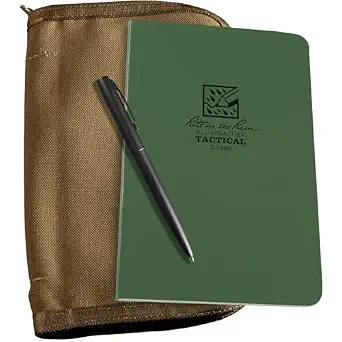
This tactical field kit includes a weatherproof notebook and pen, all housed in a durable CORDURA fabric cover. Designed for outdoor use, it is ideal for fieldwork and rugged environments.
Pros:
- Weatherproof and durable for outdoor use
- Compact size suitable for fieldwork
- Includes both a notebook and pen
Cons:
- Limited product details provided
- No information on page count or paper type
- Design may be bulky for some users
Best for: Fieldworkers who want a notebook kit for outdoor observations
Not ideal for: Those who need a specific page format without confirming the listing
Bottom line: Choose this kit after checking its contents, dimensions, and suitability for your field notes.
Handheld Microscope
A handheld microscope can help learners inspect small features during an outdoor activity without relying only on unaided eyesight. The MatataStudio MX2-AS Handheld Digital Microscope for Kids is the named pick. Before choosing it, consider who will operate it and what kinds of observations the activity requires. Ease of handling is especially relevant when several students will take turns or when the tool will be used outside a classroom.
Do not assume a product name answers every practical question. Check the listing for magnification details, power and connection requirements, included accessories, and device compatibility. Those details affect whether the microscope fits your lesson and the equipment already available. Consider whether the intended users can hold it steadily and manage its controls, and how it will be transported between observation spots. Check compatibility before buying, especially if the activity depends on viewing or saving images on a particular device. Match the tool to the age group, supervision plan, and specimens you expect to examine, then confirm current product specifications.
What to look for:
- Verify magnification and viewing details in the listing.
- Check power, connection, and device requirements.
- Confirm what accessories are included.
- Consider handling and controls for the intended age group.
- Plan how the microscope will be carried and shared.
MatataStudio MX2-AS Handheld Digital Microscope for Kids

The MX2-AS is a portable digital microscope with handheld and stand modes, a 4.3-inch 1080p LCD screen, and 100x–1600x magnification. It offers adjustable lighting and color, USB-C and Wi-Fi connectivity, and a rechargeable battery rated for over three hours of use.
Pros:
- Handheld and stand modes support indoor and outdoor use.
- Large 4.3-inch 1080p screen with continuous 100x–1600x magnification.
- USB-C and Wi-Fi output allow viewing on compatible external devices.
- Includes slides, observation chambers, and other starter accessories.
Cons:
- The listed battery life is limited to over three hours per charge.
- External-device viewing requires compatible devices and the Matataxplore app.
Best for: Learners who want a handheld digital microscope for field activities
Not ideal for: Groups whose devices or activity needs do not match the listing specifications
Bottom line: Confirm the microscope’s requirements and handling details before making it part of a field lesson.
Pocket Magnifier
A pocket magnifier is a simple option for examining small details when a digital microscope is unnecessary or impractical. Because this checklist has no named product for the slot, choose based on the observation task and who will use it. Lens size and handling shape how comfortable it is to inspect an object, especially during a short outdoor lesson.
Common mistakes include overlooking the magnifier’s dimensions, assuming every model offers the same view, or buying one that is awkward for a learner to hold. Check the listing for lens specifications, overall size, grip or folding design, and any protective case. Think about whether students will examine objects one at a time or pass the tool around, and whether it needs to fit in a pocket or field kit. Match the magnifier to the activity’s level of detail and the user’s comfort. If the fieldwork calls for a stable image or digital capture, compare the task with the capabilities of the other observation tools on your checklist.
What to look for:
- Check lens specifications and viewing details.
- Choose a size that suits the users and field kit.
- Look for a grip or folding design that is easy to handle.
- Consider a protective case for transport.
- Match the magnifier to the detail required by the activity.
Soil Testing Kit
A soil testing kit can make soil analysis part of a fieldwork plan, giving learners a practical reason to collect and compare samples. The named pick is the MySoil Soil Test Kit, 12 Pack. Before choosing it, identify the number of samples or participants in your activity and the testing workflow you want students to follow. Sample planning helps determine whether the pack is suited to a single lesson or a broader project.
A frequent buying mistake is assuming the pack name describes every test, material, or step included. Read the current listing and instructions to confirm what the kit tests, how samples should be collected, and whether additional supplies or follow-up steps are required. Consider whether the process suits your learners’ ages and the time available, and plan how samples will be labeled so results stay connected to their collection locations. Check the workflow before class: testing requirements can affect what students need to bring and how you organize the activity. Keep collection and handling instructions aligned with your school or project guidance.
What to look for:
- Confirm which soil measures the kit covers.
- Check the instructions and sample requirements.
- Verify what materials are included in the pack.
- Plan sample labels and collection locations.
- Match the workflow to learners and available class time.
MySoil Soil Test Kit, 12 Pack

This kit includes 12 single-use soil sample kits for lawns, gardens, compost, houseplants, and other growing media. Mail samples to a professional lab for analysis of 13 plant-available nutrient levels, including nitrogen and pH; online results with tailored fertilizer recommendations are provided in 6–8 days.
Pros:
- Professional lab analysis measures 13 nutrient levels, including nitrogen and pH.
- Works with a wide range of soil types and growing scenarios.
- Includes prepaid mailing envelopes and tailored fertilizer recommendations.
Cons:
- Requires mailing soil samples to a lab and waiting 6–8 days for results.
- Each kit is single-use.
Best for: Groups organizing several soil samples for a field activity
Not ideal for: Users who need a particular test without confirming kit coverage
Bottom line: Review the included tests and sample workflow before building a lesson around the kit.
Weather Meter
A weather meter can support field activities that include observing local conditions. The named pick is the Kestrel 5700 Ballistics Weather Meter. Since product names alone do not establish which measurements, features, or operating requirements are included, start with the current listing and documentation. Measurement needs should drive the choice: identify the observations your activity requires before deciding whether this model fits.
One common mistake is selecting a specialized instrument without checking whether its functions align with a general science lesson. Review the listed measurements, operating instructions, power needs, and any device or accessory requirements. Consider who will take readings, whether the controls are appropriate for the intended users, and how the unit will be carried and protected outdoors. Check the full specifications and compare them with your lesson plan rather than relying on the product name. If students will compare readings across locations or times, decide in advance how readings will be recorded so the data can be interpreted consistently.
What to look for:
- Verify which weather measurements are available.
- Review operating instructions and power requirements.
- Check for required accessories or device compatibility.
- Consider controls and handling for the intended users.
- Plan a consistent method for recording readings.
Kestrel 5700 Ballistics Weather Meter

The Kestrel 5700 Ballistics Weather Meter provides accurate environmental measurements with a high-contrast, sunlight-readable display. It features a built-in ballistics calculator, data logging, and sensors for pressure, humidity, and temperature, all housed in a waterproof, drop-tested design.
Pros:
- Durable, waterproof design suitable for outdoor use
- Multiple sensors provide comprehensive environmental data
- Built-in ballistics calculator enhances shooting accuracy
- Data logging feature allows for trend analysis
Cons:
- Complex interface may require a learning curve
- Relatively high price for casual users
Best for: Field groups whose planned observations match the meter’s listed functions
Not ideal for: Beginners who need a simple instrument without checking its specialized features
Bottom line: Confirm the meter’s functions and operating requirements against your fieldwork plan.
Specimen Vials
Specimen vials can help keep small collected samples contained and organized during a field activity. No product is specified for this slot, so select vials according to the type and size of samples you expect to handle, along with your project’s collection rules. Sample fit matters: a container should suit the specimen without making labeling or transport difficult.
A common mistake is choosing containers before deciding how samples will be stored, labeled, and returned or disposed of. Check vial dimensions, closure style, materials, and whether labels can be attached and read. Consider whether students will carry individual samples or whether an instructor will manage a shared set. Confirm that the selected containers suit the sample and follow any relevant classroom, site, or collection guidance. Plan labeling first, including how each sample will be linked to its observation notes. For activities where collecting is not appropriate, use vials only with materials the lesson permits and leave specimens in place when required.
What to look for:
- Match vial dimensions to expected sample size.
- Check closure style and container material.
- Make sure labels can be attached and read clearly.
- Plan how samples will be assigned and transported.
- Follow site and classroom guidance for collecting specimens.
Build your checklist in a practical order: first decide what observations the activity requires, then choose a notebook and any tools for close-up viewing or measurements. Add the soil kit and specimen containers only when the lesson calls for those tasks. Let the field plan determine which items are essential, and check listing details before committing to a specific product.
Fieldwork works best when tools suit the people using them and the questions they are trying to answer. Keep the setup manageable, review handling and collection guidance with learners, and leave room to adapt as observations develop. A thoughtful checklist can help turn an outdoor session into a clear, engaging learning experience.