
This checklist is for students, teachers, and home learners putting together a science study setup. The picks cover protective eyewear, measurement, microscopy, glassware, anatomy, and a wall display, with one named product for each listed item except the anatomical model.

Prime made for students and young adults
- Fast, free delivery for dorm and study essentials
- Prime Video and Amazon Music included
- Member-only deals
Each section explains why the slot matters, what to check before choosing, and where the named pick may fit. The suggestions focus on intended use, fit, and compatibility so you can compare an item with your class activities or study space.
Use the list as a starting point, then check product details and any course or instructor requirements before buying. For equipment used in experiments, confirm that it suits the specific activity and that you know how to use and care for it.
Laboratory Safety Goggles
Protective eyewear belongs on the checklist whenever a class or study activity calls for it. The named pick is the 3M Chemical Splash/Impact Resistant Safety Goggle, 1 Pack. Its name identifies splash and impact resistance, but the right choice still depends on the activity and the guidance provided by the school, lab, or instructor. Read the product information to confirm it matches the hazards and use conditions you expect.
A common mistake is choosing goggles by appearance or assuming one pair will suit every wearer and task. Check how they sit on the face, whether the strap can be adjusted, and whether they work with any prescription eyewear or other protective equipment you use. A fit that shifts, pinches, or leaves gaps may make the goggles unsuitable for your needs. Confirm cleaning and storage directions, too, so the pair can be kept ready for the next activity.
Before adding this pick to your kit, compare its stated protections with your course requirements. Keep the activity instructions close at hand and ask the instructor if the required protection is unclear.
What to look for:
- Protection claims that match the planned activity and course guidance
- A secure, comfortable fit for the intended wearer
- Compatibility with prescription eyewear or other protective equipment
- Clear care, cleaning, and storage directions
3M Chemical Splash/Impact Resistant Safety Goggle, 1 Pack
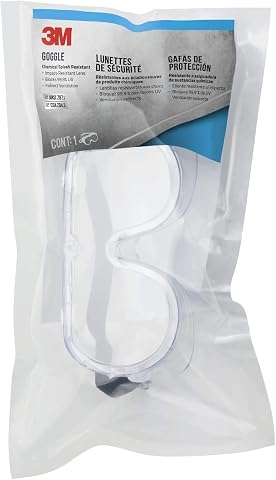
These safety goggles from 3M provide impact and splash protection with a polycarbonate lens and comfortable elastic headband. Designed to fit over most prescription eyewear, they feature vents to reduce fogging and meet ANSI Z87.1-2003 standards, making them suitable for various workplace tasks.
Pros:
- Provides impact and splash protection with durable polycarbonate lenses
- Comfortable elastic headband ensures a secure fit
- Vents help reduce fogging for clear vision during use
- Fits over most prescription glasses
Cons:
- No adjustable temple; may not fit all head sizes comfortably
- Limited color options available
Best for: Learners whose activities call for splash- and impact-resistant goggles
Not ideal for: Anyone whose required protection or fit needs are not confirmed
Bottom line: Choose these goggles only after checking their stated protection and fit against the activity requirements.
Digital Pocket Scale
A digital pocket scale can fill a measurement slot in a study kit when an activity calls for weighing. The listed pick is the RCBS Pocket Digital Scale 1500 Grain; the product name supplies its stated grain capacity. Before choosing it, check whether the unit of measurement, capacity, and precision described in the product details align with the task. A scale intended for one kind of measurement may not be suitable for another.
One common buying mistake is focusing only on the maximum capacity while overlooking the unit and readability needed for a particular assignment. Check how the scale is powered, what surface it should sit on, and whether its operating instructions explain setup and calibration. Also confirm the display and controls are practical for the environment where you plan to use it. Do not assume the word “pocket” guarantees a particular size or handling experience; verify dimensions and included accessories in the listing.
For schoolwork, follow the instructor’s directions about measurement tools and units. Keep the scale level, use it as directed, and record results consistently. The key is task compatibility: confirm that the scale’s specifications serve the activity before relying on it.
What to look for:
- Capacity and units that match the assignment
- Readability or precision appropriate to the task
- Power requirements and setup instructions
- Dimensions and included accessories in the product details
- Any course-specific requirements for measurement tools
RCBS Pocket Digital Scale 1500 Grain
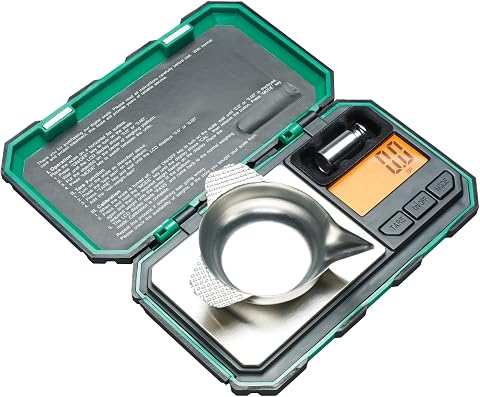
This compact digital scale has a 1500 grain capacity, ideal for weighing powder charges, bullets, and components. It provides 0.1 grain accuracy and includes a powder pan, check weight, and batteries, making it ready to use out of the box.
Pros:
- Compact and portable design
- High precision with 0.1 grain readability
- Includes necessary accessories and batteries
Cons:
- Limited to 1500 grains capacity, may not suit larger weighing needs
Best for: Tasks that match the scale’s stated capacity and units
Not ideal for: Assignments requiring specifications the listing does not confirm
Bottom line: Verify units, capacity, and operating details before using this scale for coursework.
Student Compound Microscope
A microscope can support close observation when a lesson involves viewing specimens. The named option is the PalliPartners 40X-2000X Biological Compound Trinocular Microscope. Those terms appear in the product name; check the listing for the features and included components that matter to your course. In particular, confirm whether the microscope’s stated magnification range and viewing arrangement match the work you expect to do.
A common mistake is to choose by the largest magnification number alone. Consider the objectives, eyepieces, focusing controls, illumination, stage, and any accessories described in the product details, then compare them with instructor guidance. Also consider the available desk space and how the microscope will be stored and transported. “Trinocular” is part of this product’s name, but you should verify what that means for the actual configuration and whether any camera or adapter is included before assuming it supports a particular setup.
Check compatibility with the specimens, slides, and observation methods used in your class. If the course requires a specific instrument or accessory, use that requirement as your guide. Careful comparison helps avoid a mismatch between the microscope’s listed configuration and the activities you plan to complete.
What to look for:
- A magnification range suitable for the course activities
- Details about objectives, eyepieces, stage, focus, and illumination
- What the trinocular configuration includes or supports
- Included accessories and any separately required items
- Storage needs and compatibility with the intended workspace
PalliPartners 40X-2000X Biological Compound Trinocular Microscope

This biological compound trinocular microscope offers a 40x to 2000x magnification range for home science, classroom teaching, and basic laboratory use. It features a double-layer stage, dual LED illumination, and coarse and fine focus knobs for clear specimen viewing.
Pros:
- Wide 40x-2000x magnification range for varied observation needs
- Dual LED illumination supports transparent and non-transparent specimens
- Coarse and fine focus knobs allow precise image adjustment
- Trinocular head enables camera connection and shared viewing
Cons:
- May be too advanced for very young children without supervision
- High-magnification viewing may require careful slide preparation and focusing
- Additional imaging device may be needed for documentation
Best for: Learners whose course needs align with its listed configuration
Not ideal for: Anyone needing unconfirmed accessories or a required specific setup
Bottom line: Compare the full configuration and included components with course requirements before choosing.
Glass Beaker Set
Beakers are useful checklist items when a class activity calls for lab glassware. The named pick is the Frienda 20 Pcs Lab Glassware Beaker Set – 50/100/250/500/1000ml. Its name states a 20-piece set and lists five sizes; check the product details to confirm the pieces, quantities, and capacities included. Match those details to the experiments or demonstrations you are expected to carry out.
A frequent mistake is treating a set as automatically appropriate for every lab. The activity may specify a particular capacity, material, or piece count, and an assortment may not cover every requirement. Confirm that the listing describes the glassware and its intended use, and ask your instructor whether it suits the planned activity. Consider where the pieces will be stored and how they will be handled; check care directions and any cautions supplied with the product.
For student use, follow lab procedures for handling and cleaning glassware, and avoid substituting a different vessel when instructions call for a specific one. Verify the size range and set contents before purchase, especially if you need matching pieces or a precise quantity for a group activity.
What to look for:
- Set contents and quantities for each listed size
- Capacities that match the activity instructions
- Material and intended-use details in the listing
- Care and handling directions
- Storage space and any instructor requirements
Frienda 20 Pcs Lab Glassware Beaker Set – 50/100/250/500/1000ml
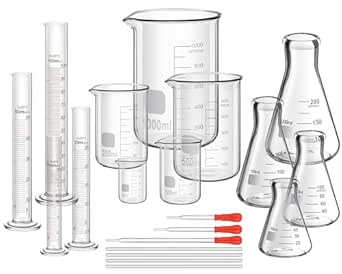
This set includes 20 pieces of laboratory glassware such as beakers, graduated cylinders, stirring rods, and droppers made of durable borosilicate glass. Designed for precise measurements and easy pouring, suitable for laboratory experiments and science projects.
Pros:
- Complete set with various sizes for different experiments
- Made of durable, acid and alkali resistant borosilicate glass
- Clear scales and tapered gates for easy measurement and pouring
Cons:
- No storage container included
- Some users may find the sizes too small for larger experiments
Best for: Activities that call for capacities listed in the set name
Not ideal for: Tasks needing a specific piece or quantity not confirmed in the listing
Bottom line: Check the included pieces and course requirements before relying on this beaker set.
Anatomical Model
No product is named for this slot, so treat it as a selection guide rather than a specific recommendation. An anatomical model can make a study topic easier to revisit when its subject and level of detail fit the course. Start by identifying the body system, structure, or lesson your class covers, then compare that need with the model’s description. Prioritize course alignment over a general impression that a model looks comprehensive.
A common mistake is selecting a model before checking its scale, labeling, or included parts. Review the product information for dimensions, assembly needs, labels, detachable components, and any accompanying guide. Think about who will use it and where it will be displayed or stored. If it is for a classroom group, consider whether learners can view the relevant details from the intended positions. Confirm the terminology and level of detail with course materials when accuracy matters for an assignment.
Use instructor recommendations and required vocabulary to narrow the options. If the model is meant to support a particular unit, make sure its represented structures are the ones students need to recognize. A well-matched model can serve as a visual study aid, while a mismatch may leave key topics unrepresented.
What to look for:
- A subject and level of detail that match the course
- Dimensions and scale suited to the intended space
- Clear labels and terminology that match class materials
- Assembly, detachable-part, and guide details
- A viewing setup practical for the intended learners
Periodic Table Wall Chart
A wall display can keep a study reference visible in a classroom or home workspace. The listed pick is the Oliver Gal ‘Periodic Table’ Black Abstract Wall Art Print, 24 x 16 inc. Its name describes a periodic-table-themed art print and gives dimensions as written in the listing. Before treating it as a study reference, inspect the product images and details to confirm that the table information is present and legible.
A common mistake is assuming that a decorative print is a complete or readable reference chart. Check whether element names, symbols, or other information are visible at the distance from which students will view it. Confirm the dimensions and orientation against the available wall space, and review whether the product is a print only or includes any mounting materials. Those details help set expectations for placement and installation.
For study use, compare the content with a trusted course reference, especially if students will rely on it to look up information. If the print is primarily decorative, pair it with the class’s required reference source. The useful distinction is display versus reference: verify legibility and content before assigning it either role.
What to look for:
- Whether the print contains a complete table or decorative imagery
- Legibility of symbols and labels at the intended viewing distance
- Dimensions and orientation suited to the wall
- Whether mounting materials are included
- Consistency with the reference information used in class
Oliver Gal ‘Periodic Table’ Black Abstract Wall Art Print, 24 x 16 inches

This educational wall art features a vibrant, abstract design inspired by the periodic table, crafted on acid-free textured canvas. Made in the US by professional artists, it arrives ready to hang and enhances any office or home decor with sophistication and color vibrancy.
Pros:
- Vivid, ultra-sharp colors with museum-quality print
- Ready to hang with all necessary hardware included
- Eco-friendly materials and sustainable framing
Cons:
- Limited to a specific abstract and educational theme
- May be too large for small spaces
Best for: Spaces seeking periodic-table-themed wall art
Not ideal for: Students needing a confirmed, legible reference chart
Bottom line: Check the print’s content and readability before using it as a periodic table reference.
Build the kit in the order your coursework needs it: first confirm required protective equipment, then prioritize the measurement tools, microscope, or glassware tied to upcoming activities. Add an anatomical model or wall display when it supports a specific lesson or study space. This course-first order helps keep each choice connected to actual use.
Check specifications, fit, included parts, and instructor guidance before settling on a pick. A checklist is most useful when it reflects your classes and workspace, so adjust it as those needs change. Start with the next activity on your schedule and add items one practical step at a time.
Evergreen bestsellers Picks
bestsellers
As an affiliate, we earn on qualifying purchases.