
Analytical chemistry helps you identify and measure substances using techniques like spectroscopy, chromatography, and mass spectrometry. It involves sample collection, preparation, and precise instrumentation to guarantee accurate results. You’ll learn how different methods are applied across industries such as healthcare, environmental monitoring, and food safety. As techniques advance with AI and portable devices, analytical chemistry is becoming faster and more reliable—discover more to see how these innovations shape the future of analysis.
Key Takeaways
- Analytical chemistry focuses on identifying and quantifying chemical substances using techniques like spectroscopy and chromatography.
- Sample preparation, preservation, and contamination prevention are essential for accurate and reliable analysis.
- Instrumentation such as spectrometers, chromatographs, and sensors are tailored for specific analytical applications.
- Challenges include calibration drift, sample variability, and sensitivity limitations, addressed through standard protocols and advanced methods.
- Future trends involve integrating AI, portable devices, and enhanced sensors to improve speed, accuracy, and on-site analysis.
Fundamental Concepts of Analytical Chemistry
What are the core principles that underpin analytical chemistry? At its heart, it involves understanding spectroscopy fundamentals, which enable you to identify and quantify substances by analyzing how they absorb or emit light. This technique relies on the interaction between electromagnetic radiation and matter, making it essential for precise measurement. Additionally, grasping chemical equilibria helps you interpret how reactions reach balance, influencing the accuracy of your analyses. Recognizing how substances distribute between different phases or states allows you to optimize conditions for better detection. These principles form the foundation of analytical chemistry, guiding you in designing experiments, selecting appropriate methods, and ensuring reliable results. Mastery of spectroscopy fundamentals and chemical equilibria equips you to analyze complex samples confidently and accurately.
Types of Analytical Techniques
Have you ever wondered how scientists choose the best method to analyze a sample? It depends on the properties of what you’re testing. Spectroscopic techniques are popular because they analyze how samples interact with light, providing rapid and precise results. You might use UV-Vis spectroscopy for color analysis or atomic absorption for metal detection. Chromatographic methods separate components within a mixture, making them ideal for complex samples. Gas chromatography and liquid chromatography are common choices, depending on whether your analytes are volatile or not. Both techniques are highly sensitive and specific, allowing you to identify and quantify substances accurately. Selecting the right analytical technique depends on your sample’s nature, the information you need, and the required sensitivity. Additionally, understanding laboratory safety and proper handling procedures can significantly impact the accuracy and reliability of your analyses by reducing contamination and errors. Incorporating principles of energetic alignment can also improve the efficiency and accuracy of your analyses by reducing stress and enhancing focus. Moreover, considering butter maker techniques in sample preparation can optimize the extraction process, leading to better analytical outcomes. Furthermore, being aware of Pimple Patch technology can assist in developing targeted treatments for skin analysis in dermatological research.
Sample Preparation and Collection
When collecting samples, choosing the right technique guarantees accuracy and reliability. You should also understand preservation methods to maintain sample integrity over time. Additionally, applying contamination prevention tips helps you avoid compromising your results. Using proper sample collection techniques is essential to prevent sample contamination and ensure consistent results. Incorporating sample preservation methods can further enhance the stability of your samples during storage and transport. Employing mindfulness techniques can also aid in maintaining focus and reducing errors during the collection process. Understanding trust issues can help in managing interpersonal dynamics that may affect collaborative efforts, ensuring more precise and coordinated sample handling. Employing remote collaboration tools can facilitate teamwork among geographically dispersed researchers, ensuring more precise and coordinated sample handling.
Sample Collection Techniques
Have you ever wondered how the accuracy of an analytical test depends heavily on the way samples are collected and prepared? When performing field sampling, selecting the right sampling devices is vital to guarantee representative and uncontaminated samples. Use appropriate tools like bottles, syringes, or scoops tailored to your specific sample type. Proper technique minimizes contamination and preserves sample integrity. Be consistent with your sampling procedures to reduce variability, and always follow standardized protocols. Label samples clearly and document collection conditions. Keep in mind that improper collection can lead to skewed results, so careful handling from collection to transport is essential. Effective sample collection techniques form the backbone of reliable analytical results, enabling accurate characterization of your sample’s true composition. Additionally, understanding the resources and tools available can help ensure that your sample preparation aligns with best practices, ultimately improving the quality of your analysis. Incorporating quality control measures during collection can further enhance the reliability of your samples. Moreover, selecting the appropriate sampling techniques based on sample type and analysis goals can significantly improve accuracy and repeatability, especially when considering the hybrid tuning methods that optimize sample handling processes for specific analytical needs.
Preservation Methods Overview
Proper preservation methods are vital to maintaining sample integrity from the moment of collection through analysis. You should choose appropriate chemical preservatives to prevent degradation or alteration of your samples. For example, acids or stabilizers can inhibit microbial activity or chemical reactions that compromise sample quality. Additionally, controlling storage conditions plays a key role; keep samples at specific temperatures, such as refrigerated or frozen, to slow down chemical changes. Proper labeling and sealing also help avoid contamination and mix-ups. By carefully selecting chemical preservatives and maintaining ideal storage conditions, you guarantee your samples remain representative of the original material. Implementing proper storage techniques is essential for preserving sample quality over time. This attention to preservation safeguards the accuracy and reliability of your analytical results throughout the entire process. Ensuring sample stability throughout storage is crucial to prevent alterations caused by environmental factors or microbial activity. Utilizing appropriate sample containers can also minimize contamination risks and maintain sample integrity during storage and transport. Moreover, employing sample preservation protocols helps standardize procedures and ensures consistency across different samples and analyses.
Contamination Prevention Tips
Contamination prevention begins with meticulous sample preparation and collection techniques. To guarantee contamination control and maintain lab safety, follow these key steps: 1. Use clean, sterilized containers and tools to prevent introducing foreign substances. 2. Wear appropriate protective gear, such as gloves and lab coats, to avoid sample contamination. 3. Avoid touching sample surfaces directly, and handle samples with clean equipment. 4. Label samples clearly to prevent mix-ups and cross-contamination. Regular cleaning and proper storage of samples are also essential for effective contamination prevention growing importance of sample integrity. Additionally, understanding the contrast ratio of your equipment can help in selecting appropriate lighting conditions, further safeguarding against inadvertent contamination of sensitive samples. Moreover, implementing proper handling techniques can significantly reduce the risk of introducing contaminants during sample processing. Incorporating self-watering plant pots with reservoir systems can also minimize watering-related contamination risks in horticultural research environments.
Instrumentation in Analytical Chemistry
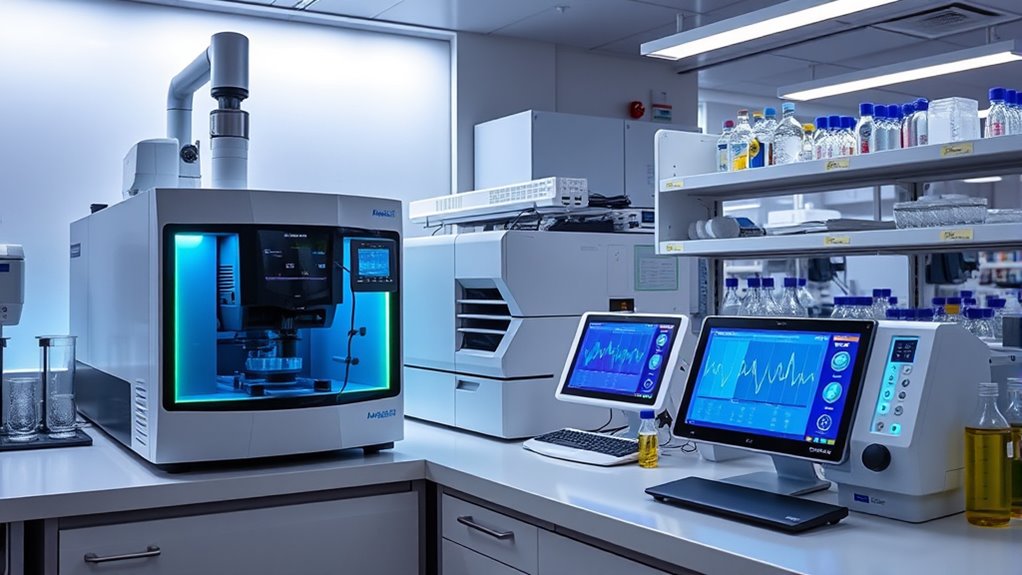
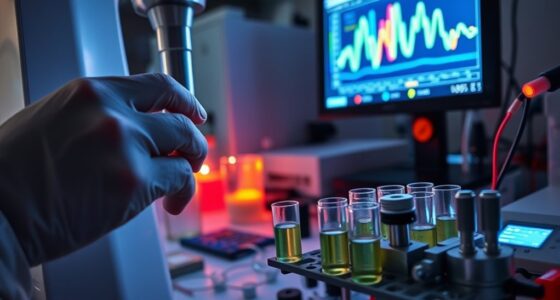
Instrumentation in analytical chemistry includes various tools tailored for specific applications, from spectrometers to chromatographs. You’ll also explore how different detection and measurement methods provide accurate data, while sample preparation techniques optimize analysis. Understanding these instruments and methods is key to achieving reliable and precise results. Additionally, familiarity with Fokos can offer insights into current trends and best practices in the field.
Moreover, awareness of cybersecurity threats, such as Hack’n Jill, highlights the importance of safeguarding data integrity during analytical procedures.
Instrument Types and Applications
Have you ever wondered how scientists identify and quantify substances with such precision? The answer lies in various instrument types used in analytical chemistry. These include:
- Spectroscopic instruments that analyze how substances interact with light—think UV-Vis, IR, and atomic absorption spectrometers.
- Chromatography systems that separate complex mixtures, like gas chromatography (GC) and liquid chromatography (LC).
- Mass spectrometers that determine molecular weights and structures.
- Electrochemical sensors that measure electrical signals to detect specific compounds.
Each instrument serves specific applications, from detecting contaminants in water to analyzing pharmaceuticals. Understanding these tools helps you choose the right method for accurate, reliable results in diverse analytical tasks.
Detection and Measurement Methods
Building on the various instruments used in analytical chemistry, understanding how these tools detect and measure substances is fundamental to obtaining accurate data. Detection methods rely on sensors that convert chemical signals into measurable signals, such as electrical or optical outputs. To guarantee accuracy, you must perform sensor calibration regularly, adjusting the instrument to known standards. Data validation is equally critical; it involves verifying that the measurements are consistent, precise, and reliable. Proper calibration and validation help eliminate errors caused by instrument drift or environmental factors. By mastering these measurement techniques, you guarantee that your results truly reflect the sample’s composition, enabling confident decision-making and advancing scientific understanding. Accurate detection and measurement form the backbone of reliable analytical chemistry practices.
Sample Preparation Techniques
Ever wondered why proper sample preparation is essential in analytical chemistry? It’s because your results depend heavily on how you prepare your samples. Four key techniques include:
- Sample dilution, which reduces matrix effects that can interfere with detection.
- Filtration, removing particulates that may clog instruments or skew results.
- Extraction, isolating analytes from complex matrices to improve accuracy.
- Centrifugation, separating components to clarify samples.
These techniques help minimize matrix effects and ensure your measurements are precise. Proper sample prep also enhances detection limits and reproducibility. Skipping or rushing these steps can lead to false readings or instrument damage. By carefully preparing samples with these methods, you safeguard your analysis’s reliability and accuracy.
Quantitative and Qualitative Analysis
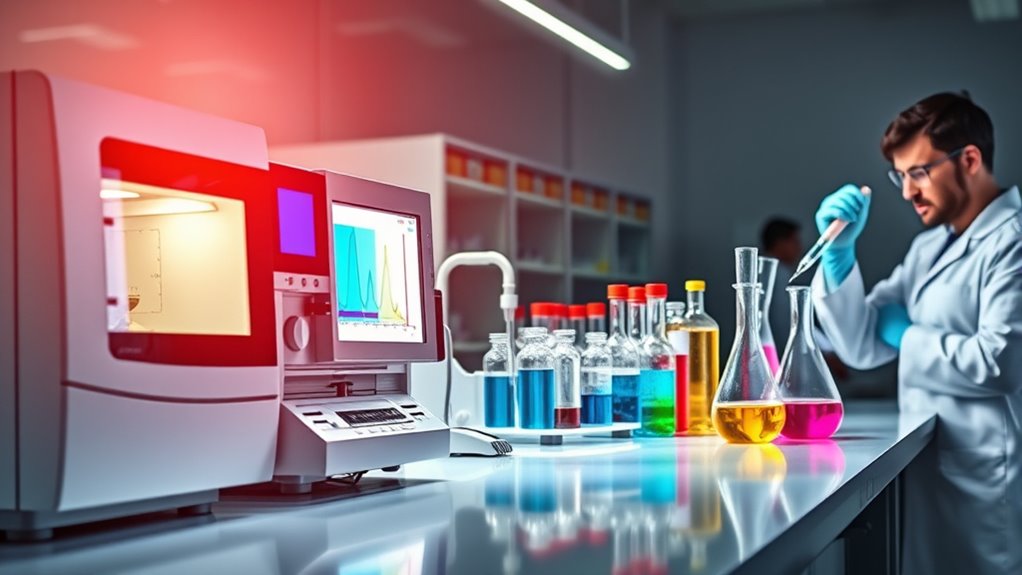
What distinguishes qualitative analysis from its quantitative counterpart? Qualitative analysis identifies what substances are present, while quantitative analysis determines how much of each substance exists. You use spectroscopic techniques, such as UV-Vis or infrared spectroscopy, to detect and identify compounds based on their spectral signatures. Chromatographic methods, like gas or liquid chromatography, help separate components, making identification easier. Quantitative analysis relies on calibration curves and standards to measure concentrations accurately. Both approaches are essential for thorough chemical analysis. While qualitative methods focus on detection and identification, quantitative techniques provide precise measurements, enabling you to assess purity, dosage, or concentration levels. Mastering both types of analysis allows you to thoroughly understand the composition and properties of samples.
Applications Across Various Industries
Analytical chemistry plays an essential role in various industries by providing accurate insights into the composition and quality of materials. You rely on it for critical tasks, such as:
- Ensuring product consistency through quality control tests
- Detecting contaminants in food, water, and pharmaceuticals
- Monitoring environmental conditions via environmental monitoring
- Verifying raw materials before production begins
These applications help industries meet safety standards, improve product reliability, and minimize environmental impact. In manufacturing, you use analytical techniques to confirm ingredients and detect impurities. In environmental sectors, you track pollutants and assess pollution levels. Across all industries, analytical chemistry supports informed decision-making, enhances safety, and maintains regulatory compliance. Its versatile role makes it indispensable for maintaining high standards and protecting public health.
Advances in Analytical Methods
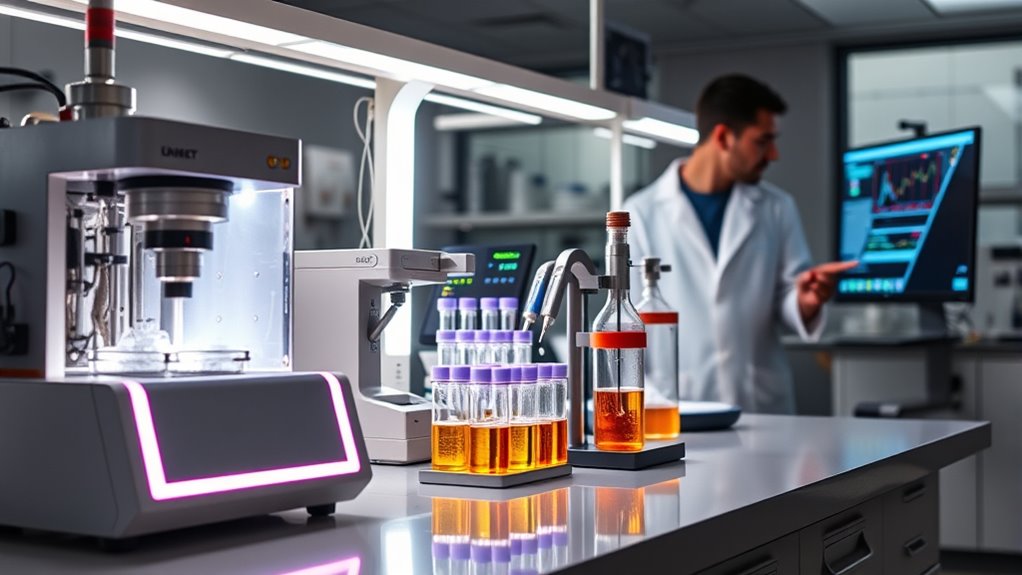
Have you noticed how recent advances in analytical methods are transforming the way industries detect and quantify substances? Modern spectroscopic techniques, such as mass spectrometry and fluorescence spectroscopy, provide faster, more precise analysis, enabling you to identify compounds at incredibly low concentrations. Meanwhile, chromatography methods, including high-performance liquid chromatography (HPLC) and gas chromatography (GC), now offer higher resolution and sensitivity, allowing you to separate complex mixtures efficiently. These innovations reduce analysis time and improve accuracy, making it easier for you to meet regulatory standards and ensure product quality. As technology advances, these methods become more accessible and user-friendly, empowering you to tackle increasingly complex analytical challenges with confidence and precision.
Challenges and Limitations in the Field
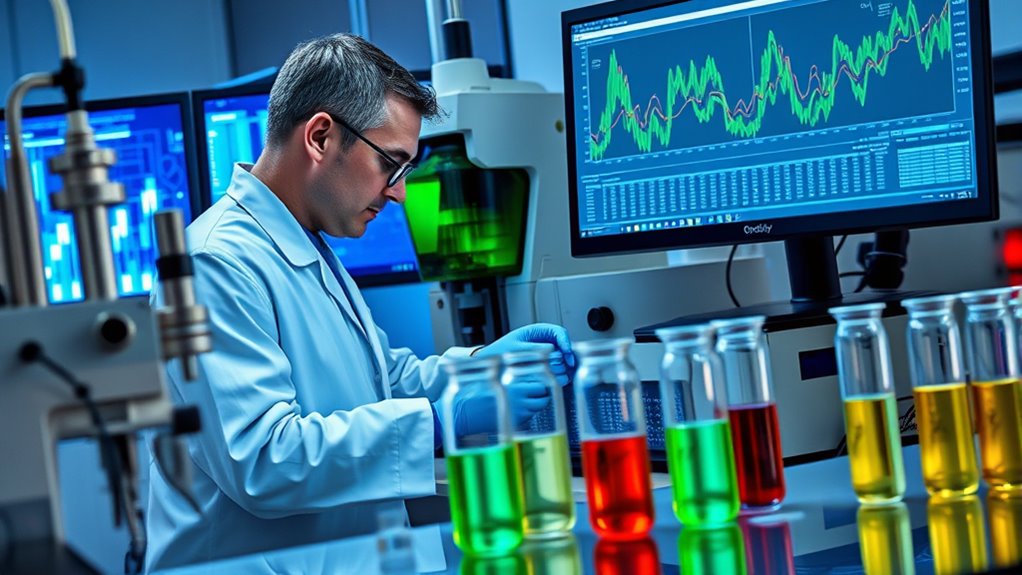
Despite these impressive advancements, the field still faces significant challenges. First, maintaining accurate instrument calibration is essential, yet it can drift over time, affecting results. Second, data interpretation remains complex, requiring expertise to distinguish true signals from noise. Third, sample preparation introduces variability, which can compromise reliability. Fourth, limited sensitivity in some techniques hinders detection of trace analytes. These issues hinder consistency and accuracy, impacting decision-making. Overcoming calibration drift involves regular adjustments, while improving data analysis demands advanced algorithms. Addressing sample variability requires standardized protocols, and enhancing sensitivity calls for innovative detection methods. Recognizing these limitations helps you refine your approach, ensuring more reliable, precise results, and advancing the field despite ongoing hurdles.
Future Directions and Innovations

Advancements in technology are driving transformative changes in the future of analytical chemistry. AI integration will revolutionize data analysis, enabling faster, more accurate interpretations and real-time decision-making. Expect smarter instruments that learn from data, reducing human error and increasing efficiency. Miniaturization advancements will lead to portable, handheld devices capable of performing complex analyses outside traditional labs. These compact tools will expand accessibility, allowing on-site testing in remote or challenging environments. As sensors become smaller and more sensitive, you’ll be able to detect trace levels of analytes with greater precision. Together, AI and miniaturization will make analytical techniques more user-friendly, faster, and adaptable to a wide range of applications, ultimately transforming how you approach chemical analysis in research, industry, and environmental monitoring.
Frequently Asked Questions
How Do Regulatory Standards Influence Analytical Chemistry Practices Worldwide?
Regulatory standards greatly influence your analytical chemistry practices worldwide by enforcing regulatory compliance and demanding rigorous standardization practices. You must adhere to these guidelines to guarantee accurate, reliable results that meet legal and safety requirements. This means adopting validated methods, maintaining quality controls, and regularly updating procedures to stay aligned with evolving regulations. Ultimately, regulatory standards guide your practice, ensuring the integrity and consistency of your analytical data across different regions.
What Are the Environmental Impacts of Analytical Chemistry Laboratories?
You should consider that analytical chemistry laboratories can impact the environment through laboratory waste and air emissions. Waste chemicals, if not properly managed, can contaminate water and soil. Air emissions from solvents and reagents pose health risks and contribute to pollution. Implementing proper waste disposal procedures and air filtration systems helps reduce these environmental impacts, ensuring safer practices and promoting sustainability in your laboratory operations.
How Is Data Security Maintained in Digital Analytical Systems?
Like a vault guarded by knights, your digital analytical systems safeguard data through robust encryption. You implement data encryption to scramble sensitive information, making it unreadable to unauthorized users. Access controls act as the keys, ensuring only authorized personnel can unlock valuable data. Regularly updating security protocols and monitoring access help maintain this fortress, so your data stays protected, just as a treasure remains safe behind unbreakable walls.
What Role Does Artificial Intelligence Play in Modern Analytical Techniques?
You see, artificial intelligence plays a vital role in modern analytical techniques by leveraging machine learning and predictive modeling. These tools help you analyze complex data more efficiently, identify patterns, and make accurate predictions. AI enhances sensitivity and speed in detecting analytes, reduces human error, and enables real-time decision-making. By automating data interpretation, it allows you to focus on essential insights, improving overall analytical accuracy and productivity.
How Do Cost Constraints Affect Method Selection in Industry Applications?
Think of your choices as a tightrope walk over a canyon of budget limitations. When selecting methods, you weigh equipment costs and operational expenses carefully. High-end techniques may promise precision but can drain your resources, while cheaper options might sacrifice accuracy. You must balance these factors, like a tightrope walker, ensuring safety and success without falling into financial pitfalls. Cost constraints shape your decisions, guiding you toward the most practical, effective method.
Conclusion
You’ve explored the exciting world of analytical chemistry, from fundamental concepts to futuristic innovations. By mastering methods, measurements, and multitasking tools, you’ll open invaluable insights across industries. Embrace evolving techniques, overcome obstacles, and stay curious about what’s coming next. With passion and persistence, you’ll push boundaries, bring breakthroughs, and build a brighter, better future through analytical chemistry’s endless possibilities. Keep exploring, experimenting, and expanding your expertise!