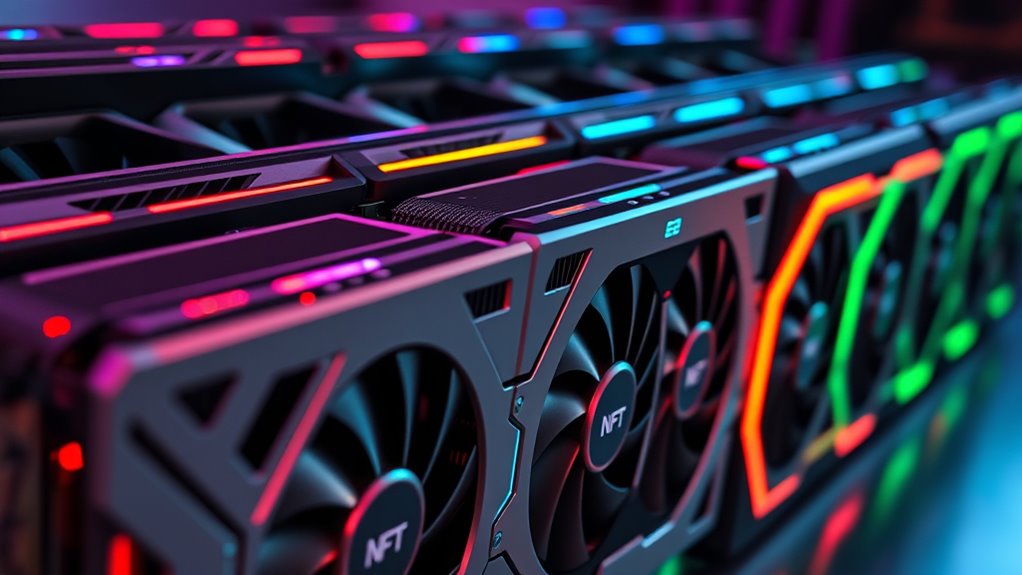

Choosing a premium graphics card for a gaming rig in 2026 means balancing raw performance, features, and price. The NVIDIA GeForce RTX 5080 Founders Edition stands out as the best overall, offering cutting-edge capabilities for demanding titles. For those prioritizing value, the ASUS TUF Gaming GeForce RTX 5070 provides strong performance without breaking the bank. Meanwhile, the GIGABYTE Radeon RX 9070 XT Gaming OC excels for AMD enthusiasts seeking high-end gaming power. Each option represents different tradeoffs between cost, performance, and features. Continue reading for a detailed comparison to find the perfect fit for your gaming rig.

Prime made for students and young adults
- Fast, free delivery for dorm and study essentials
- Prime Video and Amazon Music included
- Member-only deals
Key Takeaways
- The latest NVIDIA RTX 5080 series dominates in raw power, but comes with a higher price tag.
- AMD’s Radeon RX 9070 XT offers competitive performance and tends to be more budget-friendly in the high-end segment.
- Many premium cards now emphasize cooling and noise reduction, which can impact case compatibility and acoustics.
- VRAM size and type remain critical; 16GB GDDR7 is becoming standard for high-resolution, demanding gaming.
- Price-to-performance ratios vary significantly, making careful consideration of features versus cost essential.
| NVIDIA GeForce RTX 5080 Founders Edition |  | Best Overall for Cutting-Edge Performance | Architecture: Blackwell | Ray Tracing: Full Ray Tracing | DLSS: 4 | VIEW ON AMAZON | See Our Full Breakdown |
| GIGABYTE Radeon RX 9070 XT Gaming OC 16G Graphics Card |  | Best Value for High-Performance Gaming | GPU Model: Radeon RX 9070 XT | Memory: 16GB GDDR6 | Interface: PCIe 5.0 | VIEW ON AMAZON | See Our Full Breakdown |
| ASUS TUF Gaming GeForce RTX 5080 16GB GDDR7 OC Edition Graphics Card |  | Best for Durability and Overclocking Enthusiasts | Memory: 16GB GDDR7 | Architecture: NVIDIA Blackwell | Boost Clock: 2730 MHz | VIEW ON AMAZON | See Our Full Breakdown |
| NVIDIA GeForce RTX 3090 Founders Edition Graphics Card |  | Best for High-Resolution and Professional Workloads | Chipset: NVIDIA GeForce RTX 3090 | Video Memory: 24GB GDDR6X | Memory Interface: 384-bit | VIEW ON AMAZON | See Our Full Breakdown |
| ASUS ROG Strix NVIDIA GeForce RTX 5070 Ti 16GB GDDR7 OC Edition Gaming Graphics Card |  | Best for Overclockers and Quiet Operation | GPU Model: RTX 5070 Ti | Memory: 16GB GDDR7 | OC Mode: 2625 MHz | VIEW ON AMAZON | See Our Full Breakdown |
| NVIDIA GeForce GTX 960 4GB Graphics Card |  | Best Budget-Friendly Entry for 1080p Gaming and Multimedia | Graphics Coprocessor: NVIDIA GeForce GTX 960 | Memory: 4 GB GDDR5 | GPU Clock Speed: 1152 MHz | VIEW ON AMAZON | See Our Full Breakdown |
| ASUS Prime Radeon RX 9070 XT 16GB GDDR6 OC Edition Gaming Graphics Card |  | Best for Overclockers and Customization Enthusiasts | Memory: 16GB GDDR6 | GPU Model: Radeon RX 9070 XT | Cooling Technology: Axial-tech fans, phase-change thermal pad | VIEW ON AMAZON | See Our Full Breakdown |
| ASUS TUF Gaming GeForce RTX 5070 12GB GDDR7 OC Edition Graphics Card |  | Best for Durability and High-Performance Gaming | GPU Architecture: NVIDIA Blackwell | Memory: 12GB GDDR7 | Boost Clock: 2640MHz | VIEW ON AMAZON | See Our Full Breakdown |
| GIGABYTE GeForce RTX 5080 Gaming OC 16G Graphics Card |  | Best for Raw Power and High-Resolution Gaming | Graphics Coprocessor: NVIDIA GeForce RTX 5080 | Memory: 16 GB GDDR7 | GPU Clock Speed: 2.73 GHz | VIEW ON AMAZON | See Our Full Breakdown |
| NVIDIA GeForce RTX 4080 16GB GDDR6X Graphics Card |  | Best for High-End Gamers and Creative Professionals | Memory: 16GB GDDR6X | Boost Clock: 2.51 GHz | CUDA Cores: 9728 | VIEW ON AMAZON | See Our Full Breakdown |
| ASUS Dual GeForce RTX 5060 Ti 16GB GDDR7 OC Edition Gaming Graphics Card |  | Best Overall for Compact High-Performance Gaming | Memory: 16GB GDDR7 | Architecture: NVIDIA Blackwell | Boost Clock: 2632 MHz (OC), 2602 MHz (Default) | VIEW ON AMAZON | See Our Full Breakdown |
| GIGABYTE GeForce RTX 5070 Ti Gaming OC 16G Graphics Card |  | Best for High-End Gaming and Creative Work | Memory: 16GB GDDR7 | Memory Interface: 256-bit | PCIe Version: 5.0 | VIEW ON AMAZON | See Our Full Breakdown |
| ASRock Radeon RX 9070 Challenger 16GB OC Graphics Card, RDNA 4, 2520MHz Boost, PCIe 5.0, Triple Fans, 0dB Silent, LED Indicator |  | Best for 1440p and 4K Gaming with Ray Tracing | Graphics Coprocessor: AMD Radeon RX 9070 | Memory: 16 GB | GPU Clock Speed: 2520 MHz | VIEW ON AMAZON | See Our Full Breakdown |
| premium graphics cards for gaming rig | Memory |
|---|---|
| NVIDIA GeForce RTX 5080 Founde | — |
| GIGABYTE Radeon RX 9070 XT Gam | 16GB GDDR6 |
| ASUS TUF Gaming GeForce RTX 50 | 16GB GDDR7 |
| NVIDIA GeForce RTX 3090 Founde | — |
| ASUS ROG Strix NVIDIA GeForce | 16GB GDDR7 |
| NVIDIA GeForce GTX 960 4GB Gra | 4 GB GDDR5 |
| ASUS Prime Radeon RX 9070 XT 1 | 16GB GDDR6 |
| ASUS TUF Gaming GeForce RTX 50 | 12GB GDDR7 |
| GIGABYTE GeForce RTX 5080 Gami | 16 GB GDDR7 |
| NVIDIA GeForce RTX 4080 16GB G | 16GB GDDR6X |
| ASUS Dual GeForce RTX 5060 Ti | 16GB GDDR7 |
| GIGABYTE GeForce RTX 5070 Ti G | 16GB GDDR7 |
| ASRock Radeon RX 9070 Challeng | 16 GB |
More Details on Our Top Picks
NVIDIA GeForce RTX 5080 Founders Edition
The NVIDIA GeForce RTX 5080 Founders Edition stands out for its advanced Blackwell architecture that balances gaming and creative workloads with high efficiency. Its support for full ray tracing and DLSS 4 delivers stunning visuals, while NVIDIA Reflex 2 minimizes latency for competitive gaming. Compared with the RTX 3090, it benefits from newer AI and rendering features, though it likely demands a higher power draw and cost. This card makes the most sense for enthusiasts who want top-tier performance and are willing to pay a premium for future-proof features, but those with limited budgets or smaller cases might find it less practical.
Pros:- State-of-the-art Blackwell architecture for versatile workloads
- Supports full ray tracing and DLSS 4 for stunning visuals
- Includes NVIDIA Reflex 2 for reduced latency
Cons:- High power consumption may necessitate a robust PSU
- Potentially steep price point for many users
Best for: Gamers and creators seeking the latest high-performance GPU with AI and ray tracing features
Not ideal for: Budget-conscious buyers or those with compact case setups due to high power and size requirements
- Architecture:Blackwell
- Ray Tracing:Full Ray Tracing
- DLSS:4
- Tensor Cores:Yes
- NVIDIA Reflex:2 with Frame Warp
- Power Consumption:High (implied)
Our verdict“This card is ideal for gamers and creators who want the newest tech and have the system to support it.”
GIGABYTE Radeon RX 9070 XT Gaming OC 16G Graphics Card
The GIGABYTE Radeon RX 9070 XT Gaming OC 16G offers impressive gaming power with 16GB of GDDR6 memory and PCIe 5.0 support. Its WINDFORCE cooling ensures thermal stability during extended play, and the RGB lighting adds a touch of style. Compared to the ASUS TUF RTX 5080, this card provides similar memory capacity but may fall short on some features like advanced ray tracing. Its main tradeoffs include limited detailed specs available and the need for a PCIe 5.0 slot, making it less suitable for older systems. This pick suits gamers who want a high-performance GPU without the premium price of the latest NVIDIA flagship, but it’s less ideal for those with older motherboards or limited power capacity.
Pros:- 16GB GDDR6 for demanding games and applications
- Effective WINDFORCE cooling system
- RGB lighting for customizable aesthetics
Cons:- Limited detailed specifications available publicly
- Requires PCIe 5.0 slot, not compatible with older motherboards
Best for: Gamers seeking high performance with ample VRAM on a modern PCIe 5.0 platform
Not ideal for: Users with older PCIe 4.0 systems or tighter power budgets, due to PCIe 5.0 and potential power draw
- GPU Model:Radeon RX 9070 XT
- Memory:16GB GDDR6
- Interface:PCIe 5.0
- Cooling System:WINDFORCE
- Lighting:RGB
Our verdict“This card offers excellent value for gamers with PCIe 5.0 systems looking for high VRAM capacity.”
ASUS TUF Gaming GeForce RTX 5080 16GB GDDR7 OC Edition Graphics Card
The ASUS TUF Gaming GeForce RTX 5080 OC Edition combines high-performance NVIDIA Blackwell architecture with durability, thanks to military-grade components. Its boost clock of 2730 MHz outperforms many standard models, and the inclusion of a GPU bracket offers extra stability during overclocking. Its size—348mm and 3.6 slots—makes it less suitable for smaller cases. Compared with the ASUS RTX 5070 Ti, the 5080 OC provides more raw power but at a significantly higher power requirement. This card is targeted at overclockers and users who want a durable, long-lasting GPU capable of intense gaming or creative tasks but must have a spacious case and a high-wattage power supply.
Pros:- Robust military-grade components for longevity
- High boost clock of 2730 MHz for extra performance
- Effective cooling with axial-tech fans and fin array
Cons:- Requires a high-wattage 850W PSU
- Size may not fit smaller or compact cases
Best for: Enthusiasts who want a durable, overclockable GPU with premium build quality
Not ideal for: Small case owners or budget-conscious buyers due to its large size and high power needs
- Memory:16GB GDDR7
- Architecture:NVIDIA Blackwell
- Boost Clock:2730 MHz
- System Requirements:850W PSU, 16-pin 12V-2×6 connector
- Dimensions:348mm length, 3.6 slots
Our verdict“Ideal for overclockers and durability-focused users with spacious builds willing to invest in premium components.”
NVIDIA GeForce RTX 3090 Founders Edition Graphics Card
The NVIDIA GeForce RTX 3090 Founders Edition remains a flagship for demanding gamers and professionals, offering 24GB of GDDR6X memory that excels in high-resolution gaming and AI workloads. Its Ampere architecture pushes ray tracing and AI capabilities forward, making it a go-to for 8K gaming or creative professionals. Compared with the RTX 5080, it provides a larger VRAM buffer but might lag slightly in newer ray tracing features. The tradeoffs include high power consumption and a size that needs ample space, making it less suitable for smaller or more budget-oriented systems. This card is best suited for users who need maximum memory and performance for specialized tasks and have a spacious, well-cooled case.
Pros:- Exceptional 24GB GDDR6X memory for high-res and AI workloads
- Support for 7680×4320 resolution and advanced ray tracing
- Powered by the latest Ampere architecture for efficiency
Cons:- Very high power consumption requiring strong cooling solutions
- Expensive compared to mid-tier options
Best for: High-end gamers and creative professionals requiring maximum VRAM and GPU power
Not ideal for: Casual gamers or system builders with limited space or power capacity
- Chipset:NVIDIA GeForce RTX 3090
- Video Memory:24GB GDDR6X
- Memory Interface:384-bit
- Output:DisplayPort x 3, HDMI 2.1
- Dimensions:12.3″ L x 5.4″ W
Our verdict“This GPU is suited for users demanding maximum VRAM and performance in large, high-end systems.”
ASUS ROG Strix NVIDIA GeForce RTX 5070 Ti 16GB GDDR7 OC Edition Gaming Graphics Card
The ASUS ROG Strix RTX 5070 Ti OC Edition balances high performance with advanced cooling and overclocking features. Its 16GB GDDR7 memory and 2625 MHz OC mode make it suitable for demanding games, while the Axial-tech fans and 3.2-slot design keep thermals in check. With 0dB technology, it operates quietly during casual gaming, and the GPU Tweak III software facilitates easy tuning. Compared to the RTX 5080 models, the 5070 Ti offers a slightly lower tier but still delivers excellent performance for overclocking enthusiasts. The main drawbacks involve its large size and high power draw, which require a spacious case and a capable power supply. This card makes sense for system builders who prioritize silence and durability alongside raw speed.
Pros:- High 16GB GDDR7 memory for demanding titles
- Effective cooling with Axial-tech fans and phase-change thermal pads
- Quiet operation with 0dB technology
Cons:- Large 3.2-slot design may limit compatibility in smaller cases
- High power consumption linked to OC features
Best for: Overclockers and quiet PC builders who want a high-performance GPU with room for tuning
Not ideal for: Small form factor builds or buyers on a tight budget due to size and premium price
- GPU Model:RTX 5070 Ti
- Memory:16GB GDDR7
- OC Mode:2625 MHz
- Cooling:3.2-slot, Axial-tech fans
- AI Performance:1492 TOPS
Our verdict“Best suited for overclockers and silent operation enthusiasts willing to invest in premium cooling and performance tuning.”
NVIDIA GeForce GTX 960 4GB Graphics Card
The NVIDIA GeForce GTX 960 stands out as a solid choice for gamers seeking reliable 1080p performance without breaking the bank. It supports 4K output and multi-monitor setups, making it versatile for multimedia use, yet it falls behind newer models like the RTX 4080 in raw power and ray tracing capabilities. Its dual-fan cooling system effectively manages heat during prolonged sessions, but its 4GB VRAM could limit performance in demanding titles or at higher resolutions. Compared with more modern cards, this model offers a more approachable price point but sacrifices future-proofing and high-end features. It’s best suited for casual gamers or users with standard gaming workflows who prioritize affordability.
Pros:- Supports 4K Ultra HD output and multi-monitor configurations
- Effective dual-fan cooling ensures stable operation
- Compatible with DirectX 12 and Windows 10/11
Cons:- Limited to 4GB VRAM, restricting high-end gaming or future titles
- Requires a 6-pin power connector, possibly demanding a higher wattage power supply
Best for: Budget-conscious gamers who primarily play at 1080p and need basic multimedia support
Not ideal for: Enthusiasts aiming for 4K or VR gaming, as the VRAM and performance may fall short
- Graphics Coprocessor:NVIDIA GeForce GTX 960
- Memory:4 GB GDDR5
- GPU Clock Speed:1152 MHz
- Video Output Interfaces:DVI, DisplayPort, HDMI
- Memory Clock Speed:6000 MHz
- Maximum Display Resolution:3840×2160
Our verdict“This card is a sensible pick for entry-level gaming rigs focused on 1080p, but it won’t satisfy high-end gaming needs.”
ASUS Prime Radeon RX 9070 XT 16GB GDDR6 OC Edition Gaming Graphics Card
The ASUS Prime Radeon RX 9070 XT OC Edition offers a compelling mix of high capacity and thermal management, standing out against cards like the GIGABYTE RTX 5080 with its robust cooling and overclocking potential. Its advanced cooling system with axial-tech fans and phase-change thermal pads helps maintain stability during intense gaming or creative tasks, while customizable BIOS profiles add flexibility for performance tuning. Its large size, however, might challenge smaller cases, and its high performance comes with increased power demands. This model is ideal for gamers or creators who want to push their hardware with overclocking and value thermal reliability.
Pros:- Advanced cooling with axial-tech fans and thermal pads
- High overclocking potential with BIOS customization
- Durable dual-ball fan bearings extend lifespan
Cons:- Large form factor requiring ample case space
- Higher power consumption due to high-performance features
Best for: Overclockers and users who prioritize thermal stability and customization in performance
Not ideal for: Builds with limited space or users seeking a more compact, budget-friendly option
- Memory:16GB GDDR6
- GPU Model:Radeon RX 9070 XT
- Cooling Technology:Axial-tech fans, phase-change thermal pad
- Clock Speeds:Up to 3030 MHz (Boost, OC mode)
- Design:2.5-slot
Our verdict“This card suits those who want to maximize overclocking and thermal reliability, even if it means larger size and higher power use.”
ASUS TUF Gaming GeForce RTX 5070 12GB GDDR7 OC Edition Graphics Card
The ASUS TUF Gaming RTX 5070 OC Edition excels in delivering high performance with NVIDIA Blackwell architecture and DLSS 4, making it a standout next to the GIGABYTE RTX 5080. Its military-grade components and protective features, like ASUS GPU Guard, ensure long-term durability under heavy loads. The card’s thermal management with fin arrays and three Axial-tech fans keeps temperatures in check, even during extended gaming sessions. The premium price reflects its build quality and advanced features, but size could be a concern for smaller cases. It’s best suited for gamers who want a reliable, high-performance GPU capable of handling demanding titles with stability and longevity.
Pros:- High-performance GPU with DLSS 4 and NVIDIA Blackwell architecture
- Durable build with military-grade components
- Effective thermal management for sustained loads
Cons:- Large size may not fit in all cases
- Premium price point might be prohibitive for some
Best for: Gamers seeking a durable, high-performance card with advanced features and overclocking headroom
Not ideal for: Users with compact setups or those on a tight budget
- GPU Architecture:NVIDIA Blackwell
- Memory:12GB GDDR7
- Boost Clock:2640MHz
- Design:3.125-slot with fin array
- Features:Protective PCB, phase-change thermal pad
Our verdict“This GPU is perfect for gamers who demand durability and top-tier performance in a premium package.”
GIGABYTE GeForce RTX 5080 Gaming OC 16G Graphics Card
The GIGABYTE RTX 5080 Gaming OC pushes the envelope with NVIDIA’s latest RTX architecture, offering remarkable 16GB GDDR7 memory and support for resolutions up to 7680×4320. Its WINDFORCE cooling system with three fans manages heat effectively during intense gaming or creative workflows, similar to the cooling found in the ASUS RX 9070 XT, but with a focus on raw power and high-resolution output. This card’s size and power needs are significant, making it less suitable for smaller builds or budget-conscious setups. It’s an ideal choice for users who prioritize ultra-high-resolution gaming, VR, or demanding professional tasks.
Pros:- Powerful NVIDIA RTX 5080 architecture with RT and Tensor Cores
- Large 16GB GDDR7 memory for demanding applications
- Effective WINDFORCE cooling system with three fans
Cons:- High power consumption and heat output
- Premium price and large size may limit compatibility
Best for: High-end gamers and creators requiring maximum resolution and GPU power
Not ideal for: Small form factor PCs or users seeking a more affordable, energy-efficient GPU
- Graphics Coprocessor:NVIDIA GeForce RTX 5080
- Memory:16 GB GDDR7
- GPU Clock Speed:2.73 GHz
- Video Output Interface:DisplayPort, HDMI
- Maximum Resolution:7680×4320
Our verdict“This card is designed for users who need the utmost in resolution, power, and future-proofing at a premium cost.”
NVIDIA GeForce RTX 4080 16GB GDDR6X Graphics Card
The NVIDIA GeForce RTX 4080 combines high memory capacity with advanced features like ray tracing and DLSS 3, making it a versatile choice for both gaming and creative workflows. Its 16GB GDDR6X memory and 2.51 GHz boost clock put it slightly behind the RTX 5080 in sheer power but still offers excellent performance, especially for those who don’t want the size or cost of the top-tier options. Its compatibility with PCIe 4.0 and 3.0 provides broad system support, yet high power consumption and cooling needs are considerations for builders. This card balances performance and efficiency, ideal for enthusiasts focused on high-quality visuals without the absolute maximum in raw power.
Pros:- Excellent performance with 16GB GDDR6X memory
- Supports ray tracing, DirectX 12 Ultimate, Vulkan RT
- Broad compatibility with PCIe standards
Cons:- Potentially high power consumption
- Requires robust cooling solutions
Best for: High-end gamers and professionals who want premium visuals and ray tracing support without the top-tier price
Not ideal for: Users seeking ultra-maximum resolution or future-proofing at the expense of size and cost
- Memory:16GB GDDR6X
- Boost Clock:2.51 GHz
- CUDA Cores:9728
- API Support:DirectX 12 Ultimate, Vulkan RT
- Compatibility:PCIe 4.0/3.0
Our verdict“This GPU strikes a balance for enthusiasts demanding high-quality visuals and ray tracing without the size or cost of the most premium options.”
ASUS Dual GeForce RTX 5060 Ti 16GB GDDR7 OC Edition Gaming Graphics Card
This model stands out for combining high-performance 16GB GDDR7 memory with a compact 2.5-slot design, making it ideal for gamers who want top-tier graphics in smaller cases. Compared with the RTX 5080 Founders Edition, it offers a more accessible size and quieter operation thanks to its axial-tech fan and 0dB technology. However, its performance metrics aren’t as extensively detailed, and its size may still pose compatibility issues in very tight builds. Still, the durable dual ball bearings and effective cooling make this a reliable choice for demanding gaming setups.
Pros:- High-performance 16GB GDDR7 memory for future-proof gaming
- Effective axial-tech fan design ensures quiet operation
- Dual ball bearings enhance durability and longevity
- Compact 2.5-slot design fits smaller cases
Cons:- Limited detailed benchmarks in the description
- Potential compatibility issues in very tight builds
- Lacks advanced features like PCIe 5.0 support
Best for: Gamers with smaller chassis seeking premium performance without sacrificing quiet operation.
Not ideal for: Enthusiasts needing the absolute highest frame rates at 4K or extreme overclocking headroom in large cases.
- Memory:16GB GDDR7
- Architecture:NVIDIA Blackwell
- Boost Clock:2632 MHz (OC), 2602 MHz (Default)
- Design:2.5-slot
- Cooling Technology:Axial-tech fan, 0dB technology
- Fan Bearings:Dual ball bearings
Our verdict“This card is best suited for gamers who want a balance of size, performance, and quiet operation in smaller gaming rigs.”
GIGABYTE GeForce RTX 5070 Ti Gaming OC 16G Graphics Card
Positioned as a high-performance option, the GIGABYTE RTX 5070 Ti offers 16GB GDDR7 memory paired with PCIe 5.0 support and the efficient WINDFORCE cooling system, making it suitable for gamers and professionals. Compared to the ASUS Dual 5060 Ti, it features PCIe 5.0, promising faster data transfer, which benefits content creators and data-heavy tasks. Still, this power comes with higher power consumption and a premium price tag, which could be limiting for budget-conscious users. Its large size also requires a spacious case, and the lack of included accessories adds to the overall cost.
Pros:- Supports PCIe 5.0 for faster data transfer
- High-performance 16GB GDDR7 memory
- Effective WINDFORCE cooling system
- Factory overclocked for enhanced gaming
Cons:- High power consumption requiring a robust PSU
- Premium price point that may be prohibitive
- Requires compatible system to utilize PCIe 5.0 benefits
Best for: Power users who need both gaming and creative performance with future-proof connectivity.
Not ideal for: Casual gamers or those with smaller cases who require a more affordable or compact GPU.
- Memory:16GB GDDR7
- Memory Interface:256-bit
- PCIe Version:5.0
- Cooling System:WINDFORCE
- Architecture:NVIDIA Blackwell
- DLSS:4
Our verdict“Ideal for enthusiasts seeking cutting-edge PCIe 5.0 performance combined with high gaming and creative workloads.”
ASRock Radeon RX 9070 Challenger 16GB OC Graphics Card, RDNA 4, 2520MHz Boost, PCIe 5.0, Triple Fans, 0dB Silent, LED Indicator
The ASRock Radeon RX 9070 Challenger stands out for its robust 16GB GDDR6 memory and factory overclock of 2520 MHz, making it a solid choice for high-resolution gaming. Its triple fan cooling system ensures quiet operation even under load, and PCIe 5.0 support offers future-proof connectivity. Compared with the NVIDIA options, this card excels at delivering strong ray tracing and AI acceleration for immersive visuals. However, its large size demands a spacious case and a powerful 700W power supply, which could exclude some builds. The absence of bundled software or accessories also means added costs for setup.
Pros:- Large 16GB GDDR6 memory for demanding workloads
- Factory overclocked for enhanced gaming performance
- Triple fan cooling ensures quiet operation
- Supports PCIe 5.0 for future compatibility
Cons:- Requires a 700W power supply and dual 8-pin connectors
- Large size may not fit all cases
- No included accessories or bundled software
Best for: Gamers aiming for high-resolution, ray-traced gaming, and future-proofing on a larger chassis.
Not ideal for: Budget-conscious users or smaller form factor builds where space or power supply capacity is limited.
- Graphics Coprocessor:AMD Radeon RX 9070
- Memory:16 GB
- GPU Clock Speed:2520 MHz
- Video Output Interface:DisplayPort, HDMI
- Graphics RAM Type:GDDR6
- Display Max Resolution:8192×4320
Our verdict“This GPU suits gamers seeking high-res, ray-traced graphics with future-ready features in larger, well-powered systems.”

How We Picked
These products were evaluated based on a combination of performance benchmarks, build quality, cooling efficiency, power consumption, feature sets, and value for money. We prioritized cards that are suitable for high-end gaming rigs, capable of pushing 4K or higher resolutions with high frame rates. The ranking reflects a balance between cutting-edge technology and real-world usability, including factors like noise levels, overclocking potential, and compatibility with current hardware standards. Our selection aims to highlight options for different budgets and priorities, ensuring there’s a premium card suited for every serious gamer.Factors to Consider When Choosing Premium Graphics Cards For Gaming Rigs
When selecting a premium graphics card for your gaming rig, it’s important to consider several factors that influence performance, longevity, and overall satisfaction. Beyond raw power, cooling solutions and noise levels can significantly affect your gaming experience, especially in extended sessions. Compatibility with your existing setup—such as case size, power supply, and motherboard standards—is essential to avoid costly mistakes. Additionally, features like ray tracing, DLSS, or AMD’s FSR can enhance visual quality and frame rates, but may come with added complexity or cost. Being aware of these tradeoffs helps ensure you invest in a GPU that truly matches your gaming needs and upgrade plans.Performance and Resolution Capabilities
High-end gaming demands a GPU that can handle 4K or higher resolutions smoothly. Look for cards with ample VRAM, ideally 16GB or more, to future-proof your setup and handle demanding textures. The latest architectures, like NVIDIA’s Ada Lovelace or AMD’s RDNA 4, offer significant performance jumps, but also come with increased power requirements. Keep in mind that some cards excel in raw benchmarks but may not deliver consistent frame rates in real-world gaming; balancing synthetic scores with actual gameplay performance matters.
Cooling and Noise Management
Premium GPUs often feature advanced cooling solutions designed to keep temperatures in check during intense gaming sessions. Open-air and triple-fan designs are common, but each has tradeoffs in noise and case compatibility. Quieter operation is increasingly important for immersive gaming, especially in multi-GPU setups or quiet environments. Consider whether your case has sufficient airflow and space for larger cooling solutions, and look for cards with customizable fan profiles if noise is a concern.
Power Requirements and Compatibility
High-performance GPUs often draw significant power, requiring robust power supplies and compatible connectors. Check your PSU’s wattage and available PCIe power ports before selecting a card. Some premium models demand 8-pin or even 16-pin connectors, and inadequate power delivery can limit overclocking potential or cause stability issues. Compatibility with your motherboard’s PCIe slot and physical space in your case can also influence your choice—oversized cards might not fit in compact builds.
Features and Future-Proofing
Features like ray tracing, DLSS (NVIDIA), or FSR (AMD) can significantly improve visual fidelity and performance in supported titles. However, they often add to the cost and complexity of the setup. Consider whether your preferred games utilize these technologies and if your system can leverage them effectively. Future-proofing means choosing a card with support for the latest standards, like PCIe 5.0, which can provide benefits as new hardware and software emerge.
Price-to-Performance and Long-Term Value
Premium GPUs come at a premium price, but the best value depends on how well they perform relative to their cost. Sometimes, a slightly older or less expensive model can offer comparable performance for a fraction of the price. Also factor in ongoing driver support, warranty, and ecosystem features that can extend the lifespan of your investment. Being mindful of these aspects helps avoid overpaying for features you won’t use or need now.
Frequently Asked Questions
Is it worth paying extra for the latest generation graphics card?
Paying more for the latest generation often means accessing the newest architectures, improved ray tracing, and better efficiency, which can translate into higher frame rates and better visual quality. However, the performance gains may be less noticeable in less demanding titles or at lower resolutions. If you have a high-end gaming monitor or plan to game at 4K, investing in the newest hardware can help future-proof your setup. For more casual or mid-range gaming, previous generations might offer better value for your money.
How important is VRAM size in choosing a premium GPU?
VRAM size directly impacts your ability to handle high-resolution textures and complex scenes, especially at 4K or with demanding mods. For most premium gaming setups, 16GB of GDDR7 or higher is becoming standard and provides ample headroom for future titles. Insufficient VRAM can cause stuttering or force lower quality settings, diminishing visual fidelity. Always match your VRAM choice to the resolution and settings you plan to use most often to avoid bottlenecks.
Should I prioritize cooling systems over raw performance?
Efficient cooling systems are essential for maintaining consistent performance and prolonging the lifespan of your GPU. Overheating can lead to thermal throttling, which reduces frame rates and increases noise levels. Premium cards with advanced cooling often operate quieter and more reliably during extended gaming sessions. If your case has limited airflow or if noise levels matter, investing in a card with a superior cooling design makes a meaningful difference, even if it costs a bit more.
Are factory overclocked cards worth the extra cost?
Factory overclocked GPUs come with higher clock speeds out of the box, offering improved performance without manual tweaking. This can translate into smoother gameplay and better frame rates, especially in demanding titles. However, overclocked models may generate more heat and noise, and sometimes have slightly shorter lifespans if not managed properly. If you value ease of use and immediate performance boosts, these cards are often worth the additional expense, but ensure your cooling solution can handle the increased load.
When should I consider switching from a mid-range to a premium GPU?
If your current GPU struggles with the resolutions and settings you prefer, or if you want to maximize visual effects like ray tracing, upgrading to a premium card makes sense. Additionally, if you are building a high-end gaming rig for 4K or VR, a premium GPU ensures you meet the demands of modern titles with high fidelity. Upgrading also makes sense if you want to future-proof your system against upcoming game releases, but weigh this against your budget and whether your current setup can handle the upgrade comfortably.
Conclusion
For gamers seeking the absolute best performance and features, the NVIDIA GeForce RTX 5080 Founders Edition remains the top choice, especially for high-end, future-proof setups. Budget-conscious enthusiasts will find the ASUS TUF Gaming GeForce RTX 5070 offers excellent value without sacrificing too much performance. Those looking for a premium AMD alternative should consider the GIGABYTE Radeon RX 9070 XT Gaming OC, blending high-end gaming with competitive pricing. Beginners or those upgrading from mid-tier cards should focus on models with robust cooling and good warranty support, while enthusiasts pushing 4K or VR should prioritize the latest architectures and VRAM capacity. Ultimately, your choice depends on your gaming resolution, performance needs, and budget constraints.
Halloween Picks
halloween
As an affiliate, we earn on qualifying purchases.