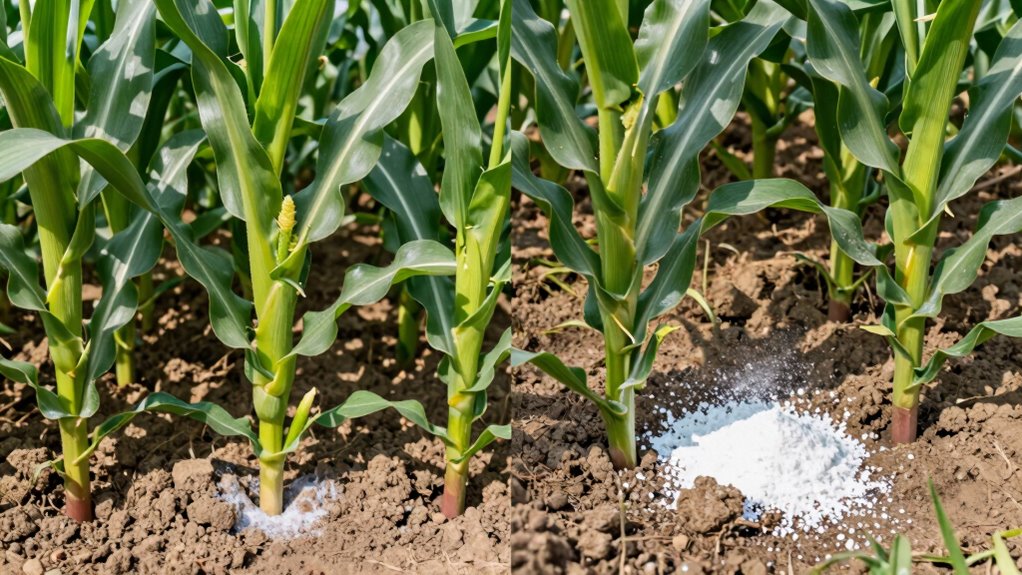
Fertilizer placement matters as much as the rate because it guarantees nutrients reach your crop’s active roots directly, supporting healthy development and maximizing uptake. Proper placement prevents nutrient loss and reduces environmental runoff, making your fertilizer use more efficient. When nutrients are placed correctly, roots explore more soil volume and access water better. If you’re interested, you’ll find more details on how soil type, microbial activity, and strategy can boost your crop’s success.
Key Takeaways
- Proper placement ensures nutrients reach active root zones, maximizing absorption and plant growth.
- Correct placement reduces nutrient loss through leaching or runoff, enhancing efficiency.
- Strategic placement promotes roots exploring more soil volume, improving water and nutrient uptake.
- Placement tailored to soil type and microbial activity enhances nutrient retention and soil health.
- Combining placement with appropriate rates prevents over-fertilization and environmental contamination.
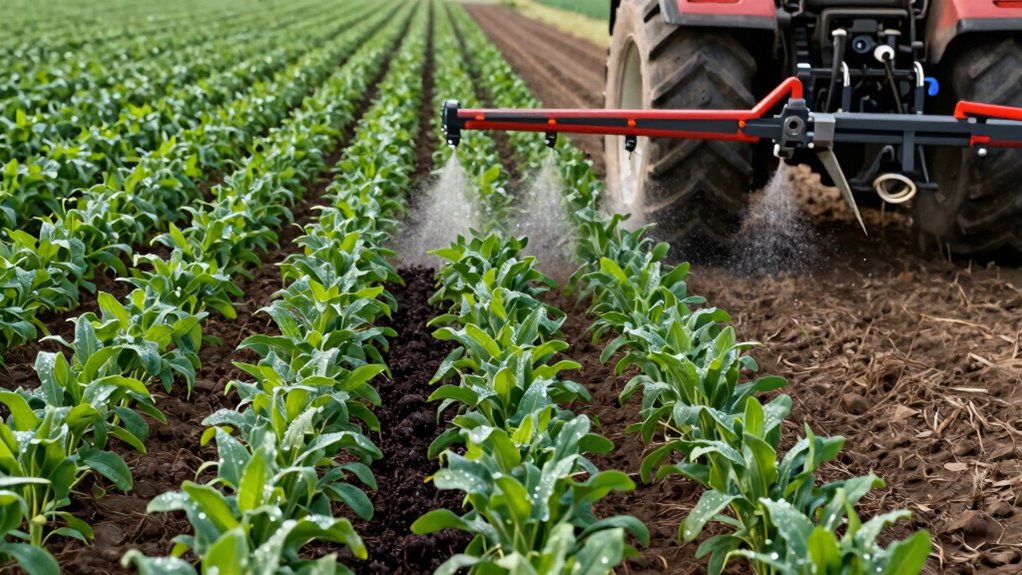
Healthy soil acts as the foundation for strong root development. When you place fertilizer correctly, you support this foundation by delivering nutrients directly where roots are actively growing. For example, banding fertilizer near the seed or root zone ensures nutrients are readily available, encouraging robust root growth. Enhanced root development means plants can explore more soil volume, access water more efficiently, and uptake nutrients more effectively. This emphasizes the importance of understanding fertilizer placement to optimize plant health. Proper placement also helps prevent nutrient loss, ensuring that fertilizers work effectively over time. This leads to healthier plants overall and better yields.
Proper fertilizer placement near roots boosts growth, health, and crop yields through targeted nutrient delivery.
Applying fertilizer at the right rate is just as vital as placing it correctly. Too much fertilizer can harm soil microbes, disrupt soil structure, and lead to runoff, which contaminates water systems. Conversely, applying too little limits plant growth and reduces productivity. By accurately calibrating your fertilizer rate, you promote a dynamic balance where soil health is maintained, and your crops thrive. Precise rates also prevent nutrient imbalances that could weaken roots or cause deficiencies, further emphasizing the significance of tailored application.
Combining proper placement with the correct rate creates a synergy that benefits both your crops and the environment. For instance, shallow surface placement might be suitable for some crops, but deeper placement often benefits root development in others, especially in soils prone to leaching. Adjusting placement based on soil type, crop needs, and environmental conditions ensures nutrients stay where they’re needed most—near the roots, not lost to runoff or volatilization. Additionally, understanding soil nutrient dynamics can help inform more effective fertilizer strategies. Recognizing how nutrient mobility varies across different soils can further refine placement techniques. Moreover, considering soil texture and structure can influence how nutrients move and are retained within the soil profile. Soil health is a dynamic system, and soil microbial activity plays a crucial role in nutrient availability and retention.
In the end, you want your fertilizer strategy to foster healthy soil, vigorous root systems, and sustainable crop production. Proper placement and rate are the tools that help you accomplish this. When you pay close attention to both, you’re not just maximizing yields—you’re also protecting your land and water resources for the future. It’s a smart, effective approach that makes all the difference in successful farming.
As an affiliate, we earn on qualifying purchases.
Frequently Asked Questions
How Does Soil Type Affect Fertilizer Placement Strategies?
Soil type considerably influences your fertilizer placement strategies because soil chemistry varies, affecting nutrient availability. In soils with high clay or organic matter, nutrients may bind tightly, so you should place fertilizer closer to roots or incorporate it into the soil. Microbial activity also impacts nutrient breakdown and absorption, so understanding your soil’s microbial health helps optimize placement. Adjust your approach based on these factors to maximize fertilizer efficiency and crop growth.
Can Improper Placement Lead to Environmental Runoff?
Improper fertilizer placement can indeed cause environmental runoff, leading to nutrient leaching into nearby waterways. If you don’t place nutrients accurately, you risk polluting the environment and harming aquatic life. This mistake can trigger a chain reaction, threatening ecosystems and water quality. To prevent this, focus on precise placement strategies for runoff prevention, ensuring nutrients stay where plants need them most, and avoid costly, damaging runoff that can have lasting consequences.
What Equipment Is Best for Precise Fertilizer Placement?
You should use precision technology like GPS-guided spreaders or injectors for the most accurate fertilizer placement. These tools help you target specific zones effectively. Make certain to regularly calibrate your equipment to maintain accuracy, avoiding over-application or runoff. Modern precision technology ensures you deliver the right amount of fertilizer exactly where it’s needed, improving efficiency and reducing environmental impact. Proper calibration and advanced equipment are key to ideal results.
How Does Plant Root Depth Influence Placement Decisions?
Imagine you’re growing carrots with deep roots. You’d place fertilizer in the root zone, where nutrients access the roots directly. If roots are shallow, surface placement works best. Conversely, for deep-rooted plants, deeper placement guarantees nutrients reach the entire root zone, promoting healthy growth. Your placement decisions should match root depth to optimize nutrient access, preventing waste and encouraging robust plant development.
Are There Crop-Specific Placement Recommendations?
Yes, there are crop-specific placement recommendations that consider crop maturity and nutrient timing. You should modify fertilizer placement based on when the crop matures and its nutrient uptake patterns. For example, fast-maturing crops may need fertilizer closer to the root zone early on, while later-maturing crops benefit from deeper placement. Tailoring your placement ensures nutrients are available when plants need them most, optimizing growth and yields.
soil testing kits for fertilizer
As an affiliate, we earn on qualifying purchases.
As an affiliate, we earn on qualifying purchases.
Conclusion
Remember, fertilizer placement is like planting seeds in the right spot—if you don’t, even the best rate won’t yield the results you want. When you focus on putting nutrients where plants need them most, you’re guiding their growth like a skilled captain steering a ship through calm waters. So, don’t just think about how much fertilizer you use; pay attention to where you place it. That’s the secret to a thriving, bountiful crop.
As an affiliate, we earn on qualifying purchases.
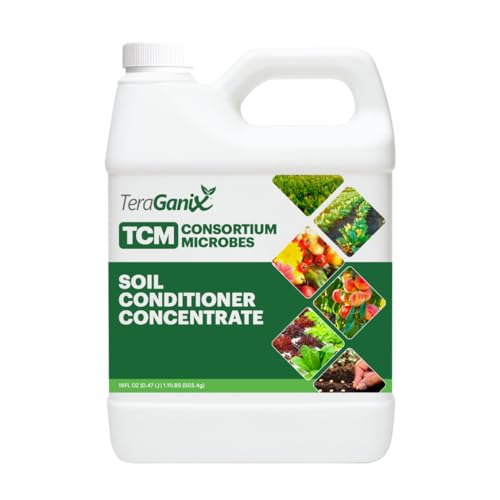
TeraGanix TCM Soil Conditioner (1 Btl = 16 Gal), Microbial Inoculant Concentrate, Plant Growth, Root Enhancer, Liquid Probiotic for Soils & Plants, Seed Germination, Garden, Lawn Care (16 fl oz)
- Organic Probiotic for Plants: Enhances soil texture and drainage
- Improves Water Quality: Safe for ponds and aquariums
- Rich in Lactic Acid Bacteria: Eliminates odors and conditions soil
As an affiliate, we earn on qualifying purchases.
As an affiliate, we earn on qualifying purchases.