
As a lab buyer, it’s essential to understand your testing needs to select the right analytical instruments that guarantee accurate and reliable data. Regular calibration using certified standards and following manufacturer guidelines helps maintain precision. Proper maintenance extends instrument lifespan, reduces downtime, and keeps costs in check. Staying current with industry standards and training staff guarantees compliance and peak performance. If you want to master these essentials, there’s more to explore below.

Prime made for students and young adults
- Fast, free delivery for dorm and study essentials
- Prime Video and Amazon Music included
- Member-only deals
Key Takeaways
- Understand your testing needs to select the right instruments that ensure accurate and reliable results.
- Regular calibration with certified standards maintains measurement precision and data integrity.
- Implement a scheduled maintenance plan to extend equipment lifespan and prevent costly repairs.
- Stay compliant with industry standards by documenting calibration and maintenance activities thoroughly.
- Train staff on proper operation, calibration, and maintenance procedures to ensure consistent instrument performance.
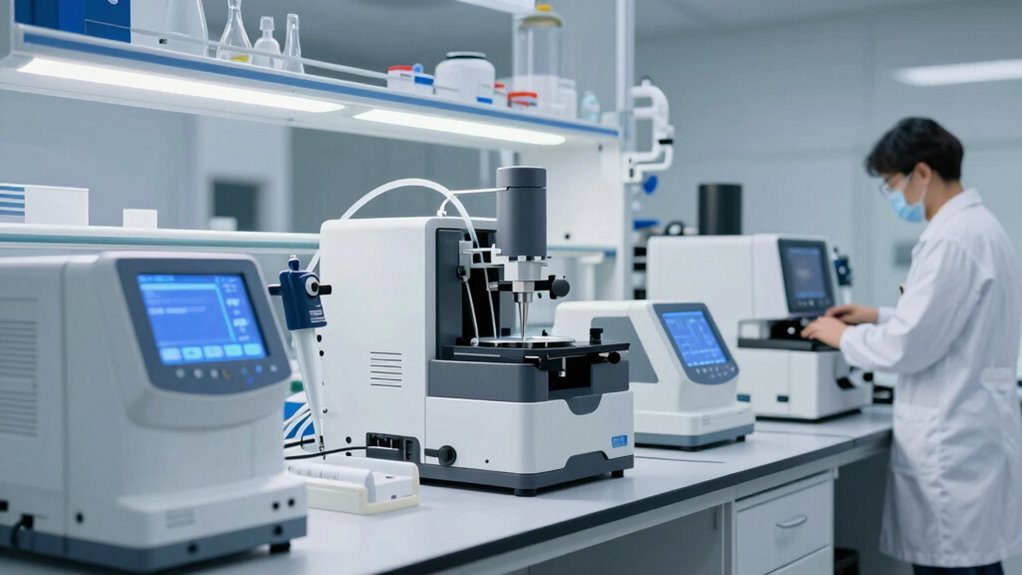
When selecting analytical instruments for your lab, understanding your specific testing needs is essential. You need to consider the types of analyses you’ll perform most often and choose equipment that aligns with those demands. This guarantees you get accurate, reliable data without overspending on features you don’t need. Once you’ve identified the right instruments, it’s imperative to pay attention to proper instrument calibration. Regular calibration guarantees your measurements stay precise over time, preventing errors that could compromise your results. It’s not just about initial setup; you should establish ongoing calibration routines based on the manufacturer’s recommendations and your workload. Proper calibration involves using certified standards and documenting each session, so you maintain traceability and quality control. A good understanding of projector technology can also help in selecting the most suitable display equipment for your lab environment, ensuring optimal visualization of your data. Additionally, understanding the importance of accurate data can help emphasize the significance of precise calibration practices in maintaining data integrity. Incorporating natural pool design principles can also inspire more sustainable and visually harmonious lab environments, especially if outdoor or hybrid spaces are involved. Recognizing the role of proper maintenance in extending equipment lifespan can further enhance your lab’s operational efficiency. Staying informed about industry standards and regulations ensures your practices align with compliance requirements. Alongside calibration, maintaining an organized maintenance schedule is essential. Every instrument has specific maintenance requirements, which, if neglected, can lead to inaccuracies, breakdowns, or shorter equipment lifespan. Developing a clear maintenance schedule helps you plan routine checks, cleaning, and part replacements, minimizing unexpected downtimes. For example, some devices require daily performance checks, while others might need monthly or quarterly servicing. Staying consistent with these schedules ensures your instruments function at their best, saving you money in the long run by avoiding costly repairs or replacements.
Selecting the right instruments and maintaining regular calibration ensures accurate, reliable lab results and compliance with industry standards.
Understanding the importance of both instrument calibration and maintenance schedules also impacts your compliance with industry standards and regulations. Many testing environments require documentation of calibration and maintenance activities to meet quality assurance protocols. Keeping detailed logs not only helps you stay compliant but also provides a clear audit trail, demonstrating that your lab maintains high standards. Additionally, investing in well-maintained, calibrated instruments boosts confidence in your data’s accuracy, which is critical when reporting results to clients or regulatory agencies. Proper staff training on calibration and maintenance procedures is equally vital to ensure consistency and precision in your lab operations.
analytical instrument calibration standards
As an affiliate, we earn on qualifying purchases.
As an affiliate, we earn on qualifying purchases.
Frequently Asked Questions
How Do I Evaluate the Long-Term Durability of Analytical Instruments?
You evaluate the long-term durability of analytical instruments by examining their instrument longevity and material resilience. Look for instruments built with high-quality, durable materials designed to withstand daily use and environmental factors. Ask vendors about maintenance requirements and the manufacturer’s warranty, as these can impact longevity. Additionally, review user feedback and industry reports to gauge how well similar instruments perform over time, ensuring your investment remains reliable long-term.
What Training Is Available for Operating Complex Laboratory Equipment?
You can access various training programs designed for operating complex laboratory equipment safely and effectively. These programs often include hands-on workshops, online modules, and manufacturer-led sessions, emphasizing operator safety and proper instrument handling. By participating in these training sessions, you guarantee your team is well-versed in the equipment’s operation, safety protocols, and maintenance, reducing errors and enhancing overall lab productivity. Always seek certified or reputable training providers for ideal results.
How Often Should Calibration and Maintenance Be Performed?
You should perform instrument calibration and follow maintenance schedules regularly, typically based on the manufacturer’s recommendations or your lab’s usage. Calibration guarantees accuracy, while routine maintenance prevents breakdowns. Many instruments require calibration daily, weekly, or after specific procedures. Establish a clear schedule, document each task, and stick to it. Regular calibration and maintenance keep your analytical instruments reliable, extend their lifespan, and ensure your lab’s results remain precise and trustworthy.
Are There Eco-Friendly or Energy-Efficient Analytical Instruments?
Think of eco-friendly analytical instruments as the green engines powering your lab’s future. Many now feature sustainable innovations and eco-friendly designs, reducing energy consumption and minimizing waste. These instruments not only help lower your carbon footprint but also promote efficiency and cost savings. By choosing energy-efficient models, you’re investing in tools that support eco-conscious practices while maintaining high performance, making your lab a leader in environmental responsibility.
What Are the Best Practices for Data Security and Compliance?
You should prioritize data security and compliance by implementing robust data encryption methods to protect sensitive information. Make certain your laboratory complies with relevant regulatory standards, such as GDPR or HIPAA, depending on your location and industry. Regularly update your security protocols, conduct staff training on data handling, and audit your systems to identify vulnerabilities. Staying proactive ensures your data remains secure and your lab meets all necessary legal requirements.
As an affiliate, we earn on qualifying purchases.
Conclusion
As you navigate the world of analytical instruments, remember that choosing the right tool is like finding the perfect key to open your lab’s potential. Stay informed about the latest technologies, understand your specific needs, and don’t rush the process. With careful selection, you’ll turn your lab into a well-oiled machine, where precision and efficiency work hand in hand. Your investment today will be the cornerstone of breakthroughs tomorrow—so make it wisely!
certified standards for calibration
As an affiliate, we earn on qualifying purchases.
As an affiliate, we earn on qualifying purchases.
laboratory instrument documentation software
As an affiliate, we earn on qualifying purchases.
As an affiliate, we earn on qualifying purchases.
Evergreen bestsellers Picks
bestsellers
As an affiliate, we earn on qualifying purchases.