Temperature data loggers are crucial in compliance because they guarantee your temperature records are accurate and secure, reflecting actual environmental conditions. They help maintain measurement precision through regular calibration checks and protect sensitive data from tampering or loss via encryption and secure transfer methods. Reliable data logging demonstrates your commitment to quality and safety, preventing regulatory issues and product recalls. Keeping your system secure and accurate is essential—continue to explore how these tools can support your compliance efforts.

Prime made for students and young adults
- Fast, free delivery for dorm and study essentials
- Prime Video and Amazon Music included
- Member-only deals
Key Takeaways
- They ensure temperature data accurately reflects environmental conditions critical for regulatory compliance.
- They enable automatic calibration reminders and logs, maintaining measurement precision over time.
- They secure sensitive data through encryption and access controls, protecting compliance records from tampering.
- They facilitate continuous monitoring, simplifying audit readiness and regulatory inspections.
- They demonstrate organizational commitment to quality, safety, and compliance through reliable data management.
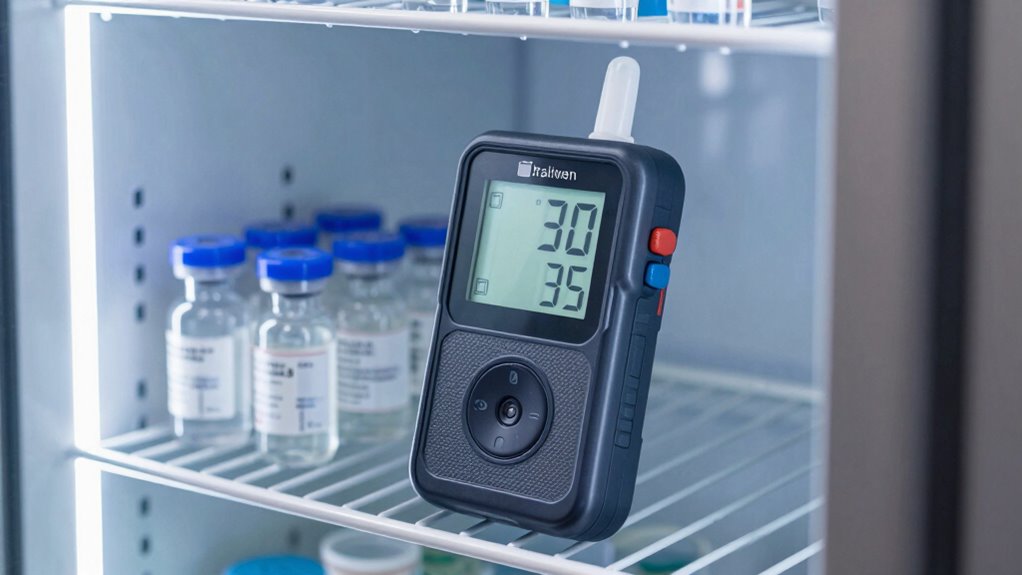
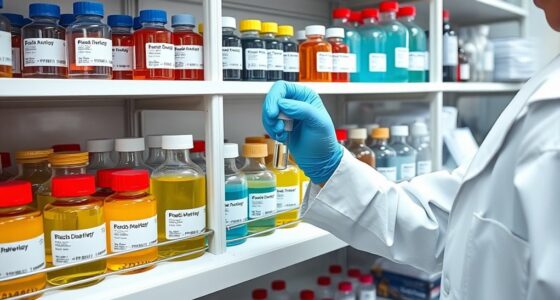
Ensuring compliance with industry regulations often depends on accurately monitoring temperature conditions. Temperature data loggers play a crucial role in this process by providing precise, continuous recordings of environmental conditions. Their accuracy hinges on calibration accuracy, which ensures that the data collected truly reflects the actual temperature. Regular calibration checks are essential to maintain this precision, especially in industries like pharmaceuticals, food production, and biotech, where even slight deviations can lead to regulatory violations or safety risks. Reliable calibration gives you confidence that your temperature records are trustworthy, supporting your compliance efforts during inspections and audits. Additionally, choosing devices with calibration reminders can help streamline this process and prevent oversight.
Accurate temperature monitoring is vital for compliance and safety in regulated industries like pharma and food.
Beyond accuracy, data security should be a top priority when using temperature data loggers. These devices store sensitive information that regulators and quality assurance teams rely on to verify compliance. If data security isn’t guaranteed, there’s a risk that data could be altered, lost, or accessed by unauthorized personnel. Implementing secure data transmission protocols, encryption, and access controls safeguards your records from tampering or breaches. This not only protects your organization’s reputation but also ensures the integrity of your compliance documentation. When regulators review your records, they need to trust that the data is unaltered and authentic, making data security a non-negotiable aspect of effective temperature monitoring. Ensuring that your devices are compliant with data protection standards further reinforces your commitment to best practices.
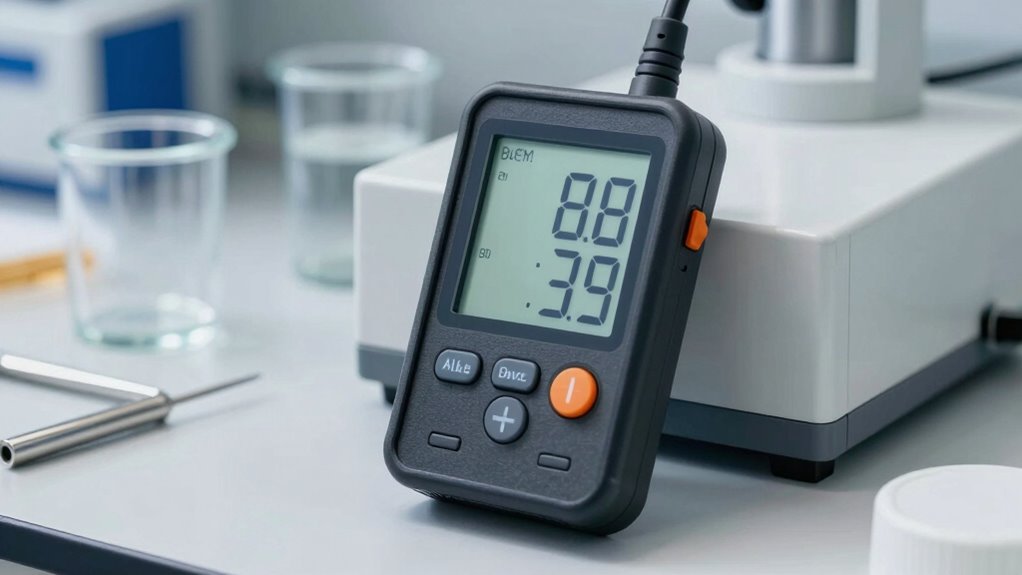
Choosing the right temperature data logger involves considering features that support both calibration accuracy and data security. Look for devices that offer automatic calibration reminders and calibration logs, making routine checks straightforward and ensuring ongoing precision. Additionally, opt for loggers that provide encrypted data storage and secure transfer options, so your information remains protected throughout its lifecycle. The ability to back up data automatically and set user permissions further enhances your control over the records, reducing the risk of data loss or unauthorized access. Incorporating secure data management practices ensures your temperature monitoring system remains resilient against potential threats and errors. The selection process should also include evaluating the reliability of performance, as consistent operation over time is essential for maintaining compliance and avoiding discrepancies in critical data.
In the end, temperature data loggers are more than just recording devices—they’re vital tools for maintaining compliance, safeguarding your data, and ensuring product safety. Their role in delivering accurate, secure temperature data helps you meet stringent industry standards and avoid costly penalties or product recalls. When you prioritize calibration accuracy and data security, you reinforce your commitment to quality, safety, and regulatory adherence. This proactive approach not only simplifies compliance efforts but also strengthens your organization’s credibility and trustworthiness in the eyes of regulators and customers alike.
temperature data logger with calibration reminders
As an affiliate, we earn on qualifying purchases.
As an affiliate, we earn on qualifying purchases.
Frequently Asked Questions
How Often Should Temperature Data Loggers Be Calibrated?
You should calibrate your temperature data loggers regularly to maintain accuracy, typically every 6 to 12 months, depending on your specific industry standards and the manufacturer’s recommendations. Regular calibration ensures data logger accuracy, preventing measurement errors that could compromise compliance. Keep track of calibration frequency and document each session to demonstrate that your data loggers are functioning correctly, which is essential for meeting regulatory requirements and ensuring data integrity.
What Are the Costs Associated With Implementing Data Loggers?
Implementing data loggers costs less than you might think, and the expense is well worth avoiding data security breaches and compliance issues. You’ll need to budget for data logger maintenance, calibration, and potential replacement parts, along with secure data storage solutions. While initial investments can seem significant, the long-term savings from continuous monitoring, reduced errors, and regulatory compliance make data loggers a smart, cost-effective choice for your operations.
Can Data Loggers Integrate With Existing Monitoring Systems?
Yes, data loggers can integrate with your existing monitoring systems. They often feature high sensor accuracy, ensuring reliable temperature readings, and are designed with robust data security to protect sensitive information. Integration usually involves compatible software or APIs that allow seamless data transfer and real-time monitoring. This way, you maintain consistent oversight, meet compliance standards, and reduce errors without overhauling your current setup.
How Long Do Temperature Data Loggers Typically Last?
On average, temperature data loggers last between 6 months to 2 years, depending on usage and battery life. You’ll find that their longevity directly impacts data accuracy, so choosing a model with a reliable battery is essential. If you’re monitoring temperature-sensitive products, knowing how long your logger lasts helps guarantee continuous compliance, preventing costly errors or spoilage. Regular maintenance and battery checks keep your data precise and your operations smooth.
Are There Industry-Specific Standards for Data Logger Usage?
Yes, there are industry-specific standards for data logger usage that you need to follow for regulatory compliance. These standards guarantee accurate, reliable temperature monitoring tailored to your sector, whether healthcare, food, or pharmaceuticals. You should regularly review and adhere to these industry standards to avoid compliance issues. Implementing data loggers that meet these specific requirements helps you maintain quality and safety standards effectively.
secure temperature data logger for compliance
As an affiliate, we earn on qualifying purchases.
As an affiliate, we earn on qualifying purchases.
Conclusion
In the world of compliance, temperature data loggers are your silent guardians, ensuring your processes stay on track. Think of them as a watchful lighthouse guiding you through the fog of regulations, preventing costly mistakes. By trusting these devices, you’ll keep your operations safe and compliant, much like a ship stays steady amidst turbulent waters. Embrace temperature data loggers—they’re your essential partners in maintaining accuracy and peace of mind.
encrypted data logger for regulated industries
As an affiliate, we earn on qualifying purchases.
As an affiliate, we earn on qualifying purchases.
continuous temperature monitoring device
As an affiliate, we earn on qualifying purchases.
As an affiliate, we earn on qualifying purchases.
Fall Picks
fall essentials
As an affiliate, we earn on qualifying purchases.