

To guarantee safe solvent handling, always store flammable solvents in designated, fire-resistant safety cabinets with self-closing doors to contain ignition sources. Use proper ventilation to reduce vapor buildup and prevent spills. Identify and control ignition sources around storage and use areas. Follow strict handling procedures, including risk assessments and regular safety checks, to minimize fire risks. Continuing will reveal more essential steps to protect yourself and your workspace from hazards.
Play games included with Prime
Start a Prime free trial and play with Amazon Luna on your devices.
As an affiliate, we earn on qualifying purchases.
Key Takeaways
- Use fire-resistant safety cabinets with self-closing doors for secure solvent storage.
- Store solvents away from ignition sources to minimize fire risk.
- Ensure proper ventilation to disperse vapors and prevent vapor buildup.
- Conduct risk assessments to identify hazards and implement appropriate control measures.
- Regularly inspect and maintain storage and ventilation systems for ongoing safety.
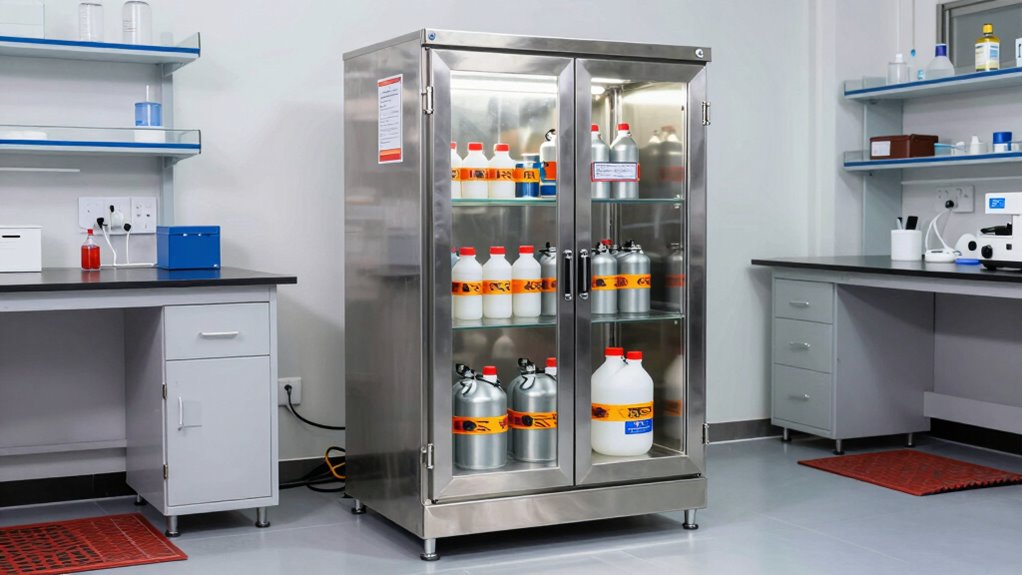
Handling flammable solvents safely is vital to prevent fires and guarantee a secure laboratory environment. The first step in achieving this safety is conducting a thorough risk assessment. You need to identify potential hazards associated with the solvents you handle, such as their flash points, volatility, and reactivity. Understanding these factors helps you determine the level of danger and implement appropriate controls. For instance, if a solvent has a low flash point, you’ll need to take extra precautions to prevent ignition sources nearby. Risk assessment also involves evaluating how solvents are stored, used, and disposed of, ensuring all procedures minimize the chance of accidental ignition or spills. Proper storage practices are essential, including the use of designated flammable safety cabinets that are constructed with fire-resistant materials and feature self-closing doors to contain any ignition sources. Using fire-resistant storage significantly reduces the risk of ignition in the event of an incident. Ventilation requirements play an essential role in maintaining a safe workspace. You should make certain your laboratory has adequate ventilation systems to effectively remove vapors and reduce the concentration of flammable fumes. Proper ventilation not only prevents the buildup of hazardous vapors but also helps in quickly dispersing any accidental releases. Additionally, the ventilation system should be regularly maintained and tested to confirm it’s functioning correctly. Adequate ventilation systems are crucial in keeping vapors at safe levels and minimizing fire risks. If your lab doesn’t have sufficient ventilation, you risk creating an environment where vapors can accumulate, increasing the likelihood of fire or explosion.
flammable safety cabinets with self-closing doors
As an affiliate, we earn on qualifying purchases.
As an affiliate, we earn on qualifying purchases.
Frequently Asked Questions
How Often Should Flammable Safety Cabinets Be Inspected?
You should inspect flammable safety cabinets at least once every six months to guarantee fire prevention measures are effective. Regular cabinet maintenance helps identify any signs of damage, corrosion, or leaks that could compromise safety. During inspections, check that vents, seals, and alarms function properly. Consistent maintenance not only keeps the cabinet compliant with safety standards but also minimizes fire risks, protecting your workspace and personnel effectively.
Are There Specific Regulations for Storing Different Solvents?
You need to follow specific regulations for storing different solvents, ensuring chemical compatibility and proper storage organization. Imagine a well-arranged cabinet where each solvent sits safely, separated by barriers or labels to prevent dangerous reactions. Regulations often specify container types, ventilation, and temperature controls tailored to each solvent’s properties. By adhering to these rules, you protect yourself and your workspace from hazards, keeping safety at the forefront of your storage practices.
What Training Is Required for Safe Solvent Handling?
You need to complete hazard communication training that covers proper solvent handling, storage, and disposal procedures. This training guarantees you’re aware of the hazards and how to minimize risks. Additionally, emergency preparedness training is essential, teaching you how to respond effectively in case of spills or fires. Both trainings help you stay compliant with safety regulations and protect yourself and others from potential hazards associated with solvent use.
Can Flammable Safety Cabinets Be Used Outdoors?
You can use flammable safety cabinets outdoors, but don’t throw caution to the wind. Make certain they’re designed for outdoor storage, offering weather resistance to withstand the elements. Keep in mind, not all cabinets are built for outdoor use, so check the manufacturer’s specifications. Proper outdoor storage ensures safety and compliance, preventing accidents. When in doubt, it’s always best to consult safety guidelines to keep everything running smoothly.
What Are the Signs of a Safety Cabinet Failure?
You’ll know a safety cabinet has failed if you notice signs like unusual odors, corrosion, or paint bubbling, which increase fire risk. Also, keep an eye on door seals and locks—if they don’t close properly or are damaged, it compromises containment. Regular cabinet maintenance helps prevent failure, ensuring your safety measures stay effective. If any of these signs appear, address them immediately to avoid dangerous incidents.
fire-resistant solvent storage cabinets
As an affiliate, we earn on qualifying purchases.
As an affiliate, we earn on qualifying purchases.
Conclusion
Remember, if you think safety cabinets are just fancy storage units, think again. They’re your first line of defense against fiery disasters, not just decorative office furniture. Handling solvents safely isn’t optional—it’s your duty. Skimp on safety, and you might just get a fiery reminder that shortcuts lead to sparks, not success. So, take safety seriously; after all, a little precaution now prevents a big, expensive fire later. Stay safe, stay smart!
laboratory ventilation systems for flammable vapors
As an affiliate, we earn on qualifying purchases.
As an affiliate, we earn on qualifying purchases.
flammable solvent spill containment kits
As an affiliate, we earn on qualifying purchases.
As an affiliate, we earn on qualifying purchases.
Flea & tick season Picks
flea and tick prevention
As an affiliate, we earn on qualifying purchases.