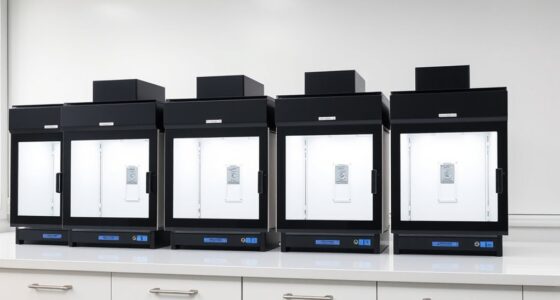

When selecting a professional laboratory microscope, precision, durability, and versatility are key. The HSL Trinocular Compound Microscope stands out as the best overall choice, offering high-resolution imaging and user-friendly digital features. For budget-conscious labs, the AmScope T720Q provides excellent performance at a lower price point, while the Herwicm Research Grade Microscope excels for advanced research with its high magnification and robust build. The main tradeoffs involve balancing cost against features like magnification range, camera quality, and mechanical stability. Continue reading for a detailed breakdown of these top picks and how they compare across critical factors.
Open a free Amazon Business account
Business pricing, bulk buying and tax-exempt orders.
Create a free accountAs an affiliate, we earn on qualifying purchases.
Key Takeaways
- High magnification ranges (up to 5000X) are typically paired with advanced features like dual mechanical stages and HD cameras, making them ideal for research-focused labs.
- Digital integration, especially USB cameras and LCD screens, significantly enhances usability but often adds to the cost, appealing to those needing detailed imaging and documentation.
- Build quality and mechanical stability are critical for precise work; models with robust stages and high-quality optics tend to be more durable and accurate over time.
- Entry-level professional microscopes often compromise on features like magnification or camera resolution but can still serve educational or semi-professional purposes if budget is tight.
- Choosing a microscope with versatile eyepieces and adjustable illumination makes it easier to adapt to different specimen types and lighting conditions.


More Details on Our Top Picks
HSL Trinocular Compound Microscope for Adults Professional, 9 inch LCD Digital Microscope kit, Electron microscopes Light, Biological Microscope LAB with Screen 400x 1000x Micro Scope
This HSL microscope stands out for its integrated 9-inch HD display, allowing real-time viewing and easy photo/video capture, making it ideal for both amateurs and professionals. Compared with the OMAX 40X-2500X LED Digital Trinocular Microscope (Product 4), it offers a built-in screen that simplifies multi-user viewing without needing a separate computer. Its adjustable LED illumination and high magnification range support detailed biological analysis, though its heavier weight and higher cost make it less portable and budget-friendly. The dual functionality of a camera-equipped digital display combined with traditional microscope features provides a comprehensive solution for labs and educational settings.
Pros:- Built-in 9-inch HD display for real-time observation and recording
- High magnification range up to 1000x with quality achromatic lenses
- Includes SD card and USB connectivity for easy image and video transfer
- Adjustable LED illumination for bright, clear images
Cons:- Heavy at over 10 kilograms, limiting portability
- Requires 100-240V power, unsuitable for remote fieldwork
- Complex setup may overwhelm first-time users
Best for: Laboratory technicians, educators, and hobbyists who want an all-in-one digital microscope with easy sharing capabilities.
Not ideal for: Field researchers needing lightweight, portable microscopes, or budget-conscious beginners not requiring high-end digital features.
- Magnification Maximum:1000x
- Display Size:9 inch HD LCD
- Light Source Type:LED
- Objective Lens Description:Achromatic
- Display Recording:Yes, SD card and USB
- Voltage:100V-240V
- Item Weight:10.64 Kilograms
- Compatible Devices:Laptop, PC
Bottom line: This pick makes the most sense for professionals or educators seeking a multifunctional digital microscope with integrated display.
OMAX 40X-2500X USB3 10MP Digital Darkfield Lab Siedentopf Trinocular LED Microscope for Live Blood
This OMAX microscope offers a broad magnification range up to 2500x and includes a high-resolution 10MP USB3 camera, making it suitable for detailed live blood analysis and professional research. It features a rotatable trinocular head, a mechanical stage, and brightfield plus darkfield capabilities, surpassing the basic features of the AmScope T720Q (Product 5) in imaging resolution and digital versatility. The powerful USB3 camera and software support allow precise measurements and high-quality image capture, though its higher cost and complexity may challenge beginners. This model excels in clinical and research environments where detailed live specimen observation is essential.
Pros:- Magnification range up to 2500x for detailed observation
- Includes 10MP USB3 digital camera for high-quality images
- Rotatable trinocular head with 360-degree viewing
- Brightfield and darkfield illumination modes
Cons:- Higher price point for advanced features
- Requires a stable power source and computer connection
- Setup complexity may require technical knowledge
Best for: Researchers, clinicians, and advanced students needing high-resolution live imaging and darkfield microscopy.
Not ideal for: Casual hobbyists or educational users who only need basic imaging or less magnification.
- Magnification Range:40X-2500X
- Camera Resolution:10MP
- Head Type:Siedentopf trinocular
- Illumination Type:LED, Brightfield & Darkfield
- Objective Lenses:Achromatic 4X-100X (oil)
- Interpupillary Adjustment:1-7/8 to 2-15/16 inches
- Power Supply:AC 100V-240V
- Stage Type:X-Y Mechanical
Bottom line: Ideal for advanced research and clinical purposes demanding high-resolution live imaging and darkfield analysis.
OMAX 40-2500X LED Digital Trinocular Lab Microscope + 5MP Camera + Blank Slides + Covers + Lens Paper + Book
This OMAX model combines a high magnification range up to 2500x with a 5MP digital camera, offering extensive educational and lab capabilities. Its included accessories—blank slides, covers, lens cleaning paper, and a dedicated microscope book—make it particularly suitable for teaching environments. Its plan infinity optical system rivals the AmScope T720Q (Product 5) in image sharpness and offers versatile imaging functions, including stitching and measurement, thanks to compatible software. However, its weight and power needs make it less portable, and the setup might be complex for novices. This microscope is designed for serious teaching labs and detailed sample analysis.
Pros:- High magnification up to 2500x for detailed study
- Includes 5MP digital camera for high-quality images
- Comes with extensive accessories for teaching and sample prep
- Plan infinity optical system for sharp, clear images
Cons:- Relatively heavy and less portable
- Higher price for full accessory kit
- Requires stable power and compatible computer systems
Best for: Educational institutions, advanced students, and laboratories requiring comprehensive kits for teaching and research.
Not ideal for: Field researchers or users needing lightweight, portable microscopes on the go.
- Magnification Range:40X-2500X
- Camera Resolution:5MP
- Objective Lenses:Achromatic 4X-100X (oil)
- Optical System:Plan Infinity
- Included Accessories:Slides, covers, book
- Stage Type:Mechanical double layer
- Illumination:Variable LED
- Power Supply:AC 100V-240V
Bottom line: Perfect for educational and research labs that need a complete package for detailed sample analysis and teaching.
OMAX 40X-2500X LED Digital Trinocular Microscope with USB Camera and Mechanical Stage
This OMAX microscope offers an extensive magnification range from 40x to 2500x, equipped with a USB camera and a sturdy mechanical stage, making it well-suited for detailed research and documentation. Its 640×480 USB camera, compatible with Windows, allows for capturing images and videos, although it lacks the high resolution of 10MP cameras seen in other models like Product 2. The mechanical stage provides precise specimen positioning, but its heavier weight and limited Mac compatibility may restrict portability and cross-platform use. This model balances high magnification with digital capabilities suitable for professional labs and detailed specimen analysis.
Pros:- Magnification range up to 2500x for detailed viewing
- Includes USB camera with live video and image capture
- Solid mechanical stage for precise movement
- Achromatic optics for clear images
Cons:- Lower camera resolution (640×480) compared to newer models
- Heavier, less portable design
- Limited Mac compatibility for camera software
Best for: Research labs and professionals needing high magnification with digital imaging on Windows systems.
Not ideal for: Users seeking lightweight portable microscopes or Mac users needing full camera compatibility.
- Magnification Range:40X-2500X
- Camera Resolution:640×480
- Stage Type:Mechanical
- Objective Lenses:Achromatic 4X-100X
- Illumination:LED
- Voltage:240V
- Head Type:Trinocular
- Power Supply:AC 240V
Bottom line: A solid choice for high-magnification observation with digital imaging primarily for Windows-based research applications.
AmScope T720Q 40X-1000X Trinocular Compound Microscope
The AmScope T720Q offers a versatile magnification range up to 1000x, featuring a Plan infinity optical system that delivers sharp, high-contrast images suitable for both education and detailed research. Its trinocular port supports photo and video documentation, making it comparable to the more advanced Product 2 but at a more accessible price point. The Kohler LED illumination provides even, adjustable lighting, though setup complexity and a higher price for advanced features could deter casual users. This microscope fits well in professional labs requiring reliable imaging and documentation capabilities.
Pros:- Magnification up to 1000x with high-quality optics
- Trinocular port for photo/video recording
- Kohler LED illumination for consistent lighting
- Plan infinity optical system for sharp images
Cons:- Setup can be complex for new users
- Higher cost compared to basic models
- Limited portability due to size and weight
Best for: Research laboratories and educators needing a reliable, versatile microscope with photo/video documentation features.
Not ideal for: Beginners or field users who prioritize portability and simple operation over advanced imaging features.
- Magnification Range:40X-1000X
- Optical System:Plan Infinity
- Head Type:Trinocular
- Illumination Type:Kohler LED
- Objective Lenses:Achromatic 4X-100X
- Photo/Video Port:Yes
- Voltage:90-240V
- Stage Type:Mechanical
Bottom line: A strong choice for advanced research and documentation in professional or educational settings requiring high-quality imaging.
Binocular Microscope with WF10x/WF25x Eyepieces, 40X-2000X Magnification & USB Camera for Biology/Chemistry Labs
This binocular microscope offers a broad 40X-2000X magnification range with durable metal construction, making it well-suited for biology and chemistry classrooms or research labs. Its included USB 2.0 camera allows for easy photo and video documentation, a feature that makes it stand out compared to simpler models like the Herwicm Compound Trinocular Microscope. The ergonomic design with a 45° inclined head reduces neck strain during prolonged use, and the adjustable LED lighting enhances sample clarity. While its strong build and comprehensive focusing controls are advantageous, it is relatively heavy at 3.86 kg, which could hinder portability. The complex setup with multiple magnification options may challenge beginners, but it provides excellent value for those needing detailed biological observation combined with digital recording capabilities. This pick makes the most sense for labs or schools emphasizing biological research and digital documentation, not for mobile or budget setups.
Pros:- High magnification range (40X-2000X) for biological details
- USB 2.0 camera for photo and video capture
- Ergonomic 45° inclined binocular head
- Adjustable LED illumination for sample clarity
Cons:- Heavy weight (3.86 kg), less portable
- Complex setup for beginners
- No warranty details specified
Best for: Educational institutions and biological research labs needing detailed imaging and documentation
Not ideal for: Mobile field researchers or users with limited space who require lightweight equipment
- Magnification Range:40X-2000X
- Light Source:LED
- Objective Lenses:4x, 10x, 40x, 100x Achromatic
- Enclosure Material:Metal
- Weight:3.86 kg
- Color:Black and white
Bottom line: A strong choice for educational and biological research environments emphasizing digital imaging, but less suited for portable or beginner users.
Compound Binocular Microscope for Adults, Professionals & Kids, 40X-2000X Magnification with LED Illumination, Mechanical Stage, WF10x & WF25x Eyepieces,Compatible for Lab, School, Home Education
This microscope provides a versatile 40X-2000X magnification range, coupled with dual LED illumination for both opaque and transparent samples, making it a flexible choice for education, hobbyists, or professional labs. Its large mechanical stage with precise controls ensures accurate sample positioning, outperforming models like the Herwicm Compound Trinocular Microscope in ease of slide navigation. The ergonomic 45° inclined binocular head minimizes neck fatigue, and the adjustable illumination allows for clear, detailed observation. However, the extensive feature set and dual lighting system introduce complexity that might overwhelm beginners. Its robust construction and comprehensive kit—including smartphone compatibility—make it ideal for school labs, hobbyists, and advanced students. The tradeoff involves its size and complexity versus ease of portability and simplicity, making it best suited for stationary use in educational or research settings.
Pros:- Wide magnification range (40X-2000X)
- Dual LED illumination for opaque and transparent samples
- Large mechanical stage with precise controls
- User-friendly ergonomic design
Cons:- Relatively bulky and less portable
- Complex setup may challenge beginners
- No mention of included camera in description
Best for: Educational settings, hobbyists, and professionals needing detailed observation and slide navigation
Not ideal for: Field researchers or users needing lightweight or highly portable microscopes
- Magnification Range:40X-2000X
- Light Source:Dual LED
- Objective Lens Description:Achromatic
- Mechanical Stage:Large with scales
- Inclined Head Angle:45°
- Power Source:USB-powered
Bottom line: Ideal for stationary educational and professional labs requiring flexible illumination and precise sample handling, but less suitable for portable or casual use.
OMAX 40X-2500X LED Digital Trinocular Lab Compound Microscope with 1.3MP Camera and Mechanical Stage
This OMAX model offers a broad 40X-2500X magnification range combined with a 1.3MP camera, making it an excellent choice for capturing detailed images in professional or educational labs. Its mechanical stage and wide-angle 10x/25x eyepieces provide precise slide control, surpassing simpler microscopes like the Herwicm Compound Trinocular. The LED illumination ensures bright, adjustable lighting, while its durable metal construction guarantees stability during use. The high price reflects its advanced features, including a comprehensive 5MP camera option available separately, but setup may require some technical familiarity. Its portability is limited by its corded design and weight, yet it delivers high-quality imaging and broad magnification, ideal for detailed research and documentation. It suits labs and educators demanding high resolution, though less so for casual or mobile applications.
Pros:- Magnification range up to 2500X
- Built-in 1.3MP camera for high-quality images
- Mechanical stage with precise control
- Bright LED illumination
Cons:- High cost for advanced features
- Limited portability due to corded power
- Setup may be complex for novices
Best for: Professional laboratories and educators needing high-resolution digital imaging
Not ideal for: Mobile or field users seeking lightweight, battery-operated microscopes
- Magnification Range:40X-2500X
- Objective Lens Type:Achromatic
- Light Source:LED
- Included Accessories:Slides, tools, 1.3MP camera
- Power Source:Corded, 240V
- Item Weight:Approx. 8 pounds
Bottom line: A top-tier choice for high-resolution imaging in stationary lab environments, but not suited for portable or beginner use.
Trinocular Microscope with 40X-5000X Magnification, HD USB Camera & Dual Mechanical Stage
This professional-grade trinocular microscope reaches an impressive 40X-5000X magnification, surpassing typical models for detailed cellular and biological studies. Its included HD USB camera and dual mechanical stage facilitate both high-magnification observation and digital documentation, making it ideal for advanced education and research. The 195 achromatic objective lens and LED lighting provide bright, clear images, while the comprehensive accessory kit supports a wide array of experiments and educational activities. Its high price and complex setup may be prohibitive for casual users, but for those needing maximum magnification and digital integration, it offers exceptional performance. The corded power supply limits portability, but the robust construction ensures durability for intensive use. Suitable for laboratories and institutions focused on high-detail biological analysis, less so for quick or mobile deployments.
Pros:- Magnification up to 5000X for cellular detail
- HD USB camera for live streaming and photo capture
- Dual mechanical stage for precise slide positioning
- Comprehensive accessory kit included
Cons:- High price point
- Requires technical setup
- Limited portability due to corded power
Best for: Advanced educational institutions and research labs requiring maximum magnification and digital capabilities
Not ideal for: Users needing portable or budget-friendly microscopes for casual observations
- Magnification Range:40X-5000X
- Objective Lens Type:Achromatic
- Light Source:LED
- Included Accessories:Slides, tools, HD USB camera
- Power Source:Corded
- Objective Lens:195 Achromatic
Bottom line: Best for high-magnification, digital documentation, and educational use in fixed lab settings, not for portable applications.
Herwicm Compound Trinocular Microscope 40X-5000X Magnification, Research Grade Professional Microscope, Two Levels of Mechanical Stage LED Illumination, USB Video Camera with Microscope for Adults
This microscope stands out for its extensive magnification range up to 5000X, surpassing models like the AmScope T720, which maxes at 1000X. Its 195 flat-field achromatic lenses deliver sharp, true-to-color images suitable for detailed research and educational use. The triocular head supports additional camera accessories, making it ideal for recording and broadcasting specimens. The dual-layer mechanical stage provides precise control, though it adds weight (4.24 kg) and complexity. Compared to simpler models, it offers greater flexibility but at a higher price and setup complexity. The LED illumination with adjustable intensity ensures clear visibility across different specimen types. However, its size and price might be overkill for casual hobbyists or basic classroom setups.
Pros:- Extensive magnification up to 5000X for detailed observation
- Research-grade optics with sharp, color-accurate imaging
- Triocular head supports camera attachments for recording
Cons:- Relatively heavy at over 4 kg, less portable
- Higher cost may be prohibitive for casual users
- Complex setup might be intimidating for newcomers
Best for: Advanced students, researchers, and educators requiring high magnification and recording capabilities.
Not ideal for: Beginners or hobbyists seeking a lightweight, budget-friendly microscope without camera integration.
- Magnification Range:40X-5000X
- Objective Lenses:Achromatic
- Viewing System:Binocular, Triocular
- Illumination:LED, adjustable
- Mechanical Stage:Double-layer, mechanical
- Weight:4.24 kg
- Power Source:AC/DC
- Camera Compatibility:USB video camera (not included)
Bottom line: This microscope is best suited for professionals and serious students who need high magnification and recording features without compromise.
HSL 8-inch LCD Compound Trinocular Microscope,40x-2500x Professional Biological Microscopes for Adults Laboratory,2K Camera Digital Microscope LED WF10x and WF25x eyepieces ABBE Condenser
This model offers a balanced combination of magnification (up to 2500X) and digital capabilities, making it ideal for medical professionals, high school students, and hobbyists who want to view specimens on screen. Its 2K digital camera with software compatibility supports image editing, stitching, and measurement, comparable to the AmScope T720Q but with integrated digital output. The Abbe condenser and adjustable LED illumination ensure bright, clear images, though the stage is only double-deck with 1.0mm divisions, which may limit precision for very small samples. The large 8-inch LCD provides a comfortable viewing experience, but the overall weight of the unit makes it less portable. Unlike simpler models, this offers a seamless digital workflow but involves a steeper learning curve and higher investment.
Pros:- Built-in 2K digital camera with editing software
- Magnification up to 2500X with high-quality achromatic lenses
- Large 8-inch LCD for comfortable viewing
Cons:- Relatively heavy and less portable
- Limited stage precision for very small objects
- Higher price point for integrated digital features
Best for: Medical students, clinical professionals, and hobbyists needing digital imaging and moderate magnification.
Not ideal for: Those seeking ultra-high magnification or a lightweight, purely optical microscope for fieldwork.
- Magnification Range:40X-2500X
- Camera Resolution:2K
- Eyepieces:WF10X and WF25X
- Illumination:LED, adjustable
- Condenser:Abbe
- Display:8-inch LCD
- Weight:varies, relatively heavy
- Power Source:AC
Bottom line: This microscope is ideal for users who want integrated digital imaging in a mid-range magnification setup for educational or clinical applications.
AmScope T720 40X-1000X Plan Infinity Kohler Laboratory Trinocular Compound Microscope
Compared with the Herwicm model, the AmScope T720 offers a more traditional optical setup with a maximum of 1000X magnification, suitable for many research and teaching environments. Its plan infinity optical system provides sharp, flat images across the entire field of view, ideal for detailed biological studies. The Kohler illumination ensures even lighting, reducing shadows and glare, though the stage is less advanced than dual-layer models. Its metal construction makes it durable but heavier. While it lacks the camera support of more advanced models, its high optical quality and reliable performance make it a preferred choice for professional labs. The main tradeoff is the limited maximum magnification compared to models like the Herwicm or Poothoh microscopes, but it remains highly effective for most biological applications.
Pros:- Plan infinity optical system for sharp, flat images
- Kohler illumination for even lighting
- Durable metal construction
Cons:- Maximum magnification limited to 1000X
- No camera or digital output support
- Heavier weight may hinder portability
Best for: Professional laboratories and educational institutions focusing on biological research at moderate magnifications.
Not ideal for: Enthusiasts needing high magnification or integrated digital imaging for fieldwork.
- Magnification Range:40X-1000X
- Optical System:Plan infinity
- Illumination:Kohler LED
- Objective Lenses:Achromatic
- Stage Type:Mechanical
- Weight:Heavy
- Power Source:AC
- Build Material:Metal
Bottom line: This microscope provides high optical performance for research and teaching where moderate magnification and durability are prioritized.
Compound Trinocular Microscope, 40X-5000X Magnification, Research Grade Professional Microscope with USB Camera and Mechanical Stage, Microscope for Adults
This microscope offers a broad magnification range up to 5000X, comparable to the Herwicm, but with a focus on digital recording via its USB camera. Its double-layer mechanical stage allows precise movement, suitable for detailed specimen analysis, though it adds weight (3.82 kg). The LED illumination with variable diaphragm helps optimize brightness for different specimens. The metal construction ensures durability, but the size and complexity might be overkill for casual hobbyists. Its research-grade optics make it appropriate for professional labs, but the setup may be more complex than simpler models like the AmScope T720. The main tradeoff involves balancing high magnification and digital capabilities against portability and ease of use.
Pros:- High magnification up to 5000X for detailed analysis
- USB camera for live streaming and recording
- Double-layer mechanical stage for precise positioning
Cons:- Relatively heavier at 3.82 kg
- Setup complexity for less experienced users
- Higher price point for digital features
Best for: Research professionals and serious hobbyists needing high magnification with digital integration.
Not ideal for: Beginners or casual users seeking a lightweight, straightforward optical microscope without digital features.
- Magnification Range:40X-5000X
- Camera:USB, 1.3MP
- Objective Lenses:Achromatic
- Stage:Double-layer mechanical
- Illumination:LED, variable diaphragm
- Weight:3.82 kg
- Build Material:Metal
- Power Source:Corded
Bottom line: This microscope is best for users who need high magnification combined with digital imaging for research or documentation.

How We Picked
In selecting these microscopes, I focused on performance factors that matter most to professionals: optical clarity, magnification range, build quality, and ease of use. Usability features like integrated cameras and user interfaces were prioritized because they improve workflow. Durability and stability were also key, ensuring the microscopes can withstand frequent use in rigorous environments. I ranked products based on a combination of these factors, balancing features against price to identify options suitable for serious research, education, and lab work. This approach aims to highlight models that deliver reliable, high-quality results while offering good value for different professional needs.Factors to Consider When Choosing Professional Laboratory Microscopes
Choosing a professional laboratory microscope involves more than just looking at magnification specs. To make an informed decision, consider factors such as optical quality, mechanical stability, camera integration, and the scope’s adaptability to different specimens. Understanding these factors can help you avoid common pitfalls, like overspending on features you don’t need or selecting a model that isn’t durable enough for daily use. Here are key considerations to guide your purchase.Optical Quality and Magnification
Optical clarity directly impacts your ability to see fine details, so look for high-quality lenses with good coatings to reduce glare and improve contrast. Magnification ranges should suit your typical work; for most research applications, 400X to 1000X is standard, but advanced labs may need up to 5000X or more. Keep in mind that higher magnification requires better optics to prevent image distortion. Investing in a microscope with adjustable magnification and multiple objective lenses ensures flexibility across different specimen types.
Mechanical Stability and Build Quality
A sturdy, well-designed mechanical stage and robust frame prevent vibrations and shifting during detailed work. Look for models with high-quality, precise focusing mechanisms and durable materials like metal rather than plastic. Mechanical stability is especially critical at high magnifications, where even slight movements can blur images or cause inaccuracies. Poor build quality leads to faster wear and potential misalignments, so consider these aspects carefully when choosing a professional-grade instrument.
Camera Integration and Digital Features
Many labs now require digital documentation, making integrated cameras or compatibility with external devices a vital consideration. High-resolution USB cameras allow for capturing detailed images or videos, which are essential for reporting and analysis. LCD screens or Wi-Fi connectivity are additional features that improve workflow and collaboration. However, these digital features often add to the cost and complexity, so evaluate whether they align with your specific needs and budget.
Ease of Use and Ergonomics
Professional microscopes should be comfortable for extended use, with ergonomic eyepiece designs, adjustable stands, and intuitive controls. Features like binocular or trinocular heads enhance comfort and reduce eye strain, especially during long sessions. Consider the user interface of digital components—simple controls and clear displays save time and frustration. A well-designed microscope minimizes fatigue and allows for more precise work, crucial in professional environments.
Price and Total Cost of Ownership
While investing in a high-quality microscope can seem costly initially, remember to factor in long-term durability, maintenance, and accessories. Cheaper models may require frequent repairs or upgrades, which can add up over time. Conversely, premium models often include warranties and better support, offering peace of mind. Matching your budget with your specific requirements ensures you get the best value without sacrificing essential features.
Frequently Asked Questions
How much should I expect to spend on a professional laboratory microscope?
The price range for professional laboratory microscopes varies widely. Entry-level models with basic features can start around $1,000, but high-end research microscopes with advanced optics, digital imaging, and high magnification often cost $5,000 or more. Your budget should align with your intended use—more expensive models typically offer better optics, build quality, and digital capabilities, which are vital for detailed research or clinical applications. Balancing cost against required features will help ensure you invest wisely for your specific needs.
Are digital microscopes significantly better than traditional optical models?
Digital microscopes offer advantages such as easy image capture, sharing, and analysis, which can streamline workflows in many labs. They are especially useful for documentation, teaching, or collaborative research. However, traditional optical microscopes often provide superior optical quality, especially at high magnifications, and tend to be more durable. The choice depends on your primary needs—if digital imaging and ease of sharing are priorities, digital models are beneficial; for maximum optical clarity, traditional models may be preferable.
What features are most important for high-magnification research microscopes?
For high-magnification applications, optical quality becomes even more critical. Look for microscopes with high Numerical Aperture (NA) lenses, high-quality coatings, and precise focusing mechanisms. Mechanical stability and vibration damping are essential to maintain image clarity at 4000X or higher. Additionally, high-resolution cameras that can handle detailed imaging without lag or distortion are important. Ensuring the microscope has a sturdy frame and reliable illumination helps achieve consistent results in demanding research settings.
Can I use a professional microscope for educational purposes?
Absolutely, many professional microscopes are suitable for educational use, especially models with versatile features and adjustable magnifications. Trinocular microscopes with cameras are excellent for sharing images with students or recording observations. However, some high-end research microscopes might be more complex and expensive than necessary for classroom settings. For educational environments, balancing cost with features like ease of use, durability, and adequate magnification is key to getting the most value.
How important is the lighting system on a professional microscope?
The lighting system significantly impacts image quality, especially at high magnifications. LED illumination is common due to its brightness, longevity, and low heat emission. Adjustable brightness and Kohler illumination systems help achieve uniform lighting and reduce glare. Proper lighting enhances contrast and detail visibility, which is crucial for precise analysis. Investing in a microscope with a flexible, high-quality illumination system ensures consistent, clear images across different specimen types.
Conclusion
For serious research or clinical work, the HSL Trinocular Compound Microscope offers the best combination of optical quality, digital features, and durability, making it the ideal choice for professional labs. Budget-conscious users or educational settings might prefer the AmScope T720Q for its balanced performance and affordability. Those seeking the highest magnification and advanced imaging should consider the Herwicm Research Grade Microscope or similar models. Overall, matching your specific application, budget, and desired features will guide you toward the best professional laboratory microscope for your needs in 2026. As an affiliate, we earn on qualifying purchases.NFL season / tailgating Picks
team gear