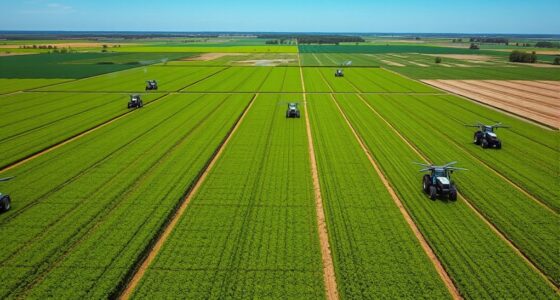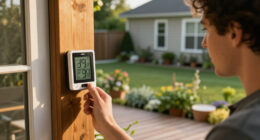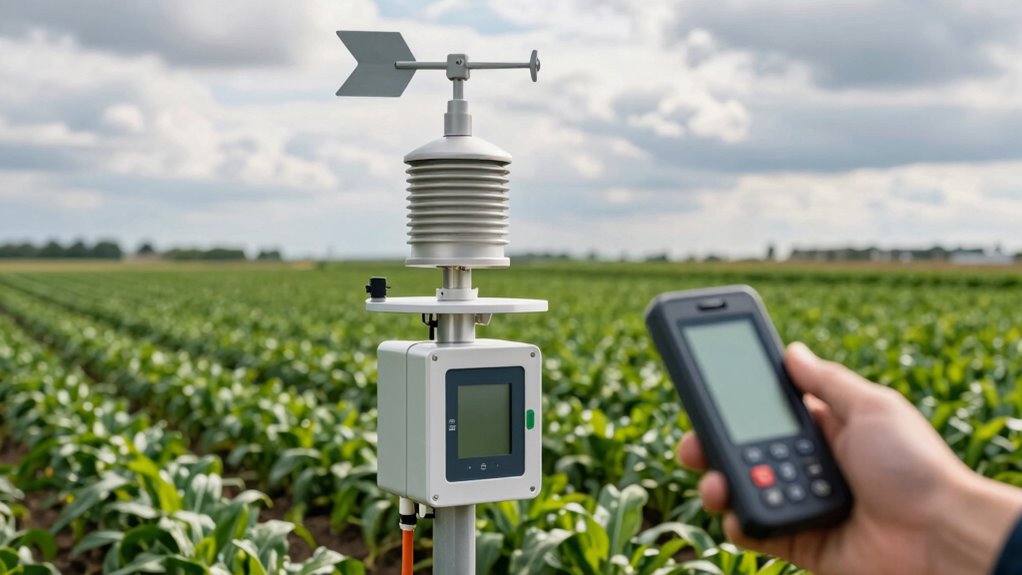

Agricultural weather stations and microclimate tracking systems give you precise environmental data to make smarter farming decisions. They monitor factors like soil moisture, temperature, and humidity in real-time, helping you optimize irrigation, prevent pests, and adapt to local weather variations. By understanding these microclimates, you can improve crop health and conserve resources more effectively. Keep exploring to discover how these technologies can transform your farming practices for better yields and sustainability.

Prime made for students and young adults
- Fast, free delivery for dorm and study essentials
- Prime Video and Amazon Music included
- Member-only deals
Key Takeaways
- Agricultural weather stations provide localized, real-time environmental data critical for effective farm management.
- Microclimate tracking helps identify variations in weather conditions across different farm areas.
- Data from weather stations supports optimized irrigation, conserving water and energy.
- Monitoring microclimates enables targeted pest control and tailored crop practices.
- Using weather station insights reduces weather-related risks and enhances sustainable farming.
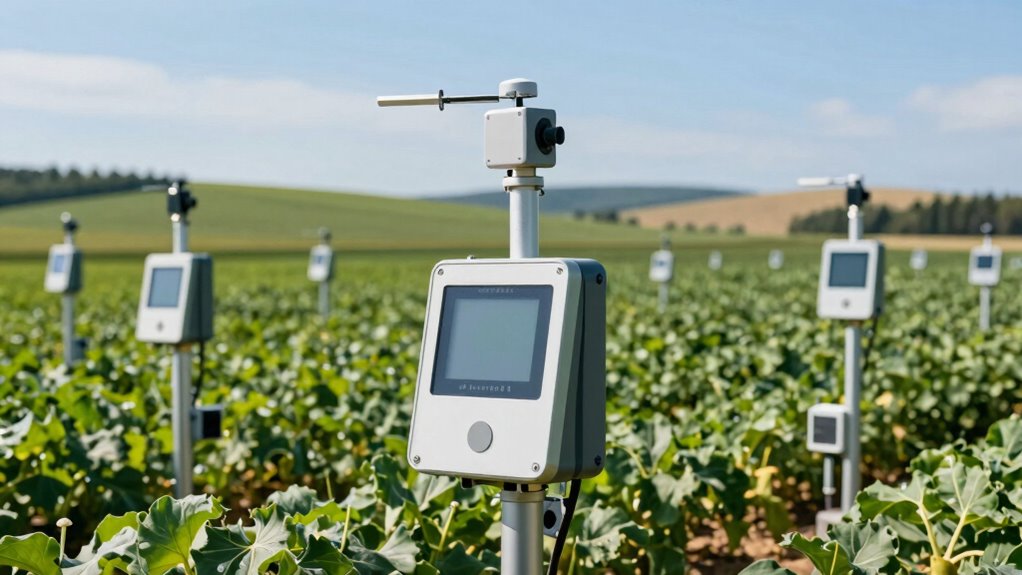
Agricultural weather stations play an essential role in helping farmers monitor local conditions with greater accuracy. By providing real-time data on various environmental factors, these stations enable you to make informed decisions that directly impact your crop yields and farm management practices. One of the key measurements these stations gather is soil moisture, which is fundamental for understanding how much water is available to your plants. Accurate soil moisture readings help you optimize irrigation schedules, preventing overwatering that can lead to root diseases or underwatering that stresses plants. With precise data, you can guarantee your crops receive the right amount of water at the right time, promoting healthy growth and conserving water resources.
Beyond soil moisture, these weather stations also play a significant role in pest prediction. Certain pests thrive under specific environmental conditions, such as temperature and humidity levels, which stations continuously monitor. By analyzing this data, you can anticipate pest outbreaks before they become severe, allowing for timely interventions. This proactive approach minimizes the need for broad-spectrum pesticide applications, reducing chemical use and its environmental impact. With better pest prediction, you can implement targeted treatments, saving money and protecting your crops more effectively.
Microclimate tracking, facilitated by these weather stations, offers you detailed insights into localized weather patterns that might differ from regional forecasts. Microclimates can vary due to factors like topography, soil type, and vegetation cover. Recognizing these differences helps you adapt your farming practices to specific areas within your farm. For example, a patch of land that retains more moisture might require different irrigation or pest management strategies compared to drier sections. By integrating microclimate data, you gain a granular understanding of your farm’s unique conditions, leading to more precise and efficient crop management. This detailed information can also help you mitigate weather-related risks and plan for unforeseen climate events.
Using this technology isn’t just about collecting data; it’s about applying it effectively. With accurate soil moisture levels, you can fine-tune your irrigation system to save water and energy while maintaining healthy crops. Meanwhile, leveraging pest prediction data allows you to schedule targeted treatments, reducing chemical inputs and preventing crop losses. The ability to track local microclimates ensures that your practices are tailored to each part of your farm, increasing productivity and sustainability. Additionally, understanding microclimate variations can help you mitigate potential risks from unexpected weather events. In summary, agricultural weather stations empower you with the knowledge needed to optimize every aspect of your farming operation, making your management practices smarter, more responsive, and ultimately more successful.
Popular right now

Vitamix 5200 Blender with 64 oz. Container, Black

Dyson V8 Cordless Vacuum

Ninja Foodi Smart XL 6-in-1 Indoor Grill and Air Fryer, 4 Qt, FG551
As an affiliate, we earn on qualifying purchases.
Frequently Asked Questions
How Do Weather Stations Impact Crop Yields Long-Term?
Weather stations directly impact your long-term crop yields by providing real-time data on soil moisture and weather patterns. With this info, you can make informed decisions about irrigation and pest management, which boosts crop health. Over time, this leads to healthier plants, reduced resource waste, and increased yields. By monitoring microclimates accurately, you improve your farm’s resilience, ensuring sustained productivity even under changing weather conditions.
Can Microclimate Data Predict Pest Outbreaks?
Yes, microclimate data can help predict pest outbreaks by tracking conditions that influence pest migration and disease development. When you monitor temperature, humidity, and wind patterns locally, you can anticipate when pests are most likely to migrate or become active. This proactive approach allows you to implement targeted pest control and disease prevention strategies, reducing crop damage and improving yield quality over time.
Are Weather Stations Cost-Effective for Small Farms?
Yes, weather stations can be cost-effective for small farms. When you do a thorough cost analysis, you’ll find that the benefits—like improved crop management and pest control—often outweigh the initial investment. However, installation challenges, such as limited space or technical expertise, might require extra planning. Overall, with proper setup and maintenance, weather stations can enhance your farm’s productivity without breaking the bank.
How Often Should Microclimate Data Be Updated?
You should update microclimate data at least every 15 minutes, so you stay ahead of weather surprises. Imagine sensors sending data faster than a cheetah, but if you don’t calibrate them properly, it’s like chasing a illusion. Regular sensor calibration ensures accurate readings, and swift data transmission keeps your farm’s weather info fresh. This way, you’re always ready to make the best decisions for your crops.
What Are the Limitations of Current Weather Station Technology?
Current weather station technology faces limitations like sensor calibration issues, which can affect data accuracy over time. Data transmission can also be problematic, especially in remote areas with poor connectivity, leading to delays or data loss. These challenges hinder reliable microclimate tracking, making it essential for you to regularly calibrate sensors and guarantee robust communication systems. Improving these aspects helps you get more precise, timely weather data for better decision-making.
Conclusion
Think of agricultural weather stations as your personal microclimate detectives, always on the lookout to give you precise, real-time data. By tracking local weather patterns, you can make smarter decisions that boost crop health and yields. Just like a GPS guides your journey, these stations steer your farming practices toward success. Embrace this technology, and you’ll navigate the changing climate with confidence, turning uncertainty into opportunity every season.