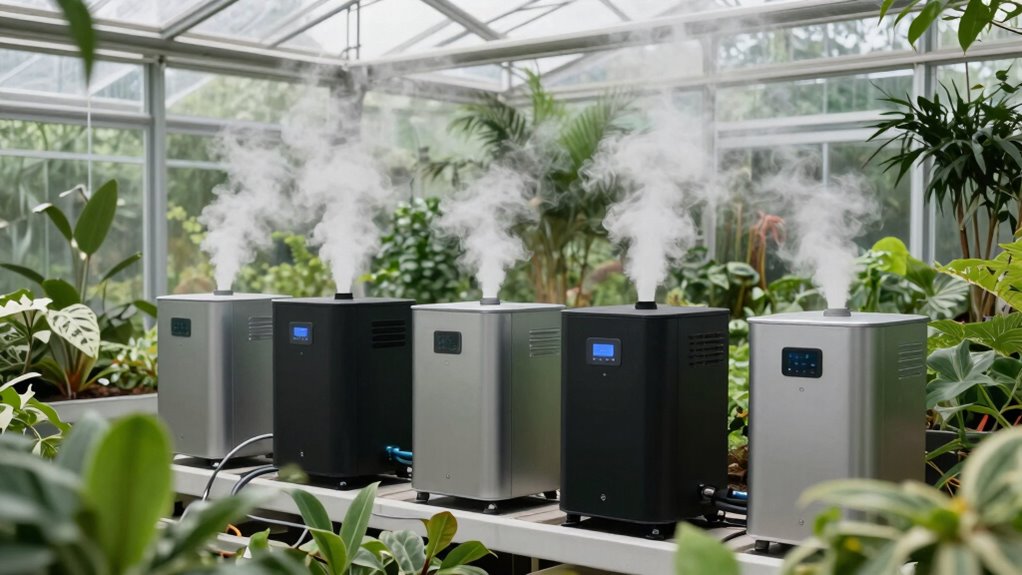

Greenhouse humidifiers and dehumidifiers play a essential role in controlling humidity levels for healthy plant growth. You add moisture with humidifiers during dry periods to prevent water stress and promote strong roots and vibrant foliage. Dehumidifiers remove excess moisture to stop mold, fungal diseases, and root rot. Proper humidity management supports disease prevention and energy-efficient climate control. Keep exploring to discover how balancing these systems can optimize your greenhouse environment effectively.
Key Takeaways
- Humidifiers add moisture to optimize plant growth and prevent water stress in dry conditions.
- Dehumidifiers remove excess humidity to prevent mold, mildew, and fungal diseases.
- Proper humidity control balances environmental conditions, enhancing plant health and reducing disease risks.
- Using both devices ensures energy efficiency and climate stability within the greenhouse.
- Precise environmental regulation supports vigorous growth, higher yields, and healthier crops.
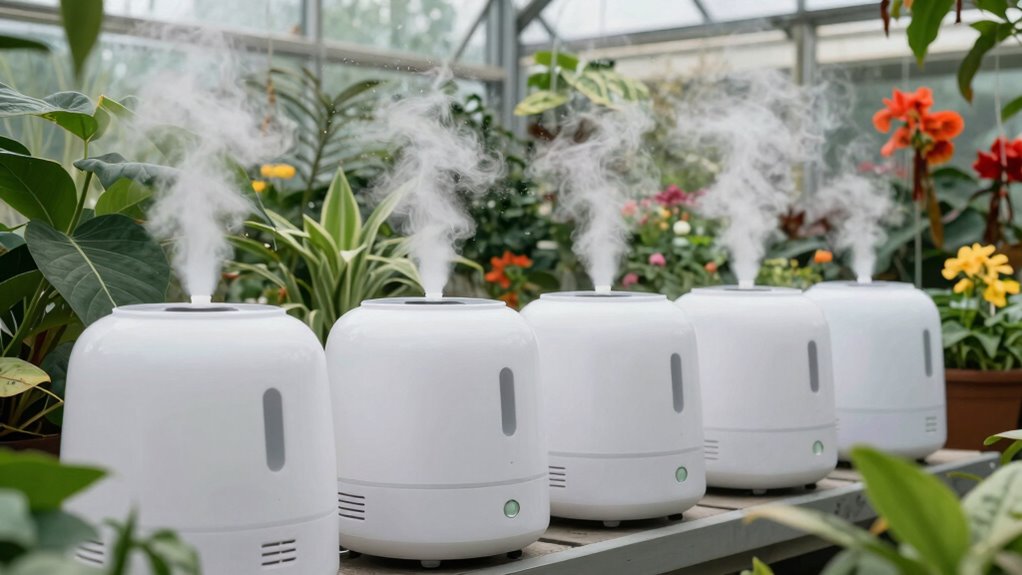
Maintaining the right humidity levels is essential for a healthy and productive greenhouse, and choosing the right humidifiers and dehumidifiers can make all the difference. When you manage humidity properly, you directly influence plant growth, ensuring your plants develop strong roots, vibrant foliage, and abundant flowering or fruiting. Proper water management within your greenhouse relies heavily on controlling moisture levels, preventing issues like mold, mildew, and fungal diseases that thrive in overly humid environments, or plant stress caused by excessively dry air.
Humidifiers work by adding moisture to the air, which is especially critical during dry seasons or in climates where natural humidity is low. When you use humidifiers effectively, you create an ideal environment where water is readily available for plants to absorb through their roots and leaves. This promotes healthy cell growth and enhances nutrient uptake, leading to faster growth rates and better overall plant health. For water management, a well-designed humidification system helps prevent water stress—whether it’s too much or too little—by maintaining a consistent humidity level suited to your specific plant varieties. Additionally, humidity monitoring tools can assist in maintaining precise control over environmental conditions, which is essential for climate regulation in greenhouse settings. Properly managed humidity levels can also contribute to energy efficiency by reducing the need for excessive heating or cooling. Furthermore, understanding the types of humidifiers available can help you select the most suitable system for your greenhouse needs.
On the other hand, dehumidifiers remove excess moisture from the air, which is vital when humidity levels become too high. If you notice mold on plant surfaces or a musty smell in your greenhouse, a dehumidifier can help restore balance. Controlling excessive humidity prevents water from condensing on leaves and surfaces, reducing the risk of fungal infections and disease spread. Proper water management through dehumidification also ensures that your plants don’t suffer from root rot or other moisture-related issues that can stunt growth or cause plant death. By keeping humidity in check, you create a more stable environment that promotes vigorous plant growth and reduces the need for chemical interventions. Additionally, understanding the importance of humidity control can help you optimize your greenhouse conditions more effectively, leading to healthier plants and increased yields. Maintaining optimal humidity levels is also essential for disease prevention, helping to safeguard your crops from common fungal and bacterial threats.
greenhouse humidifier with adjustable moisture control
As an affiliate, we earn on qualifying purchases.
As an affiliate, we earn on qualifying purchases.
Frequently Asked Questions
How Often Should Greenhouse Humidifiers and Dehumidifiers Be Maintained?
You should maintain your greenhouse humidifiers and dehumidifiers regularly—at least once a month. Check humidifier calibration to guarantee accurate moisture levels and clean or replace dehumidifier filtration to keep airflow ideal. Regular maintenance helps prevent malfunctions, maintains consistent humidity, and promotes healthy plant growth. Pay close attention to any signs of wear or buildup, and schedule more frequent checks during peak usage or changing weather conditions.
Are There Specific Models Best Suited for Different Greenhouse Sizes?
Yes, there are specific models best suited for different greenhouse sizes. When choosing, focus on model selection by considering the size of your greenhouse. Larger spaces need higher-capacity humidifiers and dehumidifiers, while smaller ones require more compact units. Size considerations guarantee efficient climate control without over- or under-utilizing equipment. Always match the model’s capacity to your greenhouse’s volume for ideal humidity regulation and energy efficiency.
How Do External Weather Conditions Affect Their Performance?
External weather conditions considerably influence how your humidifiers and dehumidifiers perform. Weather fluctuations, like sudden temperature drops or humidity spikes, can challenge their efficiency. External impacts such as wind, rain, or extreme heat might cause your equipment to work harder or less effectively. To maintain ideal conditions, you should regularly monitor and adjust your systems based on current weather patterns, ensuring your greenhouse stays balanced regardless of external influences.
Can They Operate Effectively With Renewable Energy Sources?
Like a steady heartbeat in a living organism, renewable integration powers your greenhouse humidifiers and dehumidifiers effectively. You harness solar or wind energy, turning them into a sustainable pulse that keeps your environment balanced. This approach boosts energy efficiency, reducing reliance on fossil fuels. As a result, your environmental control system operates smoothly, blending nature’s renewable gifts with technology’s precision to create a ideal, eco-friendly climate.
What Are the Initial Costs Versus Long-Term Savings?
The initial costs of greenhouse humidifiers and dehumidifiers can be high, but a thorough cost comparison shows that the investment benefits outweigh these expenses over time. You’ll save on energy bills, reduce maintenance costs, and optimize plant growth, leading to increased yields. While upfront investments may seem steep, the long-term savings from efficient environmental control make these systems a smart, cost-effective choice for sustainable greenhouse management.
dehumidifier for greenhouse environment
As an affiliate, we earn on qualifying purchases.
As an affiliate, we earn on qualifying purchases.
Conclusion
So, next time you’re obsessing over perfect humidity levels, remember: greenhouse humidifiers and dehumidifiers are your trusty sidekicks in this grand game of plant perfection. Who needs natural climate control when you can orchestrate an artificial paradise? Just keep a close eye—after all, a little overzealous control might turn your lush haven into a desert or swamp faster than you can say “photosynthesis.” Happy growing, master of your microclimate!
plant humidity monitor and control system
As an affiliate, we earn on qualifying purchases.
As an affiliate, we earn on qualifying purchases.
energy-efficient greenhouse climate control system
As an affiliate, we earn on qualifying purchases.
As an affiliate, we earn on qualifying purchases.