
Using multispectral drones is only effective when paired with a solid agronomy plan. They reveal important data on soil health, crop vigor, and stress, but without understanding these underlying issues, you risk misinterpreting the information. Combining drone insights with strategies like soil testing and crop rotation helps target interventions and improve yields sustainably. Keep exploring how integrating technology with good agronomic practices can maximize your farm’s potential.
Key Takeaways
- Multispectral drones provide valuable data only when integrated into a comprehensive agronomy strategy.
- Effective use of drone data requires understanding soil health and crop rotation practices.
- Agronomy planning ensures targeted interventions for optimal resource efficiency and crop growth.
- Without proper agronomic context, drone insights may lead to misinformed or ineffective actions.
- Combining drone technology with science-based management maximizes farm productivity and sustainability.
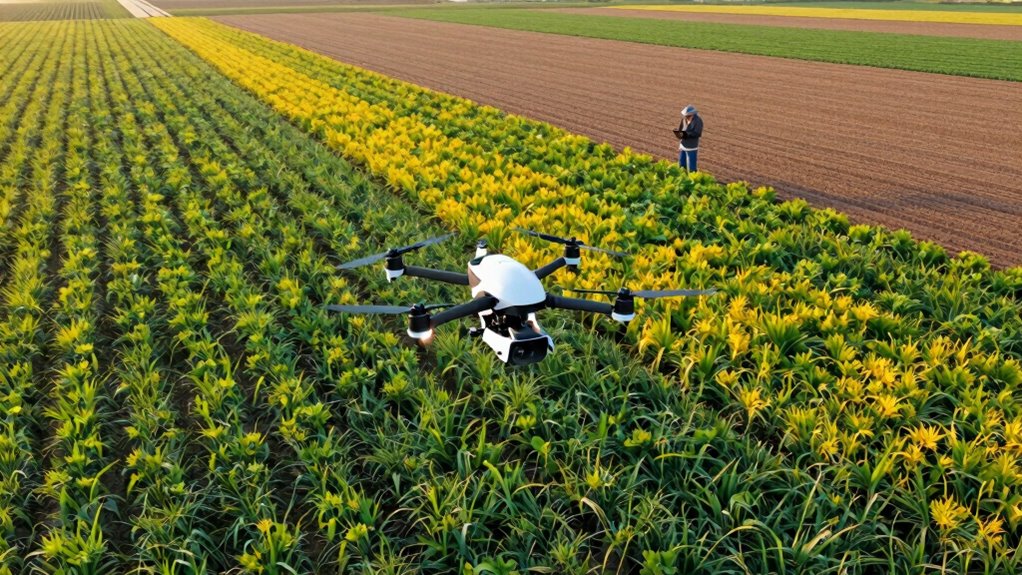
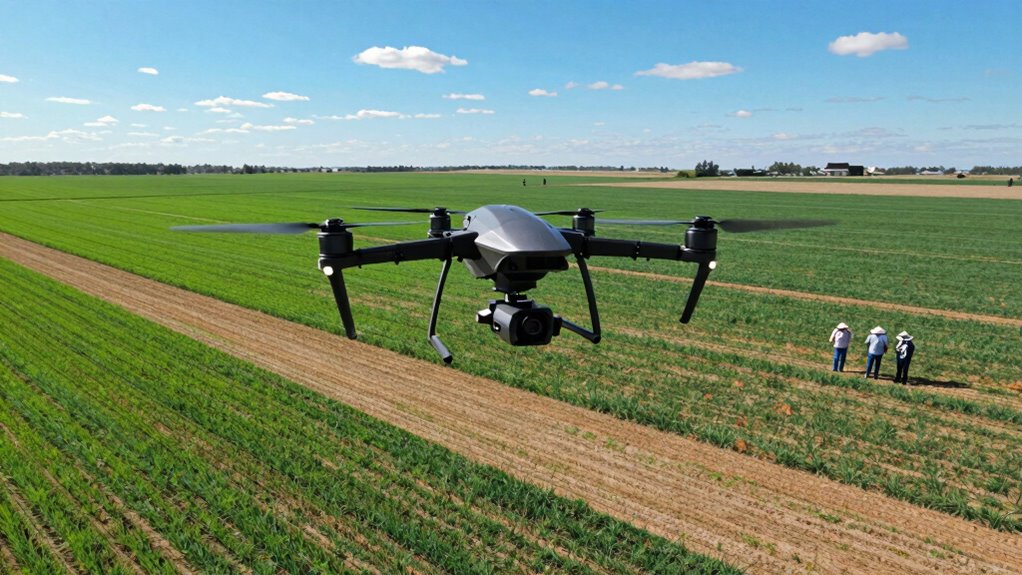
In today’s agricultural and environmental sectors, multispectral drones have become essential tools for precise monitoring and analysis. Their ability to capture detailed imagery across multiple spectral bands allows you to assess crop health, detect stress early, and make informed decisions. However, simply owning the best multispectral drone doesn’t guarantee success. To truly harness its potential, you need a solid agronomy plan that integrates drone data into your overall farm management strategy.
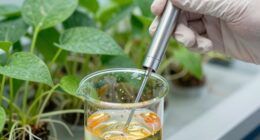
One critical aspect of this plan is understanding soil health. Healthy soil is the foundation of productive farming, influencing everything from nutrient availability to water retention. Multispectral imagery helps you identify areas of poor soil health by revealing variations in plant vigor and canopy reflectance. When you combine drone data with soil tests, you gain a clearer picture of what’s happening beneath the surface. This insight guides you in making targeted interventions, such as soil amendments or adjusting irrigation. Without a focus on soil health, even the most advanced drone technology can’t compensate for underlying issues that limit crop growth.
Healthy soil is the foundation of productive farming, guiding targeted interventions with drone data and soil tests.
Crop rotation is another vital component that your agronomy plan should incorporate. Rotating crops reduces pest and disease pressure, improves soil structure, and prevents nutrient depletion. Using multispectral drones, you can monitor how different crops respond to rotation practices across your fields. For example, you might notice that certain areas show signs of stress or lower productivity after specific rotations. This information helps you refine your rotation schedule to optimize soil health and crop yields over time. It’s crucial to see drone data not as a standalone tool, but as part of a broader effort to improve sustainability and profitability through strategic crop management.
To make the most of multispectral drone technology, you must align its capabilities with your agronomic goals. This means not just capturing data but interpreting it in the context of soil health and crop rotation strategies. When you develop a comprehensive plan that considers these factors, you empower yourself to make proactive decisions. You can apply fertilizers more precisely, manage pests effectively, and adjust your rotation plans based on real-time insights. Additionally, understanding soil health can help you address underlying issues that may not be immediately visible, maximizing the effectiveness of your interventions. Incorporating precision agriculture techniques further enhances your ability to optimize resource use and sustainably increase yields. Moreover, integrating data on soil variability allows for more targeted management practices, reducing waste and improving overall efficiency. A thorough understanding of soil conditions can also help you adapt to changing environmental factors, ensuring resilience in your farming practices. Furthermore, aligning drone data with environmental conditions ensures your management practices are adaptable to changing weather patterns. In the end, the best multispectral drones become a powerful asset, but only when integrated into a thoughtful, science-based approach to farming. Without this integration, the technology risks being underutilized or misapplied, limiting its true potential to transform your agricultural practices.

Drones Over the Back Forty: A Midwest Farmer's Guide to Seeing What Your Eyes Simply Can't
As an affiliate, we earn on qualifying purchases.
As an affiliate, we earn on qualifying purchases.
Frequently Asked Questions
How Do Multispectral Drones Improve Crop Yield Predictions?
Multispectral drones improve crop yield predictions by providing detailed data on plant health, helping you identify soil variability and areas needing attention. With this info, you can optimize pest management and resource application, reducing waste and boosting yields. The drone’s imagery reveals stress signs early, allowing you to intervene promptly. This targeted approach leads to more accurate predictions and healthier crops, ultimately increasing your farm’s productivity.
What Are the Cost Differences Between Various Multispectral Drone Models?
You might be surprised by the cost comparison among multispectral drone models. Entry-level options are surprisingly affordable, making drone technology accessible for small farms, while high-end models with advanced features can reach premium prices. Drone affordability varies widely, depending on sensors, flight time, and data processing capabilities. If you’re considering investing, weigh your needs carefully; sometimes, a mid-range drone offers the perfect balance of price and performance.
How Often Should Multispectral Images Be Captured During a Growing Season?
You should capture multispectral images every 1 to 2 weeks during the growing season to monitor crop health effectively. Make certain of consistent image resolution for accurate comparisons and perform regular data calibration to maintain data quality. This frequency helps identify stress areas early, allowing timely intervention. Adjust the schedule based on crop type and growth stage, but consistent capture and calibration are key to reliable insights throughout the season.
What Are the Maintenance Requirements for Multispectral Drone Equipment?
You need to stay vigilant with your multispectral drone’s maintenance. Regularly check the battery lifespan to prevent unexpected failures, and perform calibration procedures each time you fly. Neglect these steps, and the accuracy of your data could be compromised, jeopardizing your entire project. Keep your equipment in top shape, and you’ll gain access to consistent, reliable imagery that’s critical for effective crop management. The key to success is ongoing care.
Can Multispectral Drones Detect Specific Plant Diseases?
Yes, multispectral drones can detect specific plant diseases by analyzing plant stress indicators that aren’t visible to the naked eye. They identify disease patterns through specialized sensors that capture spectral data, highlighting areas of concern. This targeted disease identification helps you respond quickly, improving crop health. However, accurate detection depends on proper calibration, data interpretation, and integrating drone findings with your agronomy plan for ideal results.
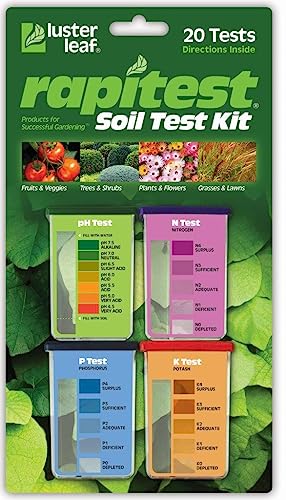
Rapitest Soil Test Kit for Gardens, Vegetables, Flowers and Lawns. USA designed and assembled soil tester completely, quickly and accurately measures/analyzes soil pH acidity and garden nutrients.
- Quick at-home soil test: Measures pH, N, P, K accurately
- Complete testing kit: Includes components for 20 tests
- Versatile testing: Tests multiple garden spots
As an affiliate, we earn on qualifying purchases.
As an affiliate, we earn on qualifying purchases.
Conclusion
Remember, even the best multispectral drone won’t reap rewards if your agronomy plan isn’t solid. It’s like trying to steer a ship without a compass—you might move, but you won’t reach your destination efficiently. To truly maximize your drone’s potential, align its capabilities with a well-thought-out strategy. When you do, you’ll see your efforts pay off and your fields thrive, proving that tools alone can’t do the job—you’re the key to success.
As an affiliate, we earn on qualifying purchases.
As an affiliate, we earn on qualifying purchases.