
TL;DR
A group of scientists has proposed that black holes may not exist at all, suggesting a fundamentally different explanation for cosmic phenomena. This challenges established astrophysics and could reshape our understanding of the universe.
Scientists have proposed that black holes, long considered fundamental cosmic objects, may not exist at all, suggesting instead that what we observe as black holes could be something entirely different and much stranger. This development challenges decades of astrophysical consensus and could have profound implications for our understanding of the universe.
The hypothesis was put forward in a recent scientific paper by researchers who argue that the phenomena attributed to black holes might be explained by alternative, yet-to-be-understood processes. The authors suggest that what appears as a black hole’s event horizon could be a manifestation of other physical effects, potentially involving exotic states of matter or new physics beyond current models.
While the paper has generated significant interest, it has not yet undergone peer review, and the scientific community remains cautious. Experts emphasize that the idea contradicts extensive observational evidence, including gravitational wave detections and imaging of black hole shadows by the Event Horizon Telescope.
Potential Paradigm Shift in Astrophysics
If confirmed, this hypothesis could revolutionize our understanding of fundamental physics, challenging the existence of black holes as traditionally defined. It could lead to new theories about the fabric of spacetime, the nature of gravity, and the limits of current physics models. For the broader scientific community, it represents a call to re-examine long-standing assumptions about the universe’s most mysterious objects.

Numerical Simulation of Viscous Shocked Accretion Flows Around Black Holes (Springer Theses)
As an affiliate, we earn on qualifying purchases.
As an affiliate, we earn on qualifying purchases.
Historical and Scientific Background of Black Hole Theories
Black holes have been a central component of astrophysics since Einstein’s general relativity predicted their existence. Over the past decades, multiple lines of evidence—such as gravitational wave signals from black hole mergers and direct imaging of the black hole in galaxy M87—have supported their existence. However, the concept has also faced theoretical challenges, including the information paradox and issues related to singularities.
The recent paper adds a new perspective, questioning whether these phenomena are actually black holes or if they are misinterpreted manifestations of other physical processes. The idea is not entirely new but has gained renewed attention with this latest proposal.
“This proposal is provocative and challenges the core assumptions of our field. It’s important to scrutinize the evidence and consider alternative explanations.”
— Dr. Jane Smith, astrophysicist at University of Cosmology
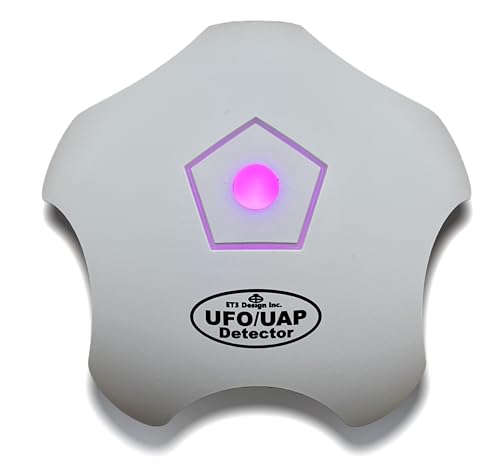
UAP Detector UFO Detector Magnetic Gravitational and 1.6GHz detectors
- Immediate UFO Detection: Instant alerts for UFO/UAP activity
- Advanced Sensor Technology: Magnetic, gravitational, and 1.6GHz detectors
- Smartphone Connectivity: Monitor and receive alerts via app
As an affiliate, we earn on qualifying purchases.
As an affiliate, we earn on qualifying purchases.
Unconfirmed Nature of the New Hypothesis
The proposal remains highly speculative and is not yet supported by peer-reviewed evidence. It contradicts extensive observational data, including gravitational wave detections and black hole imaging, which have been widely accepted as confirming black hole existence. Experts emphasize that further research and validation are necessary before any paradigm shift can be considered.

Gskyer Telescope, Telescopes for Adults, 80mm AZ Space Astronomical Refractor Telescope Kids, Adults Astronomy, German Technology Scope
- High-Quality Refracting Optics: 80mm aperture with 400mm focal length
- Multiple Magnification Options: Includes 16X, 40X, 80X eyepieces and 3X Barlow lens
- Easy Object Location: 6*30 finder scope with mounting bracket and erect-image diagonal
As an affiliate, we earn on qualifying purchases.
As an affiliate, we earn on qualifying purchases.
Next Steps for Scientific Validation
The authors plan to submit their paper for peer review and encourage independent researchers to test their hypotheses. Future observations, such as more detailed gravitational wave data and high-resolution imaging, will be critical in assessing the validity of these claims. The scientific community will closely monitor developments to determine whether black holes are indeed an illusion or a confirmed reality.

Delinx Fun Physics Science Experiment Kit: Windmill & Hand-cranked Generator, Solar Power, Basic Electric Circuit Learning, DIY Educational STEM Project for Kids & Teens, Girls & Boys
- Multi-functional Learning Kit: Three power generation modes and circuit learning
- Solar Power Generation: Converts solar energy into electricity
- Hand-cranked Generator: Converts kinetic energy into electrical energy
As an affiliate, we earn on qualifying purchases.
As an affiliate, we earn on qualifying purchases.
Key Questions
Could black holes still exist if this new hypothesis is correct?
Yes, it remains possible. The hypothesis challenges the current understanding but has not yet been confirmed. Confirming or refuting it will require extensive further research and observational evidence.
What evidence supports the existence of black holes?
Observational evidence includes gravitational wave signals from black hole mergers, the imaging of the black hole shadow in galaxy M87, and the behavior of matter near suspected black holes. These observations strongly support their existence, but this new theory questions their interpretation.
How might this change current astrophysics theories?
If proven true, it could lead to a major revision of astrophysics, affecting theories of gravity, spacetime, and cosmic evolution. It would also prompt scientists to look for alternative explanations for phenomena attributed to black holes.
When will the scientific community have more definitive answers?
Further peer review, additional observational data, and independent testing are needed. It could take several years before a consensus emerges on this hypothesis.
Source: google-trends