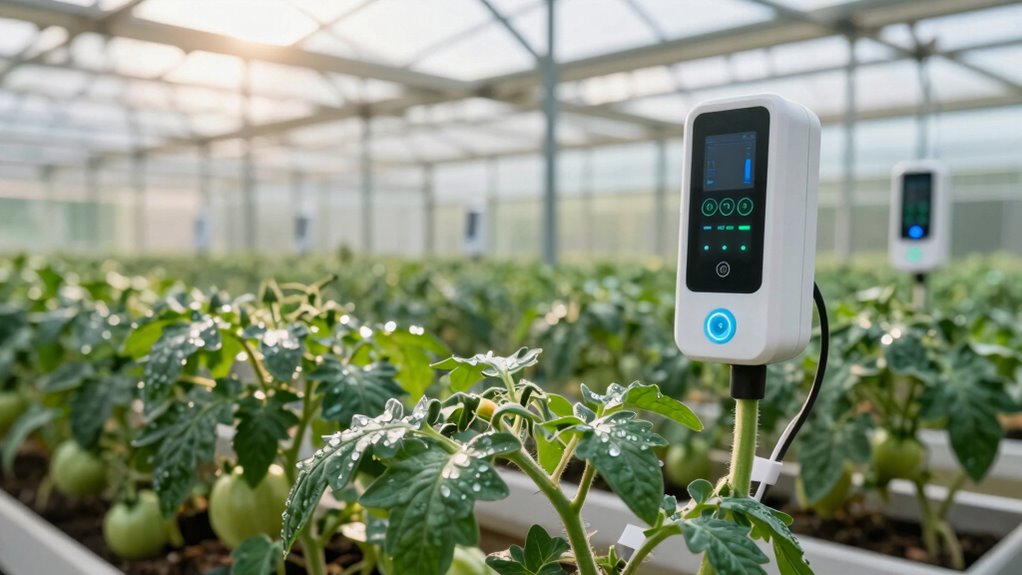

Smart sensors can considerably improve your greenhouse chemistry control by providing real-time, precise data on environmental factors like temperature, humidity, light, and nutrients. This info helps you make immediate adjustments, ensuring ideal growth conditions and healthier plants. Proper calibration and data integration are key to maintaining accuracy and gaining a complete environmental picture. By using these tools effectively, you’ll reduce guesswork and boost yields. Keep exploring to discover how to maximize your greenhouse’s potential.

Prime made for students and young adults
- Fast, free delivery for dorm and study essentials
- Prime Video and Amazon Music included
- Member-only deals
Key Takeaways
- Smart sensors provide real-time environmental data for precise monitoring and adjustments in greenhouse conditions.
- Regular calibration of sensors ensures accurate measurements, enhancing the reliability of chemical control.
- Data integration from multiple sensors creates comprehensive environmental profiles for better decision-making.
- Automated data processing enables quick responses to environmental changes, optimizing chemical application.
- Proper sensor calibration and data management improve plant health, yields, and overall greenhouse operational efficiency.
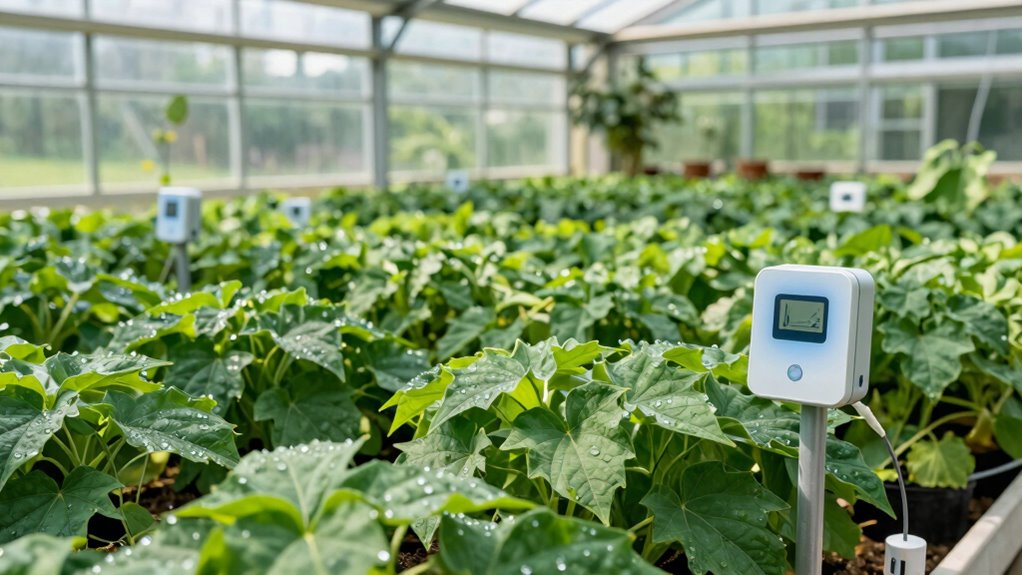
Smart sensors are transforming greenhouse chemistry by providing real-time data that helps growers optimize conditions and enhance plant growth. These sensors continuously monitor critical parameters like temperature, humidity, light, and nutrient levels, giving you immediate insights into your greenhouse environment. But to truly harness their power, you need to understand the importance of proper sensor calibration and effective data integration. Calibration ensures that your sensors deliver accurate readings, which is vital because even small inaccuracies can lead to subpar conditions or misinformed decisions. Regular calibration routines, whether manual or automated, help maintain precision over time and prevent drift that could compromise your data quality. You want to trust your sensors’ measurements, so establishing a routine calibration schedule is vital for consistent, reliable data.
Data integration takes this a step further by combining information from multiple sensors and sources into a cohesive system. Instead of looking at isolated data points, you can analyze extensive environmental profiles that reflect the entire greenhouse ecosystem. When you integrate data effectively, it becomes easier to identify patterns, predict issues, and adjust conditions proactively. For example, if temperature sensors indicate a sudden rise in one zone, and humidity sensors show a drop elsewhere, you can quickly respond to prevent stress on your plants. Data integration also allows you to connect sensor outputs with your control systems, automating adjustments for irrigation, ventilation, or lighting. This seamless flow of information enhances your ability to maintain ideal conditions consistently and reduces manual intervention. Moreover, the use of accurate sensors is essential to ensure that your integrated data is reliable and actionable. Incorporating real-time data processing can further streamline decision-making and improve responsiveness. Additionally, understanding the impact of calibration on data accuracy underscores the need for regular sensor checks. Understanding the role of data quality in sensor performance is fundamental to making informed decisions based on your collected data.
Using smart sensors for greenhouse chemistry control is about more than just collecting data; it’s about making that data work for you. Proper sensor calibration guarantees your measurements are accurate, so your decisions are based on trustworthy information. Meanwhile, effective data integration transforms raw data into actionable insights, giving you a holistic view of your environment. In addition, adopting advanced data analytics can further improve your ability to interpret complex data patterns and optimize growth strategies. When these elements work together, you can fine-tune your greenhouse conditions with precision, ensuring your plants thrive and your yields improve. The combination of accurate data and integrated systems minimizes guesswork and helps you respond swiftly to changing conditions, ultimately leading to healthier plants and more efficient operations. In essence, smart sensors, when properly calibrated and integrated, are powerful tools that can greatly elevate your greenhouse chemistry control, making your growing environment smarter and more responsive.
smart greenhouse environmental sensors
As an affiliate, we earn on qualifying purchases.
As an affiliate, we earn on qualifying purchases.
Frequently Asked Questions
How Do Smart Sensors Compare Cost-Wise to Traditional Monitoring Methods?
Smart sensors are generally more cost-efficient than traditional monitoring methods because their sensor affordability allows for widespread deployment. While initial investments might be higher, they reduce ongoing costs by providing real-time data, minimizing resource waste, and preventing crop loss. Over time, their ability to improve decision-making and optimize environmental conditions makes them a smart choice, ensuring you get better value and more precise control without breaking your budget.
What Are the Potential Privacy Concerns With Smart Sensor Data?
You should be aware that smart sensors can raise privacy concerns, especially regarding data security. If you don’t implement strong security measures, there’s a risk of unauthorized access to sensitive data. This could lead to information leaks or misuse. To protect your data, you need effective encryption, access controls, and regular security audits, ensuring your smart sensor data remains secure and private, minimizing the risk of unauthorized access.
Can Smart Sensors Predict Future Greenhouse Conditions Accurately?
Smart sensors act like crystal balls, offering surprisingly accurate predictions of future greenhouse conditions. By regularly calibrating sensors, you guarantee data remains precise, while seamless data integration from various sources enhances forecast reliability. These sensors analyze trends and patterns, allowing you to anticipate changes in humidity, temperature, or light. As a result, you can optimize conditions ahead of time, boosting plant health and yield with confidence in the system’s predictive power.
How Durable Are Smart Sensors in Harsh Greenhouse Environments?
Smart sensors are quite durable in harsh greenhouse environments, especially when properly maintained. Regular sensor calibration guarantees accuracy over time, even under extreme conditions. Their environmental resilience depends on robust materials and protective coatings designed to withstand humidity, heat, and chemical exposure. With these measures in place, your sensors will perform reliably, providing consistent data to optimize greenhouse conditions and improve overall plant health.
What Training Is Required to Operate and Maintain Smart Sensors?
Think of operating smart sensors like tending a garden—regular care keeps everything thriving. You’ll need training on sensor calibration to guarantee accurate readings and understanding data security measures to protect your information. Basic troubleshooting skills help you address common issues, while advanced training can deepen your knowledge. Staying updated on software updates and maintenance routines ensures your sensors run smoothly, helping you optimize greenhouse conditions efficiently and confidently.
digital temperature and humidity sensors for greenhouse
As an affiliate, we earn on qualifying purchases.
As an affiliate, we earn on qualifying purchases.
Conclusion
By embracing smart sensors, you’re equipping your greenhouse with a vigilant guardian, constantly monitoring and adjusting chemistry levels like a skilled conductor guiding an orchestra. These sensors turn complex data into actionable insights, ensuring your plants thrive in perfect harmony. Without them, managing chemistry is like sailing without a compass—chaotic and uncertain. So, invest in smart sensors, and watch your greenhouse bloom with health and productivity, guided by technology’s steady hand.
nutrient level sensors for plants
As an affiliate, we earn on qualifying purchases.
As an affiliate, we earn on qualifying purchases.
automated greenhouse data logger
As an affiliate, we earn on qualifying purchases.
As an affiliate, we earn on qualifying purchases.
Fall Picks
fall essentials
As an affiliate, we earn on qualifying purchases.