TL;DR

Prime made for students and young adults
- Fast, free delivery for dorm and study essentials
- Prime Video and Amazon Music included
- Member-only deals
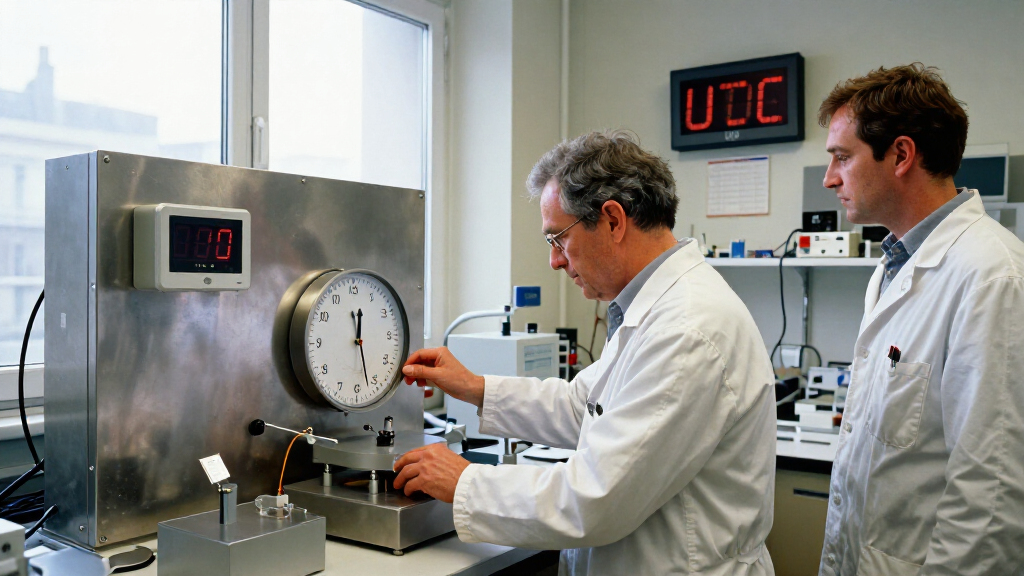
The General Conference on Weights and Measures has decided that continuous UTC will take effect on May 20, 2027, ending future leap-second adjustments. The permitted difference between UTC and Earth-rotation time UT1 will rise to 3,600 seconds, or one hour; the BIPM says it will work with international organizations to support the change.
The General Conference on Weights and Measures has decided that Coordinated Universal Time (UTC) will become continuous on May 20, 2027, ending future leap-second adjustments. Its Resolution 5 sets the maximum permitted difference between UTC and Earth-rotation time UT1 at 3,600 seconds, or one hour, a change intended to reduce risks for systems that depend on reliable, synchronized time.
The resolution was adopted at the 28th meeting of the CGPM in 2026. The conference directs the International Bureau of Weights and Measures (BIPM), which produces UTC, to implement the continuous time scale on the specified date. UTC will continue at the same rate as International Atomic Time (TAI); the change removes the adjustments that have been used to keep UTC close to UT1, the time scale associated with the Earth’s rotation.
Under the new limit, the absolute difference |UT1−UTC| may reach one hour. This is a permitted maximum, not a prediction that the gap will reach an hour on the implementation date. The resolution says the larger limit is intended to support UTC’s continuity for several centuries. It also calls on the BIPM to monitor the difference and its projected evolution, report to the International Committee for Weights and Measures, and work with organizations affected by the decision.
The conference cited the needs of critical infrastructure and industrial users, including transportation, energy distribution, telecommunications and space projects. Its resolution says systems that require continuous time can face operational risks when a leap second is inserted, and that a negative leap second would be especially challenging because one has never been applied. The resolution describes a March 2025 workshop estimate that the probability of a negative leap second could reach 30% by 2035; that figure is an estimate cited by the conference, not a prediction that such an adjustment will occur.
Why Infrastructure Needs Continuous UTC
The decision changes a standard used well beyond clocks and calendars. Telecommunications networks, power systems, transport operations and satellite services rely on timestamps to coordinate equipment and services. A discontinuity can require software and operational systems to handle a special time adjustment, while different providers may use different ways to manage it.
The CGPM’s resolution says those differing mitigation methods can create inconsistencies between systems and disseminated time signals. It argues that a continuous UTC would avoid future leap-second insertions and reduce the risk of a negative adjustment, for which critical infrastructure may be poorly prepared. The decision also reflects a standardization concern: the conference warned that delaying the change could lead some users to adopt other reference time scales, weakening the role of UTC as the international reference.
For ordinary users, the change is not a decision to move civil clocks by an hour on the start date. Rather, it changes how UTC is kept in relation to Earth’s rotation over time. The practical effect on local clock displays and particular services will depend on how national authorities and service providers apply the new standard.
atomic clock for precise timekeeping
As an affiliate, we earn on qualifying purchases.
As an affiliate, we earn on qualifying purchases.
From Leap Seconds to a One-Hour Limit
UTC is produced by the BIPM and is the recommended time scale for international reference and the basis of civil time in most countries. It runs at the same rate as TAI but has historically differed from it by an integral number of seconds. Leap seconds have been used to keep UTC aligned within a defined limit of UT1, which tracks Earth’s rotation.
At its 26th meeting in 2018, the CGPM reaffirmed UTC’s relationship to TAI. In 2022, at its 27th meeting, it decided that the maximum permitted difference between UT1 and UTC would be increased by, or before, 2035, and asked for a proposal at the next meeting. Resolution 5, adopted in 2026, sets the limit at one hour and establishes the earlier implementation date of May 20, 2027.
The resolution also cites international coordination already under way. The International Telecommunication Union’s Radiocommunication Sector has been studying how to transmit the UT1−UTC difference, and a 2023 World Radiocommunication Conference resolution provided for a transition period for some radio equipment, extending in certain cases to no later than 2040. The CGPM also welcomes work by the International Earth Rotation and Reference Systems Service (IERS) to adjust its operational provision and announcements of leap seconds in line with the resolutions.
“Continuous UTC will become effective on 20 May 2027.”
— The 28th General Conference on Weights and Measures, Resolution 5
As an affiliate, we earn on qualifying purchases.
How Systems Will Handle the Change
The resolution establishes the international decision and date, but it does not specify how every country, technology provider or user will adapt its systems. Implementation details for individual services remain open, including how time signals and operational software will be updated and how providers will communicate the evolving UT1−UTC difference.
The cited 30% estimate by 2035 concerns the probability of a negative leap second, as reported from the 2025 workshop; it does not establish that one will occur or provide a date for one. The resolution says a negative leap second has never been applied. Nor does the one-hour limit mean that the difference will promptly reach that value: its timing depends on Earth’s rotation and the IERS’s monitoring and modelling.
Radio equipment may face a separate timetable. The resolution references provisions allowing a transition for systems that cannot be replaced earlier, with dissemination of an increased UT1−UTC difference permitted until no later than 2040 in specified cases. The exact arrangements for affected equipment and national systems will require coordination beyond the decision itself.
As an affiliate, we earn on qualifying purchases.
Coordination Before May 2027
The BIPM is tasked with continuing work with the ITU, International Astronomical Union, International Union of Geodesy and Geophysics, IERS and other affected organizations. The resolution calls for user information and support for applying the decision, continued monitoring and modelling of UT1−UTC, and regular updates to the CIPM on how the difference evolves.
The next key milestone is May 20, 2027, when continuous UTC is scheduled to take effect. In the run-up, international bodies and national metrology organizations will need to communicate technical arrangements to users, while radio-system changes may use the transition provisions described in the resolution. The resolution does not give a detailed implementation schedule for every sector, so further guidance from the organizations involved will determine how the change is applied in particular systems.
professional time synchronization device
As an affiliate, we earn on qualifying purchases.
As an affiliate, we earn on qualifying purchases.
Key Questions
What did the BIPM and CGPM decide?
The 28th CGPM adopted Resolution 5, setting May 20, 2027, as the date when UTC becomes continuous. Future leap-second adjustments will no longer be used to keep UTC within the former limit of UT1.
Will clocks jump by an hour in May 2027?
No. The one-hour figure is the maximum permitted difference between UTC and UT1, which tracks Earth’s rotation. The resolution does not call for an hour-long change to civil clocks on the implementation date.
Why are leap seconds being stopped?
The CGPM cited concerns that leap-second insertions can disrupt systems dependent on continuous time, including critical infrastructure and industrial services. It said a negative leap second could pose particular risks because none has previously been applied.
Does the resolution mean a negative leap second is certain?
No. The resolution cites a workshop estimate of a 30% probability by 2035; it does not say a negative leap second will happen. The estimate is a stated risk, not a confirmed future event.
What happens to the difference between UTC and Earth’s rotation?
The permitted absolute difference, |UT1−UTC|, will be up to 3,600 seconds. The BIPM is tasked with monitoring its value and projected evolution, while the resolution identifies services such as GNSS messages and IERS information as sources for users needing UT1 data.
Source: hn
Fall Picks
fall essentials
As an affiliate, we earn on qualifying purchases.
![The early History of the Singular Value Decomposition (1993) [pdf]](https://varietychem.com/wp-content/uploads/2026/07/the-early-history-of-the-singular-value-decomposition-1993-pdf-featured-560x300.jpg)