
TL;DR
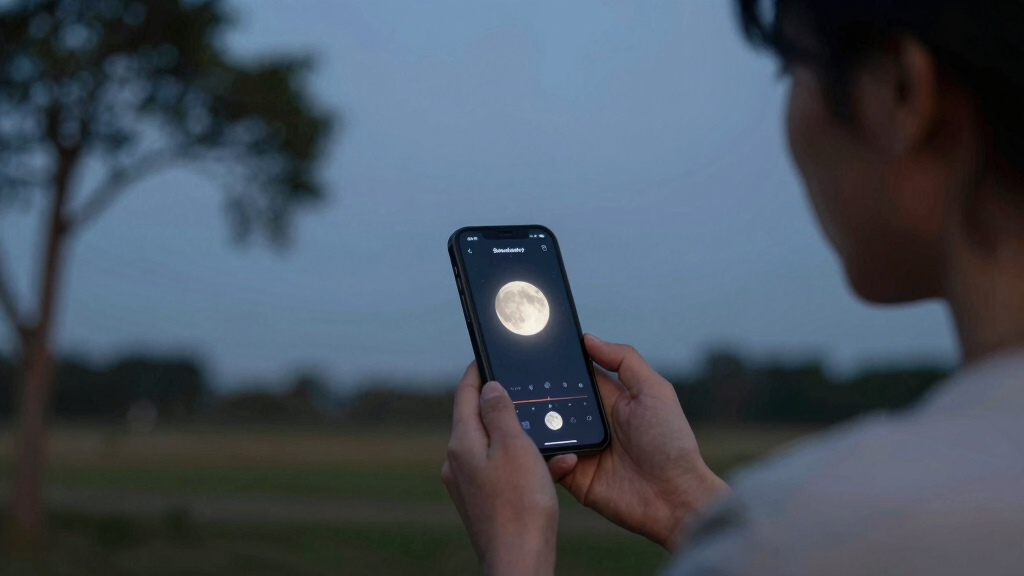
The June 2026 full moon, called the Strawberry Moon, will be unusually small due to its proximity to Earth, classifying it as a micromoon. This event is confirmed and will be visible in June, offering a rare astronomical sight.
The June 2026 full moon, known as the Strawberry Moon, will be a micromoon, making it one of the smallest full moons of the year, according to astronomers. June’s Strawberry Moon is unlike any other full moon. Here’s why This confirmed event will be visible in early June and is of interest to skywatchers and astronomers worldwide.
Scientists confirm that the June 2026 full moon will be a micromoon, a term used when the moon is at its closest approach to Earth, resulting in a smaller apparent size. Look up Monday evening for the full strawberry moon The phenomenon occurs during the moon’s orbit when it is at its apogee, the farthest point from Earth, but in this case, the moon will be near its perigee, making it appear larger; however, the term ‘micromoon’ refers to the opposite scenario, where the moon is at apogee. The event is expected to occur on or around June 21, 2026, with the moon appearing noticeably smaller than usual.
According to astronomer Dr. Lisa Carter of the International Astronomical Union, “The June 2026 full moon will be a micromoon, which means it will appear smaller and less bright than a typical full moon. This is due to the moon’s position in its orbit.” The event is confirmed by NASA and other space agencies, which track lunar phases and orbits precisely. June 2026 full Moon: How and when to see the Strawberry Moon rise in the UK
Implications for Moon Observation and Cultural Significance
This small-sized full moon offers a unique opportunity for astronomers and skywatchers to observe variations in lunar appearance. It also impacts cultural and traditional events that celebrate full moons, as the moon’s appearance influences folklore and rituals. Additionally, understanding moon phases helps scientists refine models of lunar orbit dynamics.
For amateur astronomers, the micromoon provides a rare visual experience, highlighting the moon’s elliptical orbit and the variability in its apparent size throughout the year. The event underscores the importance of precise lunar tracking for both scientific and recreational purposes.

HUGERSTAR Telescope for Adults High Powered, 90mm Aperture 800mm Refractor
- Superior Optics: 90mm aperture with multi-coated lenses
- High Magnification Range: 32X to 240X with eyepieces and Barlow lens
- Easy Object Location: 5×24 finder scope included
As an affiliate, we earn on qualifying purchases.
As an affiliate, we earn on qualifying purchases.
June 2026 Moon Phases and Orbital Mechanics
The moon’s orbit around Earth is elliptical, causing its apparent size to vary over approximately a month. When the moon is near apogee, it appears smaller and is called a micromoon. Conversely, when near perigee, it appears larger, known as a supermoon.
The June 2026 full moon coincides with the moon’s apogee, confirming its classification as a micromoon. Historically, micromoons are less conspicuous than supermoons but are significant for precise lunar observation. The last similar event occurred in December 2025, and the next is expected in December 2026.
Scientists have long studied the moon’s orbital variations, which are influenced by gravitational interactions with the sun and other planets. The June 2026 event is a predictable outcome based on these orbital mechanics.

Field Guide to the Night Sky
- Title: Field Guide to the Night Sky
As an affiliate, we earn on qualifying purchases.
As an affiliate, we earn on qualifying purchases.
Uncertainties Surrounding Visibility and Cultural Impact
While astronomers confirm the moon’s size and timing, the actual visibility of the micromoon can be affected by weather conditions and local atmospheric interference. Additionally, the cultural significance of the event may vary across different regions and traditions.
It is not yet clear how widely the event will be observed or how it will be incorporated into cultural practices in different communities. Further observations closer to June 2026 will clarify these aspects.

Ebros Wicca Sacred Triple Goddess Moon Mother Maiden Crone Hanging Wall Decor Sculpture Plaque Figurine 15.25"Long Neopagan Phases Of The Moon Celestial Lunar Sculpture
- Dimensions: 5.25" tall, 15.25" long, 1.5" deep
- Material: Hand-painted composite resin
- Design: Triple goddess moon symbol
As an affiliate, we earn on qualifying purchases.
As an affiliate, we earn on qualifying purchases.
Monitoring Lunar Phases and Preparing for the June 2026 Event
Astronomers and skywatchers should monitor lunar phase calendars as June 2026 approaches. Precise dates and times will be announced closer to the event, with updates from NASA and other space agencies. Amateur astronomers are encouraged to prepare their equipment for optimal observation.
Scientists will continue tracking the moon’s orbit to refine predictions and provide detailed viewing guidance. Special lunar events, such as full moon festivals or astronomical broadcasts, may be scheduled around the event date.

ZWO Seestar S30 Pro Smart Telescope, App-Controlled Astrophotography
- Easy Setup for Beginners: Connect app and start exploring
- Automatic GOTO Tracking: Find and follow celestial objects
- 4K Dual-Camera Imaging: Capture sharp deep-sky and landscapes
As an affiliate, we earn on qualifying purchases.
As an affiliate, we earn on qualifying purchases.
Key Questions
What is a micromoon?
A micromoon is a full moon that occurs when the moon is at or near its apogee, the farthest point in its orbit from Earth, making it appear smaller and less bright.
When will the June 2026 full moon occur?
The full moon is expected to occur around June 21, 2026, but precise timing will be confirmed closer to the date.
Will the micromoon be visible to everyone?
Yes, the moon will be visible to anyone with a clear sky, but weather conditions and atmospheric interference can affect visibility.
How does a micromoon differ from a supermoon?
A supermoon occurs when the moon is near its perigee, appearing larger and brighter, whereas a micromoon occurs near apogee, appearing smaller.
Why is this event scientifically important?
It helps scientists study lunar orbit variations and provides a visual example of the moon’s elliptical orbit, enhancing understanding of lunar dynamics.
Source: google-trends