When choosing between broadcast and banding for potassium application, consider your soil conditions, crop needs, and management goals. Broadcast spreads fertilizer evenly over the soil surface, which is efficient for large fields but may lead to leaching in sandy soils. Banding places nutrients close to roots, improving uptake and reducing loss. To optimize crop growth and yield, understanding these methods will help you make the best decision—keep looking to discover more details.

Prime made for students and young adults
- Fast, free delivery for dorm and study essentials
- Prime Video and Amazon Music included
- Member-only deals
Key Takeaways
- Broadcast application spreads potassium evenly over soil, suitable for large fields and quick initial fertility boost.
- Banding places fertilizer directly near roots, increasing nutrient efficiency and reducing leaching losses.
- Choice depends on soil pH, texture, and susceptibility to nutrient leaching; banding is better in challenging soil conditions.
- Broadcast is effective for uniform soil fertility, while banding offers targeted delivery for improved crop uptake.
- Proper method selection enhances crop yield, minimizes nutrient loss, and supports sustainable fertilizer management.
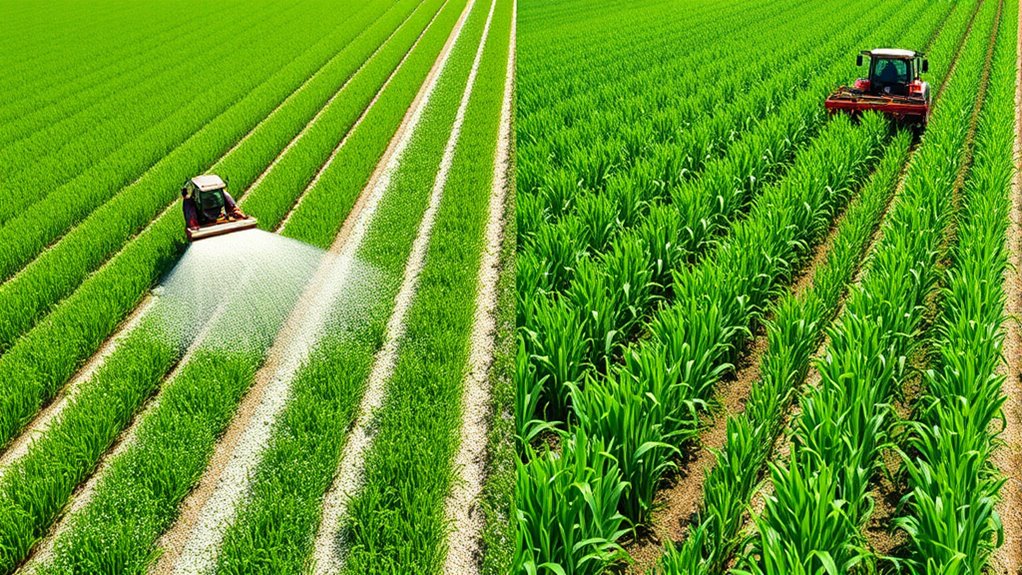
Have you ever wondered how farmers supply essential potassium to their crops? It’s a critical question because potassium plays a vital role in plant growth, influencing everything from water regulation to disease resistance. The way you apply potassium fertilizer can significantly impact your crop yield, and choosing the right method depends on several factors. Two common methods are broadcast and banding, each with its own advantages and considerations.
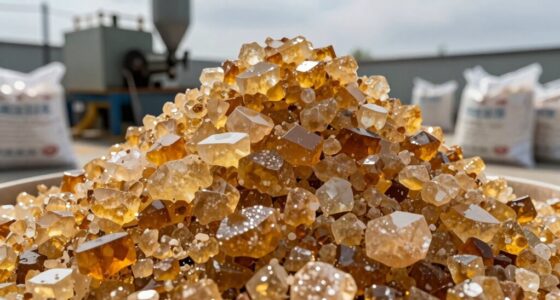
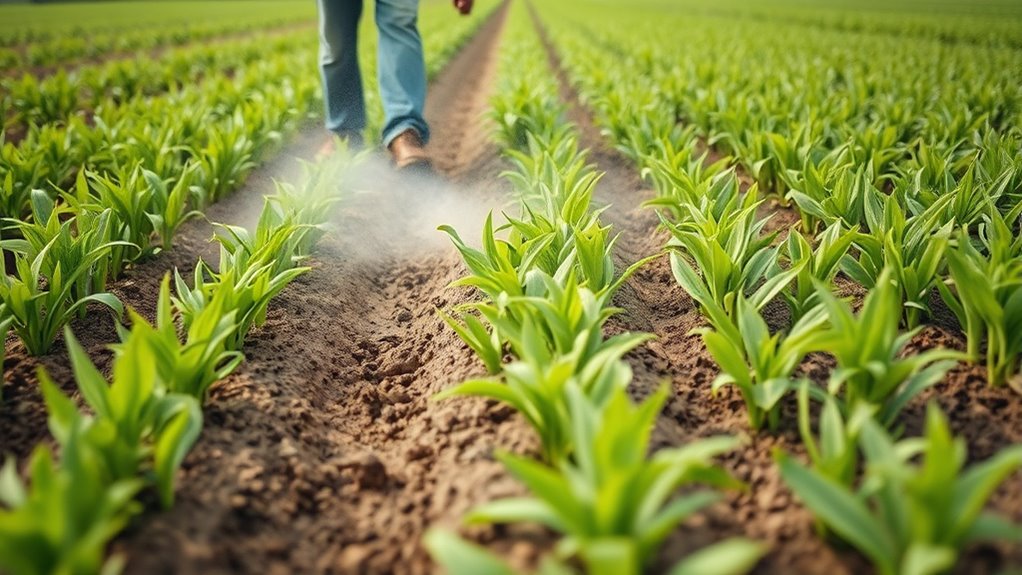
When applying potassium via broadcast methods, you spread the fertilizer evenly across the soil surface before planting or during early growth stages. This approach is straightforward and efficient for treating large fields quickly. However, one key aspect to consider is soil pH. If your soil has a high or low pH, it can affect how potassium is absorbed by plants. For instance, in acidic soils, potassium availability may be limited, reducing its impact on crop yield. Broadcast application helps improve soil fertility uniformly, but it may also lead to some potassium loss through leaching, especially in sandy soils or areas with high rainfall. Therefore, while this method can boost overall soil potassium levels, it might require adjustments based on soil pH and environmental conditions to maximize crop yield. Additionally, understanding soil nutrient interactions can help optimize fertilizer use.
On the other hand, banding involves placing fertilizer directly into the soil near the plant roots, often as a concentrated band either alongside or below the seed. This method allows for more precise delivery of potassium, ensuring the nutrient is readily accessible when plants need it most. Because the fertilizer is localized, banding minimizes nutrient loss and enhances the efficiency of potassium uptake, which can lead to higher crop yields. It’s especially beneficial if your soil’s pH is not ideal or if you’re working with soils prone to nutrient leaching. By concentrating potassium in specific zones, you give your plants a direct supply, often resulting in better growth and improved yield outcomes.
Choosing between broadcast and banding depends on your specific soil conditions, crop type, and management practices. If your goal is to quickly improve soil fertility over a large area, broadcast application might be the best route. But if you’re looking for maximum efficiency and targeted delivery, especially in soils with challenging pH levels, banding offers a strategic advantage. Either way, understanding how each method interacts with soil pH and affects crop yield helps you make informed decisions to optimize your fertilization plan. Proper application ensures your crops receive the potassium they need, promoting healthy growth, better harvests, and sustainable farming practices.
As an affiliate, we earn on qualifying purchases.
Frequently Asked Questions
How Does Soil Type Influence Potassium Application Choice?
Soil type greatly influences your potassium application choice. If you have fine-textured soils with high nutrient retention, banding is more effective because it delivers potassium directly where roots need it most, reducing losses. Conversely, sandy soils with low nutrient retention benefit from broadcasting to evenly distribute potassium, ensuring better availability over time. Your soil texture determines how well potassium stays in place and how effectively your chosen application method works.
What Are the Environmental Impacts of Each Application Method?
Imagine you apply potassium broadcast on a sandy soil; this increases leaching risks because nutrients quickly wash away with rain. Banding, on the other hand, concentrates nutrients near roots, reducing runoff potential and environmental contamination. Overall, broadcast methods tend to pose higher risks of leaching and runoff, especially on permeable soils, while banding minimizes these impacts by targeting delivery, making it a more environmentally friendly option when managed properly.
Can Potassium Banding Be Combined With Other Fertilizers?
Yes, you can combine potassium banding with other fertilizers. Just guarantee fertilizer compatibility to avoid chemical reactions that could reduce effectiveness or damage plants. Combining fertilizers can improve application efficiency by delivering multiple nutrients directly to the root zone. Always check compatibility and consider timing to maximize benefits, reduce waste, and prevent nutrient imbalances. Proper planning ensures your fertilizers work synergistically to promote healthy crop growth.
How Do Crop Stages Affect the Timing of Application Methods?
You should time your potassium application based on crop stages to optimize nutrient uptake during key growth phases. During early crop maturity, applying fertilizer through banding can guarantee rapid access for roots, supporting vigorous development. As the crop approaches maturity, broadcast application may be more effective, providing a steady nutrient supply. Proper timing maximizes nutrient uptake, enhances yield, and prevents deficiencies, aligning fertilizer methods with the crop’s specific developmental needs.
Are There Cost Differences Between Broadcast and Banding?
You’ll find that broadcast application generally costs less upfront, making it appealing for large-scale fields due to lower equipment and labor expenses. In contrast, banding often involves higher expenses because it requires precise equipment and more labor per acre, leading to a different expense analysis. While banding can improve nutrient use efficiency, your choice depends on balancing these cost differences with potential yield benefits and long-term savings.
As an affiliate, we earn on qualifying purchases.
Conclusion
Choosing between broadcast and banding methods is like selecting a painting style—you shape how nutrients paint the roots’ landscape. Broadcast spreads your potassium like a gentle rain, nourishing broadly but slowly. Banding, on the other hand, is a focused brushstroke, delivering nutrients directly where plants reach deep. Your decision sets the stage for a lush, thriving crop, turning your field into a vibrant canvas of growth—each method a stroke that crafts the masterpiece of your harvest.
As an affiliate, we earn on qualifying purchases.
As an affiliate, we earn on qualifying purchases.
Fall Picks
fall essentials
As an affiliate, we earn on qualifying purchases.