
Slow-release nitrogen fertilizers provide a steady supply of nutrients, reducing how often you need to apply fertilizer. They help promote healthy plant growth while minimizing nutrient runoff and environmental pollution. These fertilizers improve efficiency by releasing nutrients gradually, but they can be more expensive and affected by weather conditions. If you’re interested in maximizing plant health while protecting the environment, understanding these benefits and limitations can help you make better choices—there’s more to discover beyond this overview.
Key Takeaways
- Provide a steady, controlled nitrogen supply, reducing application frequency and promoting balanced plant growth.
- Minimize nutrient runoff and environmental pollution, supporting sustainable gardening practices.
- Environmental factors like temperature and rainfall can influence the effectiveness of slow-release fertilizers.
- Usually more costly initially than quick-release options, but enhance fertilizer efficiency over time.
- Overuse or improper application may lead to nutrient buildup, potentially harming plants and the environment.
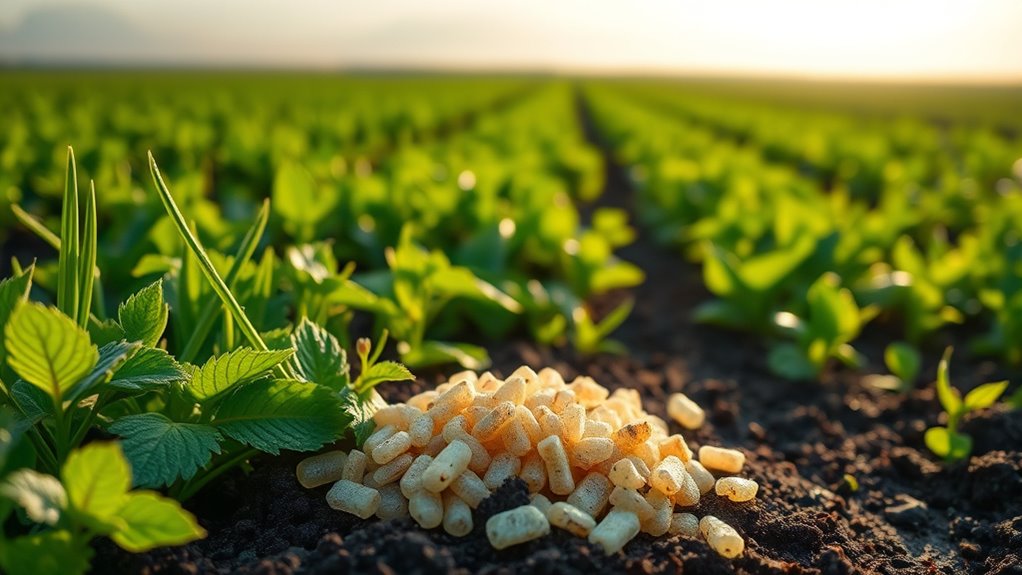
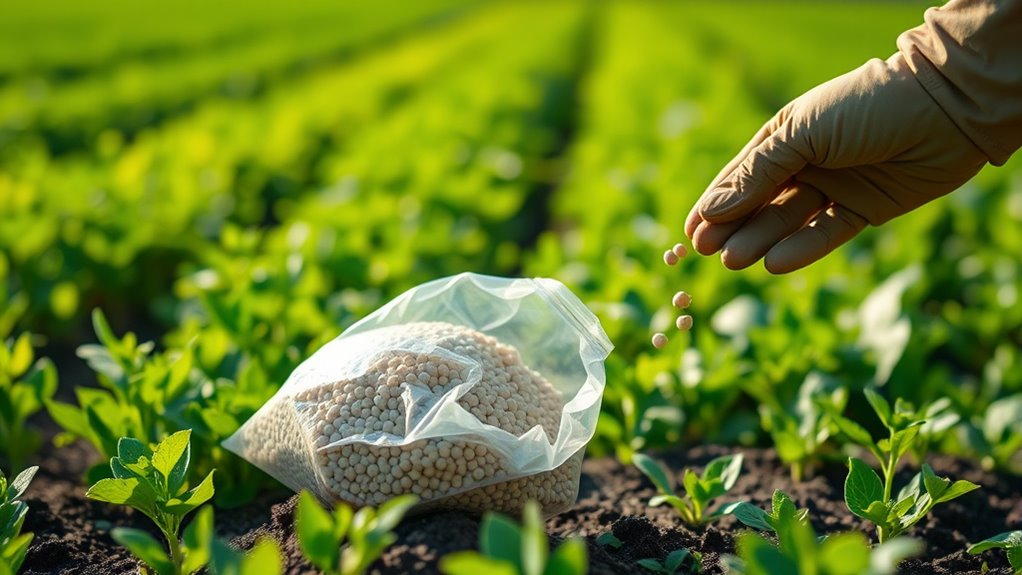
Slow-release nitrogen fertilizers are designed to provide plants with a steady supply of nitrogen over an extended period, reducing the need for frequent applications. This consistency helps guarantee that your plants receive a balanced amount of nutrients over time, promoting healthy growth without the risk of over-application. When you use these fertilizers, you’re effectively managing soil nutrient levels, which is vital for maintaining soil health and optimizing plant development. By releasing nitrogen gradually, they minimize nutrient runoff, which is a significant concern for the environment. Excess nitrogen from traditional fertilizers often leaches into water systems, causing pollution and ecological imbalance. In contrast, slow-release formulas help you reduce this environmental impact by providing a controlled nutrient supply that aligns more closely with plant uptake rates. Additionally, the controlled release can be tailored to match specific plant needs, further enhancing their efficiency and effectiveness. Since these fertilizers release nutrients slowly, they tend to improve fertilizer use efficiency. You don’t need to apply them as often, saving you time and effort while still supporting consistent plant growth. This feature is especially beneficial in areas where frequent fertilization isn’t practical or where you want to avoid the labor involved in multiple applications. Additionally, because the nitrogen is released gradually, there’s less chance of nutrient loss due to volatilization or leaching, which often occurs with quick-release options. This not only conserves your fertilizer investment but also lessens the potential for groundwater contamination, further reducing environmental concerns.
However, it’s important to recognize that slow-release fertilizers aren’t a perfect solution for every situation. They tend to be more expensive initially compared to traditional quick-release options, which can be a limiting factor for large-scale applications. Moreover, their effectiveness depends on environmental conditions; for example, high temperatures or heavy rainfall can accelerate the breakdown of the fertilizer coating, leading to unpredictable nutrient release rates. This variability can sometimes result in insufficient nitrogen availability during critical growth stages. Also, if your soil already has high levels of soil nutrient or organic matter, the additional nitrogen from slow-release fertilizers might not be necessary, potentially leading to excess nutrient buildup that could harm the plant or environment. It is also worth noting that understanding dog names can help you choose the right names for your pets, reflecting their personality or breed characteristics, much like selecting the appropriate fertilizer for your garden’s needs.

Milorganite All-Purpose Eco-Friendly Slow-Release Nitrogen 6-4-0 Fertilizer, 32 lb Bag – for Lawns, Flowers, and Gardens – Includes Bonus Feeding & Spreader Tips Brochure
- Bonus brochure included: Seasonal tips and spreader settings
- No streaks or stripes: Easy to apply without damage
- Salt-free formula: Won't burn lawns or plants
As an affiliate, we earn on qualifying purchases.
As an affiliate, we earn on qualifying purchases.
Frequently Asked Questions
How Do Slow-Release Fertilizers Impact Long-Term Soil Health?
Slow-release fertilizers positively impact your long-term soil health by supporting soil microbial activity and enhancing organic matter. As they release nutrients gradually, microbes have a steady food source, promoting a healthy soil ecosystem. Over time, this leads to better structure, increased organic matter, and improved nutrient cycling. You’ll notice more resilient soil that sustains plant growth, reduces runoff, and maintains fertility without causing nutrient imbalances or degradation.
Are Slow-Release Fertilizers Suitable for All Crop Types?
You’ll find slow-release fertilizers suitable for many crop types, but not all. About 75% of farmers find them effective for crops like corn and vegetables. Crop compatibility depends on the crop’s nutrient needs and growth cycle. Proper application timing is vital; applying too early or late can reduce efficiency. Always assess your specific crop requirements to determine if slow-release fertilizers are the right choice for your farm.
What Are the Environmental Risks Associated With Slow-Release Fertilizers?
You should be aware that slow-release fertilizers can pose environmental risks like soil contamination and nutrient runoff if not managed properly. They may slowly release nitrogen over time, but excess fertilizer can leach into the soil and water sources, harming ecosystems. To minimize these risks, apply fertilizers carefully, follow recommended rates, and incorporate best management practices to protect the environment from contamination and runoff.
How Do Cost and Availability Compare to Traditional Fertilizers?
Imagine a marketplace where slow-release fertilizers stand like steady lanterns amid flickering options. Generally, their pricing trends are higher than traditional fertilizers due to specialized formulas, and availability can be limited by supply chain challenges. While these fertilizers may cost more upfront, their efficiency often balances the expense over time. You’ll find that their consistent supply is improving, but you might still face occasional shortages compared to readily available traditional options.
Can Slow-Release Fertilizers Be Customized for Specific Nutrient Needs?
Yes, you can customize slow-release fertilizers for specific nutrient needs through tailored fertilizer formulations. By adjusting the types and amounts of nutrients in the formulation, you guarantee your plants receive the right nutrient balance. Nutrient tailoring allows for precise control over nutrient release rates, meeting your plants’ unique requirements. This customization enhances efficiency, promotes healthy growth, and reduces waste, making slow-release fertilizers a versatile option for targeted nutrient management.
![Organic Plant Magic - Truly Organic™ Slow Release Granular Fertilizer : Long-Lasting Plant Food Granules - Indoor & Outdoor Flowers, Vegetable Gardens, Fruit Trees, Shrubs, House Plants [One 4 lb Bag]](https://m.media-amazon.com/images/I/51HyQUTD-WL._SL500_.jpg)
Organic Plant Magic – Truly Organic™ Slow Release Granular Fertilizer : Long-Lasting Plant Food Granules – Indoor & Outdoor Flowers, Vegetable Gardens, Fruit Trees, Shrubs, House Plants [One 4 lb Bag]
- Spreadable Fertilizer Granules: Easy to apply and beneficial
- All-Purpose Use: Suitable for all plants and gardens
- Long-Lasting Nutrition: Provides month-long plant nourishment
As an affiliate, we earn on qualifying purchases.
As an affiliate, we earn on qualifying purchases.
Conclusion
By now, you see how slow-release nitrogen fertilizers can boost efficiency and reduce environmental impact. They help you get healthier crops with fewer applications, saving time and money. But are you prepared to manage their limitations, like higher costs or inconsistent release rates? Embracing these fertilizers requires careful planning. Ultimately, isn’t optimizing both productivity and sustainability worth considering for your farming practices? The choice is yours—will you harness their full potential?

10-10-10 Plant Fertilizer Slow Release – 10 10 10 All Purpose Granular Garden Fertilizer for Vegetables, Tomato, Arborvitae, Shrubs, Rose, Flowers, Fruit, Fig Trees (1/2 Quart)
- Balanced Nutrient Ratio: 10-10-10 for all-purpose feeding
- Slow-Release Formula: Provides up to 8 weeks of nutrients
- Versatile Use: Suitable for indoor and outdoor plants
As an affiliate, we earn on qualifying purchases.
As an affiliate, we earn on qualifying purchases.
best slow-release fertilizer for lawns
As an affiliate, we earn on qualifying purchases.
As an affiliate, we earn on qualifying purchases.