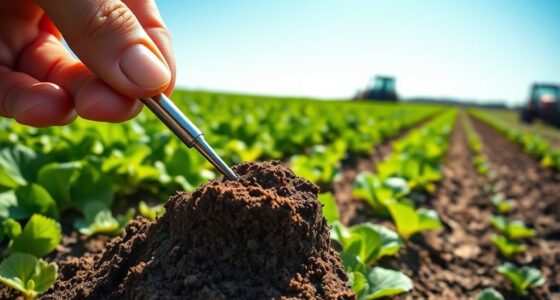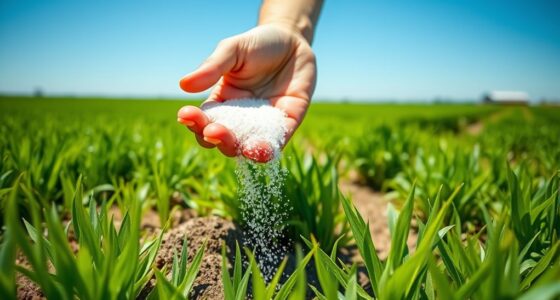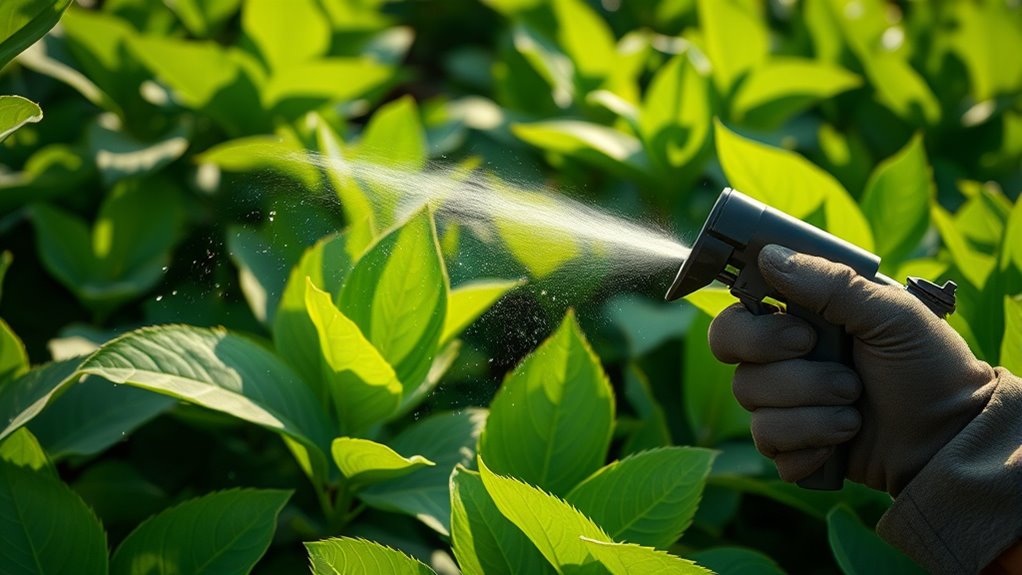

To effectively apply nitrogen foliarly, spray when your crops are actively growing, preferably during early vegetative or pre-flowering stages. Use a fine mist for even coverage, and avoid applying before rain or during high humidity to prevent wash-off and leaf scorch. Monitor weather conditions carefully and time your applications to match the crop’s nutrient needs. Continuing further will help you master the techniques and best practices for successful foliar nitrogen use.

Prime made for students and young adults
- Fast, free delivery for dorm and study essentials
- Prime Video and Amazon Music included
- Member-only deals
Key Takeaways
- Apply foliar nitrogen during active growth stages under optimal weather conditions for maximum absorption.
- Use appropriate sprayer equipment to ensure uniform coverage and avoid leaf scorching.
- Time applications to avoid extreme heat, drought, or high humidity to enhance nutrient uptake.
- Monitor crop health and soil conditions to determine the best timing for foliar nitrogen applications.
- Record application details and crop responses to refine future foliar feeding schedules effectively.

Foliar application of nitrogen offers a quick and efficient way to supply crops with essential nutrients. When you apply nitrogen directly to the leaves, you’re providing the plant nutrient in a form that the crop can absorb rapidly, bypassing potential soil limitations. This method is especially useful during critical growth stages or when soil conditions hinder nutrient uptake. Proper application timing is vital; applying nitrogen at the right moment ensures your crops receive maximum benefit. Typically, foliar feeding works best during periods of active growth, such as early vegetative stages or just before flowering. Avoid applying during extreme heat, drought, or periods of high humidity, as these conditions can reduce absorption efficiency and increase the risk of leaf scorch.
For effective results, you need to pay close attention to your application timing. If you apply nitrogen too early, the crop might not need the nutrient yet, leading to waste and potential environmental runoff. Conversely, delaying application until deficiencies become evident can hinder growth and reduce yields. Regular monitoring of your crops’ health and soil conditions helps you determine the ideal time for foliar nitrogen application. When you notice signs of nitrogen deficiency—such as yellowing leaves or stunted growth—it’s an excellent moment to act. Timing also involves considering weather conditions; avoid applying before rainstorms, as excess water can wash away the nutrients, or during high wind, which can cause uneven coverage.
The choice of application timing also depends on your crop type. For fast-growing vegetables, early and timely foliar feeding can boost vigor and improve yield potential. In cereal crops, applying nitrogen during the tillering or early heading stages can promote better grain filling. Remember, the goal is to supplement the plant nutrient in a way that aligns with the crop’s natural nutrient uptake curve. This synchronization maximizes absorption and minimizes waste. To fine-tune your timing, keep a record of past applications and crop responses, adjusting your schedule as needed for future seasons. Additionally, understanding the importance of contrast ratio in projectors can help in creating optimal visual environments for crop monitoring and management.
garden sprayer for foliar feeding
As an affiliate, we earn on qualifying purchases.
As an affiliate, we earn on qualifying purchases.
Frequently Asked Questions
What Are the Signs of Nitrogen Deficiency in Plants?
If your plants show nitrogen deficiency, you’ll notice chlorosis symptoms, where leaves turn yellow, especially in older foliage. Leaf discoloration becomes evident as the green pigment depletes, leading to pale or yellowish leaves. You might also see stunted growth and weak stems. Keep an eye out for these signs, as they indicate your plants need more nitrogen to thrive. Prompt foliar application can help correct this deficiency quickly.
How Does Foliar Nitrogen Application Compare to Soil Fertilization?
Think of foliar nitrogen application like a quick boost, much faster than soil fertilization. It delivers nutrients directly to leaves, making it ideal for rapid correction, especially when soil nutrient uptake is slow or during critical growth stages. However, soil fertilization provides a sustained supply over time. For best results, synchronize application timing with plant needs, ensuring nutrients are available when plants can most effectively absorb them.
Can Foliar Nitrogen Application Cause Plant Toxicity?
Yes, foliar nitrogen application can cause plant toxicity if overdone. You might see foliar burn, which appears as scorched or damaged leaf edges, and nutrient imbalance, disrupting overall plant health. To prevent these issues, follow recommended application rates and avoid frequent, high-concentration sprays. Proper timing and technique help ensure your plants receive nutrients safely without risking toxicity or damage.
What Environmental Conditions Optimize Foliar Nitrogen Absorption?
Ironically, the best conditions for foliar nitrogen absorption aren’t so “ideal.” You should aim for moderate humidity levels to prevent runoff and maximize uptake. Bright sunlight intensity helps open leaf pores, boosting absorption efficiency. Too much humidity causes droplets to form and wash away nutrients, while excessive sunlight can damage leaves. So, moderate humidity and balanced sunlight create the perfect environment for your plants to soak up nitrogen effectively.
How Frequently Should Foliar Nitrogen Be Applied During the Growing Season?
You should apply foliar nitrogen every 10 to 14 days during the growing season, depending on crop needs and environmental conditions. Maintaining proper timing intervals guarantees maximum absorption and minimizes nutrient loss. Avoid over-application, as it can cause leaf damage or runoff. Regular applications at recommended intervals help sustain healthy growth, improve nitrogen use efficiency, and support consistent crop development throughout the season.
As an affiliate, we earn on qualifying purchases.
Conclusion
By applying nitrogen foliarly, you can quickly boost plant growth and improve nutrient uptake, especially during critical growth stages. While some believe foliar feeding can replace soil fertilization entirely, research shows it’s most effective as a supplement rather than a substitute. When done correctly—using proper timing, concentration, and technique—you’ll see healthier, more vigorous plants. Just remember, integrating foliar application with overall nutrient management is the key to maximizing your crop’s potential.
As an affiliate, we earn on qualifying purchases.
plant nutrient foliar application
As an affiliate, we earn on qualifying purchases.
As an affiliate, we earn on qualifying purchases.
Evergreen bestsellers Picks
bestsellers
As an affiliate, we earn on qualifying purchases.