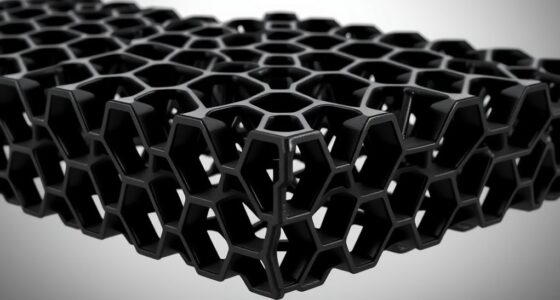

Superalloys that resist melting are crucial for high-temperature uses like jet engines and power plants, where extreme heat challenges material strength. Advances focus on optimizing microstructures, grain boundary strengthening, and adding elements that form protective oxide layers. These improvements help superalloys maintain stability, resist oxidation, and prevent failure even at very high temperatures. If you keep exploring, you’ll discover how ongoing innovations are pushing these materials to new performance heights.
Key Takeaways
- Modern superalloys incorporate elements that form stable oxide layers, enhancing oxidation resistance at high temperatures.
- Microstructural control, such as fine grain sizes, improves creep resistance and prevents melting under extreme heat.
- Alloy compositions with refractory metals increase melting point and thermal stability of superalloys.
- Innovations include adding rare-earth elements to improve oxide layer adherence and prevent degradation.
- Advanced superalloys enable engines and turbines to operate reliably at higher temperatures, reducing melting risks.
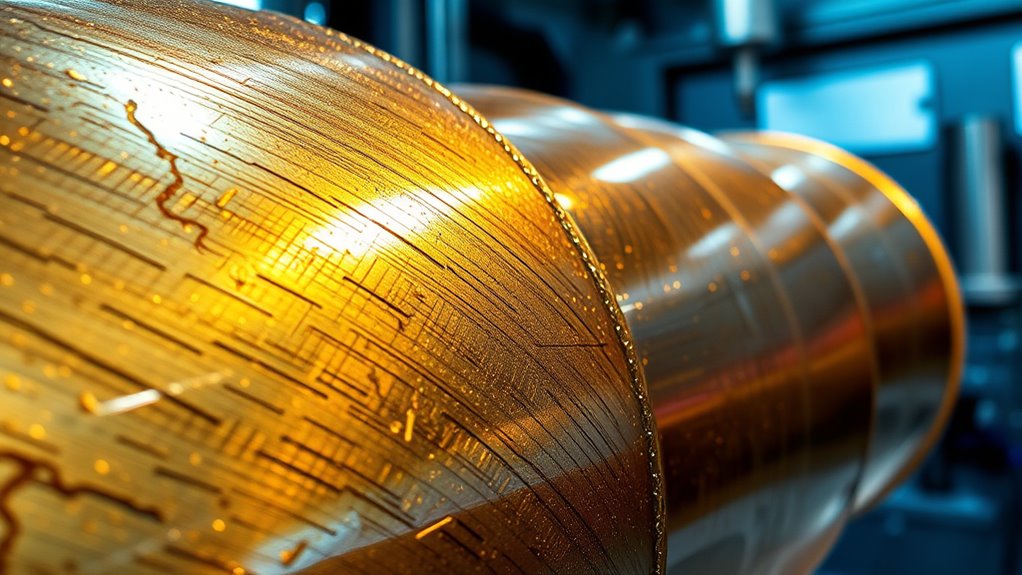
Superalloys that resist melting are indispensable materials in high-temperature applications, such as jet engines and power plants. These advanced alloys are engineered to maintain strength and stability under extreme conditions, making them critical for modern engineering. One of the key factors that enable superalloys to perform reliably at elevated temperatures is grain boundary strengthening. By controlling the microstructure, especially the grain boundaries, manufacturers can prevent the initiation and propagation of cracks that often start at these interfaces. Fine, well-distributed grains improve the alloy’s overall toughness and creep resistance, ensuring it can withstand prolonged exposure to intense heat without deforming or failing. Grain boundary strengthening therefore plays a fundamental role in enhancing the durability and lifespan of superalloys operating in harsh environments.
Grain boundary strengthening enhances superalloy durability in high-temperature environments.
In addition to microstructural control, oxidation resistance is foundational to the functionality of high-temperature superalloys. When metals are exposed to extreme heat, they tend to oxidize, forming brittle oxide layers that compromise mechanical integrity. To combat this, alloy designers incorporate elements like aluminum and chromium, which form stable, protective oxide films on the surface. These oxide layers act as barriers, preventing further oxidation and preserving the alloy’s structural stability. As a result, superalloys with high oxidation resistance can operate at higher temperatures for longer periods, reducing maintenance costs and downtime. This resistance is especially critical in jet engines, where exposure to high-velocity airflow and combustion gases accelerates oxidation processes.
Advancements in alloy compositions further bolster these attributes. Researchers have developed new superalloys with optimized microstructures that combine grain boundary strengthening with enhanced oxidation resistance. These innovations often involve adding small amounts of rare-earth elements or reactive metals to improve the adherence and stability of protective oxide layers. The goal is to create materials that not only resist melting but also withstand the corrosive and oxidative environment inherent in high-temperature operations. As a result, modern superalloys are more reliable, efficient, and longer-lasting.
You benefit from these developments because they allow for greater engine performance and safety margins. By selecting superalloys with superior grain boundary strengthening and oxidation resistance, engineers can push turbines and other components to higher temperatures, boosting efficiency without sacrificing durability. This progress directly translates into more powerful, cleaner, and more cost-effective energy and propulsion systems. In essence, the ongoing improvements in high-temperature superalloys guarantee that you can rely on equipment that performs under the most demanding conditions, making them indispensable in the quest for technological advancement in high-temperature industries.

Superalloys II: High-Temperature Materials for Aerospace and Industrial Power
This is the first truly comprehensive review of the latest developments in the pursuit of superalloys since the…
As an affiliate, we earn on qualifying purchases.
As an affiliate, we earn on qualifying purchases.
Frequently Asked Questions
How Do Superalloys Maintain Strength at Extreme Temperatures?
You see, superalloys maintain strength at extreme temperatures because their grain boundaries resist weakness and prevent crack growth. They also achieve phase stability, meaning their microstructure stays intact under heat, preventing deformation. By controlling the composition and microstructure, these alloys retain their strength, ensuring they perform reliably in high-temperature environments like turbine engines. This combination of grain boundary strength and phase stability is key to their durability.
What Are the Typical Applications of High-Performance Superalloys?
Think of superalloys as the backbone of modern innovation. You’ll find these high-performance materials powering aerospace engines, ensuring they withstand extreme heat and stress. They also play a crucial role in power generation, where their resilience guarantees efficiency and safety under intense conditions. By resisting melting and maintaining strength at high temperatures, you enable cutting-edge technology to operate reliably in the most demanding environments, shaping the future of industry and exploration.
How Do Alloy Compositions Influence Melting Resistance?
Your alloy composition directly influences melting resistance by enhancing phase stability and minimizing elemental clustering. When you carefully balance elements like nickel, cobalt, and refractory metals, you improve the alloy’s ability to resist melting at high temperatures. Proper composition prevents undesirable phase transformations and reduces elemental clustering, ensuring the superalloy maintains its structure and strength even under extreme heat. This precise tuning is key for high-performance, high-temperature applications.
Are There Environmental Concerns With Superalloy Manufacturing?
You should consider environmental impact and manufacturing emissions when producing superalloys, as these processes often involve energy-intensive steps and hazardous materials. These emissions contribute to air pollution and climate change, raising concerns about sustainability. To minimize effects, manufacturers are adopting cleaner technologies, recycling materials, and improving energy efficiency. Being mindful of these environmental concerns helps guarantee that high-performance materials don’t come at the planet’s expense.
What Future Innovations Are Expected in Superalloy Development?
You can expect future superalloy innovations to incorporate biomimicry innovations, mimicking nature’s efficient structures for enhanced strength and heat resistance. Additive manufacturing will play a key role, enabling precise, complex designs and reducing waste. These advancements will lead to more durable, environmentally friendly superalloys suited for extreme conditions, improving aerospace and energy applications while minimizing environmental impact through innovative production techniques.
Fretting Stresses in Single Crystal Superalloy Turbine Blade Attachments
As an affiliate, we earn on qualifying purchases.
As an affiliate, we earn on qualifying purchases.
Conclusion
As you explore these advanced superalloys, remember they’re like modern-day Prometheus, forging fire-resistant materials that push boundaries. Just as Prometheus brought fire to humanity, these innovations bring humanity closer to conquering extreme temperatures. Stay inspired by their resilience, knowing that each breakthrough fuels progress. Embrace the journey of discovery, for in mastering high-temperature materials, you’re shaping a future where limits are merely starting points.

The Microstructure of Superalloys
Used Book in Good Condition
As an affiliate, we earn on qualifying purchases.
As an affiliate, we earn on qualifying purchases.

Microstructure and Mechanical Properties of Structural Metals and Alloys
As an affiliate, we earn on qualifying purchases.
As an affiliate, we earn on qualifying purchases.