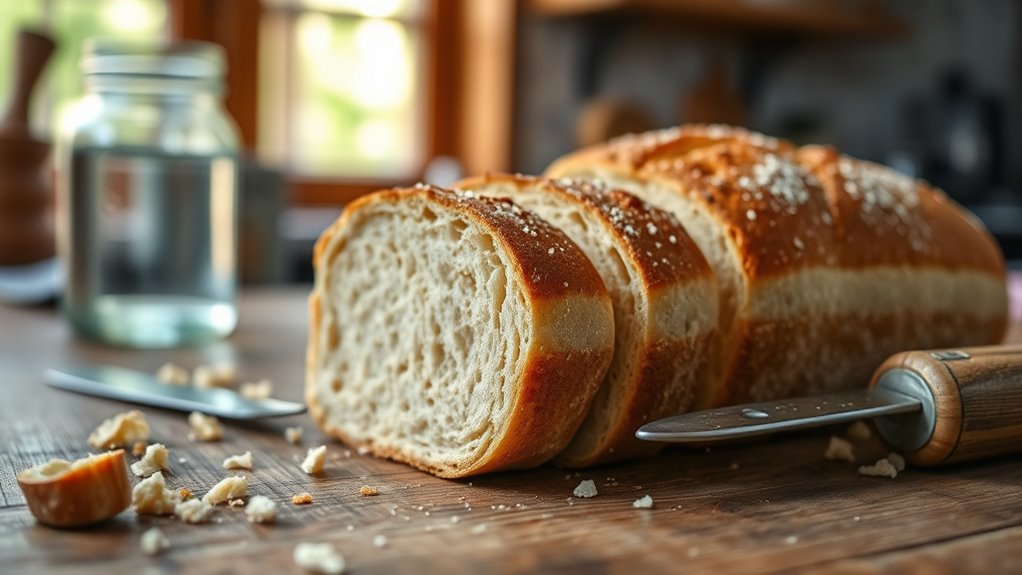

Bread goes stale because moisture inside it gradually escapes and redistributes, leading to changes in texture and flavor. Over time, moisture migrates from the crumb to the crust and out into the air, making the inside dry, crumbly, and less enjoyable. Starch molecules also recrystallize as the bread cools, further firming it up. Understanding how moisture loss causes these changes helps you keep bread fresh longer—there’s more to discover below.
Key Takeaways
- Bread stales mainly due to moisture loss, causing the crumb to dry out and become firmer.
- Starch molecules recrystallize during cooling, leading to increased firmness and dryness.
- Moisture migrates from the crumb to the crust and then escapes into the air over time.
- Refrigeration accelerates staling by speeding up moisture loss and starch retrogradation.
- Freezing halts the staling process, preserving bread’s freshness longer.
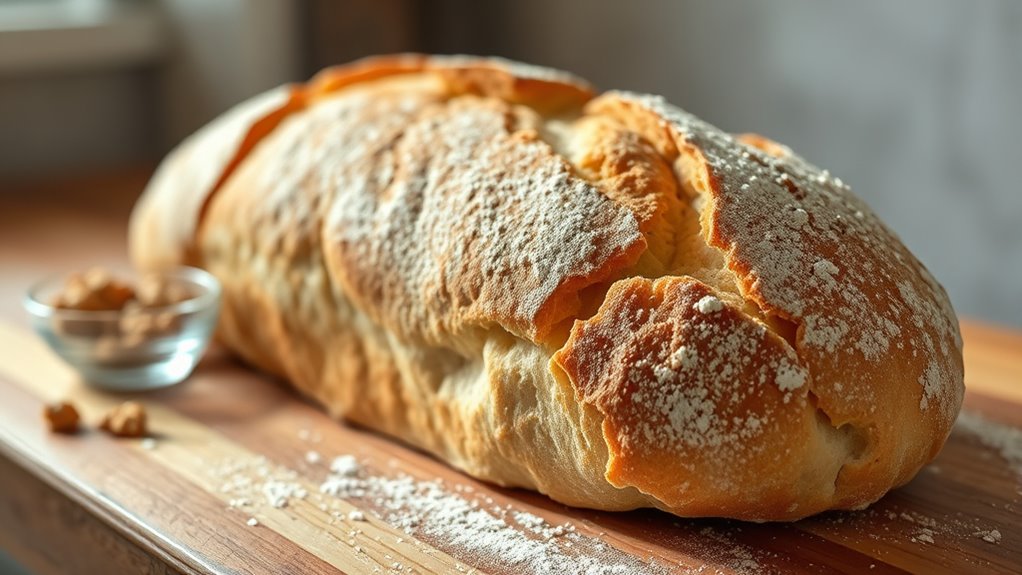
Have you ever wondered why bread loses its freshness and becomes stale even when it’s stored properly? The answer lies in the natural changes that happen during the staling process, primarily driven by moisture loss. When you bake bread, the moisture inside is evenly distributed, keeping it soft and pliable. But over time, even sealed or well-stored bread begins to lose some of that moisture, leading to a firmer, drier texture. This moisture migration from the crumb to the crust and eventually out into the air causes the bread to become stale.
The staling process is a complex series of physical and chemical changes, but moisture loss is a key factor. As the bread sits, the internal water molecules gradually evaporate, especially if the bread is stored at room temperature or in a dry environment. This evaporation results in a drier crumb, making the bread feel harder and less pleasant to eat. Even if you keep bread in a plastic bag, some moisture still escapes over time, and the bread’s texture deteriorates. The crust may become tougher, and the interior becomes crumbly or dry, which is often mistaken for mold or spoilage, but it’s simply moisture imbalance.
Furthermore, the staling process isn’t just about moisture loss; it also involves starch retrogradation. When bread cools after baking, the starch molecules in the bread recrystallize, pushing out water and causing the bread to become firmer. This recrystallization is a natural process, and it accelerates as the bread loses moisture. That’s why even fresh bread can start to feel stale after a day or two, regardless of how it’s stored. starch retrogradation plays a significant role in the texture changes during staling, making it more noticeable over time.
You might think that refrigerating bread would help preserve freshness, but it actually speeds up moisture loss and starch retrogradation, making bread go stale faster. Instead, freezing is a better option, as it halts the staling process by stopping moisture migration. When you’re ready to eat the bread, reheating it can help revive some moisture and improve the texture, but it won’t fully reverse the staling process.

Gifhomfix Bread Box Bread Boxes for Kitchen Counter Airtight, Time Recording Bread Storage Container with Lid, Bread Keeper for Homemade Bread, Toast, Bagel, Donut and Cookies, Grey
- Includes Time Recording Dial: Tracks storage duration accurately
- Large Capacity Size: Measures 12×6.1×6.2 inches
- Holds Most Bread Types: Fits homemade bread, muffins, and more
As an affiliate, we earn on qualifying purchases.
As an affiliate, we earn on qualifying purchases.
Frequently Asked Questions
Can Refrigeration Delay Bread Staling?
Refrigeration can delay bread staling by slowing down the staling mechanisms, but it often leads to bread becoming dry and tough. To preserve bread longer, it’s better to store it in a cool, dark place or freeze it for later use. When you refrigerate, you slow moisture loss and starch recrystallization, which are key factors in bread preservation, but keep in mind that refrigeration might affect texture.
Does the Type of Bread Affect How Quickly It Stale?
Yes, the type of bread affects how quickly it stales. You’ll notice that bread with higher moisture content, like fresh baguettes, stales faster due to its bread composition. Starch retrogradation plays a key role here, as the starch molecules realign over time, causing the bread to become firm and dry. Denser or bread with added fats may slow this process, meaning your bread stays fresher longer.
How Does Storing Bread in the Fridge Impact Freshness?
Storing bread in the fridge feels like trapping a cloud in a jar, but it actually accelerates staling. The cool environment causes moisture migration from the crumb to the crust, making bread dry and tough. Plus, starch retrogradation speeds up, turning the soft interior gritty. Instead, keep bread at room temperature in a paper bag to maintain its freshness, as this slows moisture loss and starch retrogradation, keeping your bread tender longer.
What Role Does Humidity Play in Bread Staling?
Humidity plays a key role in bread staling by affecting moisture migration. If humidity is high, bread absorbs moisture, making it feel soft initially but promoting mold growth. Low humidity causes moisture to escape, leading to dryness and hardness. You should focus on humidity control to keep bread fresh longer; storing it in a sealed container or a cool, dry place helps maintain ideal moisture levels and slows down staling.
Are There Ways to Reverse Stale Bread?
Sure, you can revive stale bread—think of it as a culinary resurrection. Just sprinkle water, wrap it in foil, and heat in the oven for a few minutes. This simple bread preservation trick restores its moisture and softness. For stale bread remedies, avoid the microwave, which turns it into a soggy mess. Instead, give your bread a quick makeover, and you’ll enjoy fresh-like bites with minimal effort.

Premium Beeswax Bread Bags for Sourdough with Wide Zipper Access, 2 Pack XL(13x17in) Reusable Organic Beeswax-Coated Linen Cotton Bread Bags for Homemade Bread, Keeps Bread Fresh Naturally
- Material: Organic beeswax linen cotton construction
- Breathability: Maintains optimal humidity and airflow
- Keeps Bread Fresh: Preserves crustiness and softness naturally
As an affiliate, we earn on qualifying purchases.
As an affiliate, we earn on qualifying purchases.
Conclusion
So, now you know that bread goes stale because of moisture loss and starch crystallization, turning it from fresh to tough. Think of bread as a delicate dance partner, losing its grace when left out too long. To keep it soft and delightful, store bread properly and enjoy it before it turns. Remember, like a fleeting sunset, fresh bread’s magic doesn’t last forever—so cherish every slice while it’s still perfect.

Reusable Plastic Bread Bags for Homemade Bread – 100 Pack Clear Bag with Ties For An Airtight Moisture-free Preservation and Storage – Loaf Home Bakers Bakery Owners
- Keeps Bread Fresh and Odor-Free: Moisture and odor protection with ties
- Suitable for All Bread Sizes: Fits loaves, bagels, muffins, and buns
- Transparent and Reusable: Clear polyethylene bags for visibility and reuse
As an affiliate, we earn on qualifying purchases.
As an affiliate, we earn on qualifying purchases.
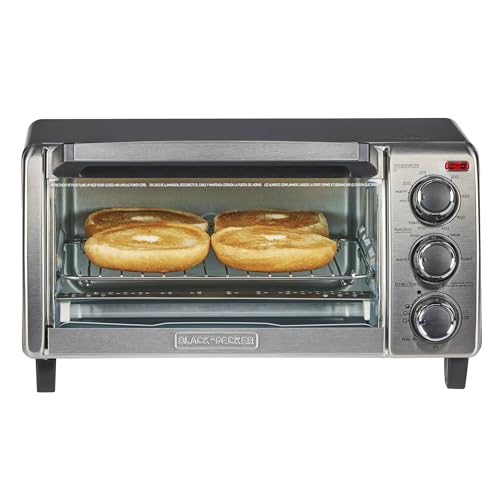
BLACK+DECKER TO1313SBD Toaster Oven, 15.47 Inch, Silver
- Fits 9-inch pizza or 4 slices: Compact design for versatile use
- Four cooking functions: Bake, broil, toast, warm
- 30-minute timer with stay-on: Controlled and safe operation
As an affiliate, we earn on qualifying purchases.
As an affiliate, we earn on qualifying purchases.