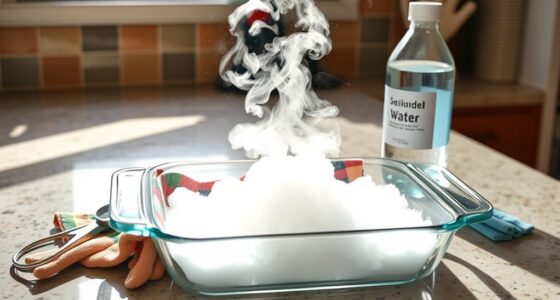
When you mix baking soda and vinegar, a chemical reaction occurs that produces carbon dioxide gas, causing bubbling and foam similar to a small explosion. The gas builds pressure, pushing the foam out and creating an eruption effect. The amount of baking soda and vinegar determines how big or quick the eruption is. Understanding this gas evolution helps you see how chemical changes produce observable energy releases, and there’s more fascinating details if you keep exploring.

Prime made for students and young adults
- Fast, free delivery for dorm and study essentials
- Prime Video and Amazon Music included
- Member-only deals
Key Takeaways
- The reaction between vinegar and baking soda produces carbon dioxide gas, causing bubbling and foam in the volcano.
- CO₂ gas generation results from the chemical reaction between acetic acid and sodium bicarbonate.
- The amount of baking soda and vinegar influences the size and duration of the gas release and eruption.
- Bubbling and foaming are visual indicators of gas evolution during the chemical change.
- Understanding gas production helps explain the forces driving the volcanic eruption simulation.

A baking soda and vinegar volcano is a fun and easy science experiment that demonstrates a chemical reaction. When you combine these two common household ingredients, a fascinating process unfolds, showcasing the power of chemistry in action. The key event in this experiment is the release of gas, which creates the bubbling eruption you see. Understanding how this gas release occurs helps you grasp the basic principles behind chemical reactions and how they produce observable effects.
When you pour vinegar, a weak acid, onto baking soda, a base, a chemical reaction instantly begins. This reaction produces carbon dioxide gas, which is responsible for the fizzing and bubbling you observe. The process is straightforward: the acetic acid in vinegar reacts with sodium bicarbonate (baking soda), forming sodium acetate, water, and carbon dioxide gas. The rapid formation of CO₂ causes an increase in pressure within the confined space of the volcano, forcing the gas to escape quickly. This escape of gas pushes the liquid and foam out of the volcano, mimicking a volcanic eruption.
This gas release is a result of the chemical reaction happening at a molecular level. You can think of it as the vinegar breaking down the baking soda, releasing tiny bubbles of carbon dioxide. These bubbles quickly expand and rise to the surface, creating the characteristic foam. The process is exothermic, meaning it releases energy, though you won’t feel it strongly. The visual spectacle of bubbling and foaming is a clear indicator that a chemical reaction is taking place, with gas being released as a byproduct.
The excitement of this experiment lies in its simplicity and the immediate visual feedback. You can experiment with different amounts of vinegar or baking soda to see how the size and duration of the eruption change. The more baking soda you use, the more gas is produced, leading to a bigger eruption. Conversely, using less vinegar can slow down the reaction, making it more controlled. This experiment teaches you that gas release during a chemical reaction is a key indicator of the transformation happening at the molecular level.
In essence, a baking soda and vinegar volcano isn’t just about creating a fun display; it’s a hands-on way to understand the basics of chemical reactions and gas evolution. By observing how the gas is released and how it causes the eruption, you gain valuable insight into the nature of chemical changes and the forces at play during such reactions. The contrast ratio plays a crucial role in how vividly you can observe the bubbling and foam during the eruption, especially in different lighting conditions. It’s a simple yet powerful demonstration of science that can spark curiosity and deepen your understanding of chemistry fundamentals.
baking soda and vinegar science experiment kit
As an affiliate, we earn on qualifying purchases.
As an affiliate, we earn on qualifying purchases.
Frequently Asked Questions
Can Baking Soda and Vinegar Be Used for Cleaning Purposes?
Yes, you can use baking soda and vinegar for cleaning purposes. Their pH levels make them effective; vinegar’s acidity helps dissolve mineral buildup, while baking soda’s alkalinity tackles grease and grime. The reaction speed creates bubbling action that lifts dirt. You simply mix them, and the rapid reaction produces carbon dioxide gas, which helps scrub surfaces. This eco-friendly combo is great for cleaning kitchen sinks, countertops, and even carpets.
What Are Other Common Household Reactions Similar to Volcanoes?
Other household reactions similar to volcanoes involve simple chemical reactions that release gas, creating bubbling or fizzing. For example, mixing baking soda with lemon juice produces carbon dioxide gas, causing fizzing. When you combine hydrogen peroxide with dish soap, it releases oxygen gas, creating foam. These reactions are safe and fun, illustrating how gas release from chemical reactions can create impressive bubbling effects in everyday situations.
How Does Temperature Affect the Gas Production in the Reaction?
You’ll notice that increasing the temperature speeds up the reaction rate, causing more gas to be produced quickly. Warmer temperatures also lead to thermal expansion, making gases expand and escape faster. When you heat the mixture, the molecules move more vigorously, boosting gas production and making the volcano eruption more vigorous. So, temperature plays a key role in controlling how quickly and intensely the gas evolves during the reaction.
Are There Safety Precautions When Performing This Experiment?
You should wear safety gear like goggles and gloves to protect your eyes and skin during the experiment. Make sure an adult supervises the activity, especially if kids are involved. Conduct the volcano on a stable surface and in an open area to prevent messes or accidents. Keep vinegar and baking soda away from your face, and be cautious with the reaction to avoid spills or unexpected eruptions.
Can This Reaction Be Used to Generate Electricity?
Yes, you can use this reaction for electricity generation, but it’s more like a small flicker than a steady glow. The chemical energy from the vinegar and baking soda produces gas, which can turn a tiny turbine or generate a small current. However, it’s not practical for powering devices. This reaction illustrates basic principles of chemical energy transforming into electrical energy, serving as a fun, educational glimpse into energy conversion.
volcano eruption science kit for kids
As an affiliate, we earn on qualifying purchases.
As an affiliate, we earn on qualifying purchases.
Conclusion
Next time you create a baking soda and vinegar volcano, remember it’s more than just a fun experiment—it’s a glimpse into chemical reactions. For example, imagine a student learning about acid-base reactions for the first time; witnessing the bubbling eruption helps them truly grasp gas production. This simple activity shows how science connects theory to real-world experiences, inspiring curiosity and understanding. So, keep exploring and let your experiments ignite your passion for discovery.
chemical reaction demonstration set
As an affiliate, we earn on qualifying purchases.
As an affiliate, we earn on qualifying purchases.
kids chemistry experiment supplies
As an affiliate, we earn on qualifying purchases.
As an affiliate, we earn on qualifying purchases.
Fall Picks
fall essentials
As an affiliate, we earn on qualifying purchases.