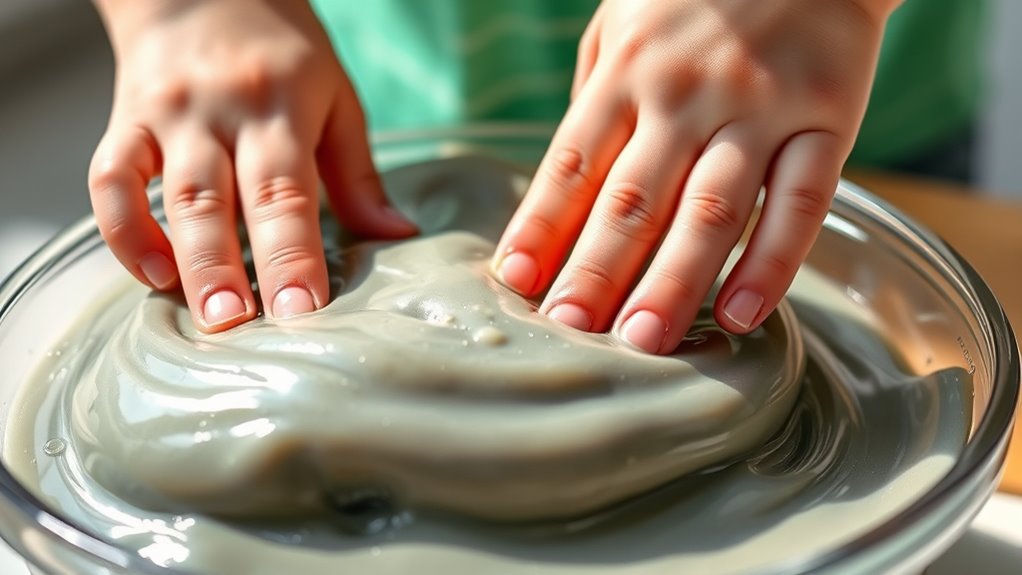
To create oobleck, combine about two cups of cornstarch with one cup of water in a large bowl. Mix gradually until the mixture feels firm yet flows when handled gently. Adjust the consistency by adding more water or cornstarch as needed. This non-Newtonian fluid behaves like a solid under force but flows like a liquid when you move slowly. Keep exploring, and you’ll discover even more about this fascinating, sensory-rich experiment.
Key Takeaways
- Mix equal parts cornstarch and water gradually until achieving a firm yet flowable consistency.
- Stir continuously to prevent lumps and adjust texture by adding more water or cornstarch.
- Explore the non-Newtonian properties by applying force, observing how Oobleck behaves like a solid or liquid.
- Add food coloring for visual appeal and to enhance the sensory experience during play.
- Use molds or sculptures to extend the activity, encouraging creativity and hands-on science exploration.
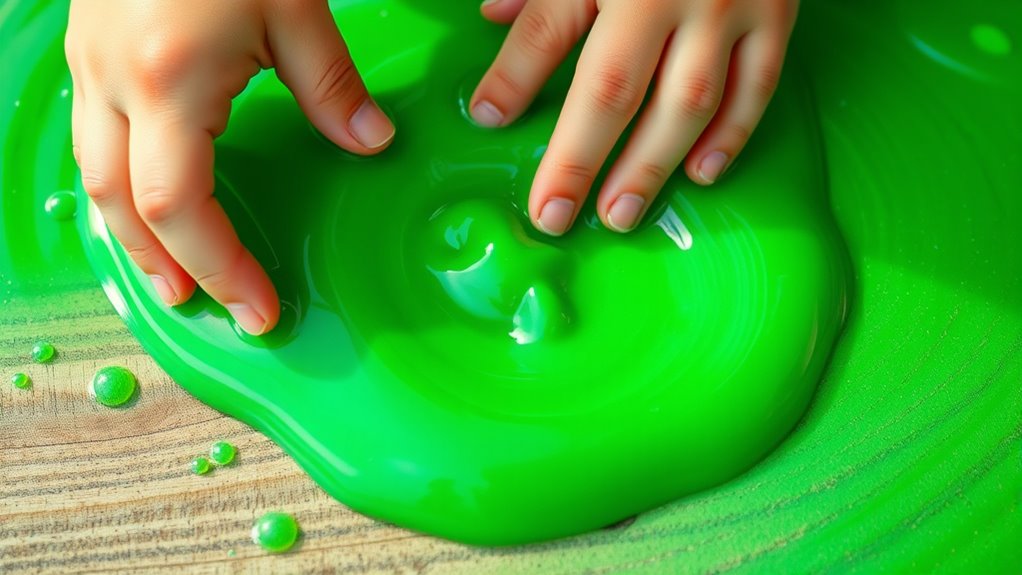
Oobleck is a fun and simple slime made from just two household ingredients: cornstarch and water. It’s a perfect project for diy science, allowing you to explore fascinating properties of materials while having a blast. When you make oobleck, you’re engaging in hands-on sensory play, which stimulates your senses and makes learning about non-Newtonian fluids exciting and accessible. This project is easy to set up, requires minimal supplies, and offers a surprising experience that’s both educational and entertaining.
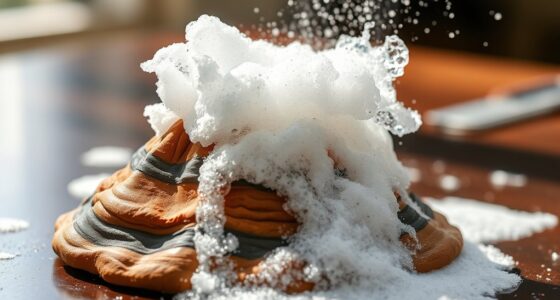
To create your oobleck, you’ll start by measuring about two cups of cornstarch and pouring it into a large mixing bowl. Then, slowly add one cup of water, stirring constantly. As you combine the ingredients, you’ll notice the mixture begins to thicken and become moldable. Feel free to add more water or cornstarch as needed to achieve your desired consistency. The key is to mix until the oobleck feels firm but still flows when you move it gently. The magic of this mixture lies in its non-Newtonian properties: it acts like a solid when you apply force but flows like a liquid when you handle it gently. Understanding non-Newtonian fluids helps explain the unique behavior of oobleck.
Measure two cups of cornstarch and add water gradually for perfect oobleck.
This simple recipe is a fantastic way to introduce yourself to diy science concepts. With oobleck, you observe firsthand how certain materials don’t follow the usual rules of liquids and solids. As you play with the mixture, you can experiment with how it responds under different conditions—try punching it, running your fingers through it, or letting it sit still. Each action reveals new insights into its unique behavior, making this project a dynamic learning experience. The sensory aspect is equally compelling; the cool, slimy texture engages your sense of touch and provides a calming, satisfying experience. Kids and adults alike find it mesmerizing to manipulate and watch it change under different forces.
Once you’ve made your oobleck, you can extend the sensory play by pouring it into molds or creating small sculptures. You might also explore how adding food coloring can make your mixture more visually appealing, turning it into a colorful science experiment. Remember, the beauty of DIY science and sensory play with oobleck is that it’s all about exploration and discovery. There’s no right or wrong way to enjoy it—just let your curiosity lead you. Whether you’re teaching kids about non-Newtonian fluids or simply looking for a fun, tactile activity, making oobleck offers a rewarding experience that combines science, creativity, and sensory fun in one simple, engaging project.
Frequently Asked Questions
Can Oobleck Be Reused After Drying Out?
Yes, you can reuse dried-out oobleck by recycling techniques like adding water gradually to restore its texture. Store it in an airtight container to prevent it from drying out further, and when ready to reuse, knead the mixture thoroughly. Keep in mind that the consistency might slightly change over time, but with proper storage methods, you can extend its usability and enjoy more non-Newtonian fluid fun.
How Long Does It Take for Oobleck to Dry Completely?
Drying time for oobleck varies depending on thickness and environment, typically taking several hours to a day for complete moisture removal. You should leave it in a warm, dry space with good airflow to speed up the process. Thinner layers dry faster, so spread it out evenly. Keep in mind, once fully dry, it becomes brittle and may crack, making reuse difficult. Patience is key for thorough moisture removal.
Is Oobleck Safe for Young Children to Play With?
Oobleck is generally safe for young children to play with, but you should always prioritize child safety. Supervision tips include keeping an eye on them to prevent ingestion or irritation, and making sure they wash their hands afterward. Use non-toxic ingredients, like cornstarch and water, and avoid any added chemicals. Always supervise closely, especially with younger kids, to ensure they enjoy the fun while staying safe.
Can Oobleck Be Used for Educational Science Experiments?
Yes, you can definitely use oobleck for educational science experiments. It’s perfect for a science demonstration or classroom activity because it visually shows non-Newtonian fluid properties. When kids play with it, they learn about viscosity and how materials behave under different forces. Plus, it’s easy to make and safe, making it an engaging hands-on experience that sparks curiosity and deepens understanding of physical science concepts.
What Are the Environmental Impacts of Making Oobleck?
You might wonder about the environmental impacts of making oobleck. Since it’s mainly cornstarch and water, it’s biodegradable, but there are biodegradability concerns if other additives are used. To minimize environmental effects, opt for sustainable ingredients like organic cornstarch. Avoid synthetic dyes or chemicals, and dispose of oobleck responsibly by composting or pouring it out on soil, ensuring it breaks down naturally without harming ecosystems.
Conclusion
Now that you’ve made Oobleck, you’ve experienced firsthand how non-Newtonian fluids behave. Imagine a classroom where students test Oobleck’s properties, discovering it’s solid when hit hard but flows when gentle. This hands-on experiment not only sparks curiosity but deepens understanding of complex physics concepts. By exploring Oobleck, you unleash a fun, engaging way to connect science to everyday life, inspiring future experiments and a love for discovery.