
By applying biochar to soil, you can turn organic waste into a stable carbon source that boosts soil fertility while capturing carbon from the atmosphere. Microbes thrive in biochar’s porous structure, speeding up organic matter breakdown and creating more soil carbon. This process improves soil health, reduces reliance on chemical inputs, and helps fight climate change. If you keep exploring, you’ll uncover more ways biochar and microbes work together to turn waste into soil enrichment.
Key Takeaways
- Biochar provides a stable habitat that enhances microbial activity, facilitating microbial carbon capture and soil organic matter formation.
- Microbes decompose organic waste on biochar surfaces, converting it into stable soil carbon, boosting carbon sequestration.
- Incorporating biochar into soil improves microbial diversity and function, promoting efficient organic matter breakdown and nutrient cycling.
- The synergy between biochar and microbes enhances soil fertility, supports plant growth, and increases long-term carbon storage.
- Utilizing biochar in soil management reduces greenhouse gases by trapping carbon and decreasing reliance on chemical fertilizers.
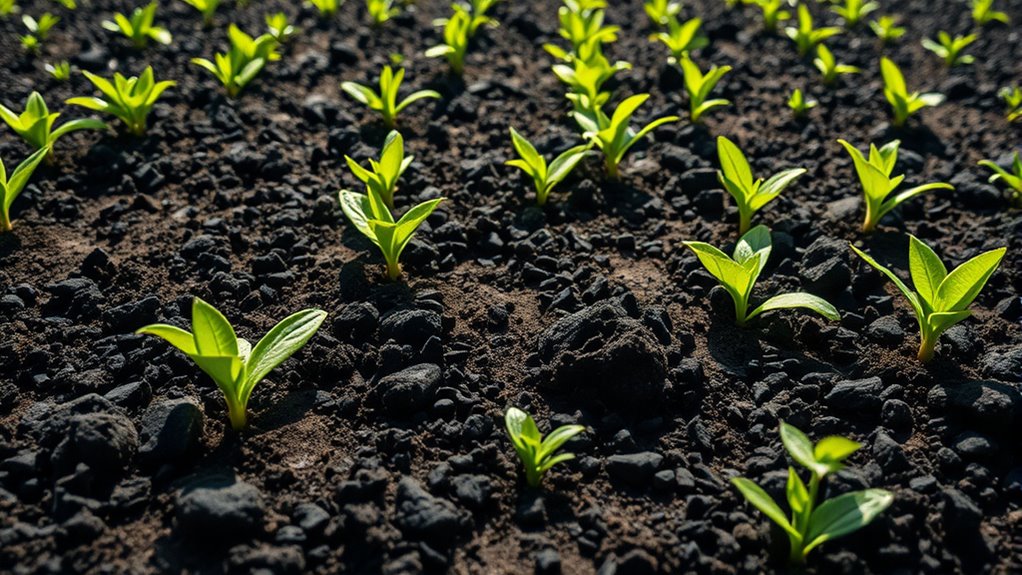
Have you ever wondered how we can enhance carbon sequestration in soils? One promising approach involves using biochar, a type of charcoal produced from organic waste through pyrolysis. When added to soil, biochar can considerably boost soil fertility and help trap carbon underground for long periods. This process not only improves the soil’s ability to support healthy plant growth but also acts as a carbon sink, reducing the amount of greenhouse gases in the atmosphere. By turning waste materials into a stable form of carbon, biochar transforms discarded biomass into a valuable resource, making it an eco-friendly solution for sustainable agriculture.
Using biochar from organic waste enhances soil fertility and sequesters carbon for sustainable agriculture.
The key to maximizing these benefits lies in understanding how biochar interacts with soil microbes. Microbial communities play an essential role in carbon cycling, breaking down organic matter and releasing nutrients vital for plant health. When biochar is incorporated into soil, it provides a hospitable environment for these microbes, offering a habitat rich in surface area and porous structure. This encourages microbial activity, which in turn enhances soil fertility by increasing nutrient availability and promoting organic matter decomposition. As microbes become more active, they also contribute to additional carbon sequestration by converting organic residues into more stable forms of carbon within the soil matrix.
Moreover, biochar’s porous nature helps trap moisture and protect microbes from extreme environmental conditions, ensuring a thriving microbial ecosystem over time. This symbiotic relationship between biochar and microbes can lead to more resilient soils, capable of supporting crops with fewer chemical inputs. This not only benefits farmers by reducing costs but also contributes to healthier ecosystems and less environmental degradation.
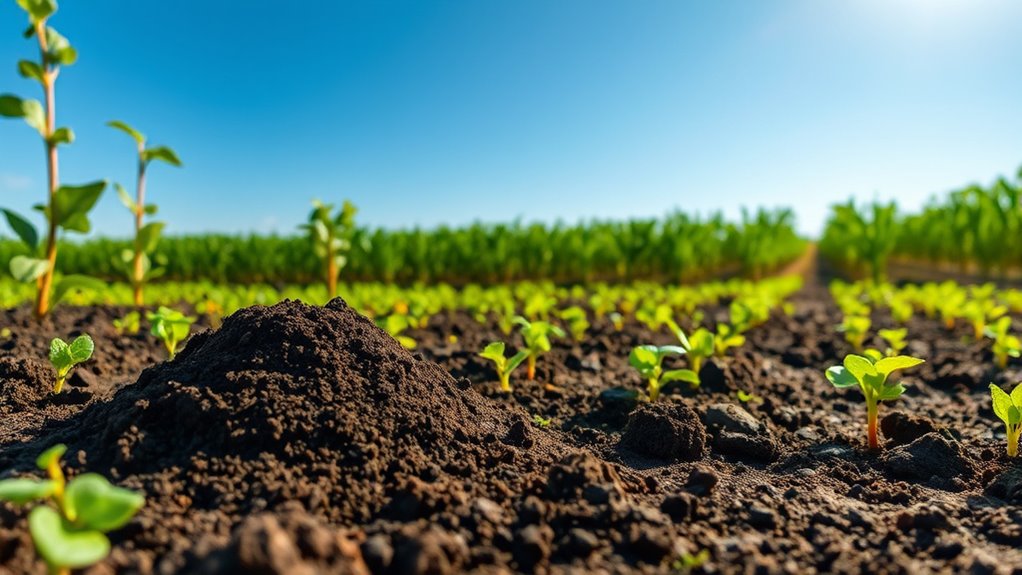
Incorporating biochar into soil management practices aligns with the goal of sustainable agriculture by improving soil fertility while sequestering carbon. The process is straightforward: you add biochar to the soil, where it integrates into the existing nutrient and microbial cycles. Over time, this enhances soil structure, encourages microbial activity, and locks carbon away from the atmosphere. The result is a more productive, resilient soil that supports plant growth and mitigates climate change. As research continues, the potential of biochar and microbial interactions to revolutionize how we manage land and waste becomes increasingly clear. This approach offers a practical, nature-based solution to balancing agricultural productivity with environmental stewardship.
Frequently Asked Questions
How Long Does Biochar Effectively Sequester Carbon in Soil?
Biochar can effectively sequester carbon in soil for hundreds to thousands of years, thanks to its high carbon stability. Its long sequestration duration depends on factors like soil type, climate, and land management practices. You’ll find that properly produced biochar remains stable, locking away carbon and reducing greenhouse gases over extended periods. This makes biochar a valuable tool for long-term carbon storage and climate change mitigation efforts.
Are There Any Environmental Risks Associated With Biochar Application?
You should be aware that biochar application can pose environmental risks, such as potential biochar toxicity and soil contamination if not properly produced. If made from contaminated feedstocks or at high temperatures, it might introduce harmful substances into your soil. To minimize these risks, verify the biochar is sourced from clean materials and properly processed, helping you safely improve soil health without damaging your environment.
Can Biochar Be Used in Urban Gardening Practices?
Yes, you can definitely use biochar in urban gardening practices like container gardening and urban farming. It improves soil structure, retains moisture, and boosts nutrient availability, making your plants healthier. Just guarantee you use food-grade or properly processed biochar to avoid contaminants. Mix it into your soil or compost, and you’ll see better growth and soil sustainability, helping you create a more productive and eco-friendly urban garden.
What Types of Waste Are Most Suitable for Biochar Production?
You might think all waste is suitable, but organic residues and agricultural waste are best for biochar production. These materials are rich in carbon and decompose efficiently, creating high-quality biochar. Using such waste reduces landfill, minimizes greenhouse gases, and enriches soils effectively. Avoiding plastics or treated materials is vital, as they release toxins. Focusing on organic residues and agricultural waste guarantees sustainable, safe, and nutrient-rich biochar for your gardening needs.
How Does Microbial Activity Influence Biochar’s Soil Enrichment Capabilities?
Microbial activity greatly enhances biochar’s soil enrichment capabilities by increasing microbial diversity and boosting enzyme activity. As microbes colonize biochar, they break down organic matter, releasing nutrients and improving soil fertility. You’ll notice healthier plant growth and better soil structure because active microbes help integrate biochar into the soil ecosystem. Their diverse communities and enzyme functions create a dynamic environment that promotes nutrient cycling and long-term soil health.
Conclusion
By now, you see how biochar and microbial carbon capture can transform waste into valuable soil enrichment. This sustainable approach not only boosts soil health but also helps fight climate change. Remember, every little effort counts—“A journey of a thousand miles begins with a single step.” So, start exploring these methods and turn waste into a powerful tool for a greener future. Your actions today can make a lasting difference tomorrow.