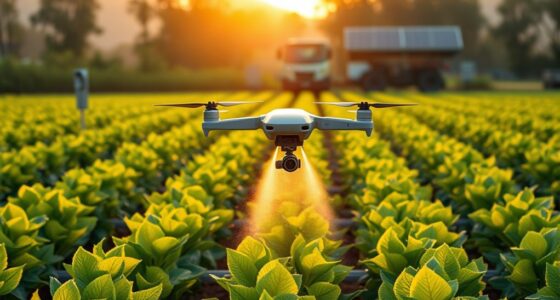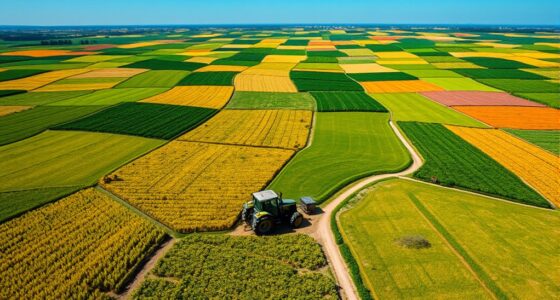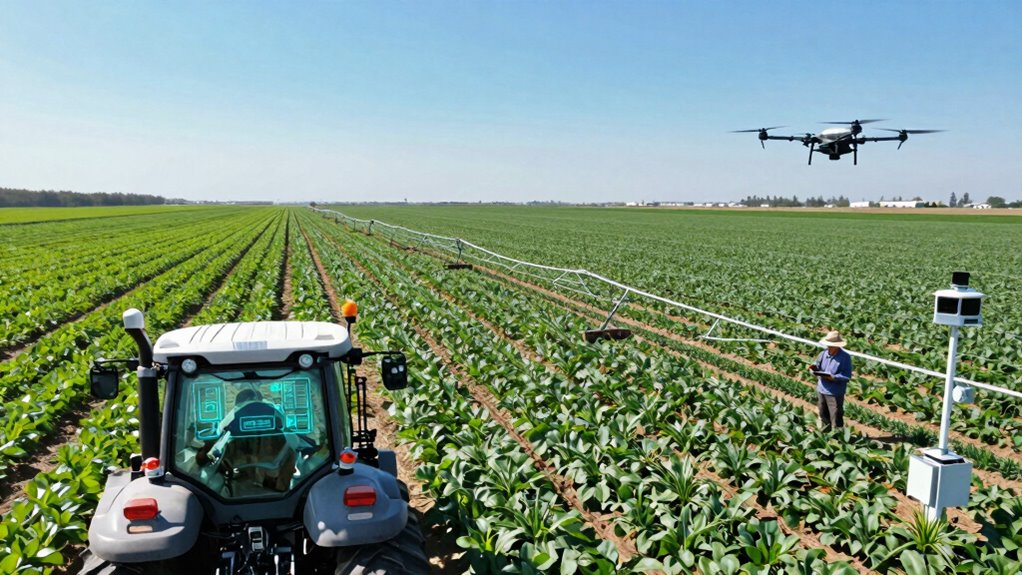
Farm data integration is the next big challenge because your systems often don’t speak the same language, making it hard to get a clear, unified picture of operations. Data from various sensors and equipment come in different formats, units, and standards, causing delays and errors. Without seamless integration, automation and decision-making suffer. Tackling these issues will enable smarter, more efficient farms. Keep exploring to discover how overcoming these hurdles can transform your farm management.
Key Takeaways
- Diverse data formats and units hinder seamless data sharing and analysis across farm systems.
- Interoperability issues prevent efficient communication between different farm technologies and platforms.
- Fragmented solutions increase costs and reduce the ability to leverage comprehensive farm insights.
- Lack of standardized data practices impedes automation, predictive modeling, and decision-making.
- Addressing data integration is essential for creating smarter, resource-efficient, and future-ready farms.
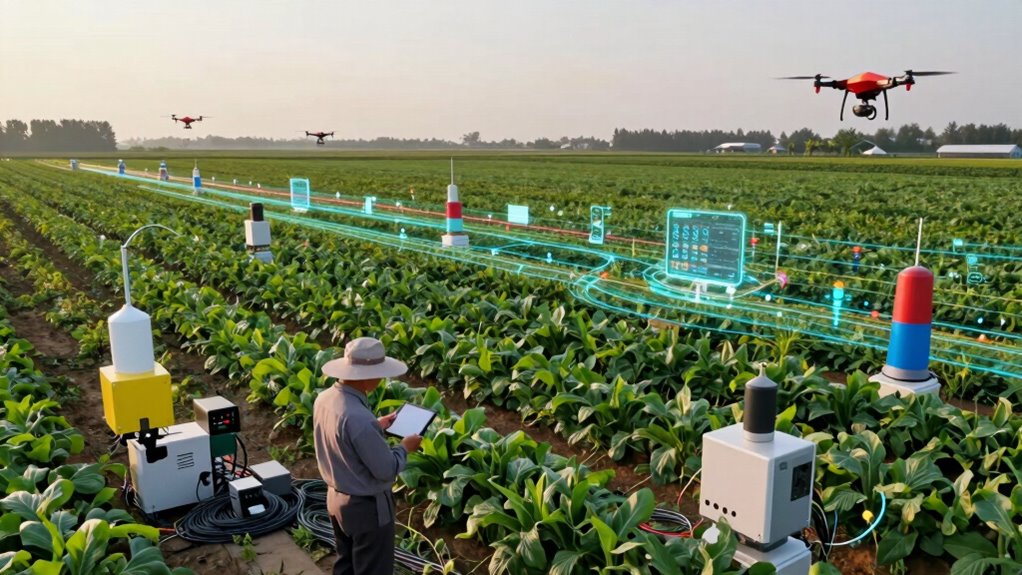
Integrating farm data can be a complex task, especially when different systems and sources don’t easily communicate with each other. You often face a jumble of data from various equipment, sensors, software platforms, and manual inputs, all stored in different formats. This inconsistency makes it difficult to create a unified view of your farm operations. One of the biggest hurdles is data standardization. Without common standards, data collected from one sensor or platform may not match the format or units used elsewhere. You might see soil moisture readings in percentages from one device and volumetric measurements from another, which complicates analysis and decision-making. This lack of uniformity hampers your ability to automate processes, generate accurate reports, or develop predictive models that rely on integrated data. Ensuring data consistency across your systems is essential for effective analysis and operational efficiency.
Interoperability issues further compound the challenge. Even if you have data in compatible formats, systems may not be able to communicate seamlessly. For instance, your irrigation controller might not easily share data with your weather station or your farm management software. This disconnect forces you to manually transfer information, leading to errors and delays. As more devices and platforms enter your farm, these issues multiply, making it increasingly difficult to get a coherent picture of your operations. You’re left juggling multiple logins, data exports, and manual integrations, which wastes time and reduces your ability to respond quickly to changing conditions.
The core problem is that many farm technologies are developed in silos, each with its own data protocols. This fragmentation results in interoperability issues that prevent you from leveraging the full potential of your data. When systems can’t communicate, you miss out on valuable insights that could improve crop yields, optimize resource use, or prevent issues before they escalate. The lack of standards also means you might have to invest in custom solutions or middleware, increasing costs and complexity.
To overcome these challenges, you need to focus on adopting common data standards and ensuring that your systems are compatible through open APIs or standardized data formats. This involves choosing technologies that prioritize interoperability and working with vendors committed to data sharing. By doing so, you’ll streamline data collection, reduce manual workloads, and liberate the full value of your farm data. Ultimately, addressing data standardization and interoperability issues isn’t just about technical convenience; it’s about creating a smarter, more responsive farm that can adapt to future innovations and market demands.

Cube Farm
Used Book in Good Condition
As an affiliate, we earn on qualifying purchases.
As an affiliate, we earn on qualifying purchases.
Frequently Asked Questions
How Does Data Integration Impact Farm Productivity?
Data integration boosts your farm productivity by enabling better crop monitoring and weather forecasting. When you combine data sources seamlessly, you can identify issues early, optimize irrigation, and plan harvests more accurately. This proactive approach reduces waste and increases yields. With integrated data, you gain real-time insights that help you make smarter decisions, ultimately leading to more efficient farming practices and higher profitability.
What Are the Costs Associated With Farm Data Integration?
The costs associated with farm data integration include initial investments in technology and ongoing expenses like software updates and maintenance. You also need to contemplate data privacy, ensuring sensitive information stays protected, which may require additional security measures. Conducting a thorough cost analysis helps you weigh these expenses against potential productivity gains, making informed decisions about integrating data systems effectively without overspending or risking data breaches.
How Secure Is Farm Data When Integrated?
Farm data remains quite secure when integrated properly, but you must prioritize data privacy and cybersecurity protocols. Implementing robust encryption, regular security updates, and access controls helps prevent unauthorized access. Staying vigilant about potential cyber threats and ensuring compliance with data privacy regulations protect your valuable farm information. While no system is entirely risk-free, following best practices markedly reduces vulnerabilities, allowing you to confidently leverage integrated data for better farm management.
Can Small Farms Afford Data Integration Solutions?
Yes, small farms can afford data integration solutions. Many providers offer affordable options tailored for smaller operations, making it accessible without breaking the bank. Scalability concerns are common, but these solutions often grow with your farm’s needs, ensuring you don’t outgrow them quickly. By choosing scalable, cost-effective data integration tools, small farms can enhance productivity and decision-making without significant upfront investments.
What Skills Are Required to Manage Integrated Farm Data?
To manage integrated farm data effectively, you need strong data management skills, including organizing, analyzing, and securing data across systems. Skill development in digital tools, database management, and basic analytics is essential. You should also learn how to troubleshoot issues and interpret data insights for decision-making. Staying updated on new technologies and understanding farm operations will help you optimize data use, ensuring smooth integration and better farm management.
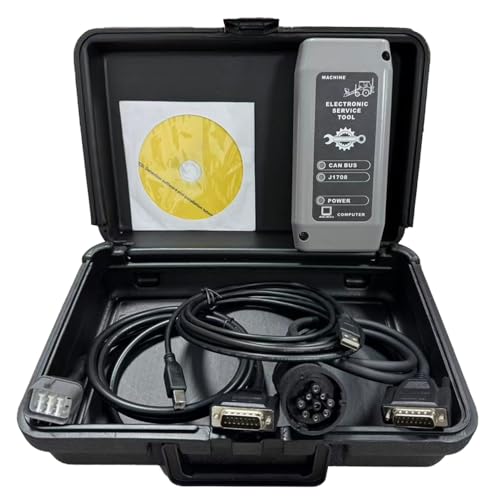
for JCB Electronic Service Diagnostic Tool Agricultural Construction Excavato V24.1.3 Version (Tool with Software)
Agricultural models: Fastrac tractors (2000-3000 Series, 3000 Series)
As an affiliate, we earn on qualifying purchases.
As an affiliate, we earn on qualifying purchases.
Conclusion
You now stand at the crossroads of innovation and complexity, where farm data integration is the key to unleashing smarter agriculture. Like a intricate tapestry, each data point weaves together to create a clearer picture of farm management. Overcoming these challenges isn’t just a task—it’s the bridge to sustainable growth and efficiency. Embrace the journey, for in weaving these threads, you’re shaping a future where technology and nature grow in harmony, hand in hand.
farm management system with API support
As an affiliate, we earn on qualifying purchases.
As an affiliate, we earn on qualifying purchases.
interoperable farm automation devices
As an affiliate, we earn on qualifying purchases.
As an affiliate, we earn on qualifying purchases.