
Regenerative agriculture means you focus on building healthy soil ecosystems that rely less on synthetic fertilizers. You enhance soil microbial life and organic matter, naturally replenishing nutrients and supporting plant growth. By increasing crop diversity, rotating crops, and applying targeted fertilizers, you improve soil health over time. This sustainable approach reduces environmental impact and boosts farm resilience. Want to see how these practices can transform your farming? Keep exploring to learn more.
Key Takeaways
- Reduces reliance on synthetic fertilizers by enhancing natural soil fertility and microbial activity.
- Prioritizes targeted, strategic fertilizer application based on soil testing and monitoring.
- Promotes crop diversity and cover cropping to naturally replenish nutrients and improve soil health.
- Builds soil organic matter through compost, manure, and crop rotation to sustain plant growth.
- Aims for long-term farm resilience and sustainability through ecosystem balance and reduced environmental impact.
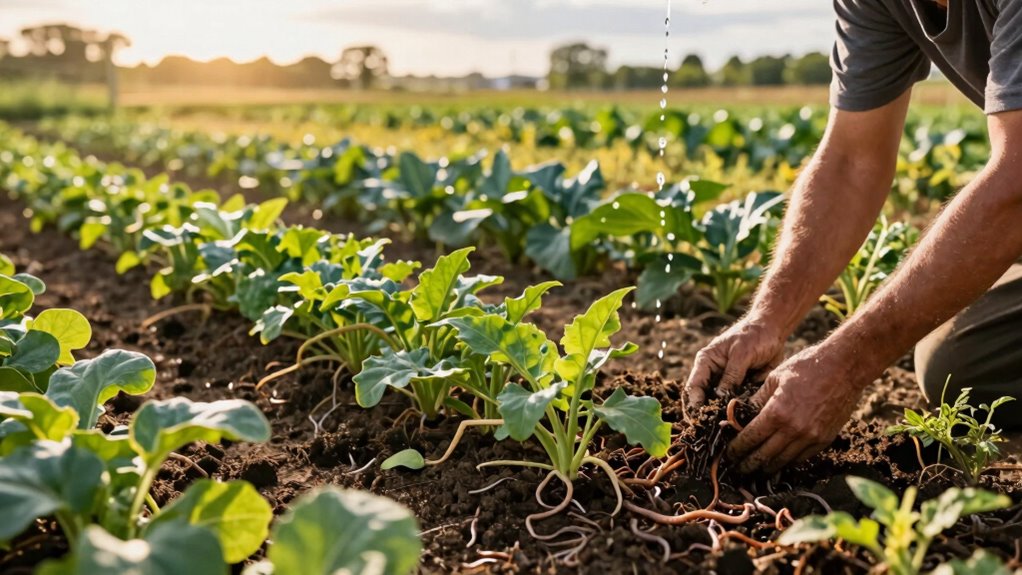
Regenerative agriculture is gaining momentum as a sustainable approach to farming that focuses on restoring soil health and increasing biodiversity. When you adopt this method, you begin to see how essential healthy soil is for productive, resilient crops. Instead of relying heavily on synthetic fertilizers, you work to enhance natural soil fertility through practices that promote soil microbial life and organic matter. This shift means you’re less dependent on chemical inputs and more focused on nurturing the land itself. As a result, your soil becomes more resilient, better at retaining moisture, and capable of supporting robust crop growth without constant external inputs.
Regenerative farming restores soil health, boosts biodiversity, and reduces reliance on chemical fertilizers for resilient crops.
A key aspect of regenerative agriculture involves increasing crop diversity. By planting a variety of crops, you help break pest and disease cycles, improve soil structure, and promote a balanced ecosystem. Crop diversity also contributes to soil health because different plants have varying nutrient needs and root structures, which can improve soil porosity and foster beneficial microbial communities. When you rotate crops or plant cover crops, you naturally replenish nutrients that might otherwise require synthetic fertilizers, reducing your farm’s environmental footprint. This diversity creates a more resilient farming system, capable of adapting to changing weather patterns and reducing the risk of crop failure. Additionally, implementing soil health principles supports the development of a thriving ecosystem that sustains your farm in the long term. Recognizing the importance of soil microbial life helps you understand how biological activity contributes to overall soil vitality and nutrient cycling.
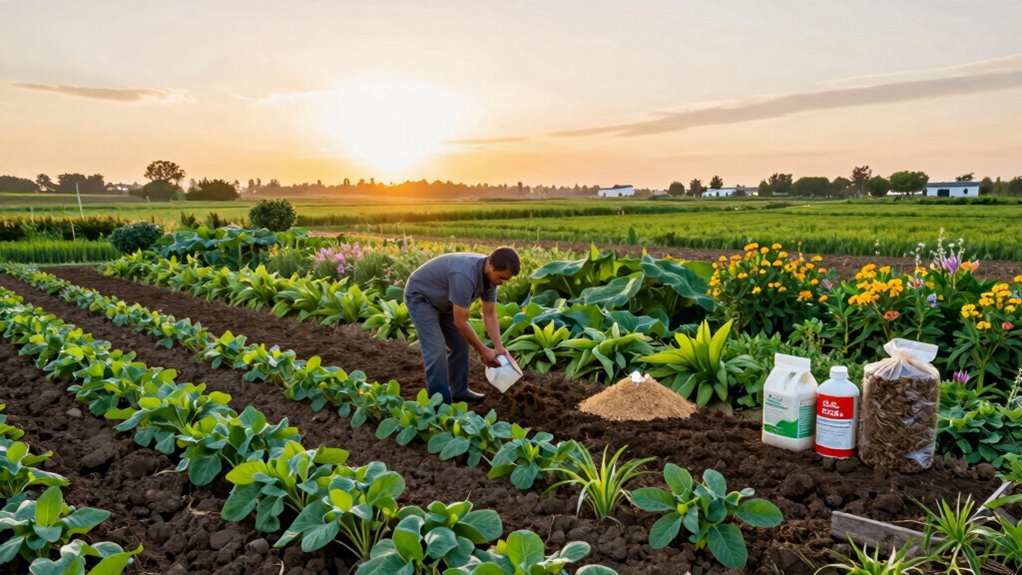
You’ll find that using fertilizers in regenerative agriculture isn’t about applying more but about applying smarter. Instead of blanket applications of synthetic fertilizers, you focus on building soil organic matter and optimizing nutrient cycling through natural processes. Compost, manure, and cover crops become your primary tools for providing nutrients, supporting soil life, and enhancing crop health. Over time, as your soil health improves, you notice that your plants require fewer supplemental fertilizers. The natural nutrient reserves and microbial activity in your soil do much of the work, creating a sustainable cycle of nourishment. Additionally, understanding the soil health principles helps you make informed decisions to maintain a thriving farm ecosystem.
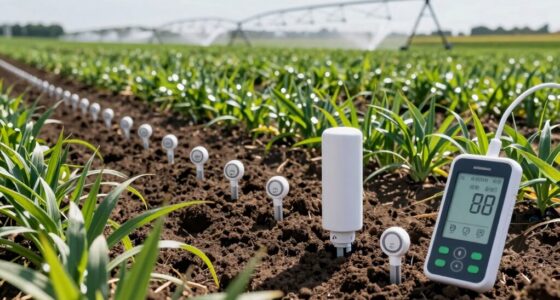
Furthermore, this approach encourages you to monitor your soil’s health regularly. Soil testing helps determine nutrient levels and microbial activity, guiding precise, minimal fertilizer applications. This not only saves costs but also prevents excess nutrients from leaching into waterways, protecting the environment. As your soil becomes more vibrant and balanced, you’ll observe healthier plants, improved yields, and greater resilience against pests and diseases. Ultimately, regenerative agriculture redefines fertilizer use from a routine input to a strategic, soil-centered practice that fosters long-term farm sustainability.

R&M Organics Premium Organic Compost 10 lb Bag for Vegetables, Flowers, Plants & Lawns-All Purpose Soil Amendment Fertilizer – Moisture Retention, Low Odor, Manure Based Compost – Indoor & Outdoor Use
Nutrient-Rich Organic Compost for Healthy Soil: Support stronger plant growth with this premium organic compost made from dairy…
As an affiliate, we earn on qualifying purchases.
As an affiliate, we earn on qualifying purchases.
Frequently Asked Questions
How Does Regenerative Agriculture Impact Long-Term Soil Health?
Regenerative agriculture improves your soil’s long-term health by boosting the soil microbiome, which enhances nutrient cycling and plant growth. You’ll use organic amendments like compost and cover crops, reducing reliance on chemical fertilizers. This approach promotes soil structure, increases organic matter, and fosters beneficial microorganisms. Over time, your soil becomes more resilient, productive, and better able to sustain crops naturally, ensuring sustainable yields and healthier ecosystems.
Are Synthetic Fertilizers Compatible With Regenerative Farming Practices?
Synthetic fertilizers can be compatible with regenerative farming, but their synthetic compatibility depends on how they’re used. If you apply them thoughtfully, focusing on fertilizer efficiency and avoiding overuse, you can support soil health without compromising regenerative principles. The key is to balance synthetic inputs with organic practices, such as cover cropping and composting, to maintain long-term soil robustness and sustainability.
What Are the Economic Benefits of Switching to Regenerative Fertilization?
Switching to regenerative fertilization can lead to significant economic benefits for you. You’ll experience cost savings by reducing or eliminating synthetic fertilizer expenses and improving soil health, which boosts crop yields naturally. Additionally, you can tap into market premiums for sustainably grown produce, increasing your profit margins. Over time, these benefits help you build a resilient farm that’s both environmentally friendly and financially sustainable, ensuring long-term success.
How Quickly Can Regenerative Methods Reduce Fertilizer Dependency?
You can see reduced fertilizer dependency within a few growing seasons. By practicing crop rotation and cover cropping, you naturally replenish soil nutrients and improve soil health. Studies show some farms cut fertilizer use by up to 50% within three years. These regenerative methods enhance soil fertility, lessen reliance on synthetic inputs, and boost crop resilience, making your farm more sustainable and environmentally friendly in a relatively short time.
Can Regenerative Agriculture Be Scaled for Large Industrial Farms?
Yes, regenerative agriculture can be scaled for large industrial farms by focusing on industrial efficiency and technology integration. You can adopt precision farming tools, cover cropping, and crop rotation to enhance productivity while reducing fertilizer dependency. By leveraging advanced data analytics and automation, you streamline operations and improve soil health. This approach allows big farms to implement regenerative practices effectively, balancing sustainability goals with the demands of large-scale production.

7 in 1 Soil Tester, Nitrogen Phosphorus Potassium NPK Tester, Handheld Soil PH Meter Kit, Temperature, Conductivity, Moisture, EC Meter for Petrochemical, Agriculture – Yellow
【7 IN 1 MULTIFUNCTIONAL SOIL TESTER】: Discover the power of our 7 in 1 Fast Soil Tester, which…
As an affiliate, we earn on qualifying purchases.
As an affiliate, we earn on qualifying purchases.
Conclusion
Embracing regenerative agriculture isn’t just a good idea—it’s a revolution that could completely transform farming as you know it. By adopting these practices, you’re not just reducing fertilizer dependence—you’re potentially ending the need for synthetic inputs altogether! Imagine a future where farms flourish naturally, soil becomes endless, and food is more nutritious than ever. This isn’t just a small change; it’s the epic shift that could save our planet and redefine agriculture forever.
![No-Till Cover Crop 13-Seed Mix (1 lb. Bag): [50% Clovers Plus Fenugreek, Vetch, Flax, Cowpeas, Buckwheat, Forage Peas, Millet, Lentils, Crimson Clover, Sweet Yellow, White Clover, Medium Red Clover]](https://m.media-amazon.com/images/I/61tz3UL4ZfL._SL500_.jpg)
No-Till Cover Crop 13-Seed Mix (1 lb. Bag): [50% Clovers Plus Fenugreek, Vetch, Flax, Cowpeas, Buckwheat, Forage Peas, Millet, Lentils, Crimson Clover, Sweet Yellow, White Clover, Medium Red Clover]
High-Quality, Nitro-Coated, All-Natural Seed Mix, From USA only
As an affiliate, we earn on qualifying purchases.
As an affiliate, we earn on qualifying purchases.

Dr. Earth Organic 5 Tomato, Vegetable & Herb Fertilizer Poly Bag
For more nutritious and tasty vegetables
As an affiliate, we earn on qualifying purchases.
As an affiliate, we earn on qualifying purchases.