
The future of smart irrigation focuses on using real-time data from soil sensors and weather forecasts to optimize water use. You’ll see more automation and remote management through connected systems that adjust schedules based on soil moisture and upcoming rainfall. AI and satellite technology will enable targeted watering, reducing waste and boosting efficiency. This integrated approach promotes sustainable farming practices, helping you conserve resources while improving crop health. Keep exploring to discover how these innovations can transform your water management strategies.

Prime made for students and young adults
- Fast, free delivery for dorm and study essentials
- Prime Video and Amazon Music included
- Member-only deals
Key Takeaways
- Integration of AI and satellite data enables precise, targeted irrigation reducing water waste across large areas.
- Autonomous systems connected via IoT allow real-time, remote management and adaptive watering schedules for optimal resource use.
- Advanced soil moisture sensors and weather forecasting improve timing and efficiency of irrigation, preventing over- and under-watering.
- Emerging technologies like drone and satellite imagery facilitate large-scale soil moisture monitoring and zone-specific watering.
- Data-driven analytics enhance drought prediction and sustainable practices, promoting environmental conservation and resource efficiency.

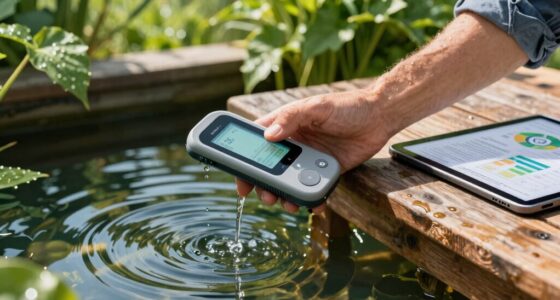
Have you ever wondered how technology is transforming the way we water crops? It’s a game-changer for resource efficiency, making farming smarter and more sustainable. Modern irrigation systems now rely heavily on real-time data to determine exactly when and how much water your crops need. Soil moisture sensors play an essential role here, providing precise measurements of water levels within the soil. Instead of watering on a fixed schedule, you can tailor your irrigation to match the actual moisture content, reducing waste and preventing overwatering. This approach not only conserves water but also promotes healthier plant growth, leading to better yields.
Weather forecasting further enhances this process by predicting upcoming weather patterns, such as rain or drought conditions. When integrated with soil moisture data, weather forecasts help you decide whether to delay irrigation or adjust watering amounts accordingly. For instance, if a rainstorm is forecasted, you can hold off on watering, saving water and energy. Conversely, during dry spells, you can optimize irrigation to ensure your crops get enough moisture without unnecessary runoff or evaporation. This synergy between soil moisture monitoring and weather prediction ensures your water application is both timely and precise, markedly boosting resource efficiency.
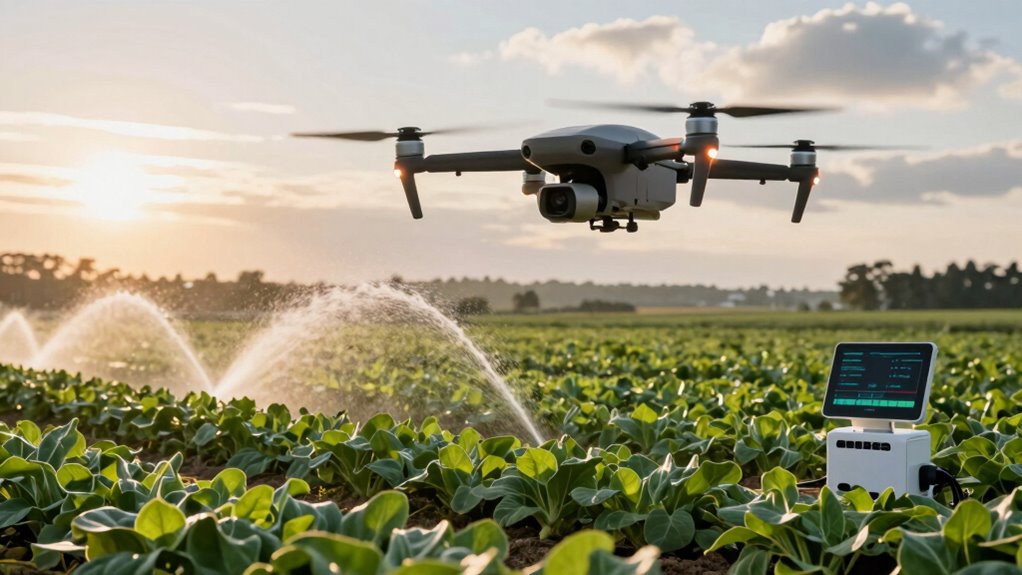
As technology advances, smart irrigation systems become increasingly autonomous. They can connect to weather data sources and soil sensors wirelessly, allowing you to manage your irrigation from anywhere via smartphone or computer. Automated systems can adjust watering schedules in real-time, responding instantly to changing conditions. This means less manual oversight, fewer mistakes, and more consistent crop care. Additionally, these systems often incorporate data analytics, helping you identify patterns and optimize water use over multiple growing seasons. Integrating digital content and research insights further enhances these systems’ capabilities, paving the way for more innovative solutions.
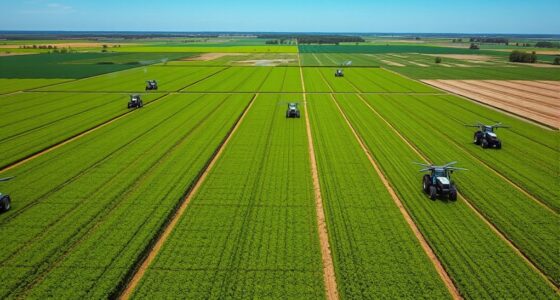
In the future, expect even more integration with emerging technologies like satellite imagery and AI-driven analytics. These tools will give you a comprehensive view of your fields, predicting water needs with greater accuracy. For example, satellite data can detect variations in soil moisture across large areas, enabling you to target specific zones rather than irrigating entire fields uniformly. AI algorithms can analyze historical weather and soil data to forecast drought periods or optimal watering times, further refining resource use. This holistic approach will make your irrigation practices more sustainable, reducing water consumption, lowering costs, and supporting environmental conservation.
In essence, the future of smart irrigation lies in harnessing cutting-edge technology to deliver water where it’s needed most, when it’s needed most. By leveraging soil moisture sensors, weather forecasting, and intelligent automation, you will be able to farm more efficiently, with a smaller environmental footprint and greater resilience against climate variability. It’s a future where resource conservation becomes second nature, and your crops thrive with smarter, data-driven watering strategies.
smart irrigation system with soil moisture sensors
As an affiliate, we earn on qualifying purchases.
As an affiliate, we earn on qualifying purchases.
Frequently Asked Questions
How Will Smart Irrigation Impact Water Conservation Policies Globally?
Smart irrigation will profoundly influence water conservation policies worldwide. You’ll see policies evolve to prioritize efficient water use, addressing water scarcity issues more effectively. As you adopt smart systems, policy reform will encourage broader implementation of these technologies, reducing waste and promoting sustainable agriculture. This shift helps conserve resources, supports environmental health, and guarantees water availability for future generations, making water conservation an integral part of global policy frameworks.
What Are the Potential Cybersecurity Risks for Smart Irrigation Systems?
You face cybersecurity risks like data breaches and system vulnerabilities with smart irrigation systems. Hackers could access sensitive data or disrupt operations, leading to water misuse or crop damage. To protect your system, you should regularly update software, implement strong passwords, and monitor network activity. Staying proactive helps prevent cyberattacks and guarantees your irrigation remains secure, efficient, and reliable.
How Can Small Farmers Afford Advanced Smart Irrigation Technologies?
You might think advanced smart irrigation tech is out of reach, but it’s not! With cost reduction strategies and flexible financing options, small farmers can access these game-changing tools without breaking the bank. These innovations are designed to be affordable and accessible, transforming your farming practices. By exploring grants, subsidies, or installment plans, you can easily integrate smart irrigation, boosting productivity while saving resources and money in the long run.
What Is the Environmental Impact of Widespread Smart Irrigation Adoption?
Widespread smart irrigation can positively impact the environment by improving soil health and increasing crop yields with precise water use. You’ll reduce water waste and minimize runoff, which benefits local ecosystems. However, over-reliance on technology might lead to energy consumption concerns. Overall, smart irrigation promotes sustainable farming, ensuring healthier soil and better crop production while conserving resources for future generations.
How Will Smart Irrigation Integrate With Other Agricultural Automation Tools?
You’ll see smart irrigation seamlessly integrate with other agricultural automation tools through sensor integration and data analytics. Sensors gather real-time data on soil moisture, weather, and crop health, while data analytics optimize watering schedules and resource use. This interconnected system allows you to make informed decisions quickly, increasing efficiency and crop yields. As these tools work together, you’ll experience smarter, more sustainable farming practices that adapt to changing conditions automatically.
automated irrigation controller for farms
As an affiliate, we earn on qualifying purchases.
As an affiliate, we earn on qualifying purchases.
Conclusion
As you embrace smart irrigation, you’re planting seeds for a more sustainable future, where technology acts as your guiding compass through water conservation. Just like a river carving its path over time, your efforts today shape the landscape of tomorrow’s resource efficiency. By harnessing innovation, you become a essential part of this evolving ecosystem, ensuring that every drop counts. Together, you’re steering toward a future where technology and nature flow in harmony, nurturing growth for generations to come.
weather forecast compatible irrigation system
As an affiliate, we earn on qualifying purchases.
As an affiliate, we earn on qualifying purchases.
satellite imagery soil moisture monitoring
As an affiliate, we earn on qualifying purchases.
As an affiliate, we earn on qualifying purchases.
Fall Picks
fall essentials
As an affiliate, we earn on qualifying purchases.