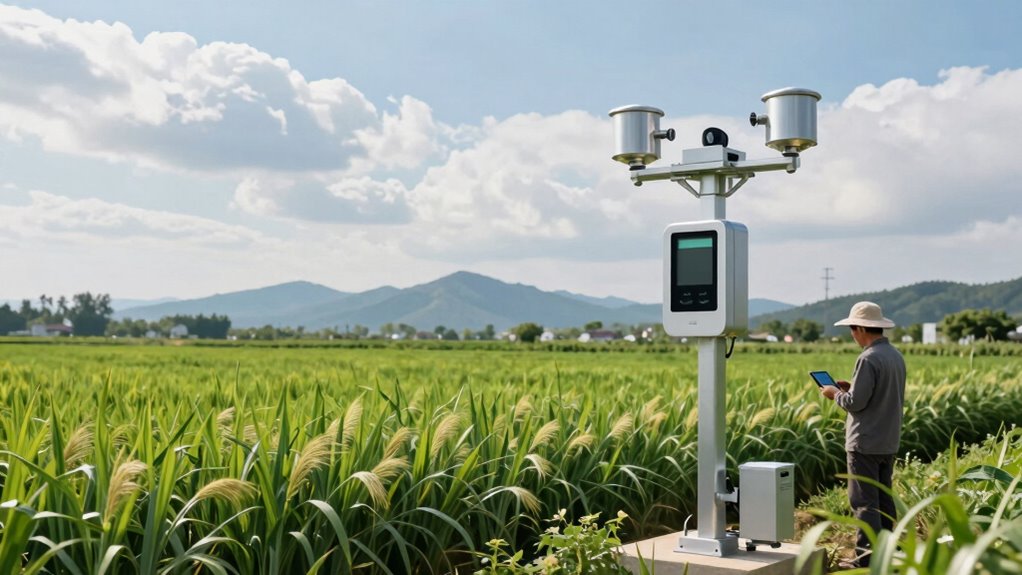

Modern weather stations give you real-time data that helps you make smarter crop decisions. You can monitor soil moisture, temperature, and rainfall closely, which means you’ll know when to water or protect your plants from pests and disease risks. Automated alerts ensure you act quickly on changing conditions. By integrating this data with your farm management tools, you’ll optimize inputs, increase yields, and promote sustainability. Keep exploring to discover how these tools can transform your farming approach.

Get school and study supplies delivered free — and shop member deals
- Fast, free delivery on millions of items
- Access to Prime Big Deal Days deals on October 6–7
- Prime Video, Amazon Music and more included
Key Takeaways
- Provide real-time atmospheric and soil moisture data for precise irrigation and resource management.
- Enable proactive pest and disease control by forecasting weather conditions conducive to infestations.
- Integrate with farm management tools for comprehensive environmental analysis and automated alerts.
- Help optimize planting schedules and crop rotation based on local climate patterns.
- Support sustainable farming practices by minimizing waste and enhancing crop resilience through accurate data.
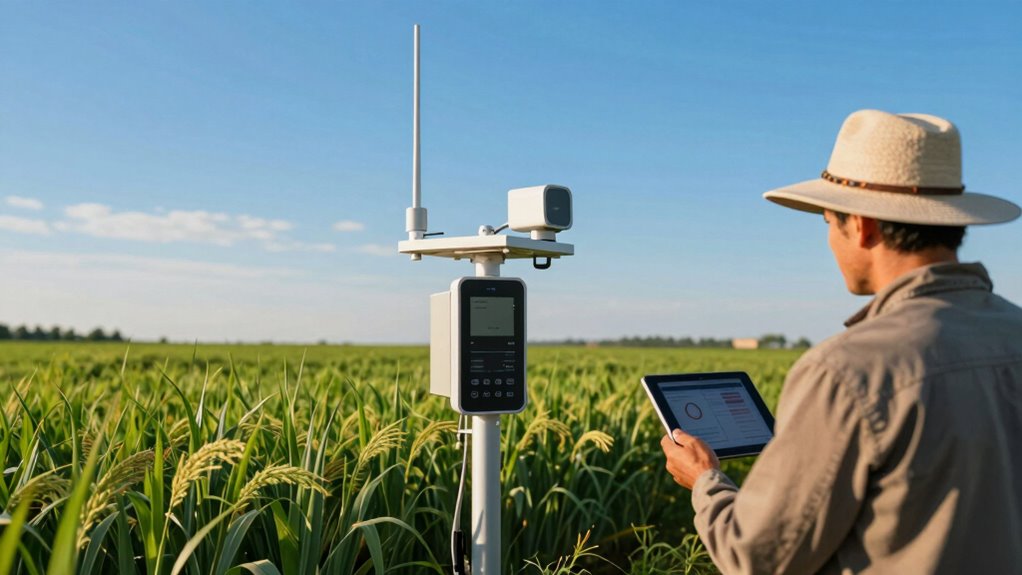
Weather stations are essential tools for farmers seeking to optimize crop yields and protect their investments. With real-time data at your fingertips, you can make informed decisions that directly impact your farm’s productivity. Modern weather stations provide critical insights into atmospheric conditions, but their benefits go far beyond just tracking temperature and rainfall. They offer detailed information on soil moisture levels, which is indispensable for effective irrigation management. Knowing the moisture content in your soil helps you avoid overwatering or underwatering, both of which can harm your crops. When soil stays too dry, plants struggle to absorb nutrients, and when it’s too wet, roots can rot or become susceptible to disease. By monitoring soil moisture through your weather station, you can fine-tune your watering schedules, ensuring your plants get just the right amount of water, leading to healthier growth and better yields. Additionally, the integration of weather station sensors with other farm management tools can enhance your ability to analyze and respond to environmental data more effectively.
Monitoring soil moisture helps optimize watering, promoting healthier crops and higher yields.
Beyond irrigation, weather stations play a key role in pest management strategies. Many pests thrive under specific weather conditions, and having precise data helps you anticipate and prevent infestations before they become severe. For example, forecasts indicating high humidity or sudden temperature drops can signal increased risks of fungal diseases or pest outbreaks. Armed with this knowledge, you can take proactive measures such as applying targeted treatments or adjusting planting times. This targeted approach not only reduces chemical use but also minimizes crop damage, saving you money and effort. Additionally, understanding climatic patterns can help you better plan crop rotations and planting schedules to adapt to changing weather trends. Incorporating weather data into your overall farm planning can also improve resource efficiency and crop resilience. Staying informed about climate variability allows you to develop more adaptable and resilient farming practices.
Furthermore, modern weather stations can integrate with other farm management tools, giving you a comprehensive view of your environment. Automated alerts notify you of critical changes, like rapid shifts in soil moisture or weather patterns conducive to pest proliferation. This real-time information enables you to act swiftly, whether that means adjusting irrigation, deploying pest control measures, or modifying planting schedules. The precision and immediacy of data empower you to optimize resource use, improve crop health, and ultimately boost your bottom line. Additionally, understanding high contrast ratios in projectors can help you create better visual displays of your farm data for analysis and planning.
In essence, modern weather stations transform how you manage your farm. They provide detailed, actionable insights into soil moisture and pest management, helping you make smarter decisions daily. No longer are you left guessing about the best time to water or treat pests; instead, you rely on accurate, timely data. This technological advantage allows you to maximize crop potential while minimizing waste and risks, setting the stage for a more productive and sustainable farming operation.
digital weather station for farming
As an affiliate, we earn on qualifying purchases.
As an affiliate, we earn on qualifying purchases.
Frequently Asked Questions
How Accurate Are Modern Weather Station Readings for Agricultural Purposes?
Modern weather station readings are quite accurate for agricultural purposes when sensors are properly calibrated. Regular sensor calibration guarantees data accuracy, which is essential for making informed crop decisions. You can trust these stations to provide reliable information on temperature, humidity, and rainfall, helping you optimize irrigation, fertilization, and pest control. While no system is perfect, proper maintenance and calibration considerably improve the precision of your weather data for better crop management.
Can Weather Stations Predict Pest or Disease Outbreaks?
Think of weather stations as your crop’s crystal ball. They can’t predict pest outbreaks or diseases with certainty, but they’re invaluable for pest outbreak forecasting and disease risk assessment. By monitoring temperature, humidity, and rainfall, you get clues about when pests or diseases might strike. This early warning system helps you take proactive measures, reducing crop damage and improving yields without waiting for problems to escalate.
How Do Weather Stations Integrate With Farm Management Systems?
You connect your weather stations to farm management systems through seamless data integration, ensuring real-time updates. Regular sensor calibration guarantees accurate readings, which are crucial for making informed decisions. These systems automatically collect data on weather patterns, soil moisture, and temperature, then analyze it to optimize irrigation, fertilization, and planting schedules. This integration helps you respond quickly to changing conditions, boosting crop yields and reducing resource waste efficiently.
What Is the Cost Range of Installing a Weather Station?
Imagine a sleek, high-tech weather station contrasted with a basic, DIY setup. You’ll find installation requirements vary, from simple plug-and-play units to more complex systems needing professional setup. Cost comparison ranges from around $200 for basic models to over $2,000 for advanced stations with extensive sensors. Your choice depends on your farm’s size, data needs, and budget, balancing affordability with accuracy for *ideal* crop decisions.
Do Weather Stations Require Regular Maintenance or Calibration?
Weather stations do require regular maintenance and calibration to stay accurate. You should follow maintenance schedules that include cleaning sensors and checking connections. Sensor calibration is essential, especially for temperature, humidity, and wind measurements, to guarantee data reliability. Regular upkeep helps prevent drift in sensor readings and keeps your station functioning properly. By staying on top of maintenance and calibration, you’ll get precise weather data to make better crop decisions.
soil moisture sensor for agriculture
As an affiliate, we earn on qualifying purchases.
As an affiliate, we earn on qualifying purchases.
Conclusion
By harnessing modern weather stations, you gain precise, real-time data that empowers smarter crop decisions. But remember, technology isn’t infallible; it’s a tool to complement your knowledge and intuition. Trusting these stations doesn’t mean abandoning your experience—it enhances it. Ultimately, embracing these innovations supports a deeper understanding of your land’s unique needs, proving that combining science with tradition leads to healthier crops and a more sustainable future.
farm weather station with alerts
As an affiliate, we earn on qualifying purchases.
As an affiliate, we earn on qualifying purchases.
As an affiliate, we earn on qualifying purchases.
Halloween Picks
halloween
As an affiliate, we earn on qualifying purchases.





![Competitive Programmer's Handbook (2018) [Pdf]](https://varietychem.com/wp-content/uploads/2026/10/competitive-programmer-s-handbook-2018-pdf-featured-260x140.jpg)