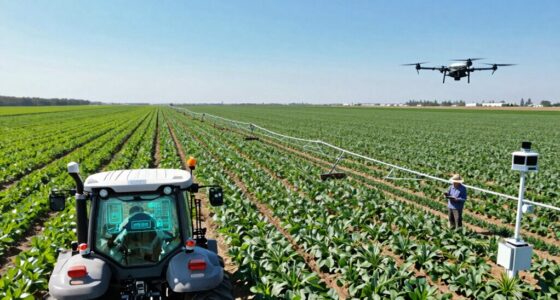
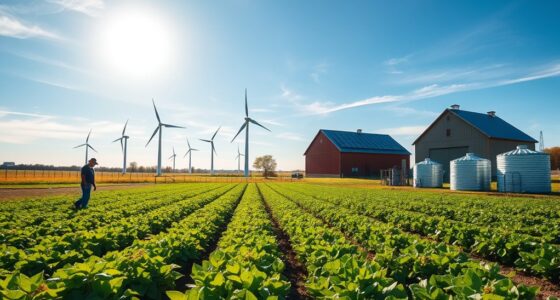
Using sensors and data analytics for soil health monitoring allows you to gather real-time insights into your soil’s condition. These technologies help you track nutrients, moisture levels, and microbial activity accurately across your fields. By analyzing this data, you can make smarter decisions on resource application, improve crop yields, and promote sustainable land management. Keep exploring, and you’ll discover how these innovations can transform your approach to soil health.

Prime made for students and young adults
- Fast, free delivery for dorm and study essentials
- Prime Video and Amazon Music included
- Member-only deals
Key Takeaways
- Sensors enable continuous, real-time soil data collection on moisture, nutrients, and pH levels.
- Data analytics platforms process sensor data to identify patterns, imbalances, and soil health trends.
- Integration of sensors with GIS and mapping tools allows zone-specific management decisions.
- Advanced analytics support targeted interventions like variable-rate fertilization for optimal soil health.
- Emerging technologies improve sensor accuracy and affordability, facilitating proactive soil management.
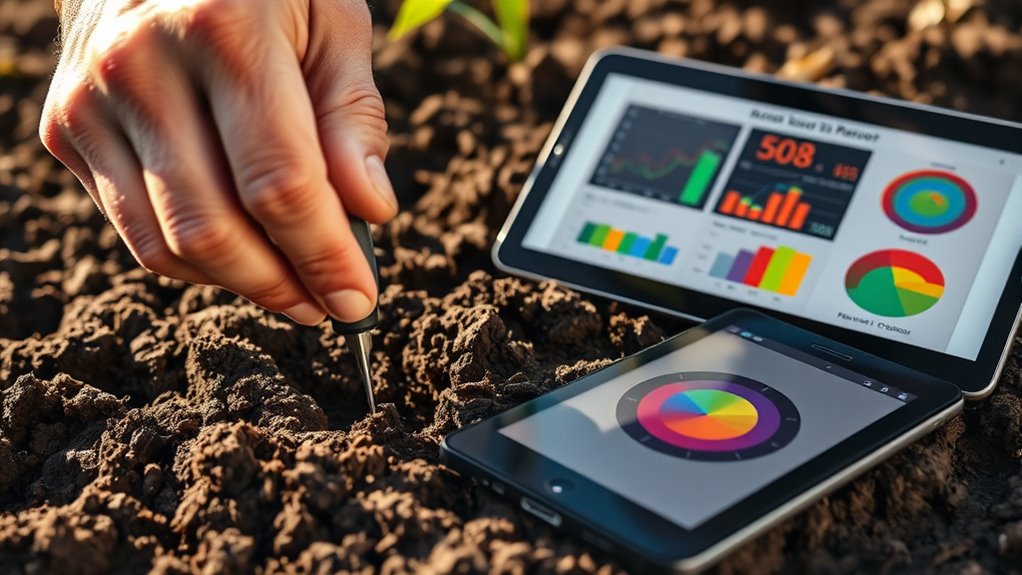
Have you ever wondered how healthy your soil truly is? It’s a question that many farmers and land managers ask, especially as sustainable practices become more important. Today, advancements in technology allow you to gain real-time insights into soil conditions through soil health monitoring systems. These systems leverage precision agriculture techniques and sensor integration to provide detailed data on soil nutrients, moisture levels, pH, and organic matter. By deploying such technology, you can make smarter decisions that maximize crop yields while minimizing environmental impact.
Discover your soil’s health in real time with advanced monitoring systems for smarter, sustainable farming.
Precision agriculture plays a crucial role in soil health monitoring because it focuses on applying resources exactly where they’re needed. Instead of blanket treatments across entire fields, you can target specific zones based on the data collected by sensors. This approach not only saves resources but also enhances soil health over time. Sensor integration is at the core of this process, enabling you to gather continuous, accurate measurements from various locations within your fields. These sensors can be embedded in the soil or mounted on drones and vehicles, providing a detailed picture of the field’s conditions.
Once sensors are integrated into your farm, they relay data to a central system for analysis. This data-driven approach helps you identify patterns and imbalances in soil health that might otherwise go unnoticed. For example, if sensors detect a drop in moisture or a deficiency in key nutrients, you can act promptly to address these issues before they impact crop growth. This real-time feedback loop allows for adjustments in irrigation, fertilization, and other management practices, ensuring your soil remains in ideal condition.
Furthermore, the integration of sensors with data analytics platforms simplifies the decision-making process. These platforms can process vast amounts of data, creating detailed maps and reports that highlight problem areas. Armed with this information, you can implement precise interventions, such as variable-rate fertilization, which targets only the affected zones. Over time, this tailored approach helps improve soil structure, reduce chemical runoff, and promote healthier microbial activity.
In essence, combining precision agriculture with sensor integration transforms traditional soil management into a proactive, science-based practice. You no longer have to rely solely on visual inspections or generalized recommendations. Instead, you gain a detailed understanding of your soil’s health, empowering you to make informed decisions that benefit your crops and the environment alike. As technology continues to advance, soil health monitoring will become even more accessible and sophisticated, helping you cultivate healthier, more productive land with confidence. Additionally, advancements in sensor technology are making these tools more affordable and easier to deploy for farmers of all sizes.
soil moisture sensor for agriculture
As an affiliate, we earn on qualifying purchases.
As an affiliate, we earn on qualifying purchases.
Frequently Asked Questions
How Cost-Effective Are Soil Sensors for Small-Scale Farmers?
Soil sensors can be quite cost-effective for small-scale farmers when you do a thorough cost-benefit analysis. While the initial investment might seem high, the sensor affordability improves over time as you optimize resource use, reduce waste, and increase yields. You’ll save money on fertilizers and water, making these sensors a smart choice if you weigh the long-term benefits against the upfront costs.
What Are the Best Practices for Maintaining Soil Sensors?
Oh, the joy of maintaining soil sensors—such a thrill, right? To keep them in top shape, you should regularly calibrate your sensors to guarantee data accuracy and perform routine checks for dirt or damage. Efficient data integration from your sensors helps catch issues early. Remember, a little proactive maintenance saves you from costly surprises later. So, stay vigilant, fine-tune your sensors, and keep that data flowing smoothly!
How Do Weather Conditions Affect Sensor Accuracy?
Weather variability can impact sensor accuracy by causing fluctuations in temperature, humidity, and moisture levels, which may lead to inaccurate readings. To counteract this, you should regularly calibrate your sensors, especially after extreme weather events. Proper calibration ensures your sensors adapt to changing conditions, maintaining precise data. Protect sensors from harsh weather with appropriate enclosures, and monitor weather forecasts to anticipate and adjust for environmental influences.
Can Data Analytics Predict Long-Term Soil Health Trends?
Yes, data analytics can predict long-term soil health trends, transforming your farming approach. By analyzing factors like soil moisture and nutrient variability, it’s possible to forecast changes that could impact your yields years from now—almost like seeing into the future! This predictive power helps you make smarter decisions today, preventing issues before they happen and ensuring your soil remains fertile and productive for years to come.
What Privacy Concerns Exist With Soil Data Collection?
You might worry about privacy concerns with soil data collection, especially around data ownership and security. When sensors gather your farm’s soil data, it’s vital to know who owns this information and how it’s protected from breaches. Without proper data security measures, sensitive details could be accessed or misused. To safeguard your farm’s data, make certain clear agreements on ownership and robust security protocols are in place before sharing or storing soil information.
As an affiliate, we earn on qualifying purchases.
Conclusion
So, you’ve got all these sensors and data analytics tools at your fingertips, making soil health monitoring easier than ever. It’s almost funny—despite all this tech, we still overlook the simple, natural signs of healthy soil. Ironically, while you rely on data, sometimes a good eye and a bit of intuition might be your best tools. After all, in the end, nature’s signals still matter more than any gadget.
As an affiliate, we earn on qualifying purchases.
As an affiliate, we earn on qualifying purchases.
Fall Picks
fall essentials
As an affiliate, we earn on qualifying purchases.