
TL;DR
Open a free Amazon Business account
Business pricing, bulk buying and tax-exempt orders.
Create a free accountAs an affiliate, we earn on qualifying purchases.
Meteorological agencies have officially forecast a strong El Niño event for this year, potentially causing significant weather disruptions globally. The development is confirmed, but the full impact remains uncertain.
Meteorological agencies worldwide have confirmed the development of a strong El Niño event for 2024, signaling potential widespread impacts on global weather patterns. The forecast was officially announced on March 14, 2024, by the National Oceanic and Atmospheric Administration (NOAA) and the World Meteorological Organization (WMO). This development is significant because it could lead to increased droughts, heavy rainfall, and storms in various regions, affecting agriculture, water resources, and disaster preparedness efforts.
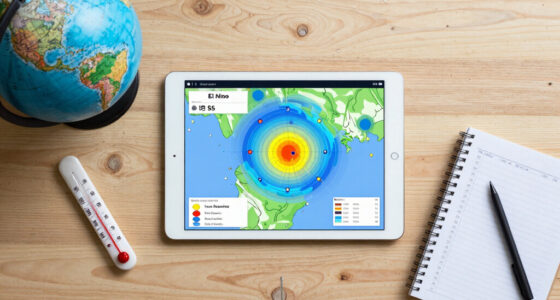
The NOAA and WMO confirmed that sea surface temperatures in the El Nino Southern Oscillation have risen to levels characteristic of a strong El Niño, surpassing the threshold for such classification. This marks the first time in three years that a significant El Niño has been officially declared, following a period of neutral or La Niña conditions. Experts indicate that this event is likely to persist through the northern hemisphere summer, with potential impacts lasting into the fall.
According to NOAA’s Climate Prediction Center, the El Niño is expected to influence weather patterns across North America, Asia, Africa, and South America. In the United States, forecasters warn of increased chances of drought in the Southwest and heightened storm activity in the Southeast and Pacific Northwest. Similarly, regions in Australia and Southeast Asia could see intensified monsoon seasons and flooding, while parts of South America might experience drier conditions.
Impacts of a Strong El Niño on Global Climate Systems
The confirmation of a strong El Niño is significant because it can cause widespread weather anomalies, including droughts, floods, and hurricanes. These disruptions have serious implications for agriculture, water supply, and disaster management worldwide. Governments and agencies are urged to prepare for potential emergencies, as El Niño events have historically led to economic losses and humanitarian crises in vulnerable regions.
emergency water storage containers
As an affiliate, we earn on qualifying purchases.
As an affiliate, we earn on qualifying purchases.
Recent Trends and Historical El Niño Events
El Niño is a climate pattern characterized by the warming of sea surface temperatures in the central and eastern Pacific Ocean. It occurs irregularly, approximately every two to seven years, and can last from nine to twelve months. The last significant El Niño event occurred in 2018-2019, which contributed to extreme weather in multiple continents. Climate scientists have been monitoring ocean temperatures and atmospheric conditions closely since early 2024, leading to the official forecast of this year’s event.
Historically, strong El Niño events have been linked to severe weather phenomena such as droughts in Australia and Indonesia, heavy rainfall and flooding in Central America, and increased hurricane activity in the Atlantic. The current forecast aligns with patterns observed in climate models predicting above-average sea surface temperatures in the Pacific for 2024.
“The sea surface temperatures have reached levels indicative of a strong El Niño, which could have significant impacts across multiple continents.”
— Dr. Laura Smith, NOAA Climate Scientist
As an affiliate, we earn on qualifying purchases.
Uncertainties in El Niño Intensity and Duration
While the development of a strong El Niño has been confirmed based on sea surface temperature data, the exact intensity, duration, and regional impacts remain uncertain. Climate models suggest a high likelihood of a strong event, but variability in ocean-atmosphere interactions means that some regions may experience less severe effects than predicted. Ongoing monitoring will be crucial to refine forecasts.
As an affiliate, we earn on qualifying purchases.
Monitoring and Preparedness for Ongoing Climate Impacts
Meteorological agencies will continue to track ocean and atmospheric conditions over the coming months to assess the evolution of the El Niño. Governments in vulnerable regions are advised to review emergency plans, especially related to drought management and flood response. Further updates and refined forecasts are expected as the event progresses into the peak months of the Northern Hemisphere summer and fall.
As an affiliate, we earn on qualifying purchases.
Key Questions
What is El Niño?
El Niño is a climate pattern characterized by the warming of sea surface temperatures in the central and eastern Pacific Ocean, which influences global weather patterns.
How does El Niño affect weather worldwide?
El Niño can cause droughts, heavy rains, flooding, and hurricanes in different regions, impacting agriculture, water supplies, and disaster preparedness.
When is the El Niño expected to peak?
Most forecasts suggest the strongest impacts will occur during the summer and fall of 2024, but the event may last into early 2025.
What regions are most at risk?
Regions most at risk include North America, Australia, Southeast Asia, and parts of South America, depending on regional climate responses.
How certain are the current forecasts?
While the development of a strong El Niño has been confirmed, the exact severity and regional impacts are still being monitored and could change as conditions evolve.
Source: google-trends
Fall Picks
fall essentials
As an affiliate, we earn on qualifying purchases.