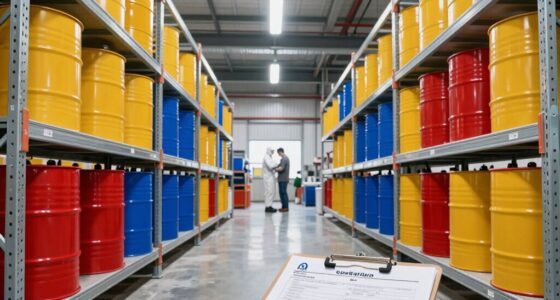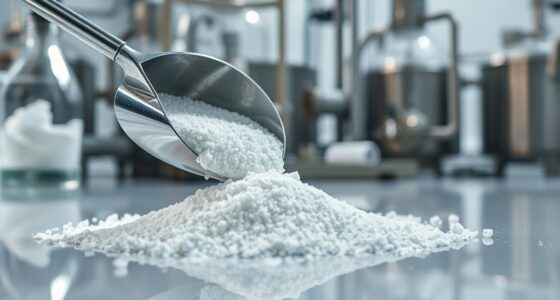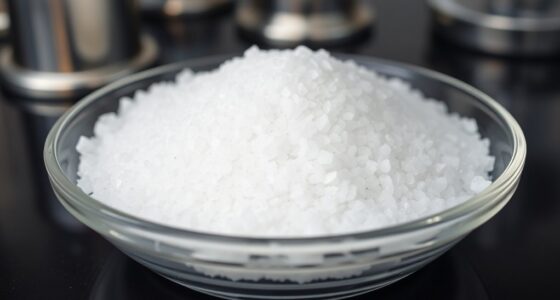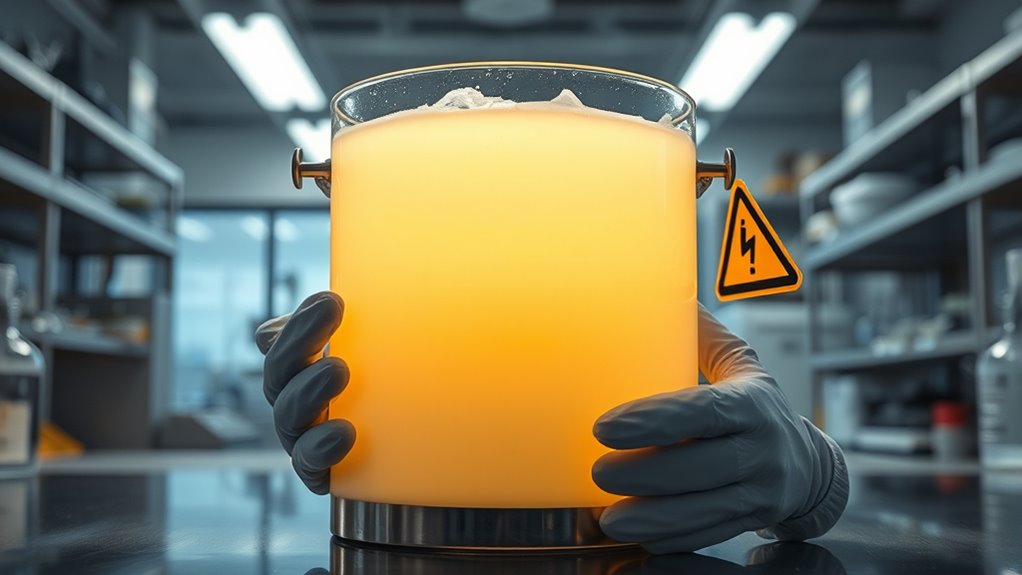

Sodium hydroxide is widely used in industries like paper manufacturing, textile processing, and water treatment, where it acts as a strong cleaning and pH regulator. It’s also common in household products such as drain and oven cleaners. However, you should handle it with care, wearing gloves and goggles, since it’s highly caustic and can cause severe burns or fumes. Understanding its uses and safety tips helps you use this chemical responsibly—stay tuned to discover how to stay safe while handling it effectively.

Prime made for students and young adults
- Fast, free delivery for dorm and study essentials
- Prime Video and Amazon Music included
- Member-only deals
Key Takeaways
- Sodium hydroxide is essential in industries like paper manufacturing, textile processing, and water treatment.
- It’s widely used in cleaning products for degreasing and removing organic materials.
- Handling requires protective gear, proper storage, and adherence to safety protocols to prevent burns and reactions.
- Its strong alkaline nature reacts violently with acids, releasing heat and fumes, demanding careful use.
- Proper training and ventilation are critical in industrial settings to minimize inhalation and chemical exposure risks.
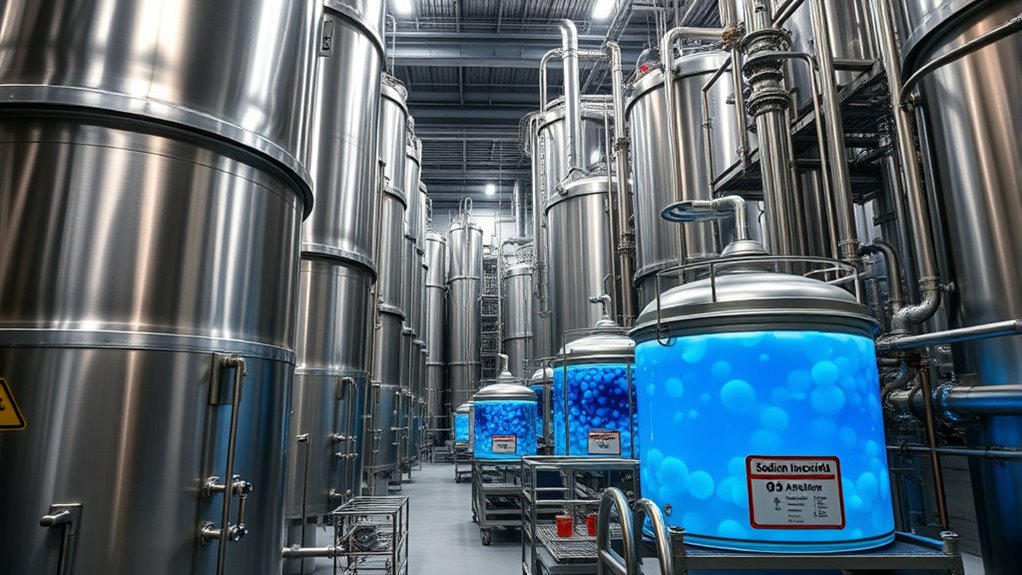
Sodium hydroxide, commonly known as lye or caustic soda, is a versatile chemical widely used in industries and households. Its strong alkaline properties make it a powerful agent for various applications, especially in cleaning and manufacturing. When it comes to cleaning, you may recognize sodium hydroxide as a key ingredient in many alkaline cleaners. These cleaners are highly effective at breaking down grease, fats, and organic materials because of the chemical’s ability to saponify fats, turning them into soap and glycerol. This makes sodium hydroxide indispensable in drain cleaners, oven cleaners, and industrial cleaning solutions. Its effectiveness in alkaline cleaning is unmatched, but you should always handle it with care. The highly corrosive nature of sodium hydroxide means it can cause severe burns if it contacts your skin or eyes. Proper protective gear, like gloves and goggles, is a must when working with it, whether you’re using it in a household setting or in an industrial environment.
Additionally, understanding local business hours can help ensure you are working with suppliers or services that adhere to safe handling practices and proper safety protocols. You also need to be aware of the chemical hazards associated with sodium hydroxide. Its caustic qualities mean it can react violently with acids, releasing heat and potentially dangerous fumes. Accidental spills or splashes can result in serious injuries, so storage and handling protocols are fundamental. Keep it away from incompatible substances and ensure containers are clearly labeled. When working with sodium hydroxide, always add the chemical to water—not the other way around—to prevent splashing and violent reactions. Ventilation is important in areas where you’re using this chemical to avoid inhaling any fumes, which can cause respiratory irritation.
In industrial applications, sodium hydroxide plays a critical role beyond cleaning. It’s used in paper manufacturing, textile processing, and water treatment. In these contexts, safety measures are even more essential due to the larger quantities involved. Proper training and safety protocols help prevent accidents. In household use, always follow manufacturer instructions carefully, and never mix sodium hydroxide with other chemicals unless specified. Remember, despite its usefulness, sodium hydroxide’s chemical hazards demand respect and caution. Handling it with the appropriate safety measures ensures you can benefit from its cleaning power without risking injury. By understanding its applications and risks, you protect yourself and others from potential harm while making the most of this powerful chemical.
As an affiliate, we earn on qualifying purchases.
Frequently Asked Questions
How Is Sodium Hydroxide Stored Safely Long-Term?
You should store sodium hydroxide in airtight, corrosion-resistant storage containers like high-density polyethylene or polypropylene. Keep these containers in a cool, well-ventilated area away from moisture and incompatible materials. Follow safety protocols by labeling containers clearly, wearing protective gear during handling, and ensuring proper grounding. Regularly inspect containers for leaks or damage, and always handle with care to prevent spills and chemical reactions.
Can Sodium Hydroxide Be Recycled After Industrial Use?
Recycling sodium hydroxide is totally doable and essential for waste management, saving you from a chemical disaster! You can recover it through methods like distillation or neutralization, turning waste into valuable resources. Proper recycling not only minimizes environmental impact but also makes your processes more efficient. So yes, sodium hydroxide can be recycled after industrial use, helping you stay sustainable and safe while managing chemical waste effectively.
What Are the Environmental Impacts of Sodium Hydroxide Spills?
When sodium hydroxide spills occur, they can cause significant environmental contamination and pose risks to aquatic life due to their high pH and corrosive nature. You should act quickly to contain and neutralize the spill to minimize aquatic toxicity and prevent damage to ecosystems. Proper disposal and cleanup are essential to avoid long-term environmental impacts, protecting both water quality and surrounding habitats from harmful effects.
How Does Sodium Hydroxide Interact With Other Chemicals?
Imagine you’re in a lab, channeling your inner wizard. Sodium hydroxide reacts vigorously with acids, producing salt and water through chemical reactions. It also interacts with metals, releasing hydrogen gas, which can be dangerous. When handling it, always follow safety protocols to prevent harmful reactions. You should be cautious because mixing sodium hydroxide with certain chemicals can cause violent reactions or releases of toxic fumes, so proper knowledge and safety measures are essential.
Are There Alternative Substances to Sodium Hydroxide for Industrial Processes?
You can consider alternative chemicals like potassium hydroxide, calcium hydroxide, or sodium carbonate for industrial processes, depending on your specific needs. Process substitutions often involve using acids or other bases to replace sodium hydroxide, reducing safety risks or environmental impact. It is crucial to evaluate each alternative’s reactivity, safety, and compatibility with your process to guarantee efficiency and safety. Consulting chemical experts helps identify the best substitution options.
caustic soda industrial cleaning
As an affiliate, we earn on qualifying purchases.
As an affiliate, we earn on qualifying purchases.
Conclusion
Sodium hydroxide is the backbone of many industries, but it’s a double-edged sword that demands respect. Like a fire in your hand, it can build or burn if mishandled. By understanding its uses and safety measures, you can harness its power responsibly. Always treat it with caution, and it’ll serve you well—transforming your work into a well-oiled machine rather than a disaster waiting to happen. Stay safe, stay smart.
sodium hydroxide safety gloves goggles
As an affiliate, we earn on qualifying purchases.
As an affiliate, we earn on qualifying purchases.
alkaline cleaner for grease removal
As an affiliate, we earn on qualifying purchases.
As an affiliate, we earn on qualifying purchases.
Fall Picks
fall essentials
As an affiliate, we earn on qualifying purchases.