
To handle corrosive chemicals safely, always wear proper PPE like gloves, goggles, and lab coats, and make sure they fit well. Work in well-ventilated areas or under a fume hood, and transfer chemicals carefully using the right tools. Keep spill kits nearby and know how to use them quickly. Staying alert to hazards and following established procedures protects you from injuries. Keep exploring to discover essential tips that keep you even safer.
Key Takeaways
- Always wear appropriate, well-fitting PPE such as gloves, goggles, and lab coats before handling corrosive chemicals.
- Work in well-ventilated areas or under a fume hood to minimize inhalation risks.
- Transfer chemicals slowly and carefully using proper tools to prevent splashes and spills.
- Keep spill kits nearby and follow proper containment and cleanup procedures immediately if a spill occurs.
- Verify labels and consult Safety Data Sheets (SDS) for specific hazards and handling instructions.
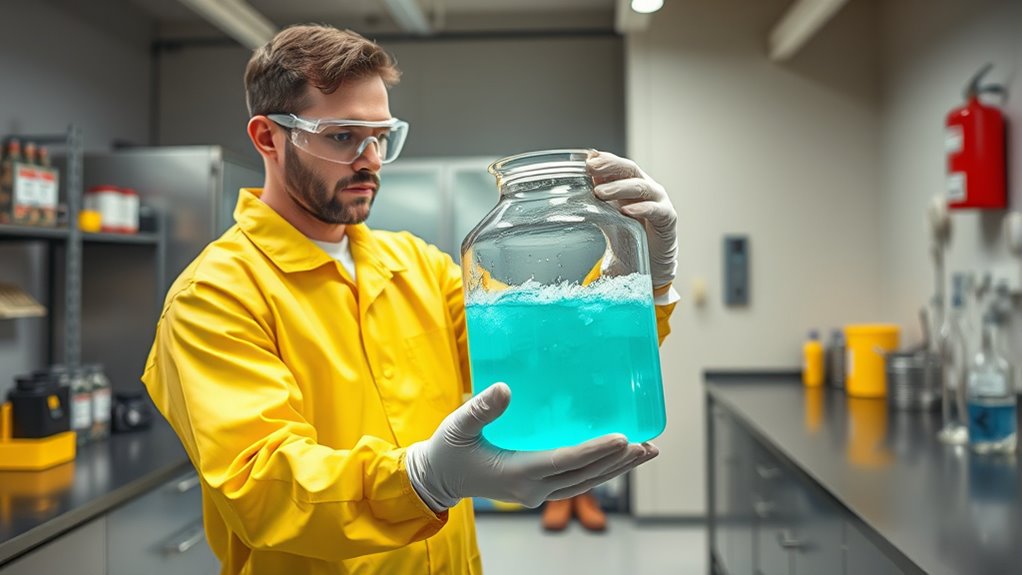
Handling corrosive chemicals safely is essential to prevent accidents and injuries in the workplace or laboratory. When working with these hazardous substances, your first priority should be to use proper PPE—personal protective equipment—that provides a reliable barrier against chemical exposure. This includes chemical-resistant gloves, goggles or a face shield, and a lab coat or apron made from materials designed to withstand corrosive agents. Proper PPE isn’t just about compliance; it’s your first line of defense against splashes, spills, or accidental contact that could cause severe burns or tissue damage. Ensure that your PPE fits well and is in good condition before starting any task, and always double-check that it covers all exposed skin.
Equally important is spill containment. Despite careful handling, accidents can happen, and having a spill containment plan in place helps minimize the risk of chemical exposure and environmental contamination. Spill containment involves using secondary containment trays, absorbent materials, or barriers that can quickly contain and control leaks or splashes. When working with corrosive chemicals, keep a spill kit nearby that includes neutralizing agents, absorbent pads, and disposal containers. Know how to use these tools effectively, and always practice good housekeeping by keeping your workspace clean and organized. This reduces the likelihood of accidental spills and makes cleanup faster if a spill occurs.
When handling corrosive chemicals, always work in a well-ventilated area—preferably under a fume hood—to prevent inhalation of harmful vapors. Before pouring, double-check the label and safety data sheet (SDS) for specific handling instructions and potential hazards. When transferring chemicals, do so slowly and carefully to avoid splashes or spills. Use appropriate tools like funnels or pipettes designed for corrosive substances to improve control. If a spill does occur, follow your spill containment procedures immediately. Alert others in the area, evacuate if necessary, and don’t attempt to clean up large spills without proper PPE and training. Being aware of the chemical properties helps you understand how to handle spills safely and effectively.
Top picks for "handle corrosive chemical"
Open Amazon search results for this keyword.
As an affiliate, we earn on qualifying purchases.
Frequently Asked Questions
What Are the Signs of Chemical Exposure Poisoning?
If you’ve been exposed to corrosive chemicals, watch for chemical symptoms like skin burns, eye irritation, or difficulty breathing. Poisoning indicators include dizziness, nausea, vomiting, or a metallic taste in your mouth. You might also notice unusual fatigue or confusion. Recognizing these signs early helps you seek prompt medical attention. Always stay alert to these symptoms and respond quickly to reduce health risks from chemical exposure.
How Often Should Safety Equipment Be Inspected?
You should inspect your protective gear according to the inspection schedule recommended by the manufacturer or your workplace safety guidelines. Regular checks guarantee your safety equipment is in good condition and effective. Make it a habit to visually examine gloves, goggles, and suits daily before use, and conduct more thorough inspections weekly or monthly, depending on usage. Consistent inspections help prevent accidents when handling corrosive chemicals.
Can Corrosive Chemicals Be Neutralized Safely at Home?
You shouldn’t attempt to neutralize corrosive chemicals at home. Household neutralizers might not work effectively and could cause dangerous reactions. Instead, keep a safe emergency disposal plan in place, and contact local hazardous waste facilities for proper disposal. If accidental spills occur, evacuate the area and call emergency services. Never try to neutralize or handle corrosive chemicals without professional guidance, as mishandling can lead to serious injuries or environmental harm.
What Are the Long-Term Health Effects of Exposure?
Exposure to corrosive chemicals can cause severe, lasting health effects if you’re not careful. You might experience chronic respiratory hazards, skin scars, or even nerve damage that feels like a lifetime of pain. Chemical absorption can lead to organ damage or increased cancer risk over time. Protect yourself by minimizing exposure and using proper safety gear—long-term health depends on how well you manage these dangerous substances daily.
How Should Spills Be Contained in Confined Spaces?
When a spill occurs in confined spaces, you should first guarantee proper ventilation strategies are in place to disperse harmful fumes quickly. Use spill containment procedures such as absorbent materials and barriers to prevent spread. Always wear appropriate PPE, and if necessary, evacuate the area. Afterward, thoroughly clean and decontaminate the space, ensuring that ventilation continues until all residues are safely removed.
Conclusion
Handling corrosive chemicals safely is vital to prevent accidents and injuries. Always wear proper protective gear, work in well-ventilated areas, and follow safety protocols carefully. Did you know that over 10,000 chemical-related injuries occur annually due to improper handling? Staying vigilant and prepared can make all the difference. By respecting these substances and following safety guidelines, you protect yourself and those around you from harm. Safety should always come first—your well-being depends on it.