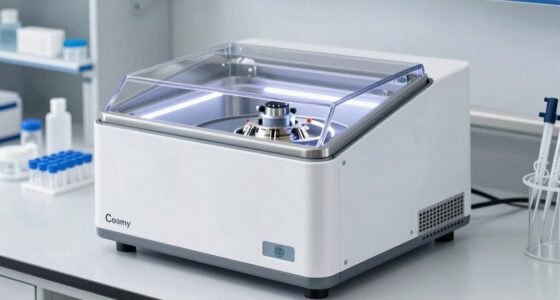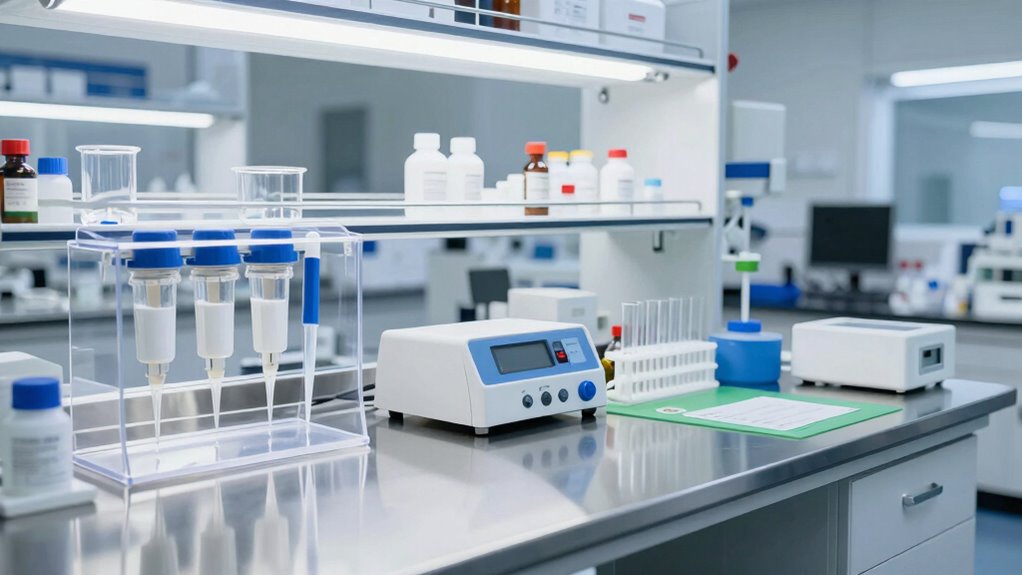

To control contamination in laboratory clean benches, you should focus on managing airflow with proper filtration and unidirectional flow to keep particles and microbes away from your samples. Wear protective gear, handle materials carefully, and minimize disruptions to airflow to maintain a sterile environment. Regularly check and maintain filters and fans to guarantee efficiency. If you keep these practices in mind, you’ll better understand how airflow pathways and proper handling can safeguard your workspace.

Prime made for students and young adults
- Fast, free delivery for dorm and study essentials
- Prime Video and Amazon Music included
- Member-only deals
Key Takeaways
- Proper airflow management using HEPA filters and unidirectional flow minimizes airborne contamination in clean benches.
- Regular maintenance of filters and ventilation systems ensures consistent airflow and contamination prevention.
- Avoiding turbulence and disturbances maintains laminar flow, reducing particle spread and contamination risk.
- Correct positioning of samples and personnel supports optimal airflow and reduces contamination pathways.
- Personal hygiene and careful handling prevent airflow disruption and microbial transfer within the workspace.
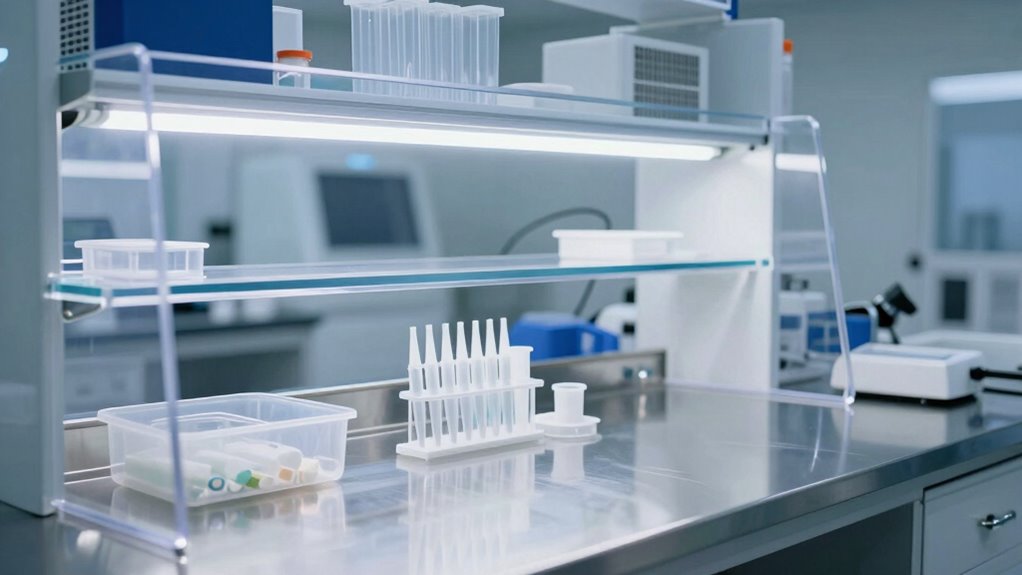
Have you ever wondered how laboratories maintain a sterile environment essential for accurate experiments? The key lies in effective contamination control, which depends heavily on airflow optimization. When working with clean benches, you need to understand that the way air moves inside the workspace directly impacts the level of contamination prevention. Proper airflow ensures that airborne particles, dust, and microbes are kept away from your samples, tools, and workspace surfaces, reducing the risk of contamination.
Effective airflow in clean benches is essential for preventing contamination and maintaining a sterile laboratory environment.
In a well-designed laboratory clean bench, airflow is carefully managed through high-efficiency particulate air (HEPA) filters. These filters trap microscopic particles, preventing them from circulating within the workspace. As you work, the air is directed downward or across the work surface in a unidirectional flow, creating a barrier that pushes potential contaminants away from your samples. This controlled airflow not only limits the entry of external pollutants but also prevents the spread of contaminants generated during work procedures. When airflow is optimized, it guarantees a steady, laminar flow that maintains a clean environment, which is essential for sensitive experiments.
Contamination prevention starts with understanding how airflow patterns influence particle movement. You should always position yourself and your materials in a way that complements the airflow design, avoiding obstructions that could disrupt the flow or create turbulence. Regular maintenance of the HEPA filters and the clean bench’s ventilation system is crucial to sustain ideal airflow. Dirty filters or malfunctioning fans diminish airflow efficiency, increasing the chance of airborne contamination. It is also important to recognize that airflow management plays a critical role in contamination control within the laboratory environment. Additionally, it’s essential to understand how airborne particles can spread and settle, which helps in designing effective contamination prevention strategies. Proper understanding of contamination pathways can further help identify potential risks and develop better preventative measures. Enhancing airflow efficiency through system calibration and monitoring can significantly reduce contamination risks and ensure consistent sterile conditions. Furthermore, it’s important to recognize that cleaning surfaces regularly and handling samples carefully help minimize the disturbance of airflow and prevent introducing new contaminants into the workspace. Maintaining awareness of airflow dynamics can significantly enhance contamination prevention efforts.
Furthermore, your personal hygiene and behavior play a vital role in contamination prevention. Wearing appropriate protective gear, such as gloves and lab coats, helps guarantee that you don’t carry microbes into the clean environment. When working, moving slowly and deliberately helps maintain airflow consistency, avoiding unnecessary turbulence. The overall goal is to create a controlled environment where the airflow acts as a barrier, preventing contaminants from settling on your work and spreading throughout the laboratory.
HEPA air filters for laboratory clean benches
As an affiliate, we earn on qualifying purchases.
As an affiliate, we earn on qualifying purchases.
Frequently Asked Questions
How Often Should Laboratory Clean Benches Be Inspected for Contamination?
You should inspect your clean benches for contamination at least monthly. During these inspections, perform airflow validation to guarantee proper airflow patterns and identify any disruptions. Also, check surface sterilization by swabbing surfaces and testing for microbial presence. Regular inspections help maintain a contamination-free environment, prevent cross-contamination, and ensure the equipment functions correctly. Increasing inspection frequency may be necessary if you handle high-risk or sensitive materials.
What Are the Latest Innovations in Contamination Control Technology?
Imagine walking into a lab where robots don’t just work but also guarantee perfect cleanliness. The latest innovations focus on airflow optimization and filter efficiency, making contamination control smarter and more reliable. Advanced HEPA and ULPA filters, combined with real-time monitoring, detect even the tiniest particles. These tech upgrades reduce contamination risks, streamline workflows, and give you peace of mind knowing your environment stays pristine with cutting-edge precision.
How Do Different Types of Clean Benches Compare in Contamination Prevention?
You’ll find that different clean benches, like laminar flow hoods and biosafety cabinets, vary in contamination prevention based on HEPA filtration and airflow patterns. Laminar flow hoods direct a unidirectional airflow to keep contaminants out, whereas biosafety cabinets incorporate both airflow and containment features for added safety. Proper HEPA filters trap airborne particles, and controlled airflow patterns guarantee a clean environment, reducing contamination risks effectively across different types.
What Training Is Required for Staff to Properly Operate Clean Benches?
You should undergo thorough training to master proper clean bench operation. This includes understanding airflow management, wearing appropriate personal protective equipment, and practicing proper procedures. You’ll learn to minimize contamination by maintaining sterile techniques, correctly handling materials, and avoiding disruptions to airflow. Continuous education guarantees you stay current on safety standards, and hands-on practice reinforces your skills, helping you operate the clean bench confidently and competently, preventing contamination effectively.
How Can Contamination Control Be Maintained During Power Outages?
During power outages, you can maintain contamination control by following power restoration protocols carefully. Guarantee backup filtration systems are in place and functioning properly to keep the clean environment stable. You should also minimize open access to the bench, cover critical samples, and avoid unnecessary movement. Once power is restored, verify that all systems are operational and contaminant levels are within acceptable limits before resuming work.
laminar flow hood with unidirectional airflow
As an affiliate, we earn on qualifying purchases.
As an affiliate, we earn on qualifying purchases.
Conclusion
By maintaining proper cleaning protocols and using quality clean benches, you markedly reduce contamination risks. For example, imagine a biotech lab that implemented strict contamination controls; they experienced fewer sample errors and improved research accuracy. Remember, your diligence in following best practices directly impacts your lab’s success. Regularly cleaning and monitoring your clean benches isn’t just routine—it’s essential for reliable, safe, and accurate scientific work. Stay proactive, and contamination will stay at bay.
laboratory contamination control filters
As an affiliate, we earn on qualifying purchases.
As an affiliate, we earn on qualifying purchases.
As an affiliate, we earn on qualifying purchases.
Fall Picks
fall essentials
As an affiliate, we earn on qualifying purchases.