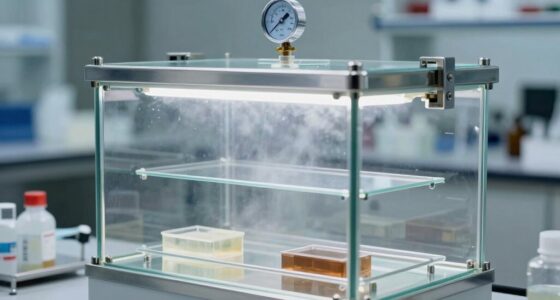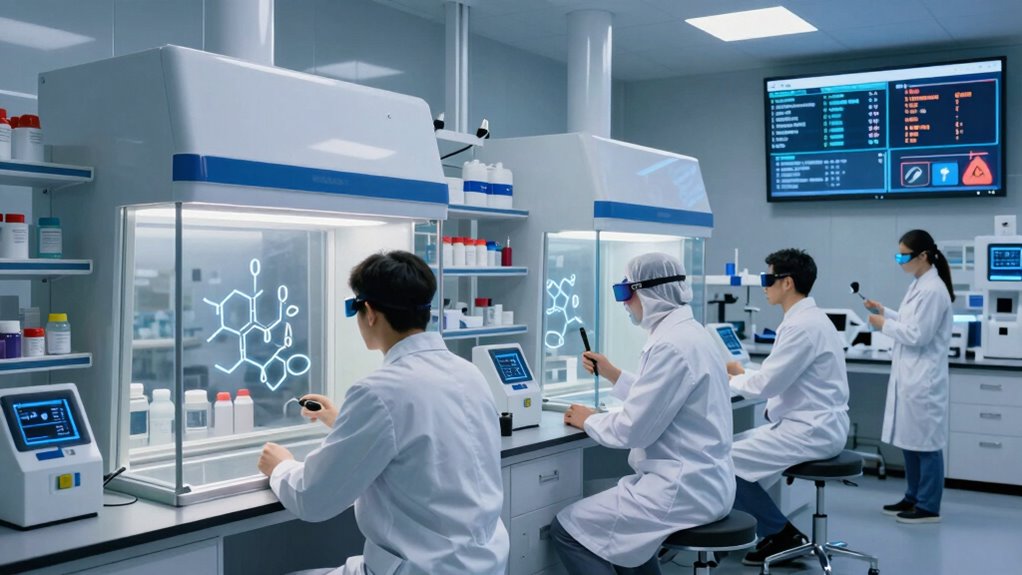
To keep chemical safety training effective in modern labs, you should shift from static manuals to engaging, personalized modules that focus on specific hazards you encounter. Incorporate virtual simulations for real-world practice and utilize digital platforms for up-to-date standards. Flexibility and continuous learning are key, so make safety training accessible anytime and tailored to your role. Embracing emerging technologies guarantees you’re prepared for any lab emergency—keep exploring to see how these changes make a difference.

Prime made for students and young adults
- Fast, free delivery for dorm and study essentials
- Prime Video and Amazon Music included
- Member-only deals
Key Takeaways
- Transition from standard lectures to personalized, engaging modules tailored to specific lab hazards and roles.
- Incorporate virtual simulations and practical scenarios for immersive, risk-free skill development.
- Utilize digital platforms and emerging technologies like augmented reality for real-time, up-to-date safety training.
- Ensure flexible, accessible training that supports continuous learning and accommodates 24/7 lab operations.
- Use data analytics to monitor effectiveness and tailor ongoing education to individual needs and safety performance.
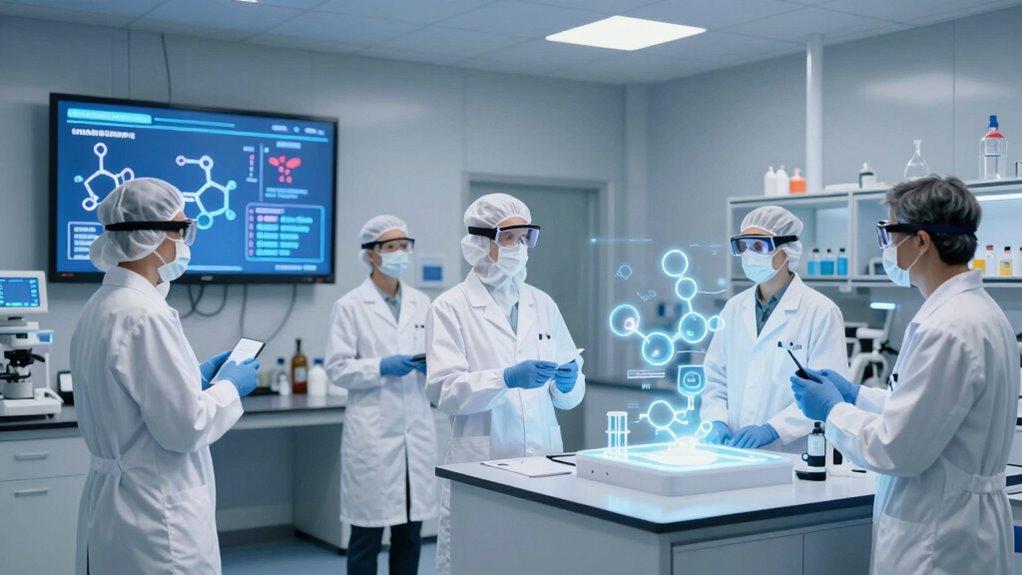
Have you ever wondered how chemical safety training has transformed over the years? It’s no longer just about reading manuals or attending standard lectures. Today, the evolution of safety training reflects a shift toward more engaging, effective methods tailored to individual learning needs. Personalized modules have become a cornerstone of modern training programs, allowing you to focus on the specific hazards you’re most likely to encounter in your particular lab environment. Instead of generic instructions, these modules adapt content based on your role, experience level, and the chemicals you handle. This targeted approach guarantees you’re not wasting time on information that doesn’t apply to your daily tasks but instead mastering relevant safety procedures. Personalized modules make training more relevant, keeping you engaged and improving knowledge retention, which ultimately enhances safety in your workspace.
Personalized safety modules target your specific hazards, boosting engagement and retention for a safer lab environment.
Alongside personalized content, virtual simulations have revolutionized how you learn about chemical hazards. Instead of passive listening, you get to immerse yourself in realistic scenarios that mimic your actual working conditions. Virtual simulations allow you to practice handling spills, using safety equipment, and responding to emergencies without any real-world risk. They give you a safe space to develop your decision-making skills and build confidence in managing hazardous situations. These immersive experiences help bridge the gap between theoretical knowledge and practical application, making it easier for you to recall what to do during an actual emergency. As technology advances, these simulations become increasingly sophisticated, providing detailed feedback and customized challenges that match your skill level. This way, you’re not just memorizing safety protocols—you’re actively applying them in a controlled setting, which considerably boosts your preparedness. Moreover, integrating digital content into safety training ensures that the material remains up-to-date with the latest safety standards and research findings. Additionally, understanding training effectiveness through data analysis can help organizations improve and tailor future safety initiatives more precisely. Furthermore, leveraging emerging technologies such as augmented reality could further enhance the realism and interactivity of virtual training environments.
The evolution of chemical safety training also emphasizes flexibility and accessibility, recognizing that modern labs often operate around the clock. Digital platforms enable you to access personalized modules and virtual simulations anytime, anywhere, whether you’re in the lab, at home, or on the go. This flexibility encourages continuous learning and ensures that safety remains at the forefront, no matter your schedule. Furthermore, tracking your progress through these platforms helps both you and your supervisors identify areas needing improvement and tailor future training accordingly.
In today’s modern labs, the future of chemical safety training lies in combining personalized modules with virtual simulations, creating an engaging, relevant, and practical learning experience. By embracing these innovative approaches, you’re better equipped to handle hazards confidently, reducing risks and promoting a safer working environment. Ultimately, this evolution guarantees that safety training keeps pace with technological advancements and the dynamic nature of modern research and industrial labs.
chemical safety training virtual simulation
As an affiliate, we earn on qualifying purchases.
As an affiliate, we earn on qualifying purchases.
Frequently Asked Questions
How Often Should Chemical Safety Training Be Updated?
You should update your chemical safety training at least annually, or whenever there’s a new chemical hazard introduced. Regular updates guarantee you stay current with safety compliance standards and understand any changes in chemical safety protocols. This ongoing process helps you recognize evolving chemical hazards, maintain a safe lab environment, and adhere to regulations, ultimately reducing risk and protecting everyone involved in your lab operations.
Are Virtual Reality Tools Effective for Chemical Safety Training?
Virtual reality tools are highly effective for chemical safety training, with studies showing a 75% increase in knowledge retention. You benefit from virtual immersion and interactive simulations that make complex concepts easier to grasp. These tools allow you to practice emergency responses and handle hazardous materials safely in a controlled environment. By engaging multiple senses, VR enhances learning, making safety procedures more memorable and improving overall lab safety compliance.
How Can Training Be Personalized for Different Lab Roles?
You can personalize training by developing role-specific protocols that address the unique hazards of each lab position. Incorporate personalized modules tailored to different roles, ensuring that each team member learns the safety procedures most relevant to their tasks. This approach helps clarify responsibilities, enhances engagement, and improves retention. By customizing content, you make safety training more effective, ensuring everyone understands their specific responsibilities and can respond promptly in emergency situations.
What Are the Latest Regulatory Changes Impacting Chemical Safety?
You should stay current with the latest chemical regulations, which now emphasize stricter safety compliance and transparency. Recent updates include tighter reporting requirements, advanced labeling protocols, and enhanced training mandates. To guarantee your lab remains compliant, regularly review regulatory agencies’ updates like OSHA and EPA, and incorporate these changes into your training programs. Staying informed helps you prevent violations, protect staff, and foster a safer lab environment.
How to Measure the Effectiveness of Chemical Safety Training Programs?
You can measure your chemical safety training’s effectiveness by conducting regular risk assessments and tracking incident reports. When risk assessments show reduced hazards, and incident reports decrease or involve less severity, it indicates your training is working. Additionally, gather feedback from staff, observe safety practices, and assess knowledge retention through quizzes or practical tests. These steps help guarantee your program effectively enhances safety awareness and compliance in your modern lab.
As an affiliate, we earn on qualifying purchases.
Conclusion
As you update your chemical safety training, remember that staying current is vital. Nearly 60% of lab accidents could be prevented with better training, highlighting its importance. Embrace modern methods like interactive modules and real-world simulations to keep your team engaged and informed. By evolving your approach, you not only enhance safety but also foster a proactive safety culture. Don’t wait for accidents—lead the way in creating a safer, more prepared laboratory environment.
augmented reality safety training tools
As an affiliate, we earn on qualifying purchases.
As an affiliate, we earn on qualifying purchases.
digital platform for chemical safety
As an affiliate, we earn on qualifying purchases.
As an affiliate, we earn on qualifying purchases.
Evergreen bestsellers Picks
bestsellers
As an affiliate, we earn on qualifying purchases.