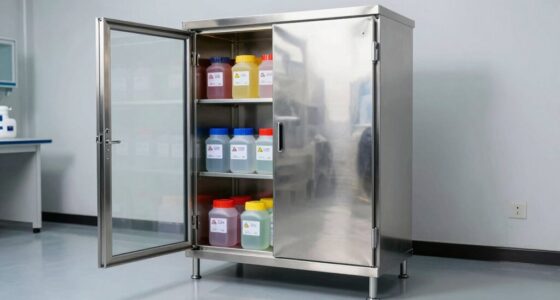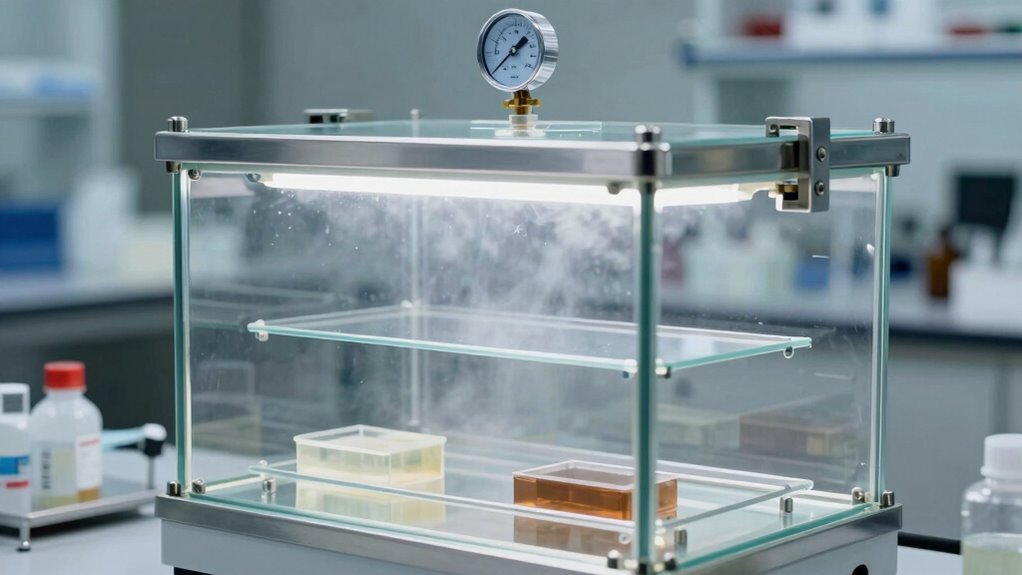
Vacuum desiccators are essential for storing moisture-sensitive samples, as they create an airtight environment that prevents humidity from causing sample degradation. They work by removing air and moisture, keeping samples stable over time. Proper storage techniques, like regular maintenance, using high-quality seals, and moisture barriers, are vital for effectiveness. If you want to learn more about best practices for utilizing vacuum desiccators, keep exploring these key tips and tricks.

Prime made for students and young adults
- Fast, free delivery for dorm and study essentials
- Prime Video and Amazon Music included
- Member-only deals
Key Takeaways
- Vacuum desiccators remove air and moisture, providing an ultra-dry environment for moisture-sensitive samples.
- They prevent sample degradation by minimizing humidity exposure during storage.
- Regular maintenance and sealing integrity are critical to ensure vacuum conditions are maintained.
- Suitable for long-term storage of hygroscopic materials like chemicals, biological samples, and electronics.
- Combining vacuum with desiccant use enhances moisture removal and stability in sensitive sample storage.
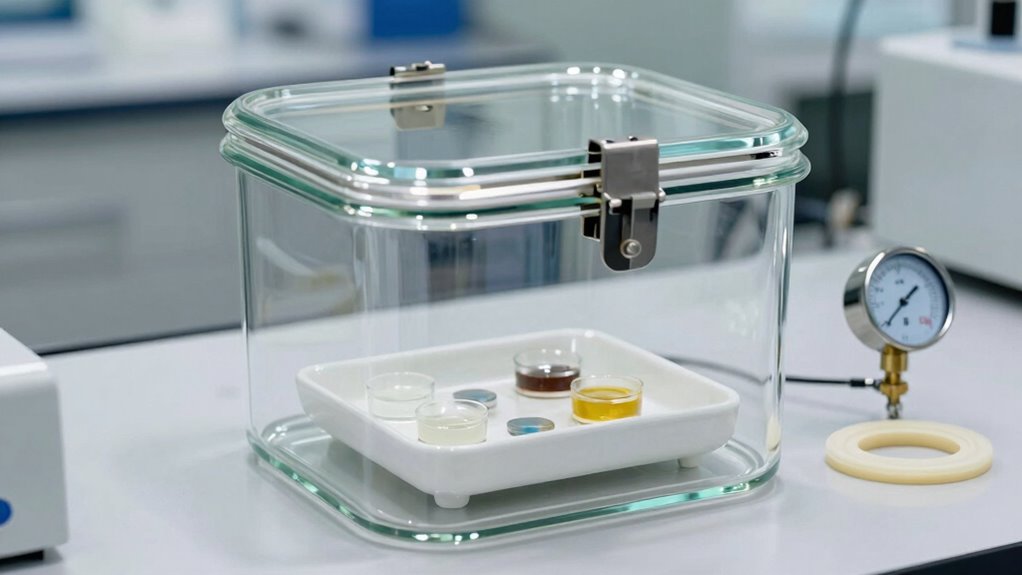
Have you ever wondered how scientists keep moisture-sensitive samples dry and stable? It’s a crucial part of many research processes, and it all comes down to proper storage techniques, especially using vacuum desiccators. These sealed chambers create an environment with minimal moisture, preventing samples from degrading or reacting with ambient humidity. But simply having a desiccator isn’t enough—you need to understand desiccator maintenance and moisture barrier techniques to ensure your samples stay in pristine condition.
Regular desiccator maintenance is essential. Over time, seals can wear out, and desiccants lose their moisture-absorbing capacity. You should frequently inspect the gasket seals for cracks or gaps and replace them when necessary. Keeping the desiccator clean inside is equally important; dust or residual moisture can compromise its effectiveness. Replace or regenerate desiccants regularly, especially after they’ve changed color or become saturated. This proactive approach ensures the environment remains dry and it reduces the risk of unexpected moisture intrusion that could jeopardize your samples. Additionally, proper desiccator design can improve long-term performance by reducing the risk of leaks or contamination. Proper desiccator design also involves choosing models with high-quality seals and materials that resist wear over time. Incorporating appropriate storage conditions can further enhance the longevity of your samples by minimizing environmental fluctuations. Regularly monitoring humidity levels inside the desiccator with a hygrometer can help you detect any changes early on.
Moisture barrier techniques play a vital role in maintaining sample integrity. One key method involves using high-quality desiccants, such as silica gel or phosphorus pentoxide, which have excellent moisture-absorbing capabilities. For added protection, you can employ moisture barrier bags or foil pouches around particularly sensitive samples before placing them inside the desiccator. This extra layer helps prevent any residual humidity from affecting your specimens, especially during handling or if there’s a temporary breach in the desiccator seal. Additionally, always ensure your samples are properly sealed in airtight containers before storage, which provides an additional moisture barrier and reduces the risk of contamination. Incorporating moisture barrier techniques is especially important when storing samples for extended periods or in environments with fluctuating humidity levels.
Maintaining a stable environment inside your desiccator also means controlling external factors. Keep the desiccator in a cool, dry location away from direct sunlight or temperature fluctuations, both of which can influence humidity levels inside. When opening the desiccator, do so quickly to minimize moisture ingress, and reseal it immediately afterward. Using a desiccator with a reliable seal can help maintain a consistent internal environment and prevent external humidity from affecting your samples. Implementing these moisture barrier techniques and diligent desiccator maintenance routines help you preserve the stability of moisture-sensitive samples, ensuring accurate and reliable experimental results.
By paying close attention to these moisture control practices, you can greatly improve the reliability of your sample storage and the overall success of your research.
vacuum desiccator for moisture-sensitive samples
As an affiliate, we earn on qualifying purchases.
As an affiliate, we earn on qualifying purchases.
Frequently Asked Questions
How Long Can Samples Be Stored in a Vacuum Desiccator?
You can typically store samples in a vacuum desiccator for several weeks to months, depending on the desiccator material and size. If the desiccator is well-sealed and the desiccant remains dry, your samples stay protected from moisture. Smaller desiccators with high-quality seals and durable materials like glass or stainless steel tend to preserve samples longer. Regularly check and replace the desiccant to guarantee ideal storage conditions.
Are Vacuum Desiccators Suitable for All Types of Moisture-Sensitive Samples?
Vacuum desiccators are like a tailored suit—they don’t fit all, which means they aren’t suitable for every moisture-sensitive sample. When considering them, check material compatibility and desiccator design to guarantee your samples stay safe. Some chemicals may react with the desiccator’s materials, or the design might not provide enough sealing for particular samples. Always choose a desiccator suited specifically to your sample’s properties for best results.
What Maintenance Is Required to Keep a Vacuum Desiccator Effective?
To keep a vacuum desiccator effective, you need to regularly perform desiccator cleaning to remove dust and residues. Additionally, you should check and maintain vacuum seals, replacing them if they show wear. Desiccator calibration involves verifying the vacuum level and ensuring gauges are accurate. Regularly inspecting and maintaining these components ensures the desiccator maintains ideal moisture control, protecting your samples effectively over time.
Can Vacuum Desiccators Be Used for Temperature-Sensitive Samples?
Yes, you can use vacuum desiccators for temperature-sensitive samples, but with caution. Make sure the desiccator materials can withstand temperature fluctuations without deforming or releasing harmful substances. Maintaining temperature stability is critical, so avoid rapid temperature changes that could cause sample damage or condensation. Use desiccators with insulation or place them in temperature-controlled environments to protect sensitive samples from temperature-related issues.
How Do I Choose the Right Desiccant for My Samples?
To choose the right desiccant, consider your sample’s sensitivity to moisture and temperature. Look for a desiccant with good moisture absorption capacity, like silica gel or activated alumina. Make certain the desiccator seals tightly to prevent moisture ingress. Regularly regenerate desiccants as needed to maintain efficiency, and monitor humidity levels. Proper desiccator sealing and desiccant maintenance keep your samples dry and protected effectively.
desiccant silica gel for laboratory storage
As an affiliate, we earn on qualifying purchases.
As an affiliate, we earn on qualifying purchases.
Conclusion
So, next time you marvel at your spotless lab setup, remember that your precious moisture-sensitive samples are quietly thriving—or struggling—inside those vacuum desiccators. Ironically, what’s meant to protect them from moisture can sometimes become their silent enemy if neglected. A little oversight might just undo the meticulous work you’ve put into your experiments. In the end, these humble desiccators remind us that even the slightest lapse can turn a perfect storage solution into a moisture trap.
high-quality gasket seals for desiccators
As an affiliate, we earn on qualifying purchases.
As an affiliate, we earn on qualifying purchases.
hygrometer for vacuum desiccator
As an affiliate, we earn on qualifying purchases.
As an affiliate, we earn on qualifying purchases.
Fall Picks
fall essentials
As an affiliate, we earn on qualifying purchases.