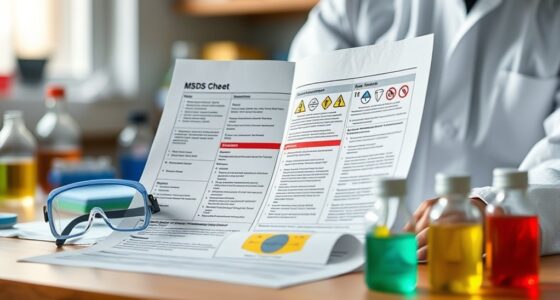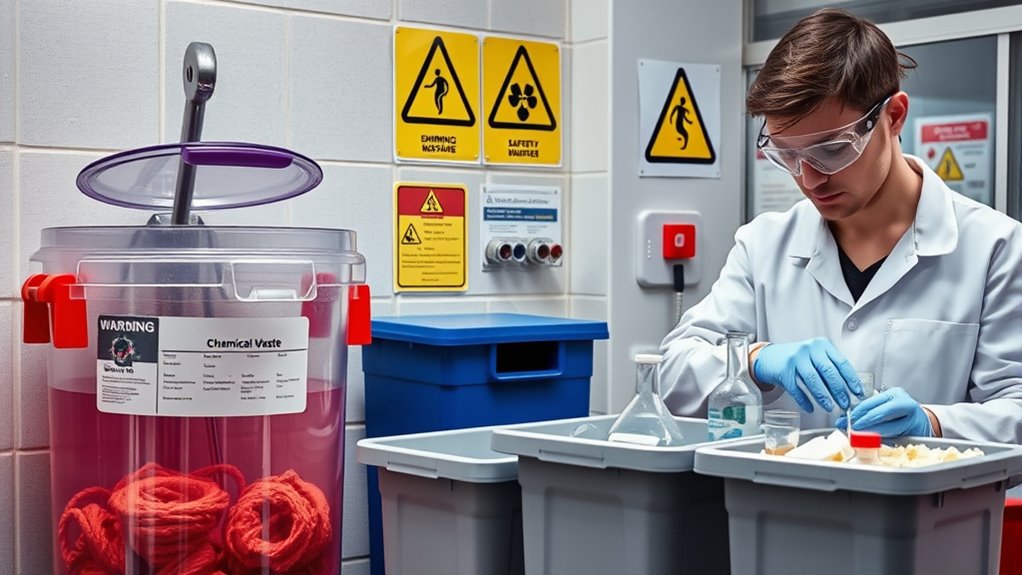

To responsibly dispose of chemical products, never pour chemicals down drains unless authorized and always label waste containers clearly with contents and dates. Store hazardous waste securely away from children, pets, and vulnerable areas. Use specialized containers to prevent leaks, and avoid mixing chemicals unless instructed by professionals. For hazardous substances, always rely on licensed disposal services to handle waste properly. Staying informed guarantees you follow safety and environmental guidelines—continue to learn more for proper chemical waste management.
Key Takeaways
- Always label and date chemical waste containers clearly to ensure proper identification and handling.
- Do not pour chemicals down drains or in regular trash unless explicitly approved by local regulations.
- Use licensed hazardous waste disposal services for chemicals classified as hazardous or reactive.
- Store chemical waste securely away from children, pets, and environmental hazards to prevent leaks or accidents.
- Follow safety protocols and local regulations to prevent spills, reactions, and environmental contamination.
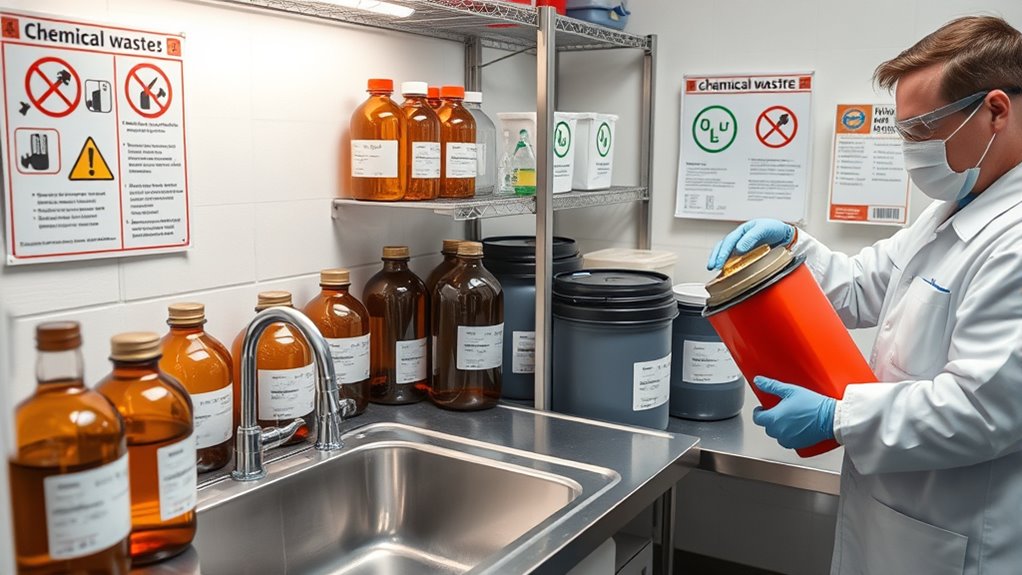
Have you ever wondered what happens to chemical products after you use them? Many people don’t think about the journey of chemical waste once it leaves their hands. Proper disposal is vital to protect the environment, public health, and guarantee safety. When dealing with chemical waste, it’s essential to understand the appropriate disposal methods. Not all chemicals can be discarded in regular trash, and improper handling can lead to dangerous spills, contamination, or fires. Knowing the right procedures helps you avoid these risks and contributes to responsible environmental practices.
The first step is to identify the chemicals you’re working with. Different substances require different disposal methods. For example, acids, bases, solvents, and reactive chemicals each have specific handling protocols. Once identified, you should consult local regulations and guidelines on hazardous waste disposal. In many cases, chemical waste cannot be simply poured down the drain or thrown in the trash. Instead, it must be collected separately to prevent environmental contamination. Some chemicals may need to be neutralized or stabilized before disposal, which involves carefully mixing them with appropriate agents to render them non-hazardous.
Many workplaces and households use specialized containers for chemical waste collection. These containers are designed to prevent leaks and minimize exposure. When disposing of chemical waste, you should never mix different chemicals unless instructed by a trained professional, as reactions can occur that release toxic gases or generate heat. Keep chemical waste clearly labeled with the contents and date to guarantee proper handling. Storage should be secure, away from children, pets, or areas where leaks could cause harm. Additionally, understanding the Gold IRA fees and regulations can help ensure proper handling of financial assets related to retirement investments.
Disposal methods vary depending on the type and quantity of chemical waste. Small quantities of non-hazardous chemicals might be safe to neutralize and flush down the drain, but only if local regulations permit. For hazardous chemicals, you’ll likely need to work with licensed waste disposal services or hazardous waste facilities. These professionals have the expertise and equipment to handle and process chemical waste safely. Never attempt to burn or incinerate chemicals unless authorized, as this can release toxic fumes.

Foxx Life Sciences UN/DOT Tight Head Containers for Shipping, Transport, Storage, and Waste 20L (5 Gallon), High Density Poly Ethylene (HDPE), 70mm Cap, UN 3H1, Pack of 1
Made from HDPE
As an affiliate, we earn on qualifying purchases.
As an affiliate, we earn on qualifying purchases.
Frequently Asked Questions
How Do I Identify Hazardous Chemical Waste?
You identify hazardous chemical waste by checking its chemical waste labels, which follow specific labeling guidelines. Look for labels indicating toxicity, flammability, corrosiveness, or reactivity. If labels are missing or unclear, consult the Material Safety Data Sheets (MSDS) or Safety Data Sheets (SDS). Always handle unknown waste carefully, assuming it’s hazardous until properly tested or identified, and guarantee proper labeling for safe disposal.
What Are the Legal Requirements for Chemical Disposal?
You need to follow all disposal regulations to guarantee legal compliance. This means understanding and adhering to federal, state, and local laws regarding chemical waste. You must properly label, store, and document waste, and use authorized disposal facilities. Ignoring these regulations can result in fines or environmental harm. Always stay updated on current disposal regulations, and consult with environmental agencies or specialists when in doubt to meet all legal requirements.
Can Household Chemicals Be Disposed of With Regular Trash?
You shouldn’t dispose of household chemicals with regular trash because they’re considered hazardous waste, which requires safe disposal to prevent environmental harm. Instead, you should take them to authorized collection sites or follow local regulations for hazardous waste disposal. Proper handling minimizes risks to health and the environment, ensuring chemicals are managed responsibly and safely. Always check your community’s guidelines for disposing of household chemicals properly.
How Should I Store Chemicals Before Disposal?
Think of chemical storage like keeping fragile glassware—carefully and securely. Follow chemical storage guidelines to prevent leaks or accidents, and always keep chemicals in their original containers with labels intact. Store them in a cool, dry, well-ventilated area away from heat and direct sunlight. Comply with safe handling protocols, such as keeping incompatible substances apart, to ensure you, your family, and the environment stay protected before disposal.
Who Can I Contact for Chemical Disposal Assistance?
You should contact your local environmental agency or hazardous waste management authority for chemical disposal assistance. They are knowledgeable about chemical disposal regulations and can guide you on proper hazardous waste management practices. Additionally, many facilities partner with licensed waste disposal companies. Reach out to them for safe disposal options, ensuring you comply with legal requirements and protect the environment. Always follow their instructions for responsible chemical disposal.

Justrite 10 Gallon Galvanized Steel Oily Waste Can, 18" x 14" Metal Oil Rag Safety Can with Hand Operated Self-Closing Lid for Oil Rag Disposal, Made in The USA, Red, 09310
Safe Storage – The Justrite oily rag safety can is a flammable rag container used for the temporary…
As an affiliate, we earn on qualifying purchases.
As an affiliate, we earn on qualifying purchases.
Conclusion
By following proper disposal guidelines, you help protect the environment and public health. For example, imagine someone improperly discarding chemicals into a storm drain, leading to water contamination. If instead they followed recommended disposal procedures, such risks could be avoided. Remember, your actions matter—dispose of chemicals responsibly, use designated disposal sites, and never pour hazardous substances down the drain. Staying informed and cautious guarantees a safer, cleaner community for everyone.
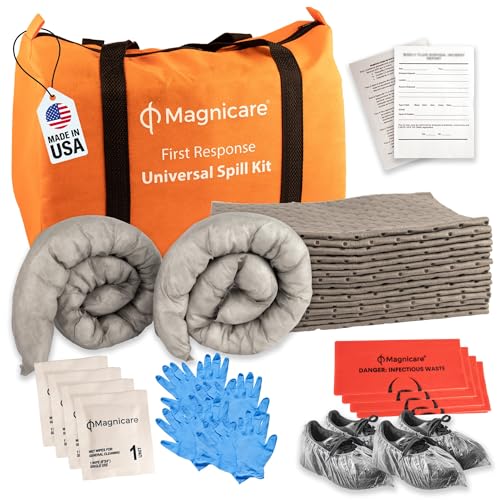
Universal Spill Kit OSHA Approved – Biohazard Clean up Kit for Oil, Water & Chemicals | 15 Absorbent Pads, 2 Socks, PPE, Biohazard Bags in Bright Orange Duffel Bag
Universal Spill Coverage – Industrial-grade universal absorbent system absorbs oil, water, coolants, solvents, and most non-aggressive fluids; ideal…
As an affiliate, we earn on qualifying purchases.
As an affiliate, we earn on qualifying purchases.

Aleplay SDS OSHA Data Labels for Chemical Safety 3×4 Inch MSDS Stickers with GHS Pictograms HMIS & Hazard Compliant Secondary Containers, 100 Stickers Per Roll
Right To Know SDS/MSDS Stickers—These stickers presents a user-friendly label that provides brief guidance to help workers who…
As an affiliate, we earn on qualifying purchases.
As an affiliate, we earn on qualifying purchases.