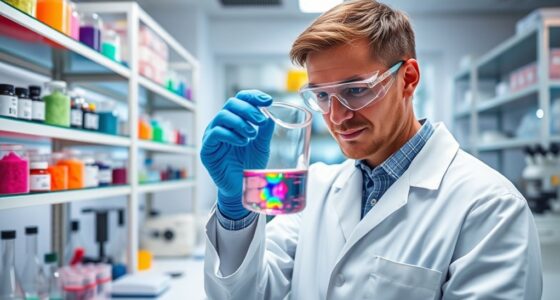

Certifications like ASCP, ASTM, and GCI offer real value by proving your technical expertise and industry commitment in chemistry. Specialized ones such as GMP for pharmaceuticals or pollution analysis enhance your credibility in specific sectors. They help you stay current with evolving techniques, boost your job prospects, and can lead to promotions. If you’re looking to strengthen your career, learning about these certifications can open new opportunities and elevate your professional profile.

Prime made for students and young adults
- Fast, free delivery for dorm and study essentials
- Prime Video and Amazon Music included
- Member-only deals
Key Takeaways
- Industry-specific certifications like GMP for pharmaceuticals or pollution analysis for environmental chemistry enhance specialized expertise.
- Certifications in laboratory techniques such as chromatography, spectroscopy, and titration validate practical skills crucial for industry roles.
- Ongoing certifications ensure professionals stay current with technological advances and industry standards, boosting career prospects.
- Recognized credentials demonstrate commitment, credibility, and technical competence, making candidates more competitive in the job market.
- Certifications facilitate networking opportunities and open pathways to advanced roles, promotions, and higher salaries.
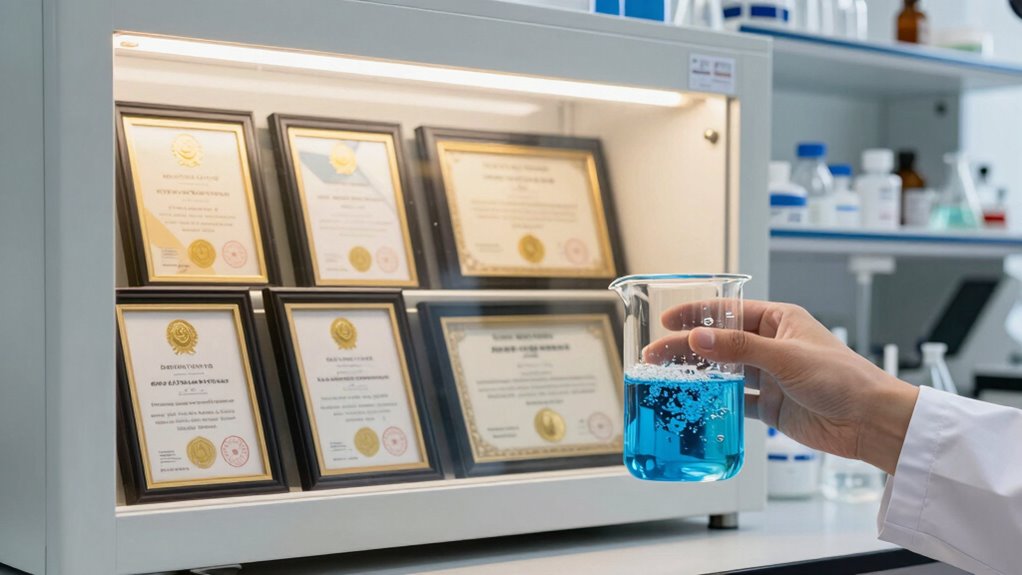
Are you looking to advance your career in chemistry? Earning the right certifications can open doors, boost your credibility, and demonstrate your expertise. One of the most tangible ways to do this is by acquiring certifications that focus on practical skills, particularly in laboratory techniques and their industry applications. These certificates not only validate your technical abilities but also signal to employers that you’re committed to maintaining high standards and staying current with industry trends. Whether you’re working in research, quality control, or product development, mastering laboratory techniques through recognized certifications can give you a competitive edge. They often cover essential skills such as titration, chromatography, spectroscopy, and safety protocols—skills that are directly applicable to real-world industry tasks. When you hold a certification in laboratory techniques, it shows employers that you can handle complex experiments accurately and efficiently, reducing the risk of errors that could lead to costly setbacks. Incorporating standardized testing methods into your skill set can further enhance your credibility and ensure consistency across different projects and environments.
Industry applications are another critical focus of valuable chemistry certifications. Many programs tailor their content toward specific sectors like pharmaceuticals, environmental science, or manufacturing. By obtaining a certification aligned with your industry of choice, you demonstrate specialized knowledge that’s highly sought after. For example, a certification in pharmaceutical chemistry might include a focus on Good Manufacturing Practices (GMP) and regulatory compliance, which are crucial in drug development and production. In environmental chemistry, certifications might emphasize pollution analysis and remediation techniques. These industry-specific certifications confirm that you understand the unique challenges and regulations relevant to your field. Additionally, certifications often include a component on measurement tools and testing accuracy, which are vital for ensuring reliable results in your work. Developing a solid understanding of analytical methods ensures you can interpret data correctly and maintain high standards of quality. As a result, you become a more attractive candidate for roles that require technical expertise and industry insight.
Furthermore, certifications often provide a structured learning path that keeps you updated on the latest advancements. This ongoing education ensures your skills remain relevant, especially as technology evolves and new laboratory techniques emerge. Staying current with emerging laboratory techniques can significantly enhance your career prospects and help you adapt to industry changes. Many certifications also offer opportunities for networking with professionals who share your interests, broadening your industry connections and opening pathways to new opportunities. The credibility gained from these certifications can lead to higher salaries, promotions, or new job prospects. They serve as proof of your dedication and capability, making you stand out in a competitive landscape. Continuously updating your knowledge with new certifications can help you stay ahead in a rapidly advancing field.
In essence, investing in certifications that focus on laboratory techniques and industry applications isn’t just about ticking boxes. It’s about actively enhancing your expertise, increasing your value as a professional, and positioning yourself for sustained success in the chemistry field.
certified chromatography test kits
As an affiliate, we earn on qualifying purchases.
As an affiliate, we earn on qualifying purchases.
Frequently Asked Questions
Are Chemistry Certifications Recognized Globally or Only Regionally?
You’ll find that some chemistry certifications enjoy global recognition, making them valuable worldwide. Others have regional validity, meaning their recognition is limited to specific areas or countries. It’s essential to check the certification’s scope before pursuing it, especially if you plan to work internationally. Certifications with global recognition can boost your career prospects globally, while regional ones may be sufficient if you’re focusing on local opportunities.
How Do Certifications Impact Salary Potential in Chemistry Careers?
Getting certified can seriously boost your salary potential—it’s like adding rocket fuel to your career! With the right chemistry certification, you’ll see significant salary enhancement because employers recognize your certification credibility and expertise. Certifications signal your dedication and skill, often leading to higher pay and better opportunities. So, investing in certifications isn’t just smart; it could be the game-changer that propels your career to new heights.
What Are the Prerequisites for Obtaining Advanced Chemistry Certifications?
To obtain advanced chemistry certifications, you need a solid foundation in laboratory techniques and relevant experience in the field. Most certifications require you to hold an undergraduate or graduate degree in chemistry or a related discipline. Additionally, you’ll need to pass an exam and complete ongoing education for certification renewal. Staying current with industry standards and sharpening your laboratory skills are essential to maintain and advance your credentials.
How Long Does It Typically Take to Complete a Chemistry Certification?
It typically takes anywhere from a few months to a year to complete a chemistry certification, depending on the program and your schedule. During this time, you’ll develop practical skills that boost your expertise. Keep in mind, certification costs vary widely, so budget accordingly. Dedicate focused effort, and you’ll gain valuable credentials that enhance your career prospects. The duration and expenses are manageable with proper planning and commitment.
Can Certifications Lead to Career Shifts Within the Chemistry Field?
Yes, certifications can definitely lead to a career shift within the chemistry field. They demonstrate your commitment to skill enhancement and can open doors to new roles or specialties. By earning targeted certifications, you show employers you’re serious about advancing your expertise, making it easier to move into different areas like research, quality assurance, or management. Overall, certifications boost your credibility and can markedly impact your career trajectory.
As an affiliate, we earn on qualifying purchases.
Conclusion
Earning the right chemistry certification is like opening a key to a world of endless possibilities. It’s your symbolic bridge from curiosity to mastery, transforming your passion into a powerful force. Just as a well-crafted molecule holds potential, your certification encapsulates your dedication and skill. Embrace these credentials as your catalysts — igniting opportunities and fueling your journey ahead. With each achievement, you’re not just adding a title, but forging a legacy in the intricate, vibrant world of chemistry.
As an affiliate, we earn on qualifying purchases.
As an affiliate, we earn on qualifying purchases.
Evergreen bestsellers Picks
bestsellers
As an affiliate, we earn on qualifying purchases.