
Commercial hydroponic systems let you grow plants efficiently without soil by controlling nutrients, water, and light. You’ll use nutrient solutions with balanced minerals, monitor water quality, and maintain proper pH levels to support healthy growth. Automated systems help regulate lighting, nutrients, and environment, maximizing yields. With the right setup, you’ll grow more plants faster and with less space. Keep exploring to discover how these systems can work best for your needs.
Key Takeaways
- Hydroponic systems grow plants in nutrient-rich water solutions without soil.
- Automated controls manage nutrient levels, pH, and lighting for optimal plant growth.
- Proper water quality and balance prevent disease and ensure healthy development.
- LED grow lights with adjustable spectrum and timers optimize light exposure.
- System automation reduces manual effort, increases efficiency, and maximizes crop yields.
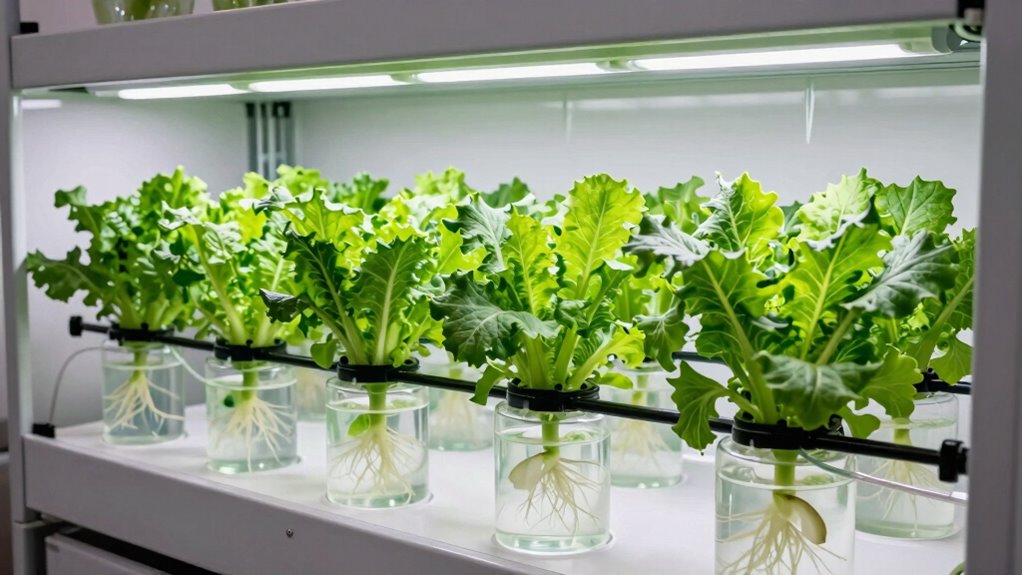
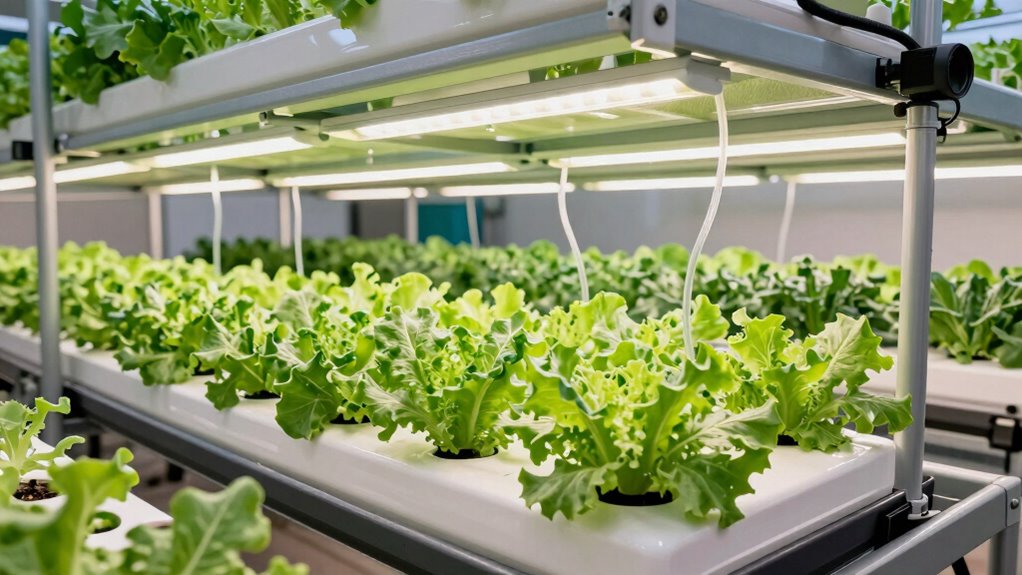
Starting a hydroponic system can seem overwhelming at first, but it’s a straightforward way to grow plants without soil. When you’re exploring commercial hydroponic systems, understanding the basics helps you set up a productive environment. One of the most critical aspects is managing nutrient solutions. Unlike traditional gardening, where soil supplies nutrients naturally, hydroponics relies on a carefully balanced mix of water and nutrients. You need to provide your plants with a nutrient solution that contains the essential elements—nitrogen, phosphorus, potassium, and trace minerals—in the right proportions. This solution circulates through your system, delivering nutrients directly to the roots. For commercial setups, you often use automated dosing systems that continuously monitor and adjust nutrient levels, ensuring your plants get what they need without manual intervention. Properly maintaining these solutions is essential because imbalances can stunt growth or cause diseases. You’ll also need to pay attention to pH levels, typically aiming for a range between 5.5 and 6.5, to optimize nutrient uptake. Additionally, understanding the importance of nutrient balance helps you maintain optimal plant health and maximize yields. Maintaining consistent water quality is vital for preventing the buildup of harmful substances that could harm your plants. Lighting requirements are another key element in commercial hydroponic systems. Plants depend heavily on light to photosynthesize and grow efficiently. In a professional setup, you’ll usually install grow lights—LEDs are popular due to their energy efficiency and customizable spectrum options. The intensity and duration of light exposure directly impact plant growth rates and yield. For most crops, you’ll want to provide around 12 to 16 hours of light daily, mimicking natural sunlight, with some crops requiring more or less. Proper lighting setup also involves positioning the lights at the right distance from your plants to prevent light burn while ensuring maximum coverage. In commercial operations, automated systems often include timers that regulate light cycles, creating a consistent environment that promotes rapid, healthy growth. Additionally, you need to think about the spectral quality of your lights, ensuring they emit the wavelengths most useful for photosynthesis, like blue and red light.

Liquid Plant Food – Fertilizer for AeroGarden & Hydroponic Systems, 8 oz
- Compatible with AeroGarden: Supports AeroGarden systems
- Promotes Healthy Growth: Encourages steady plant development
- Strengthens Roots: Supports strong root systems
As an affiliate, we earn on qualifying purchases.
As an affiliate, we earn on qualifying purchases.
Frequently Asked Questions
How Much Does a Commercial Hydroponic System Cost to Set Up?
Setting up a commercial hydroponic system typically costs between $10,000 and $50,000, depending on size and complexity. You’ll need to invest in nutrient solutions to guarantee healthy plant growth and lighting optimization to maximize yields. Costs vary with equipment quality, automation features, and infrastructure. Keep in mind that ongoing expenses, like nutrient replenishment and maintenance, also affect your overall investment. Proper planning helps you balance initial costs with long-term profitability.
What Are the Most Profitable Crops for Commercial Hydroponics?
Profit-producing crops in commercial hydroponics often include lush lettuce, vibrant basil, and juicy strawberries. You’ll want to optimize lighting and fine-tune nutrient solutions to boost growth and yield. These crops thrive in controlled conditions, making them highly profitable. By focusing on fast-growing, high-demand plants, you can maximize profits, minimize waste, and maintain consistent quality, turning your hydroponic venture into a profitable, prosperous business.
How Do I Manage Pests and Diseases in Hydroponic Systems?
You manage pests and diseases in hydroponic systems by implementing integrated pest management, combining biological controls, manual removal, and targeted treatments. Regularly inspect your crops for early signs of trouble, and use disease prevention strategies like maintaining proper nutrient balance, controlling humidity, and ensuring good airflow. Keep your system clean and sterile, and quarantine new plants to prevent infections. These proactive steps help keep your hydroponic environment healthy and productive.
What Permits or Regulations Are Needed for Commercial Hydroponics?
Like Da Vinci’s sketches, your hydroponic venture needs careful planning. You’ll need to navigate regulatory compliance and secure environmental permits before starting. Check local, state, and federal agencies for specific requirements, such as food safety standards and water usage regulations. This process guarantees your operation is legal and sustainable. By following these steps, you set a strong foundation for a thriving, compliant commercial hydroponic business.
How Do I Ensure Consistent Crop Quality in Large-Scale Systems?
To guarantee consistent crop quality in large-scale hydroponic systems, you should focus on nutrient balancing and crop rotation. Regularly test and adjust nutrient levels to meet your plants’ specific needs, preventing deficiencies or excesses. Implement crop rotation to reduce disease buildup and promote healthy growth. By maintaining ideal nutrient levels and varying your crops, you’ll promote uniform growth, improve quality, and maximize yields across your entire system.

LBW Grow Lights for Indoor Plants, 428 LEDs Full Spectrum Plant Light
- Innovative Design and Heat Dissipation: Patent mold technology with heat vents
- Full Spectrum LED Lighting: Includes white, red, and natural LEDs
- High PPFD for Optimal Growth: Scientifically optimized light spectrum
As an affiliate, we earn on qualifying purchases.
As an affiliate, we earn on qualifying purchases.
Conclusion
So, after diving into the world of hydroponics, you might think you’re ready to grow a jungle indoors. Ironically, with just a few simple systems, you’ll soon realize that nurturing plants without soil isn’t as complicated as it seems. Before long, you’ll be marveling at your lush, vibrant garden—no dirt required. Who knew that all it took was a little water, some clever setup, and a beginner’s spirit to become a garden pro?

Bluelab Pro Controller Wi-Fi Fully Automated 24/7 Digital Monitor
- Reservoir Management: 24/7 control of pH, conductivity, temperature
- Remote Monitoring: Access and adjust via phone with Wi-Fi
- Automated Dosing: Pairs with Bluelab PeriPod for nutrient and pH dosing
As an affiliate, we earn on qualifying purchases.
As an affiliate, we earn on qualifying purchases.

VIVOSUN Digital pH Meter TDS EC Meter for Water 0.01 Accuracy Hydroponics
- Application: Suitable for aquariums, pools, labs
- pH Meter Range: pH 0-14 with quick readings
- 3-in-1 TDS Meter: Measures 0-9990ppm and µs/cm
As an affiliate, we earn on qualifying purchases.
As an affiliate, we earn on qualifying purchases.