
TL;DR
Educational science kits are curated sets that bring science to life through hands-on experiments. They align with curricula, incorporate technology, and promote eco-friendly learning—making science fun and accessible outside the classroom.
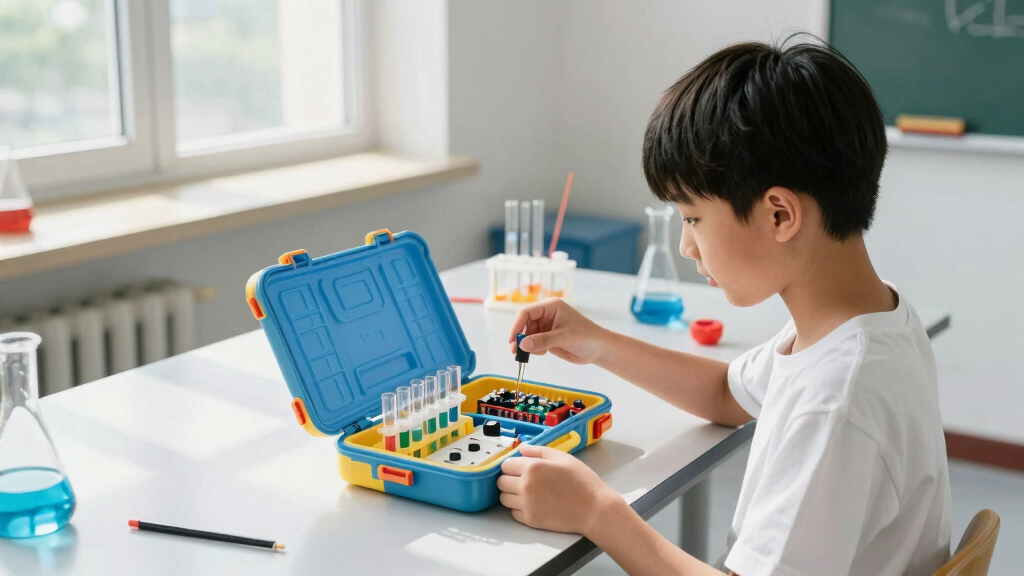
Imagine a box filled with colorful chemicals, tiny tools, and clear instructions, all designed to turn your living room or classroom into a science lab. That’s the power of educational science kits. They do more than teach; they ignite a spark, making abstract ideas palpable and fun.
Whether you’re a parent looking to supplement homework or a teacher aiming to motivate students, these kits offer a hands-on way to grasp complex concepts. They’re the secret weapon in transforming passive learning into active discovery.
Choose science kits aligned with your child’s age, interests, and curriculum standards for maximum impact.
Incorporate both traditional and tech-enhanced kits to match learning styles and keep engagement high.
Look for eco-friendly options to teach sustainability alongside science concepts.
Science kits foster critical thinking, problem-solving, and creativity—skills that last a lifetime.
Remote-compatible kits with online resources expand access and foster independent learning at home.
Why the Right Science Kit Can Make or Break Learning
Picking a quality science kit isn’t just about cool gadgets. It’s about alignment with what students need to learn and how they learn best. A poorly chosen kit might gather dust, while a well-matched one sparks excitement and understanding.
Take a 10-year-old fascinated by volcanoes. A kit with real baking soda, vinegar, and safe molds can turn a simple fizz into a fiery eruption. That moment sticks — a visual, tactile memory that textbooks can’t replicate.
Look for kits that match curriculum standards. In the US, many align with Next Generation Science Standards (NGSS), ensuring they complement classroom lessons. Safety comes first—non-toxic, durable, and easy-to-understand instructions prevent frustration and accidents.
Choosing the right kit matters because it influences engagement and retention. When a student is genuinely interested, they’re more likely to remember what they learn. Conversely, a mismatched or overly complicated kit can lead to frustration, disengagement, and missed learning opportunities. The implications extend beyond just understanding — they shape a child’s attitude toward science and their confidence in tackling new challenges.

UNGLINGA 150 Experiments Science Kits for Kids Chemistry Lab S.T.E.MToys
- Number of Experiments: 150 science experiments for kids
- Educational Topics: Earth, surface tension, chemistry, physics
- Instructional Manual: Well-illustrated, step-by-step guide
As an affiliate, we earn on qualifying purchases.
As an affiliate, we earn on qualifying purchases.
How to Pick a Science Kit That Actually Works for Your Student
- Identify your child’s age and skill level. Younger kids need simple, safe experiments; teens can handle more complex projects. Misjudging this can either bore or overwhelm your child, reducing the educational value and enjoyment.
- Match their interests. Curious about chemistry? Look for kits with colorful reactions. Into biology? Choose kits with dissections or plant growth. When kids see their interests reflected, they’re more motivated to explore and learn deeply.
- Check reviews and safety standards. Reputable brands like National Geographic or Thames & Kosmos often meet rigorous safety tests. This reduces risks and ensures the materials are of high quality, which is essential for building trust and encouraging repeated use.
- Consider the educational content. Does it promote critical thinking and problem-solving? Or just follow steps without understanding? Kits that challenge kids to hypothesize, analyze results, and draw conclusions foster deeper learning and cognitive development.
- Assess the setup and cleanup process. Easy-to-use kits with clear instructions save time and frustration, encouraging frequent experimentation. A cumbersome process might discourage repeated use, limiting learning opportunities.
For example, a parent choosing a chemistry set for a 12-year-old might pick a kit with over a dozen experiments, including pH testing and reaction demonstrations, that align with science curriculum and encourage experimentation. Such a choice not only supports academic goals but also cultivates curiosity and resilience in troubleshooting.

Bulk STEM Kits, 8 Set Electric Light Circuit Science Kits for Kids Age 8-12
- Number of Kits: 8 individual electric light kits
- Age Range: Suitable for ages 8-12
- Includes Manuals: Each kit comes with an instructional manual
As an affiliate, we earn on qualifying purchases.
As an affiliate, we earn on qualifying purchases.
The Battle of Tech-Enhanced vs. Traditional Science Kits
| Feature | Tech-Enhanced Kits | Traditional Kits |
|---|---|---|
| Interactivity | Includes AR apps, online guides, virtual experiments | Physical components only, no digital layer |
| Engagement | Highly interactive, appealing to digital natives | Hands-on, tactile experience |
| Learning Depth | Provides layered understanding with multimedia | Focuses on direct experimentation |
| Accessibility | Requires devices and internet | Simple setup, no tech needed |
For example, a STEM kit with augmented reality overlays can show how molecules move in real time, offering a dynamic visualization that enhances comprehension of complex concepts. Traditional chemistry kits, on the other hand, focus on fundamental experiments like solution mixing, emphasizing tactile learning. Both approaches serve different educational needs: tech kits deepen conceptual understanding through immersive experiences, while traditional kits foster foundational skills through direct manipulation. Understanding these tradeoffs helps parents and educators select the most appropriate tools to match their child’s learning style and technological access, ultimately influencing engagement and educational outcomes.

UNGLINGA 40+ Experiments Science Kit for Kids Chemistry Set STEM Toy
- Number of Experiments: Over 40 science experiments for kids
- Easy-to-Follow Instructions: Child-friendly manual with illustrations
- Complete Science Kit: All necessary materials included
As an affiliate, we earn on qualifying purchases.
As an affiliate, we earn on qualifying purchases.
The Latest Trends Making Science Kits Smarter and Greener
Today’s science kits are evolving fast. Many now feature eco-friendly materials—think biodegradable plastics and recycled cardboard—so you can teach sustainability as you learn science. For example, some kits use plant-based dyes or recyclable containers that decompose in months. This shift not only reduces environmental impact but also instills eco-conscious values in young learners, shaping their worldview and sense of responsibility.
Integration of technology is also on the rise. Augmented reality apps can turn a simple experiment into an immersive adventure, making learning more captivating. Modular, customizable kits allow students to expand their experiments as their skills grow. These features enable learners to develop a growth mindset, seeing science as an evolving, accessible field rather than a static subject.
Plus, kits designed for remote or hybrid learning include detailed online videos and step-by-step guides, so students can experiment at home safely and confidently. They’re also becoming more inclusive, with tactile or auditory components for students with disabilities. These advancements broaden access and ensure that all students can participate actively, fostering an inclusive learning environment that recognizes diverse needs and learning styles.

ELEGOO UNO R3 Smart Robot Car Kit V4 for Arduino Robotics for Kids Ages 8-12 12-16 STEM Science Kits Coding Gifts for 8 9 10 11 12 13 14 15 16 Year Old Boys Girls Teens Cool Engineering Building Toys
- Educational STEM Kit: Hands-on programming and robotics learning
- Complete Module Set: Includes 24 modules with remote control
- Easy Assembly Design: Modified interfaces for simple setup
As an affiliate, we earn on qualifying purchases.
As an affiliate, we earn on qualifying purchases.
What Skills Your Kid Gains from Using Science Kits
Using science kits isn’t just about facts; it’s about building skills that last. Kids develop critical thinking when troubleshooting why an experiment didn’t work. They learn problem-solving by adjusting variables to achieve a reaction. These skills are foundational for scientific literacy and are transferable to real-world challenges, making science relevant and empowering.
Fine motor skills improve as they carefully handle tiny tools. Creativity blooms as they invent new experiments or modify instructions. Plus, they gain a real sense of curiosity and independence—skills that serve well beyond science class. This experiential learning fosters resilience, patience, and adaptability, which are crucial traits for success in any field.
For example, a student experimenting with crystal growth might learn to control temperature and solution concentration, reinforcing lessons in observation, patience, and precision. Such hands-on activities cultivate a mindset of experimentation and iterative learning, emphasizing that failure is part of discovery and progress.
Frequently Asked Questions
Are science kits safe for young children?
Yes, reputable science kits are designed with safety in mind. They use non-toxic materials, have clear age recommendations, and include safety instructions to prevent accidents. Always supervise young children during experiments.
How do I choose the best science kit for my child’s age and interests?
Start by considering your child’s age, curiosity, and the skills you want them to develop. Reading reviews and ensuring safety standards are met helps select appropriate kits. Choosing brands like Thames & Kosmos or National Geographic ensures quality and safety, which is crucial for building confidence and fostering a positive attitude toward science.
Can science kits support remote or homeschooling?
Absolutely. Many kits come with comprehensive instructions, online videos, and digital resources that make at-home experiments easy and safe. They support independent learning by providing structured guidance, thus enhancing curiosity and understanding outside traditional classrooms.
What are some beginner-friendly science kits?
Look for kits focusing on simple, visual experiments—like crystal growing, slug slime, or basic circuits. These kits build foundational skills and confidence, serving as stepping stones to more complex projects, and help kids develop a love for discovery from the start.
How do science kits help develop skills beyond science facts?
They promote problem-solving, critical thinking, fine motor skills, and creativity. Kids learn to troubleshoot, observe, and innovate—traits that are valuable in school and future careers. These experiences nurture a growth mindset, resilience, and curiosity, essential for lifelong learning and adaptability.
Conclusion
For any parent or educator, the message is clear: the right science kit turns learning from a chore into an adventure. It’s a tangible bridge between theory and real-world discovery, sparking curiosity that can last a lifetime.
So next time you see a plain-looking box, remember—inside might be the start of your child’s scientific journey. What experiment will they invent tomorrow?