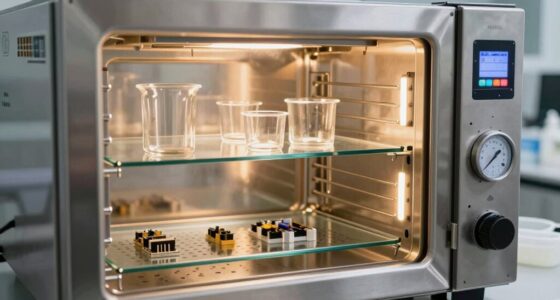
In grow rooms, you use chemistry to keep conditions steady and plants healthy. You manage nutrient levels and adjust pH to favor nutrient uptake, preventing deficiencies or toxicities. Proper application of fertilizers and understanding chemical reactions help maintain stable pH and nutrient balance. This careful control creates a consistent environment, which is essential for reliable growth and experiment results. If you want to master these techniques, there’s plenty more to uncover about how chemistry keeps everything running smoothly.

Get school and study supplies delivered free — and shop member deals
- Fast, free delivery on millions of items
- Access to Prime Big Deal Days deals on October 6–7
- Prime Video, Amazon Music and more included
Key Takeaways
- They monitor and adjust pH levels to optimize nutrient availability and prevent deficiencies or toxicities.
- Chemical fertilizers are precisely calibrated based on ongoing solution testing to maintain nutrient balance.
- Acidic or alkaline substances are added to control chemical reactions and stabilize growing conditions.
- Understanding nutrient interactions prevents issues like nutrient lockout and toxicity, ensuring consistent growth.
- Regular testing and adjustments of chemical parameters maintain a stable environment for reliable experiment results.
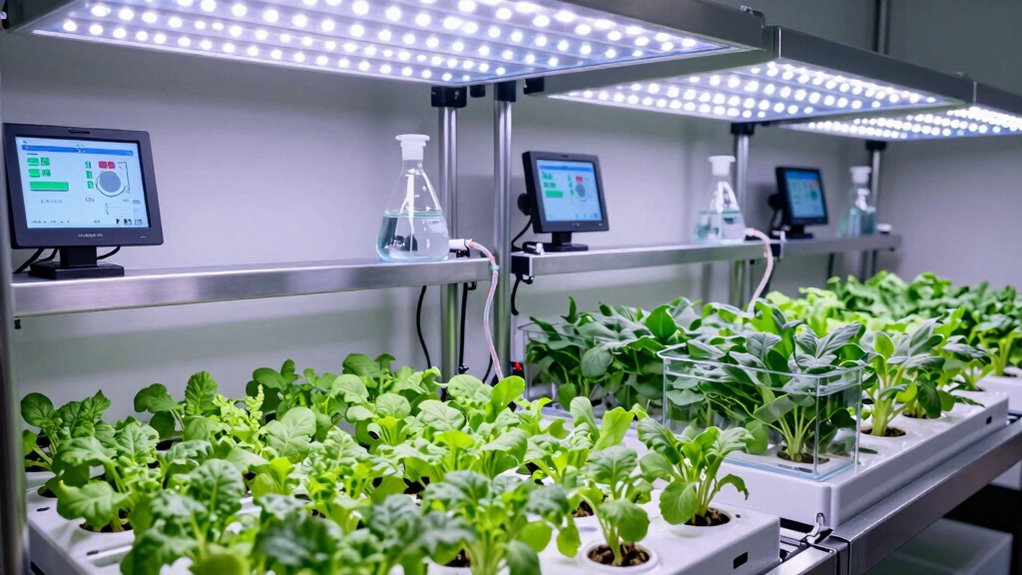
Growing rooms, whether for plants or experiments, are fascinating spaces where chemistry comes to life. You quickly realize that maintaining a stable environment isn’t just about water and light — it’s about precise chemical control, especially when it comes to plant nutrient balance and pH level management. These elements are vital for healthy growth and consistent results. When you understand how chemistry influences these factors, you can fine-tune your environment with confidence, making sure your plants thrive and your experiments succeed.
Your first step is managing the plant nutrient balance. Plants rely on a carefully calibrated mix of macronutrients like nitrogen, phosphorus, and potassium, along with micronutrients such as magnesium and iron. These nutrients must be available in just the right amounts; too much can cause toxicity or deficiencies, while too little stunts growth. You use chemical fertilizers, adjusting their concentrations based on ongoing testing. By analyzing the plant’s growth patterns and soil or solution composition, you can add specific nutrients to maintain ideal balance. This process is fundamentally a chemistry exercise — understanding how different compounds interact and how they’re absorbed by plants. When you understand how chemistry influences these factors, you can fine-tune your environment with confidence, making sure your plants thrive and your experiments succeed. Additionally, understanding the chemical interactions involved helps prevent issues like nutrient lockout or toxicity, ensuring a healthier growing environment. Recognizing how nutrient availability affects plant health allows for more precise adjustments and better overall results. Developing a solid grasp of soil chemistry can further enhance your ability to optimize growth conditions. Mastering the chemical reactions within your system also helps you troubleshoot issues more effectively, maintaining stability over time. Moreover, understanding the chemical composition of fertilizers and amendments ensures you’re applying the right substances in the correct amounts for optimal plant health.
Equally important is pH level management. The pH scale measures acidity or alkalinity, and plants are sensitive to even slight changes. If the solution is too acidic or too alkaline, nutrient uptake becomes inefficient, leading to deficiencies or toxicities. You actively monitor the pH of your growing medium, often using digital pH meters for precision. Adjusting pH involves adding acids or bases—like phosphoric acid or potassium hydroxide—carefully titrated to bring the solution into the ideal range, typically between 5.5 and 6.5 for most plants. This process requires a solid understanding of chemical reactions, as adding an acid will lower pH, while adding a base raises it. Consistently maintaining the right pH creates a stable environment where nutrients are available in the right form, making sure your plants can absorb them efficiently.
In a controlled growing room, chemistry is your silent partner. You’re constantly balancing nutrient levels and pH, using scientific principles to keep conditions consistent. Every adjustment you make is a calculated chemical reaction, aimed at creating the ideal environment for growth. With practice, you develop an intuitive sense of how your system responds to different inputs. This mastery over plant nutrient balance and pH level management ensures your growing room remains a reliable space where chemistry works seamlessly behind the scenes, delivering consistent, healthy results every time.
As an affiliate, we earn on qualifying purchases.
Frequently Asked Questions
How Do Grow Rooms Measure pH Levels Accurately?
You measure pH levels in grow rooms through pH testing using reliable test kits or digital meters. To guarantee accuracy, you should regularly perform calibration techniques, such as using standard buffer solutions, to keep your pH meters precise. Always rinse the probe between tests and calibrate before each use. This consistent approach helps you maintain ideal pH levels, promoting healthy plant growth and stable environmental conditions.
What Chemicals Are Commonly Used in Nutrient Solutions?
In nutrient solutions, you’ll commonly find chemicals like phosphoric acid or sulfuric acid for pH buffering, helping maintain stable pH levels. You’ll also use fertilizers containing nitrogen, phosphorus, and potassium for nutrient blending. These chemicals guarantee plants receive balanced nutrition and ideal pH, which is vital for healthy growth. Regularly adjusting with these chemicals keeps your grow room’s environment consistent, promoting healthy, vigorous plants and high yields.
How Is Temperature Controlled Chemically in Grow Rooms?
You control temperature chemically in grow rooms by managing chemical reactions that produce or absorb heat. For example, using endothermic or exothermic reactions, you can adjust the environment without traditional HVAC. Cooling can involve chemical cooling packs or reactions that absorb heat, while heating might use exothermic reactions. This method allows precise temperature regulation, ensuring ideal conditions for plant growth and maintaining consistency in your grow room environment.
What Safety Protocols Ensure Chemical Handling in Grow Rooms?
You guarantee chemical safety in grow rooms by properly storing chemicals in labeled, secure containers to prevent leaks or accidental exposure. Always use safety equipment like gloves, goggles, and masks when handling chemicals. Follow strict protocols for chemical storage, such as keeping incompatible substances apart, and maintain safety data sheets nearby. Regularly train staff on proper handling procedures, emphasizing the importance of safety equipment and proper chemical storage to minimize risks.
How Do Growers Prevent Chemical Contamination?
You prevent chemical contamination by carefully managing pest control and nutrient balancing. Always store chemicals separately and label them clearly to avoid mix-ups. Regularly clean your grow room equipment to prevent residue buildup. Use organic or chemical-free pest control methods whenever possible, and monitor nutrient levels closely to avoid excesses or deficiencies. These practices help maintain a safe, healthy environment, ensuring your plants grow consistently without chemical contamination risks.
As an affiliate, we earn on qualifying purchases.
Conclusion
By understanding how chemistry works behind the scenes, your grow room becomes a finely tuned symphony of nutrients and conditions. Just like a master chef balances flavors, you balance pH levels, nutrient ratios, and environmental factors to keep your plants thriving. Remember, chemistry isn’t just a science—it’s your secret recipe for consistency. With every adjustment, you’re conducting a lush garden orchestra, turning your grow room into a thriving oasis of health and growth.
plant nutrient solution fertilizer
As an affiliate, we earn on qualifying purchases.
As an affiliate, we earn on qualifying purchases.
As an affiliate, we earn on qualifying purchases.
Halloween Picks
halloween
As an affiliate, we earn on qualifying purchases.