

Finding suitable science reference books is essential for students aiming to deepen their understanding and excel in their coursework. This guide provides clear steps to identify, evaluate, and select books that match your learning needs. Whether you’re a high school student or a college attendee, follow these instructions to build a reliable science library that supports your studies effectively.

Prime made for students and young adults
- Fast, free delivery for dorm and study essentials
- Prime Video and Amazon Music included
- Member-only deals
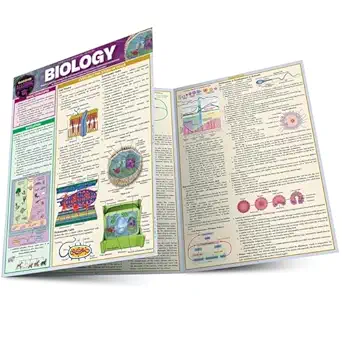
Biology: A QuickStudy Laminated Reference Guide
- ✔ Format: Laminated reference guide
- ✔ Subject: Biology
- ✔ Size: Compact

Earth Science: A QuickStudy Laminated Reference Guide
- ✔ Format: Laminated reference guide
- ✔ Subject: Earth Science
- ✔ Size: Compact

Spectrum Grade 6 Science Workbook
- ✔ Grade Level: 6th grade
- ✔ Subjects Covered: Natural Sciences, Earth Sciences, Life Sciences
- ✔ Includes: Scientific research activities
Difficulty: Beginner | Time: 30-45 minutes
What You’ll Need
Tools & Materials:
- Internet-connected device (computer, tablet, smartphone)
- Notebook or digital note-taking app
Knowledge:
- Basic understanding of science subjects relevant to your coursework
- Familiarity with library or bookstore browsing
Set aside 30-45 minutes for research and evaluation. Have your syllabus or curriculum outline handy to match books to your needs.
Biology: A QuickStudy Laminated Reference Guide
This laminated guide stands out for providing a concise overview of biology concepts in a durable, portable format. It’s ideal for students who need quick facts during exams or study sessions. Compared with the other laminated guide, it focuses solely on biology, making it more specialized. However, its brevity means it lacks detailed explanations or in-depth coverage, which may limit its usefulness for complex topics. Its compact size makes it perfect for carrying in a backpack or pocket, but less suitable as a primary learning resource.
Pros:
- Compact and portable for easy transport
- Durable laminated design resists wear
- Concise overview simplifies complex topics
Cons:
- Lacks detailed explanations and in-depth content
- Limited to quick reference, not comprehensive learning
Best for: Students needing fast biology facts and review on the go
Not ideal for: Those seeking comprehensive explanations or in-depth learning
Bottom line: A highly portable quick-reference guide ideal for review but not for deep learning.
“A highly portable quick-reference guide ideal for review but not for deep learning.”
Earth Science: A QuickStudy Laminated Reference Guide
This laminated reference guide offers a compact and comprehensive overview of earth science topics, making it an excellent quick-study resource. Its durability and portability are comparable to the biology guide, but it covers broader topics such as geology, meteorology, and environmental science. Like its counterpart, it sacrifices in-depth explanations for quick facts, which may not suffice for students needing detailed understanding. Its strength lies in serving as a handy, quick-reference tool for both students and enthusiasts who want a broad yet succinct overview of earth science.
Pros:
- Durable laminated design ensures longevity
- Provides a broad, yet concise overview of earth science
- Portable and easy to use for quick reviews
Cons:
- Limited in-depth detail and explanations
- Not suitable as a primary textbook or detailed resource
Best for: Students and enthusiasts seeking a portable, broad overview of earth science
Not ideal for: Those requiring detailed coursework explanations or in-depth study
Bottom line: A durable, broad overview guide perfect for quick references in earth science topics.
“A durable, broad overview guide perfect for quick references in earth science topics.”
Spectrum Grade 6 Science Workbook
The Spectrum Grade 6 Science Workbook makes a distinct shift from quick reference to active learning. Designed specifically for 6th-grade students, it covers natural, earth, and life sciences through engaging activities, research exercises, and problem-solving tasks. Compared with laminated guides, it provides a more interactive and curriculum-aligned experience, making it ideal for classroom or homeschool settings. Its focus on activities helps reinforce learning but may be less suitable for students seeking quick facts or needing a broad overview without active engagement. Its main limitation is that it’s targeted at a specific grade level, so older or younger students may find it less relevant.
Pros:
- Comprehensive coverage suitable for grade 6 curriculum
- Includes engaging research and activity-based exercises
- Suits both classroom and homeschooling environments
Cons:
- Limited to 6th-grade level, less adaptable for other ages
- No detailed explanations for advanced topics
Best for: 6th-grade students who benefit from active, curriculum-based science learning
Not ideal for: Students outside the grade 6 range or those preferring quick facts over activities
Bottom line: An engaging, activity-based workbook well-suited to 6th-grade science learners seeking interactive learning.
“An engaging, activity-based workbook well-suited to 6th-grade science learners seeking interactive learning.”
As an Amazon Associate we earn from qualifying purchases.
Before You Start
Ensure you have a clear idea of the science topics you need help with. Be aware that some books are more suited for beginners, while others target advanced learners. Avoid rushing; taking time to evaluate options leads to better selections.
Step-by-Step Instructions
Step 1: Identify your specific learning needs
List the science topics or concepts you find challenging or wish to learn more about, such as biology, chemistry, physics, or environmental science. Note whether you need introductory overviews or detailed explanations.
Tip: Use your course syllabus or recent assignments to pinpoint areas where additional resources will help.
Check: You have a clear list of topics and the level of detail you require for each.
Step 2: Search for reputable science reference books
Use online bookstores, library catalogs, and educational websites to find books that match your topic list. Look for titles labeled as ‘science reference,’ ‘study guide,’ or ‘encyclopedia.’
Tip: Focus on books published by well-known educational publishers or university presses for reliability.
Check: You have a curated list of candidate books relevant to your needs.
Check the author’s credentials, the publisher’s reputation, and publication date. Prefer books authored by recognized scientists or educators, and ensure the content is current.
Tip: Avoid outdated editions or books with questionable authorship; look for reviews or recommendations from educators or students.
Check: You have narrowed your options to credible, recent publications suitable for your level.
Step 4: Review the table of contents and sample pages
Examine the table of contents to verify coverage of your topics. Skim sample pages to assess clarity, depth, and writing style. Confirm that the explanations are accessible and well-organized.
Tip: Look for clear diagrams, summaries, and glossaries that aid comprehension.
Check: You can determine whether the book’s presentation style matches your learning preferences.
Step 5: Assess the usability features of the book
Check for features like index, glossary, diagrams, charts, and practice questions. These elements support quick reference and reinforce learning.
Tip: A well-structured index and glossary save time and improve understanding during study sessions.
Check: The selected books include useful features that facilitate easy navigation and review.
Step 6: Compare prices and availability
Search multiple sources, including online stores, local bookstores, and libraries, to find the best prices and formats (hardcover, paperback, e-book). Consider borrowing from a library for cost-effective access.
Tip: Check for any discounts, used copies, or digital versions that may suit your budget.
Check: You have chosen books that are both affordable and accessible.
Step 7: Make your final selection and acquire the books
Order or purchase the selected books, ensuring delivery or pickup arrangements are confirmed. If borrowing, reserve the copies in advance at your local library.
Tip: Keep receipts or confirmation emails for returns or warranty purposes.
Check: You have obtained the books and are ready to incorporate them into your study routine.
Common Mistakes to Avoid
- Choosing books that are too advanced or too basic for your current level. — Match the book’s complexity to your knowledge; start with beginner guides if unsure.
- Relying solely on online summaries or reviews instead of examining actual sample pages. — Always review sample pages or content previews before purchasing or borrowing.
- Ignoring publication date and credibility, leading to outdated or inaccurate information. — Check publication dates and author credentials carefully to ensure reliability.
Troubleshooting
Problem: The selected book is too difficult to understand.
Solution: Switch to a more introductory resource or supplement with online tutorials and videos.
Problem: The book is missing key topics you need.
Solution: Find supplementary materials or explore alternative titles that cover your gaps.
Problem: The book is unavailable or too costly.
Solution: Use library copies, look for used editions, or seek digital versions at lower prices.
What Success Looks Like
You can locate relevant sections quickly, understand explanations clearly, and find the information needed to support your coursework. The books serve as reliable references that enhance your learning process.
Next Steps
Incorporate the books into your regular study routine, bookmark important pages, and take notes. Periodically review your collection to update or replace outdated resources. Seek help from teachers or peers if certain topics remain unclear despite reading.
Frequently Asked Questions
How do I know if a book is suitable for my grade level?
Check the recommended age or education level on the book cover or description. Preview sample pages to gauge complexity and language clarity.
Are digital books as good as printed ones for studying science?
Both formats have advantages; digital books offer convenience and searchability, while printed books can be easier to navigate for some learners. Choose based on your preference and study environment.
Can I rely solely on reference books for my science coursework?
Reference books are valuable supplements, but combining them with class notes, online resources, and practical experiments provides the best understanding.
Fall Picks
fall essentials
As an affiliate, we earn on qualifying purchases.