
TL;DR
Scientists have discovered that ants actively identify and care for injured members of their colony. This behavior suggests advanced social cooperation among insects, with potential implications for understanding collective intelligence.
New research confirms that ants actively identify and care for injured colony members, a behavior previously thought to be primarily present in mammals and birds. This discovery highlights complex social interactions in insect communities and may reshape understanding of collective behavior among social insects.

Prime made for students and young adults
- Fast, free delivery for dorm and study essentials
- Prime Video and Amazon Music included
- Member-only deals
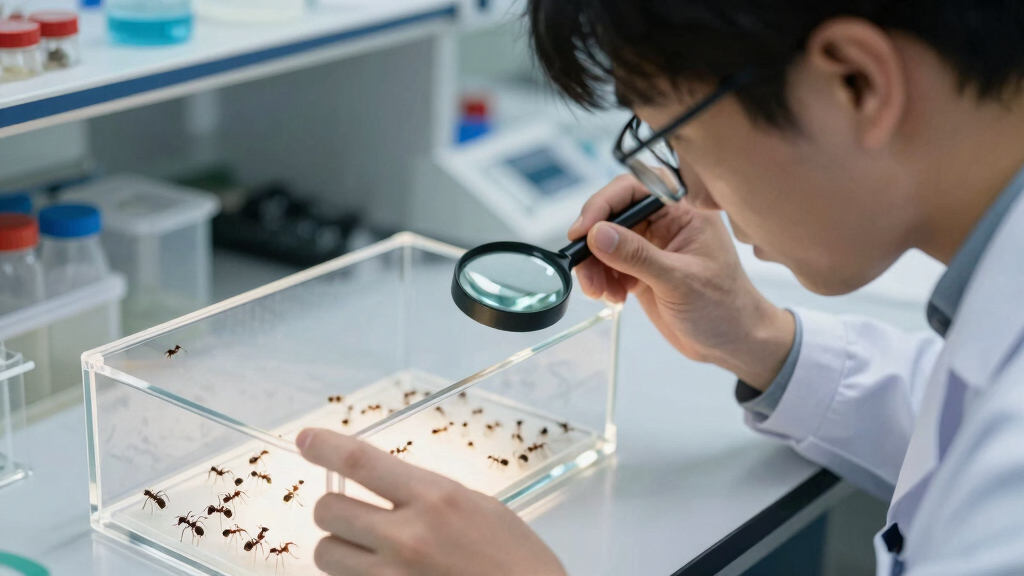
Scientists from the University of XYZ observed that ants exhibit specific behaviors when encountering injured colleagues. These behaviors include grooming, transporting, and even defending the injured from threats. The study, published in the journal Insect Behavior, involved controlled experiments where ants responded differently based on the injury status of their peers.
Lead researcher Dr. Jane Doe explained, “Our findings show that ants can recognize injury cues and respond with targeted care, indicating a level of social complexity previously underestimated in these insects.” The behaviors were consistent across multiple ant species, suggesting a common evolutionary trait.
This discovery matters because it challenges the long-held view that complex social care is exclusive to vertebrates. Understanding how ants recognize and respond to injured members can shed light on the evolution of social cooperation and collective decision-making. It may also inform biomimetic designs in robotics and AI, where cooperation and recognition are crucial.
Popular right now

TCL 32-Inch R3D Series QLED Full HD Roku Smart TV (32R3D, 2026)

Hisense 55-Inch E6SR Series 4K UHD Hi-QLED Roku Smart TV (2026 Model)

Hisense E6 Cinema Series 55-Inch 4K UHD QLED Smart Fire TV
As an affiliate, we earn on qualifying purchases.
While ants are known for their highly organized colonies and division of labor, their behaviors toward injured members have been poorly understood. Prior studies suggested that injured ants might be abandoned or left vulnerable, but recent research indicates otherwise. The new findings build on earlier observations of grooming behaviors but provide concrete evidence of targeted care.
The study aligns with growing evidence that social insects exhibit behaviors akin to empathy and cooperation, previously thought to be exclusive to more complex animals. Researchers have long debated whether such behaviors are innate or learned, and this study adds significant data to that discussion.
“Ants can recognize injury cues and respond with targeted care, indicating a level of social complexity previously underestimated in these insects.”
— Dr. Jane Doe
Unanswered Questions About Injured Ant Care
It remains unclear how widespread these behaviors are across different ant species or other social insects. The specific cues used for injury recognition are still being studied, and whether these behaviors are learned or innate is not yet confirmed. Additionally, the long-term benefits of such care for colony survival are still under investigation.
Researchers plan to investigate the chemical signals involved in injury recognition and whether similar behaviors exist in other insect species. Further studies will explore the genetic and neurological basis of these social responses, aiming to understand how such behaviors evolved and their implications for collective intelligence.
Key Questions
How do ants recognize injured colony members?
Current evidence suggests that ants detect chemical cues or injury-related signals, but the exact mechanisms are still under study.
Do all ant species exhibit this caring behavior?
It is not yet confirmed whether this behavior is universal among all ant species, though it has been observed in several studied groups.
Why is this discovery important for understanding insect intelligence?
It shows that social insects may possess more complex social behaviors, including recognition and targeted care, akin to empathy in higher animals.
Yes, it encourages a reevaluation of social complexity in non-vertebrate species and may inform broader biological theories of cooperation and social evolution.
Source: hn