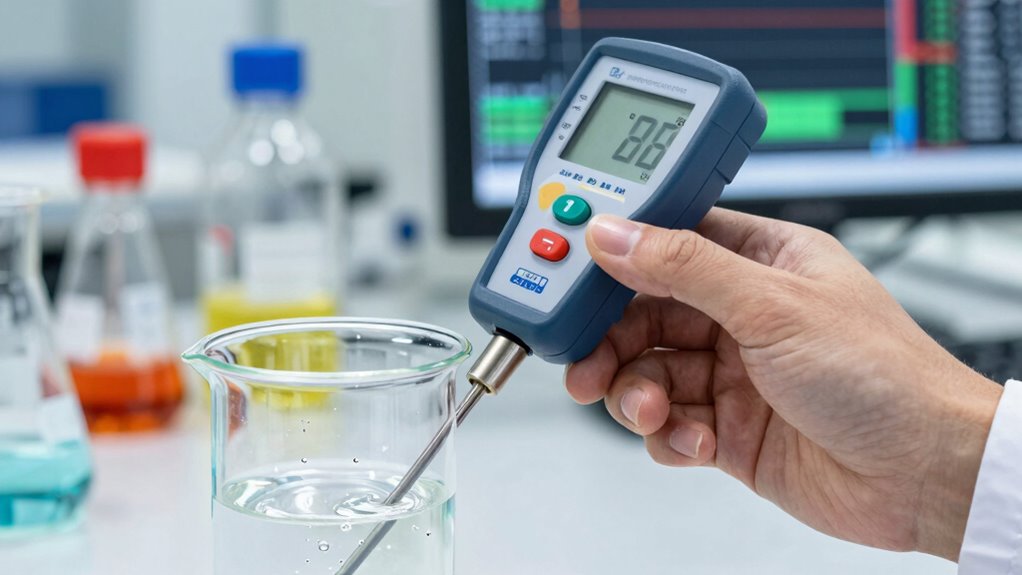

Conductivity meters are essential because they give you quick, accurate measurements of solution concentrations during mixing and testing. They help you maintain the right solution purity and guarantee product quality in industries like water treatment, pharmaceuticals, and food. Proper calibration, material choice, and maintenance are critical for reliable results. By understanding their role, you can improve process control and efficiency. Keep exploring to discover more about how these tools support your operations.

Prime made for students and young adults
- Fast, free delivery for dorm and study essentials
- Prime Video and Amazon Music included
- Member-only deals
Key Takeaways
- Conductivity meters provide rapid, accurate measurements vital for controlling solution concentration during mixing processes.
- They ensure product quality by verifying solution purity and consistency in testing procedures.
- Regular calibration and proper maintenance prevent measurement errors, supporting reliable process control.
- Material compatibility of electrodes prevents corrosion, extending device lifespan and ensuring measurement integrity.
- Industry-standard practices in calibration and handling maintain measurement accuracy and compliance with safety regulations.
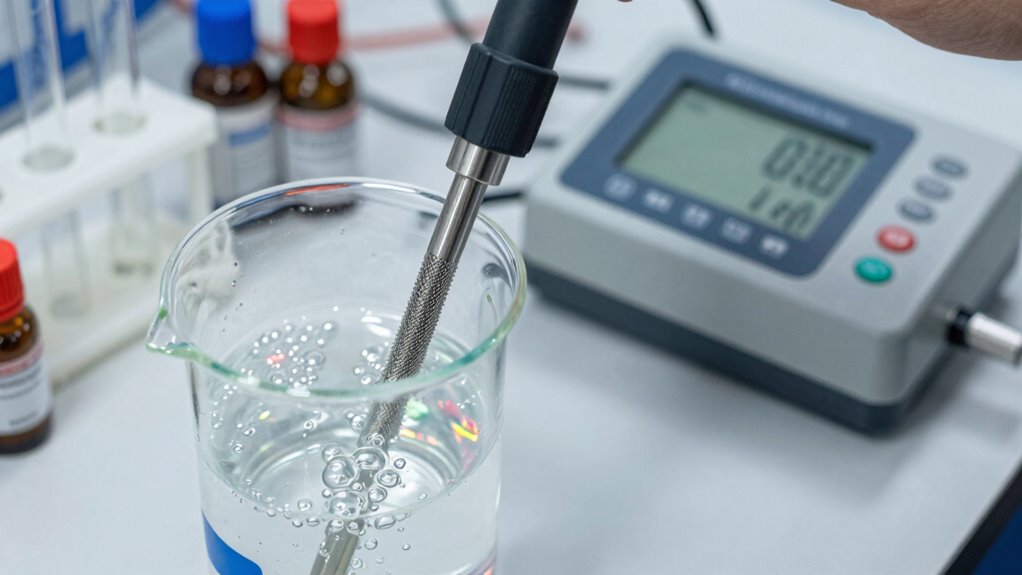
Conductivity meters play an essential role in the mixing and testing processes by providing rapid and accurate measurements of a solution’s ability to conduct electricity. This capability is fundamental in industries like water treatment, pharmaceuticals, food production, and chemical manufacturing, where precise control over solution concentration and purity directly impacts product quality. When you’re working with these meters, making certain they’re properly calibrated is essential. Calibration procedures involve adjusting the device to match known standards, which guarantees that your measurements remain accurate over time. Neglecting calibration can lead to deviations that compromise process control, resulting in inconsistent product quality or inefficient operations. Regular calibration also helps identify potential issues with the meter itself, such as sensor drift or electronic faults, so you can address them before they cause significant errors.
Proper calibration ensures accurate, reliable conductivity measurements essential for quality control and process efficiency.
Material compatibility is another important aspect to evaluate when choosing and maintaining conductivity meters. The sensors and electrodes are in direct contact with the solutions you’re testing, so they must be compatible with the specific chemicals or substances involved. Certain materials can corrode or degrade when exposed to aggressive solutions, leading to inaccurate readings or equipment failure. You need to select electrodes made from materials like platinum, graphite, or specialized plastics that resist corrosion and chemical attack, depending on your application. Making certain material compatibility not only extends the lifespan of your equipment but also maintains the integrity of your measurements, which is crucial for compliance with industry standards and safety regulations. Additionally, understanding material compatibility helps prevent costly replacements and downtime caused by equipment corrosion. Regularly monitoring and assessing electrode condition is also vital to maintaining measurement accuracy over time. Using correct storage practices for your conductivity meters further ensures their longevity and optimal performance, especially when they are not in use. It is also beneficial to keep detailed records of calibration and maintenance activities to track the device’s performance history.
In addition to calibration and material compatibility, you should pay attention to the maintenance and proper handling of your conductivity meter. Regular cleaning of the electrodes prevents buildup that could skew results, and storing the device correctly protects it from damage. When testing different solutions, rinsing electrodes thoroughly between measurements ensures that residual chemicals don’t influence subsequent readings. Proper maintenance reduces the likelihood of sensor contamination or electrical interference, both of which can affect the accuracy and reliability of your data. Moreover, following the manufacturer’s guidelines for device handling can extend the lifespan of your conductivity meter and sustain its performance. Properly handling and calibrating your equipment ensures that you obtain trustworthy data that informs your mixing and testing processes, leading to better quality control and more efficient operations. Staying informed about updates in industry standards can also help you adapt your practices to maintain compliance and improve measurement reliability.
Ultimately, your confidence in the measurements provided by your conductivity meter hinges on diligent calibration, thoughtful selection of compatible materials, and consistent maintenance. These practices help you obtain trustworthy data that informs your mixing and testing processes, leading to better quality control and more efficient operations. By understanding the importance of these factors, you guarantee your conductivity measurements remain precise, reliable, and aligned with industry standards, making the meter an indispensable tool in your workflow.
digital conductivity meter for water testing
As an affiliate, we earn on qualifying purchases.
As an affiliate, we earn on qualifying purchases.
Frequently Asked Questions
How Do Conductivity Meters Impact Overall Product Quality?
Conductivity meters impact your product quality by providing accurate, real-time measurements, guaranteeing proper mixing and consistency. Regular calibration procedures keep the sensors precise, preventing errors that could compromise quality. Additionally, monitoring sensor lifespan helps you replace or maintain equipment before it affects results. By maintaining these factors, you ensure your products meet quality standards, reducing waste and increasing customer satisfaction through reliable testing and consistent output.
Are Conductivity Meters Suitable for All Types of Liquids?
Like a trusty steed in a dusty old town, conductivity meters are versatile but not suitable for all liquids. You need to take into account liquid compatibility, as some substances can damage or give inaccurate readings. Calibration procedures are essential to guarantee accuracy across different liquids. Always check the manufacturer’s guidelines, and test the meter with compatible liquids first to avoid costly errors and ensure precise measurements.
What Maintenance Is Required for Conductivity Meters?
You need to regularly calibrate your conductivity meter, typically every few months, to guarantee accurate readings. Check the calibration standards and follow the manufacturer’s instructions. Also, replace the batteries when they start to weaken or the meter shows low power warnings. Keep the electrodes clean and store the device properly when not in use. Regular maintenance helps maintain precision and prolongs your conductivity meter’s lifespan.
Can Conductivity Meters Detect Contamination in Samples?
Sure, conductivity meters can spot contamination, but don’t rely solely on them for sample purity. They measure ion concentration, which hints at impurities, yet some contaminants slip past this silent sentinel. Proper calibration techniques are key, ensuring your readings are trustworthy. Think of your meter as a vigilant detective—sometimes it catches the bad guys, sometimes it just raises suspicion. Always double-check with other tests for complete peace of mind.
How Do Environmental Factors Affect Measurement Accuracy?
Environmental factors like temperature fluctuations and electromagnetic interference can considerably impact your conductivity meter’s measurement accuracy. As temperature changes, it affects the solution’s conductivity, leading to inconsistent readings if not properly calibrated. Electromagnetic interference from nearby equipment can cause signal disruptions, resulting in unreliable data. To guarantee precise results, you should control environmental conditions, shield your device from interference, and regularly calibrate your conductivity meter.
portable conductivity tester for pharmaceuticals
As an affiliate, we earn on qualifying purchases.
As an affiliate, we earn on qualifying purchases.
Conclusion
By using conductivity meters in mixing and testing, you guarantee accuracy, efficiency, and consistency. You measure precisely, monitor effectively, and verify reliably. You avoid errors, save time, and maintain quality. Conductivity meters become your trusted tools, your reliable partners, and your essential instruments. They empower you to produce better results, make informed decisions, and uphold high standards. Ultimately, with conductivity meters, you enhance your processes, improve your outcomes, and excel in your work.
industrial conductivity meter calibration kit
As an affiliate, we earn on qualifying purchases.
As an affiliate, we earn on qualifying purchases.
electrode material for conductivity meters
As an affiliate, we earn on qualifying purchases.
As an affiliate, we earn on qualifying purchases.
Fall Picks
fall essentials
As an affiliate, we earn on qualifying purchases.