
A reaction is reversible when molecules can switch back and forth between reactants and products easily, thanks to a balanced energy landscape and low energy barriers. If the energy change during the process is small, and external conditions like temperature or pressure support it, the reaction can reach equilibrium where forward and reverse rates are equal. By understanding these factors, you’ll see how some reactions naturally reverse, and there’s more to discover about what influences reversibility.

Prime made for students and young adults
- Fast, free delivery for dorm and study essentials
- Prime Video and Amazon Music included
- Member-only deals
Key Takeaways
- Reversible reactions proceed in both forward and reverse directions, reaching a dynamic equilibrium.
- Small energy differences between reactants and products facilitate reversibility.
- Low energy barriers allow molecules to switch states easily, maintaining reaction balance.
- External conditions like temperature and pressure influence the reaction’s shift toward reactants or products.
- Inherent properties of reactants and products determine their ability to undergo reversible transformations.
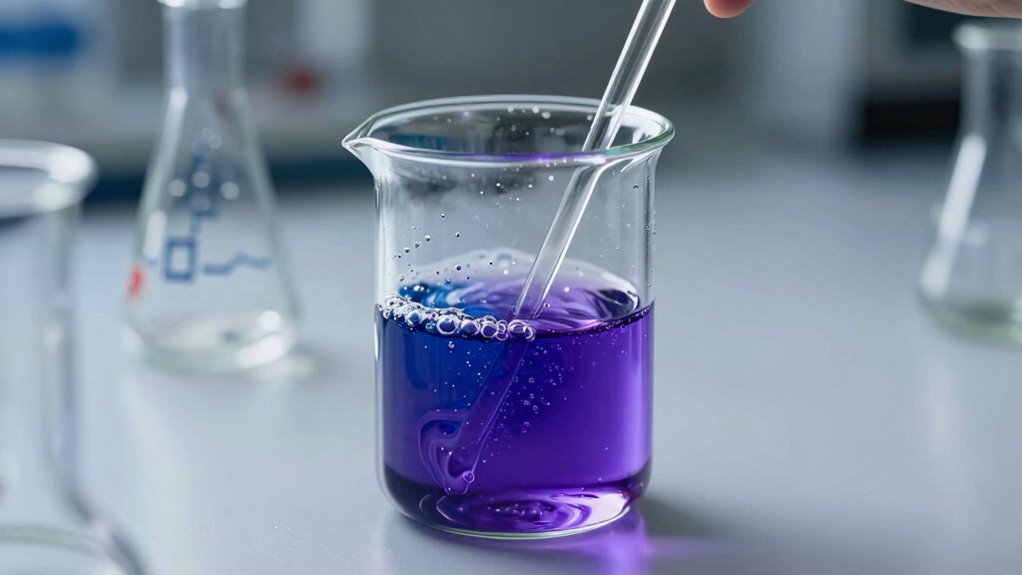
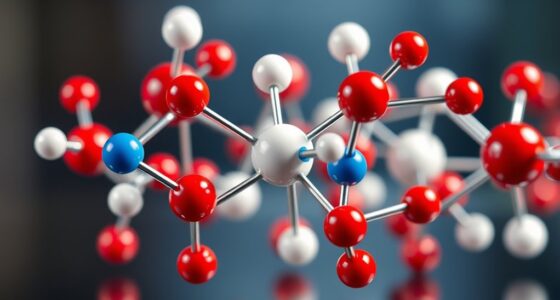
Have you ever wondered how some chemical reactions can go both ways? It’s a fascinating aspect of chemistry that hinges on the idea of reversibility. When a reaction is reversible, it can proceed in both the forward and reverse directions, meaning the reactants can turn into products, and those products can revert back into reactants. The key to understanding this lies in how the reaction reaches a state called equilibrium, where the forward and reverse reactions happen at the same rate. At this point, the concentrations of reactants and products stabilize, but the reaction doesn’t stop; instead, it continues to occur in both directions equally. This dynamic balance depends heavily on the energy change involved in the reaction and how external conditions influence the equilibrium shift.
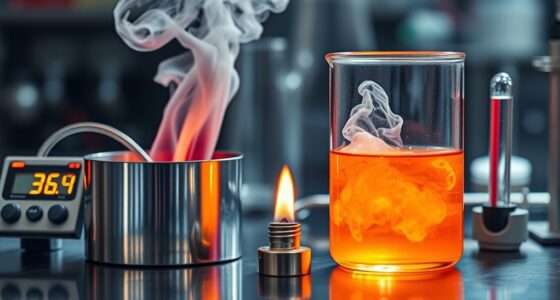
The energy change during a reaction determines whether it’s likely to be reversible. If a reaction releases energy, making it exothermic, it usually favors the formation of products, but under certain conditions, the reverse can still occur. Conversely, endothermic reactions, which absorb energy, might seem less likely to be reversible, but they can still reach equilibrium if the conditions support it. The overall energy difference between reactants and products isn’t too large, allowing the reaction to go both ways, and reaction conditions can influence this process significantly. When the energy barrier between the reactants and products is low enough, the molecules can easily switch between states, maintaining a balance that characterizes reversible reactions.
External factors such as temperature, pressure, and concentration can cause an equilibrium shift, tipping the balance toward either the reactants or the products. For example, increasing temperature might supply enough energy to favor the reverse reaction if it’s endothermic, shifting the equilibrium back toward the reactants. Conversely, decreasing temperature might push the reaction toward products if the forward process is exothermic. Changes like these influence the energy landscape of the reaction, making certain pathways more favorable and consequently altering the equilibrium position.
In essence, what makes a reaction reversible isn’t just the inherent properties of the reactants and products but also how conditions influence energy change and equilibrium shift. When the reaction can easily proceed in both directions without a significant energy barrier, and external conditions favor either side, you get a reversible process. Understanding these factors helps you grasp why some reactions are easily reversible while others are not, providing insight into many natural and industrial processes.
chemical reaction energy barrier tester
As an affiliate, we earn on qualifying purchases.
As an affiliate, we earn on qualifying purchases.
Frequently Asked Questions
How Does Temperature Affect Reaction Reversibility?
Temperature influence plays a key role in reaction reversibility. When you increase the temperature, you usually make a reaction more reversible because it provides the energy needed to overcome activation barriers, allowing forward and reverse reactions to occur more readily. Reversibility factors depend on how temperature affects reaction rates and equilibrium. Lower temperatures tend to favor the formation of products, while higher temperatures can shift the balance, making reactions more dynamic and reversible.
Can Catalysts Influence Whether a Reaction Is Reversible?
Catalysts can influence whether a reaction is reversible by affecting the reaction pathway. They speed up both forward and reverse reactions equally, but they don’t change the equilibrium point. Catalyst effects make it easier for the reaction to reach equilibrium faster, thereby enabling the reaction to be reversible. So, while they don’t make a reaction reversible or irreversible, they facilitate the process, making reversibility more apparent and quicker.
Are All Chemical Reactions Reversible Under Certain Conditions?
Not all chemical reactions are reversible, but many are under specific conditions. You might find some reactions reversible if they’re spontaneous and have low energy barriers, allowing them to proceed in both directions. Reaction spontaneity plays a key role—if a process favors the formation of products, it can often reverse if conditions change. However, high energy barriers can prevent reactions from reversing, making reversibility limited or impossible.
How Do Equilibrium Constants Relate to Reversibility?
Your understanding of equilibrium constants helps you see how reactions are reversible. When the reaction quotient (Q) equals the equilibrium constant (K), the reaction is at equilibrium and reversible. According to Le Châtelier’s principle, if conditions change, the system shifts to restore equilibrium. This balance shows that a reaction’s reversibility depends on how K relates to Q, allowing the reaction to proceed forward or backward as needed.
What Role Does Reaction Rate Play in Reversibility?
Reaction rate influences reversibility because faster reactions often reach equilibrium swiftly, balancing forward and reverse processes. In reaction kinetics, energy barriers determine how quickly molecules overcome activation energy, affecting how readily a reaction can reverse. When energy barriers are low, reactions tend to be more reversible, as molecules can easily switch directions. Conversely, high energy barriers slow down the process, making the reaction less reversible and favoring the forward or backward path.
reversible reaction demonstration kit
As an affiliate, we earn on qualifying purchases.
As an affiliate, we earn on qualifying purchases.
Conclusion
Understanding what makes a reaction reversible helps you grasp the incredible balance of chemical processes happening around you. When reactions can easily shift back and forth, it’s like a finely-tuned dance that keeps everything in harmony. If you grasp these concepts, you’ll hold the power to predict and control reactions with the precision of a master chemist. Remember, this knowledge isn’t just useful—it’s the key to revealing the universe’s most awe-inspiring secrets!
chemical equilibrium experiment kit
As an affiliate, we earn on qualifying purchases.
As an affiliate, we earn on qualifying purchases.
As an affiliate, we earn on qualifying purchases.
Evergreen bestsellers Picks
bestsellers
As an affiliate, we earn on qualifying purchases.