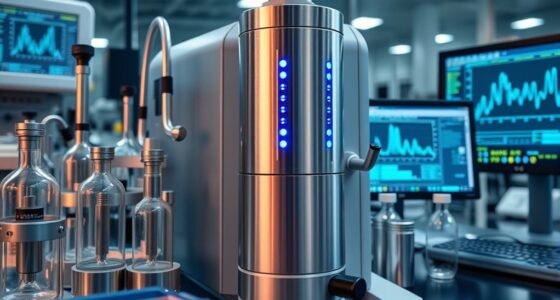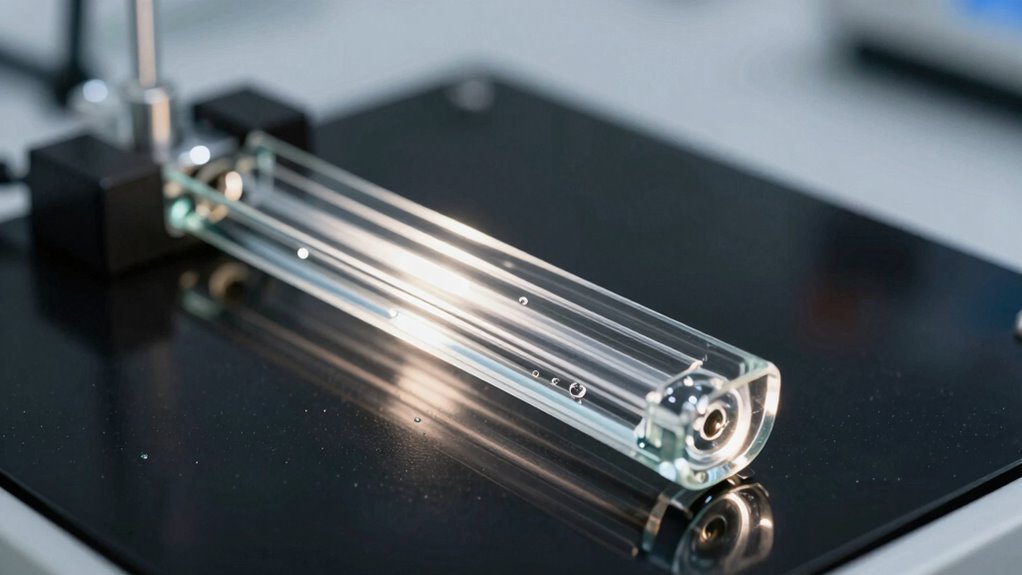

Sample splitters are vital for ensuring your samples are divided accurately and consistently, which directly affects the quality of your analysis. Proper calibration and regular maintenance prevent device drift and sample variability, helping you get reliable, reproducible results every time. Using well-maintained splitters conserves resources and reduces repeat tests, saving you time and effort. If you want to understand how to maximize your sample’s integrity and accuracy, keep exploring these essential tools.

Prime made for students and young adults
- Fast, free delivery for dorm and study essentials
- Prime Video and Amazon Music included
- Member-only deals
Key Takeaways
- Proper sample splitters ensure consistent, accurate division of samples, reducing variability before analysis.
- They maintain sample integrity, preventing contamination or loss during splitting.
- Regular calibration of splitters detects device drift, ensuring reliable and reproducible results.
- Well-maintained splitters minimize sample waste and optimize resource efficiency.
- Accurate splitting supports compliance with quality standards and enhances data trustworthiness.
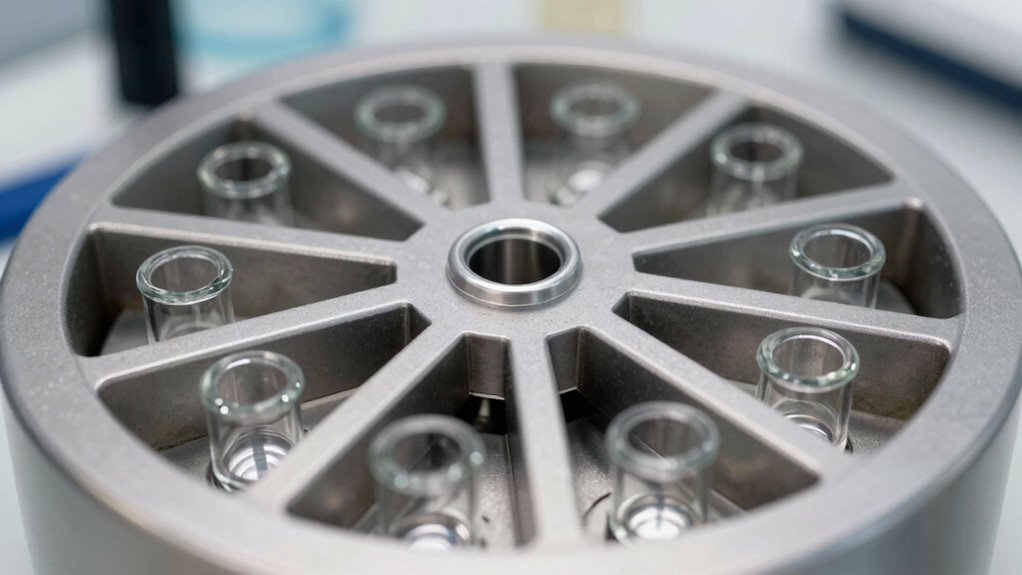
Have you ever wondered how scientists analyze multiple samples efficiently without wasting precious material? The answer often lies in the use of sample splitters, essential tools that guarantee each portion of a sample is representative and consistent. Proper sample splitter calibration is vital here, as it guarantees that the device divides samples accurately every time. Without precise calibration, the split portions can vary markedly, leading to inconsistent results that compromise the integrity of your analysis. When a sample splitter is well-calibrated, you gain confidence that each split is true to the original, allowing for reliable comparisons and reproducibility across multiple tests.
Properly calibrated sample splitters ensure consistent, accurate samples for reliable, reproducible scientific results.
Sample consistency is the cornerstone of accurate scientific work. When you’re working with limited or valuable samples, you need to be certain that each subsample reflects the composition of the whole. A poorly calibrated or poorly maintained splitter can introduce variability, skewing your data and potentially invalidating your findings. That’s why regular calibration checks and maintenance are vital. They help you detect any drift or misalignment in the device, so you can correct it before it affects your results. This attention to detail guarantees that your sample splits are uniform, maintaining the sample integrity necessary for high-quality analysis. Additionally, consistent calibration practices help ensure compliance with quality standards that are crucial in many scientific and industrial settings. Regular calibration also contributes to reproducibility, ensuring your results are dependable over time and across different testing conditions. Implementing a calibration schedule can further enhance your confidence in the accuracy of your results.
Using a properly calibrated sample splitter also saves time and resources. When each split is precise, you reduce the need for repeated experiments caused by inconsistent sampling. This efficiency not only accelerates your workflow but also minimizes waste—an important consideration when working with costly or limited samples. Moreover, consistent splits diminish the risk of errors in data interpretation, making your conclusions more trustworthy. Whether you’re conducting research, quality control, or product development, the reliability of your data depends on how well your sample splitter performs.
In essence, the importance of sample splitters goes beyond mere convenience. They are fundamental to ensuring sample integrity and accuracy in your analysis. Regular sample splitter calibration maintains sample consistency, which is critical to obtaining valid, reproducible results. Proper maintenance and device calibration are essential components of high-quality scientific work. When you invest in proper maintenance and calibration, you’re safeguarding the quality of your entire process. Ultimately, a well-calibrated sample splitter enables you to conduct more precise, reliable, and efficient analyses, reinforcing the integrity of your scientific or industrial work.
sample splitter calibration tools
As an affiliate, we earn on qualifying purchases.
As an affiliate, we earn on qualifying purchases.
Frequently Asked Questions
How Do Sample Splitters Impact Data Accuracy?
Sample splitters improve data accuracy by guaranteeing consistent sample distribution, reducing the risk of sample contamination. They help maintain precise volumes, which is vital for reliable results. Proper calibration techniques combined with effective splitters minimize errors and variability. By using well-maintained splitters, you guarantee each analysis receives a true representative sample, leading to more accurate and reproducible data.
What Are the Main Types of Sample Splitters?
Imagine choosing between a precise, calibrated sample splitter or one with a flawed design. The main types include manual, gravity, and rotary splitters. Manual splitters rely on careful calibration and sample funnel design for accuracy, while gravity splitters use weight differences. Rotary splitters offer automation, but all depend on proper calibration to guarantee consistent, reliable sample division. Which will you trust for your critical analysis?
Can Sample Splitters Be Used for All Sample Types?
Sample splitters aren’t suitable for all sample types because of sample compatibility issues. You need to take into account material selection carefully to match your sample’s properties, like corrosiveness or viscosity. For example, certain materials can react with specific samples, causing contamination or inaccurate results. Always check if the splitter’s material is compatible with your sample to ensure reliable, precise analysis without risking damage or contamination.
How Do You Maintain and Clean Sample Splitters?
Think of maintaining and cleaning your sample splitters like tuning a vintage radio—you need precision. Regularly follow your cleaning protocols, using appropriate solvents to prevent contamination. Apply calibration techniques to guarantee accurate division ratios. Disassemble parts carefully, remove residue, and inspect for wear. Properly reassemble and test before use. This keeps your splitters functioning reliably, ensuring precise sample analysis every time.
Are Sample Splitters Cost-Effective for Small Labs?
Yes, sample splitters can be cost-effective for small labs. When you do a thorough cost analysis, you’ll find they reduce sample wastage and improve accuracy, saving money in the long run. Plus, investing in durable equipment guarantees longevity, minimizing replacement costs. While the initial expense might seem high, the efficiency gains and reduced error rates make sample splitters a smart, economical choice for small labs aiming for reliable results.
As an affiliate, we earn on qualifying purchases.
Conclusion
Think of a sample splitter as the gatekeeper of your analysis, guiding a steady stream of data to various destinations. Without it, your samples are like a river without a dam—chaotic and unpredictable. By ensuring each analysis receives just the right amount, the splitter keeps everything flowing smoothly, like a well-orchestrated symphony. In the end, it’s the silent hero that guarantees your results are accurate, reliable, and ready to shine.
As an affiliate, we earn on qualifying purchases.
scientific sample dividing device
As an affiliate, we earn on qualifying purchases.
As an affiliate, we earn on qualifying purchases.
Fall Picks
fall essentials
As an affiliate, we earn on qualifying purchases.