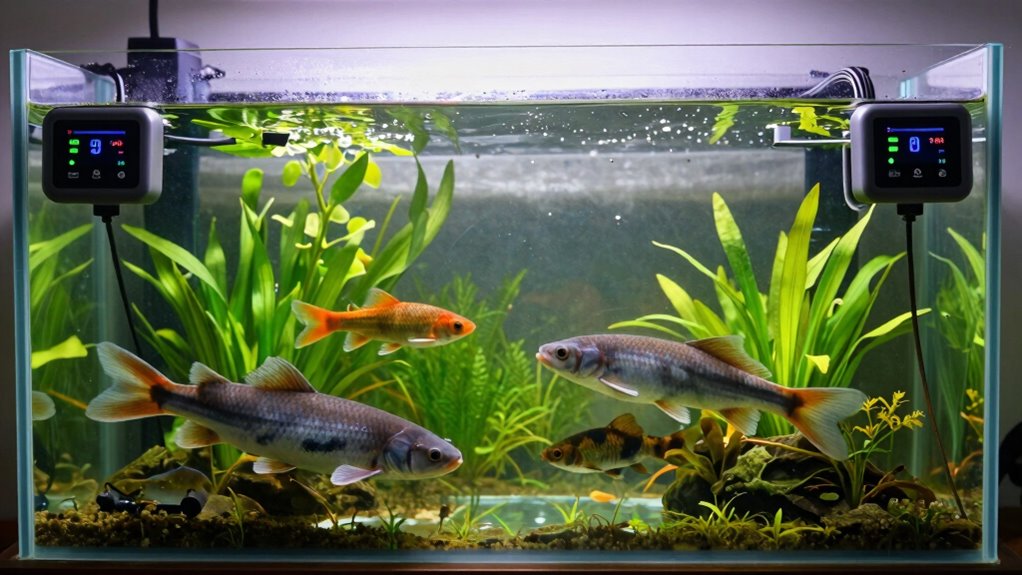

Using aquaculture water monitors helps you maintain stable, healthy environments for aquatic life. Regular monitoring detects sudden changes, like drops in oxygen, and supports proactive management to prevent stress or mortality. Proper calibration and routine maintenance guarantee sensors give accurate data, reducing risks and enhancing system stability. Incorporating advanced tools and understanding sensor behavior enable precise adjustments, creating a resilient system. Continue exploring to discover how these practices can optimize your water quality management even further.
Key Takeaways
- Consistent monitoring allows quick detection of water quality fluctuations, maintaining stable conditions for aquatic life.
- Proper calibration ensures sensor accuracy, reducing errors that could destabilize aquatic systems.
- Regular maintenance and data review help identify early signs of system imbalance, preventing harm to aquatic organisms.
- Reliable water quality data supports informed management decisions, promoting ecosystem stability.
- Advanced monitoring tools and best practices enhance long-term water system stability and aquatic health.
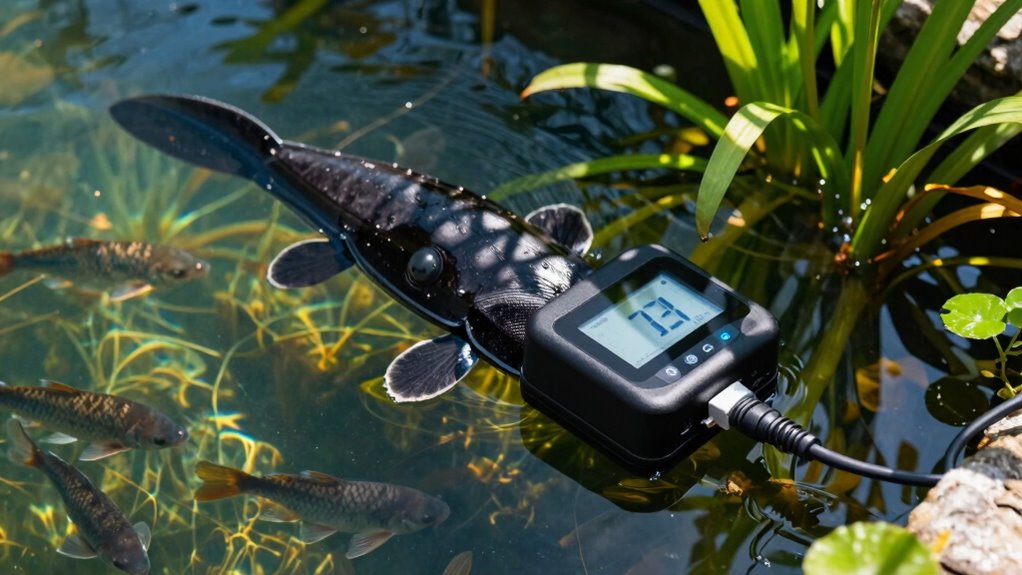
You’ll find that consistent monitoring, paired with proper calibration, allows you to respond swiftly to any changes in water conditions. For example, if your sensor detects a sudden drop in dissolved oxygen, you can take immediate action—like increasing aeration—to prevent fish stress or mortality. This proactive approach hinges on trustworthy data, which depends heavily on well-maintained sensors. Over time, sensors can become less accurate due to environmental factors or wear, so routine calibration becomes a fundamental part of your management strategy. It’s a simple step that pays off by ensuring your water quality readings truly reflect the current conditions.
Furthermore, understanding the importance of sensor calibration helps you develop better maintenance routines. You’ll schedule regular checks and calibrations, reducing the risk of unnoticed deviations that could lead to unstable water conditions. This consistency not only safeguards your aquatic stock but also optimizes your operational efficiency. When water quality remains stable, your aquatic system functions smoothly, minimizing costly interventions and losses. Essentially, diligent sensor calibration acts as the backbone of reliable water monitoring, giving you peace of mind and confidence in your management decisions. By prioritizing accurate measurements, you create a resilient environment where aquatic life can flourish, and your aquaculture efforts succeed. Proper sensor calibration is critical for maintaining long-term system stability, and understanding sensor behavior can further enhance your ability to troubleshoot issues effectively. Regularly reviewing sensor data helps identify patterns that might indicate underlying problems before they escalate. Additionally, implementing preventative maintenance routines can extend the lifespan of your sensors and improve overall accuracy. Incorporating advanced monitoring technologies can also provide deeper insights into water quality trends and facilitate more precise adjustments.
aquaculture water quality monitor
As an affiliate, we earn on qualifying purchases.
As an affiliate, we earn on qualifying purchases.
Frequently Asked Questions
How Often Should Water Quality Be Tested in Aquaculture Systems?
You should test water quality daily in aquaculture systems to maintain ideal conditions. Check water pH regularly, ideally every day, to guarantee it stays within the ideal range for your species. Additionally, monitor oxygen levels consistently, at least once a day, to prevent stress or suffocation. Consistent testing helps you catch fluctuations early, allowing you to adjust and maintain a stable environment for healthy aquatic life.
Can Water Monitors Detect All Contaminants in Aquaculture?
Water monitors can’t detect all contaminants in aquaculture because each sensor is designed for specific substances. For extensive contaminant detection, you need multiple sensors and proper calibration to guarantee accuracy. Regular sensor calibration is essential to maintain reliable readings, especially when monitoring for diverse pollutants. While monitors provide valuable real-time data, they should complement, not replace, thorough water testing to identify all potential contaminants effectively.
Are There Maintenance Requirements for Continuous Water Monitoring Devices?
Yes, continuous water monitoring devices require regular maintenance. You need to perform sensor calibration and device calibration periodically to guarantee accurate readings. Keep sensors clean and check for any buildup or damage that might affect performance. Additionally, verify that calibration standards are up-to-date and replace parts as needed. Regular maintenance helps prevent malfunctions, ensures reliable data, and extends the lifespan of your monitoring equipment.
How Do Water Monitors Impact Fish Health and Growth?
Water monitors directly impact fish health and growth by helping you detect changes in water nutrient levels early, which reduces fish stress. When nutrient levels stay balanced, fish experience less stress, leading to healthier growth and fewer disease issues. By continuously tracking water conditions, you can make timely adjustments, ensuring ideal environments. This proactive approach enhances overall fish well-being, supports steady growth, and improves your aquaculture productivity.
What Is the Cost Difference Between Basic and Advanced Water Monitoring Systems?
You’ll find that basic water monitoring systems typically cost between $200 and $500, making them quite affordable for small-scale setups. Advanced systems, however, can range from $1,000 to over $5,000, offering more precise data and automation. The cost comparison highlights that while advanced systems are pricier, they substantially improve system stability and fish health, making them a worthwhile investment if you prioritize long-term success and system affordability.
dissolved oxygen sensor for aquaculture
As an affiliate, we earn on qualifying purchases.
As an affiliate, we earn on qualifying purchases.
Conclusion
By keeping a close eye on water quality with aquaculture monitors, you can substantially improve the stability of your aquatic systems. Did you know that proper water monitoring can reduce fish mortality rates by up to 30%? This statistic highlights just how essential these tools are for maintaining healthy, thriving environments. When you actively manage water conditions, you guarantee the well-being of your aquatic life, leading to more productive and sustainable aquaculture operations.
As an affiliate, we earn on qualifying purchases.
aquaculture sensor calibration kit
As an affiliate, we earn on qualifying purchases.
As an affiliate, we earn on qualifying purchases.