TL;DR
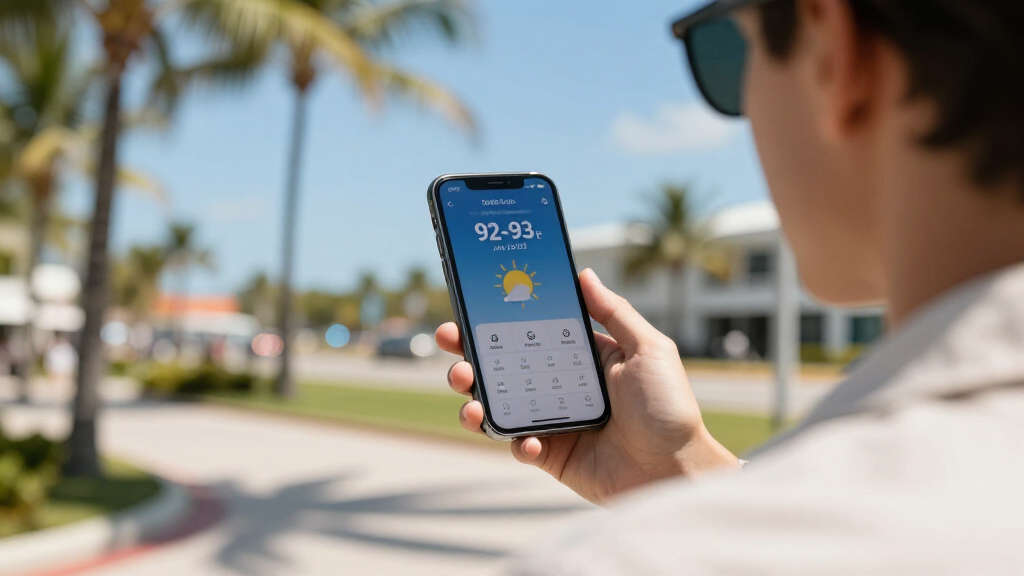
A trading market indicates speculation that Miami’s high temperature on July 23, 2026, could reach 92-93°F. No official weather forecast currently confirms this. The development highlights interest in long-term temperature predictions.
Market activity indicates that traders are speculating the high temperature in Miami on July 23, 2026, could be between 92 and 93 degrees Fahrenheit. You can see Will The High Temp In Miami Be 91-92° On Jul 11, 2026? for more on Miami’s temperature predictions. However, no official weather forecast or meteorological models have confirmed this temperature prediction at this time. This development underscores growing interest in long-term climate and temperature forecasts, though it remains speculative.
The speculation about Miami’s temperature on July 23, 2026, stems from recent trades on the Kalshi market, which has seen 11 transactions related to this specific forecast. For a different forecast, see Will The Temp In Austin Be Above 75.99° On Jul 12, 2026 At 6Am EDT?. These trades reflect traders’ expectations but do not constitute scientific predictions or official weather forecasts. No meteorological agency or climate model currently provides a definitive projection for that specific date and temperature range.
Market-based predictions like this are often used to gauge public sentiment or investor interest in future climate conditions but are inherently uncertain. Climate models typically provide temperature estimates over broader time frames and regions, not specific days years in advance. You might also be interested in Will The Temp In Austin Be Above 76.99° On Jul 12, 2026 At 5Am EDT? for more long-term temperature forecasts. The speculation appears to be driven by the market’s reaction to climate trends and possibly to the increasing frequency of heatwaves.
Implications of Long-Term Temperature Market Speculation
This market activity highlights the growing interest in long-term climate prediction and the role of financial markets in gauging future weather conditions. While the trades do not confirm any scientific forecast, they reflect societal concern about rising temperatures and heat extremes, especially in regions like Miami prone to heatwaves. Such speculation can influence public perception and policy discussions around climate resilience and adaptation strategies.
portable fans for hot weather
As an affiliate, we earn on qualifying purchases.
As an affiliate, we earn on qualifying purchases.
Long-Term Climate Trends and Market Speculation
Climate scientists project that global temperatures will continue to rise due to increasing greenhouse gas emissions, with some models indicating more frequent and intense heatwaves in Florida and other southern states. However, specific daily temperatures several years in advance are highly uncertain. The recent trades on the Kalshi market are part of a broader trend where financial instruments are used to express expectations about future climate conditions, but these are not substitutes for scientific forecasts.
Historically, long-range weather forecasts beyond a few weeks have low reliability, and predicting exact daily temperatures several years ahead remains speculative. Nonetheless, the market activity underscores public and investor interest in future climate risks.
personal cooling neck fan
As an affiliate, we earn on qualifying purchases.
As an affiliate, we earn on qualifying purchases.
Limitations of Market-Based Temperature Predictions
It is not yet clear whether the trades on the Kalshi market accurately reflect expected weather conditions or if they are primarily driven by speculation. No scientific or meteorological agency has issued an official forecast for Miami’s temperature on July 23, 2026. The reliability of such long-term predictions remains highly uncertain, and market activity should not be interpreted as definitive evidence of future weather conditions.
solar-powered outdoor weather station
As an affiliate, we earn on qualifying purchases.
As an affiliate, we earn on qualifying purchases.
Monitoring Scientific Forecasts and Market Activity
Scientists and meteorologists will continue to refine climate models, but specific daily temperature predictions several years in advance remain unreliable. Market activity related to future temperatures may persist as a measure of societal concern, but official forecasts will continue to be the authoritative source. Observers should watch for updates from climate agencies and meteorological services as the date approaches.

Palonu Black Sunglasses Bulk, Sunglasses with UV Protection for Wedding Summer Beach Party Supplies Birthday Gift Outdoor Activities (8)
【What you will get】You will receive 8 pcs black sunglasses in a package, which has sufficient quantity can…
As an affiliate, we earn on qualifying purchases.
As an affiliate, we earn on qualifying purchases.
Key Questions
Can we reliably predict Miami’s temperature on July 23, 2026?
No, current scientific methods do not allow for reliable predictions of specific daily temperatures several years in advance. Long-term climate trends are better understood than exact day-to-day weather forecasts.
What does the market activity tell us about future temperatures?
The market activity reflects investor and societal interest in future climate conditions but should not be taken as a scientific forecast. It indicates speculation and concern rather than certainty.
Are there scientific models that predict temperatures this far in advance?
Most climate models project broader trends over decades rather than specific daily temperatures years ahead. Precise forecasts for a single day in 2026 are currently not feasible.
Why is there interest in predicting future temperatures so far ahead?
Understanding long-term climate trends helps inform policy, infrastructure planning, and risk management related to heatwaves and climate change impacts.
Source: kalshi