The science behind carbonated drinks involves dissolving carbon dioxide gas into liquid under pressure, creating bubbles and that fizzy sensation we enjoy. When sealed, pressure keeps the gas dissolved, especially at colder temperatures. Opening the container reduces the pressure, causing CO₂ to escape and form bubbles that rise to the surface. These processes involve complex interactions of gas molecules, surface tension, and bubble formation—discover more about this fascinating science below.
Key Takeaways
- Carbonation involves dissolving CO₂ into liquid under pressure, with solubility increasing at lower temperatures.
- Opening a bottle causes pressure to drop, leading CO₂ to escape and form bubbles.
- Bubbles originate at nucleation sites and grow as CO₂ molecules attach.
- Surface tension and agitation influence bubble size, number, and foam formation.
- The fizzy sensation results from CO₂ escaping as bubbles, creating the characteristic effervescence.
Have you ever wondered what makes carbonated drinks fizzy and invigorating? The answer lies in the fascinating science of gas dissolution and bubble formation. When you open a bottle of soda, you’re witnessing a delicate balance of physics and chemistry at work. Carbon dioxide (CO₂) is dissolved into the liquid under pressure during the bottling process. Because of this pressure, the gas stays dissolved in the beverage, creating a state of equilibrium between the liquid and the CO₂ molecules. Once you open the bottle, the pressure drops suddenly, disrupting this balance and prompting the gas to escape. That escape is what causes the characteristic fizz and bubbles you see rising to the surface.
Gas dissolution is key to understanding how carbonated drinks keep their bubbles intact. Under high pressure, CO₂ molecules are forced into the liquid, forming a solution where the gas is evenly dispersed at a molecular level. The solubility of CO₂ depends on factors like temperature and pressure—cold temperatures allow more gas to dissolve, which is why sodas are usually chilled. When you open the bottle, the pressure drops rapidly, and the dissolved CO₂ becomes unstable. The gas molecules start to come out of solution, seeking to escape into the air as bubbles. This process is driven by the molecules’ desire to reach a state of lower energy, which they achieve by forming bubbles and escaping from the liquid. Gas dissolution plays a crucial role in how the bubbles are formed and maintained in the drink.
CO₂ dissolves under pressure, escapes as bubbles when pressure drops, creating the fizzy sensation in soda.
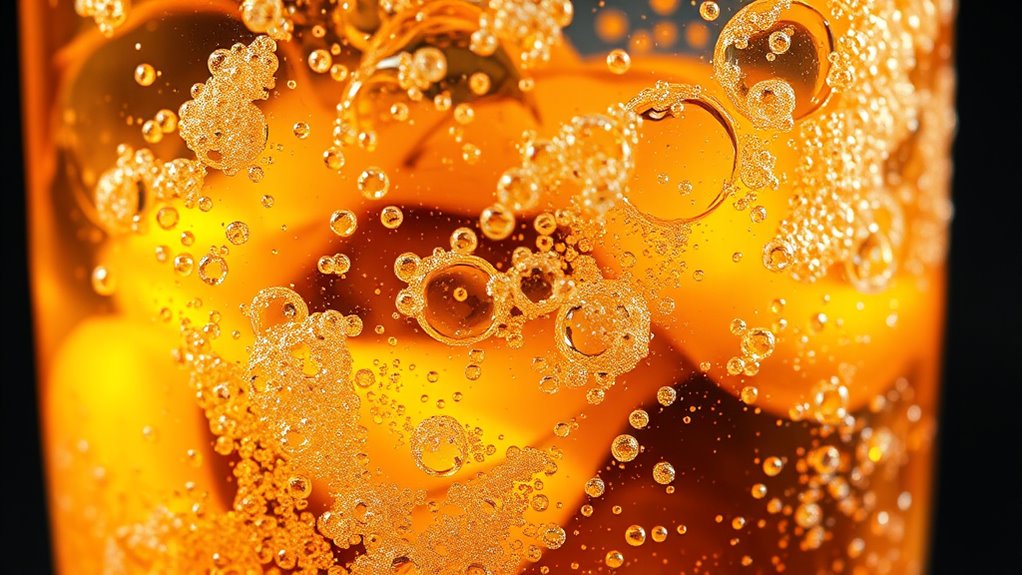
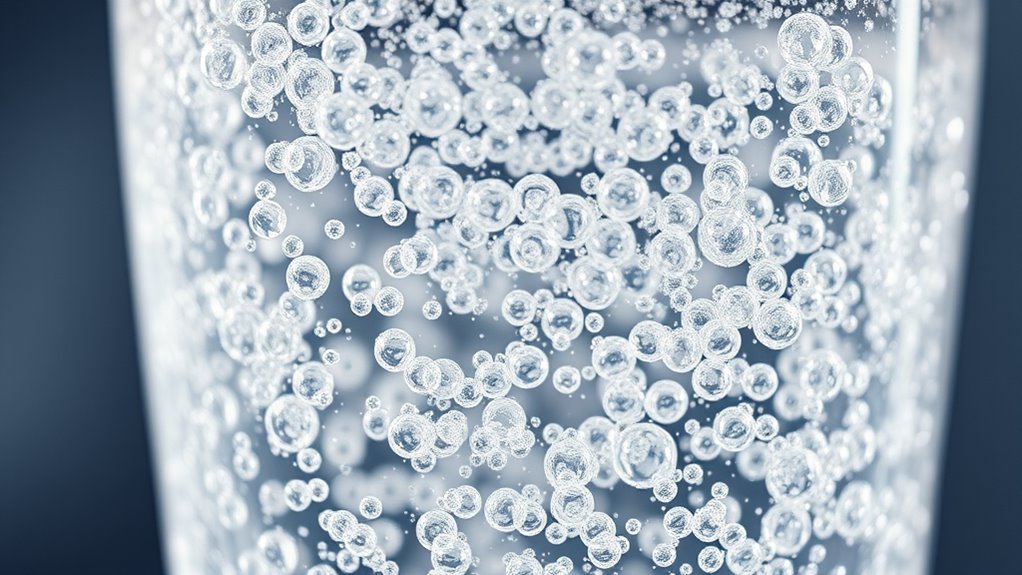
Bubble formation is a visual indicator of gas escaping from the solution. Tiny CO₂ bubbles form at nucleation sites, such as imperfections in the glass or tiny particles in the liquid. These bubbles grow as more CO₂ molecules attach to them, and buoyancy causes them to rise to the surface. The rapid formation and ascent of bubbles create the effervescent sensation you experience when drinking soda. The size and number of bubbles are influenced by factors like agitation, temperature, and the surface tension of the liquid. When you shake a can or bottle, you introduce more nucleation sites and disturb the equilibrium, leading to a more vigorous release of gases and a frothy overflow.
In essence, the fizzy sensation of your favorite carbonated drinks results from the intricate dance between gas dissolution and bubble formation. When you open the container, you’re witnessing the release of dissolved CO₂ as it escapes through bubble formation, creating that lively, bubbly experience. Understanding these processes reveals the delicate science behind what makes your soda both refreshing and delightfully effervescent.
Frequently Asked Questions
How Does Carbonation Affect the Taste of Different Beverages?
Carbonation enhances the taste of beverages by adding a sharp, invigorating bite that boosts flavor perception. It also modifies mouthfeel, making drinks feel tinglier or more effervescent, which can increase your enjoyment. You might notice that carbonated drinks seem more flavorful and lively because the bubbles stimulate your palate. This flavor enhancement and mouthfeel modification create a more engaging drinking experience, making each sip feel more exciting and satisfying.
Can Carbonation Levels Be Customized for Individual Preferences?
You can definitely customize carbonation levels to suit your preferences. Imagine sipping a soda with just the right fizz—neither flat nor overly bubbly. Many beverage brands offer personalization options or carbonation adjustment tools, allowing you to dial in that perfect sparkle. Whether you love a subtle effervescence or a bursting bubble experience, adjusting carbonation levels makes your drink uniquely yours, enhancing enjoyment and satisfaction every time.
What Are the Environmental Impacts of Producing Carbonated Drinks?
You might not realize it, but producing carbonated drinks impacts the environment through water usage and packaging waste. Companies are adopting sustainable packaging to reduce plastic waste and improve water usage efficiency during production. By choosing brands that prioritize eco-friendly practices, you help lessen environmental harm. Supporting these efforts encourages the industry to continue innovating toward more sustainable methods, making your choices impactful for the planet.
How Does Carbonation Influence the Shelf Life of Beverages?
Imagine your beverage as a delicate balloon; carbonation helps it stay lively, but if bottle integrity falters, gas retention suffers. This affects shelf life because the more carbon dioxide escapes, the flatter and less appealing the drink becomes. Proper sealing and strong bottles keep the gas in, maintaining freshness and fizz longer. So, carbonation directly influences how long your beverage stays bubbly, fresh, and enjoyable on the shelf.
Are There Health Benefits Associated With Consuming Carbonated Drinks?
You might experience some health improvements from drinking carbonated drinks, especially with digestion benefits. The bubbles can help soothe an upset stomach and improve digestion by promoting burping, which relieves gas. However, be mindful that excessive consumption can lead to dental issues or bloating. Enjoy these drinks in moderation to balance potential digestion benefits with overall health, and consider healthier options without added sugars.
Conclusion
Now that you understand the fizzy science, you might think it’s just bubbles and sweetness. But it’s also a marvel of chemistry, blending energy and refreshment in every sip. While the bubbles dance on your tongue, they hide complex reactions happening beneath. So, next time you enjoy a carbonated drink, appreciate the science that makes it so lively—where simple pleasures meet intricate processes, creating a sparkling experience you can’t resist.