
The science behind coffee brewing involves how solubility, extraction, and grind uniformity work together to create rich flavors. When hot water interacts with coffee grounds, soluble compounds dissolve at different rates, affected by grind size, contact time, and temperature. Proper extraction balances acidity, sweetness, and bitterness, resulting in a harmonious cup. Understanding these chemistry fundamentals can help you fine-tune your brew for the best flavor—discover more by exploring these concepts further.
Key Takeaways
- Extraction chemistry explains how water dissolves soluble compounds from coffee grounds, shaping flavor profiles.
- Uniform grind size ensures consistent extraction, preventing over- or under-extraction and balancing taste.
- Factors like contact time, water temperature, and grind size influence how quickly and thoroughly flavors are extracted.
- Proper grind size tailored to brewing method controls extraction rate, affecting aroma, acidity, and body.
- Achieving optimal flavor involves balancing solubility of aromatic, acidic, and bitter compounds through precise brewing variables.
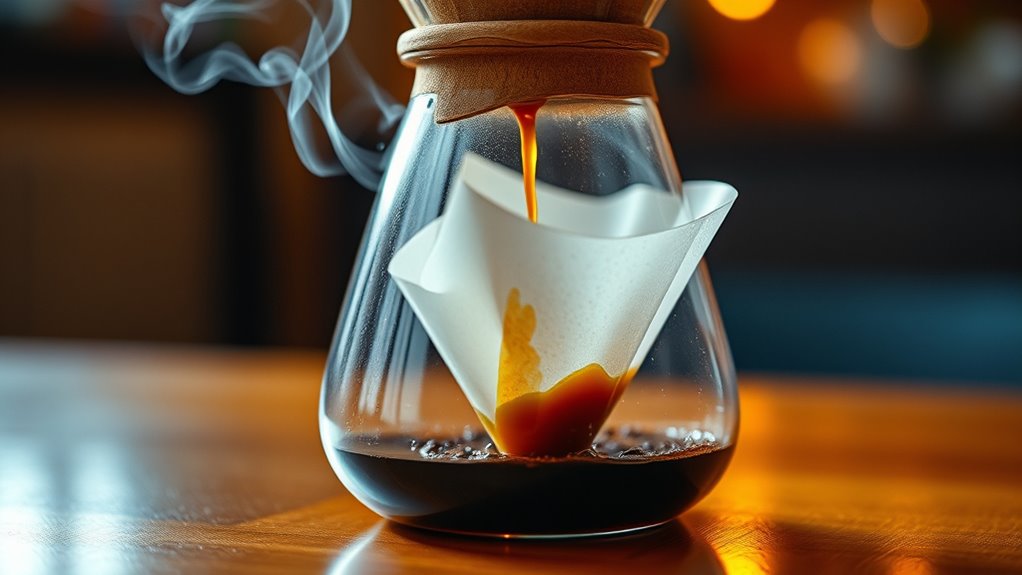
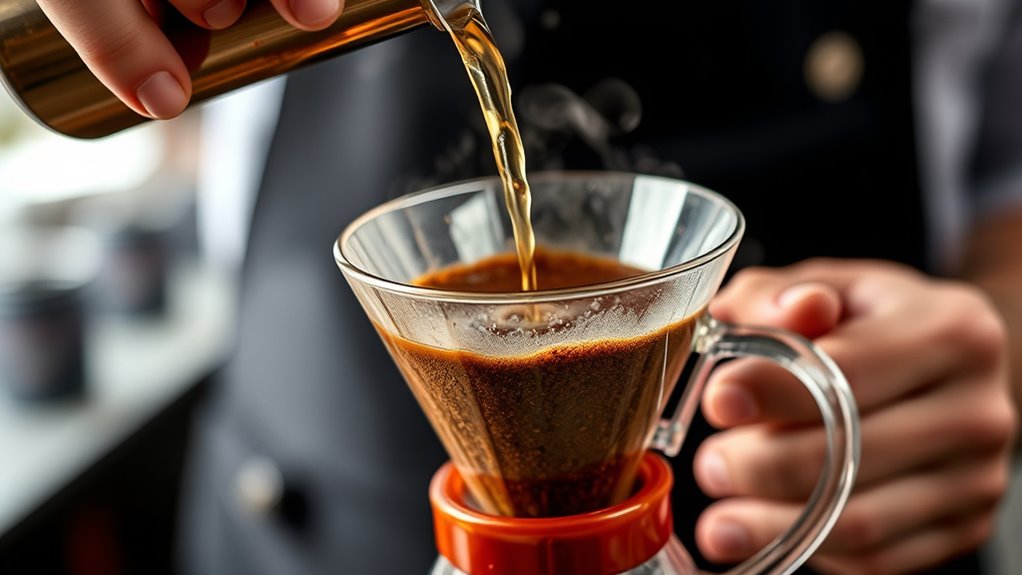
Brewing the perfect cup of coffee is a science that involves understanding how water, coffee grounds, and temperature interact to extract flavors. When you focus on extraction chemistry, you’re looking at how soluble compounds in coffee dissolve into water, creating the complex flavors you enjoy. Extraction isn’t just about pouring hot water over grounds; it’s a delicate process influenced by factors like contact time, water temperature, and, vitally, grind uniformity. If your grind size varies too much, you risk uneven extraction—some particles will release flavors too quickly, resulting in over-extraction and bitterness, while others under-extract, leaving behind sour or flat notes. Achieving grind uniformity ensures that all coffee particles are exposed to water in a consistent manner, promoting balanced extraction and a more harmonious flavor profile. Consistent grind size is essential for controlling extraction rates and achieving optimal flavor.
Understanding extraction chemistry means recognizing that different compounds dissolve at different rates. Aromatics, acids, oils, and bitter compounds each have their own solubility points, and your brewing method dictates how quickly these are pulled into your cup. For instance, fine grounds used in espresso facilitate rapid extraction because of their larger surface area, while coarser grounds suited for French press slow down the process, allowing for a richer, more nuanced flavor. The key is controlling how water interacts with these grounds to optimize extraction. When you get this chemistry right, your coffee will have a full-bodied taste, with a good balance of acidity, sweetness, and bitterness.
Frequently Asked Questions
How Does Altitude Affect Coffee Flavor Extraction?
Altitude effects your coffee’s flavor extraction by influencing bean development and brewing conditions. Higher altitudes tend to produce beans with brighter, more complex flavor nuances, as cooler temperatures slow maturation. During brewing, the thinner air can slightly alter extraction rates, emphasizing delicate flavors. You’ll notice a sharper acidity and vibrant profile in high-altitude coffees, making for a more nuanced cup, while lower altitudes often yield richer, fuller-bodied brews.
What Role Do Minerals in Water Play in Brewing?
Did you know that minerals in water substantially impact your coffee’s flavor? Water mineralization affects extraction, with the right balance enhancing brightness and body. Minerals like calcium and magnesium act as natural buffers, maintaining pH balance and preventing over-extraction. If water lacks minerals, your brew might taste flat; too many can cause over-extraction and bitterness. Adjusting mineral content guarantees ideal flavor and a well-rounded cup every time.
How Does Grind Size Influence Brewing Time?
You’ll find that grind size directly impacts brewing time, as finer grinds increase surface area, speeding up extraction, while coarser grinds slow it down. Maintaining grind consistency and even particle distribution helps guarantee uniform extraction, preventing over- or under-extraction. When you adjust your grind size, remember that smaller particles lead to shorter brewing times, but too fine can cause over-extraction and clogging, so find that perfect balance for your brewing method.
Can Brewing Temperature Alter Caffeine Content?
Yes, brewing temperature can modify caffeine content. When you regulate the temperature, you influence caffeine extraction—higher temperatures typically extract more caffeine, making your coffee stronger. Consistent temperature control ensures you get the desired caffeine levels without over or under-extracting. This precise control helps you craft a balanced brew, maximizing flavor and caffeine while preventing bitterness caused by excessively high temperatures.
How Do Different Brewing Methods Impact Antioxidant Levels?
You’ll find that different brewing methods influence antioxidant levels due to coffee bean composition and brewing chemistry. For example, methods like French press or cold brew tend to extract more antioxidants because they use longer steeping times or lower temperatures, preserving more of the bean’s natural compounds. Conversely, quicker methods like espresso may extract fewer antioxidants, but the intense pressure enhances flavor. Your choice impacts both health benefits and taste.
Conclusion
Now that you understand the science behind coffee brewing, you can master each step to unseal the perfect cup. Remember, small adjustments in grind size, temperature, and brew time can make a big difference in flavor. Isn’t it worth experimenting to find your ideal brew? By paying attention to these scientific details, you’ll turn your daily coffee ritual into a personalized, delicious experience. So, why settle for mediocre when science can help you craft greatness?